
Every cat owner has seen it: your feline companion curls up on your lap or favorite blanket, then begins rhythmically pressing their paws in and out, alternating left and right, as if working dough. This endearing motion—commonly known as “kneading” or “making biscuits”—is more than just a quirky habit. It’s a deeply rooted behavior with biological, emotional, and evolutionary significance. Understanding why cats knead not only deepens your bond with your pet but also reveals insights into their comfort, health, and instincts.
Kneading typically involves extending and retracting the claws while pushing against a soft surface—your leg, a blanket, or a plush cushion. While some cats purr during the act, others close their eyes, appearing to drift into a state of pure contentment. Though charming, this behavior often raises questions: Is it normal? Does it serve a purpose? Could it indicate stress or discomfort? The answers lie in a combination of early development, territorial signaling, and emotional regulation.
The Origins of Kneading: A Behavior Rooted in Kittenhood
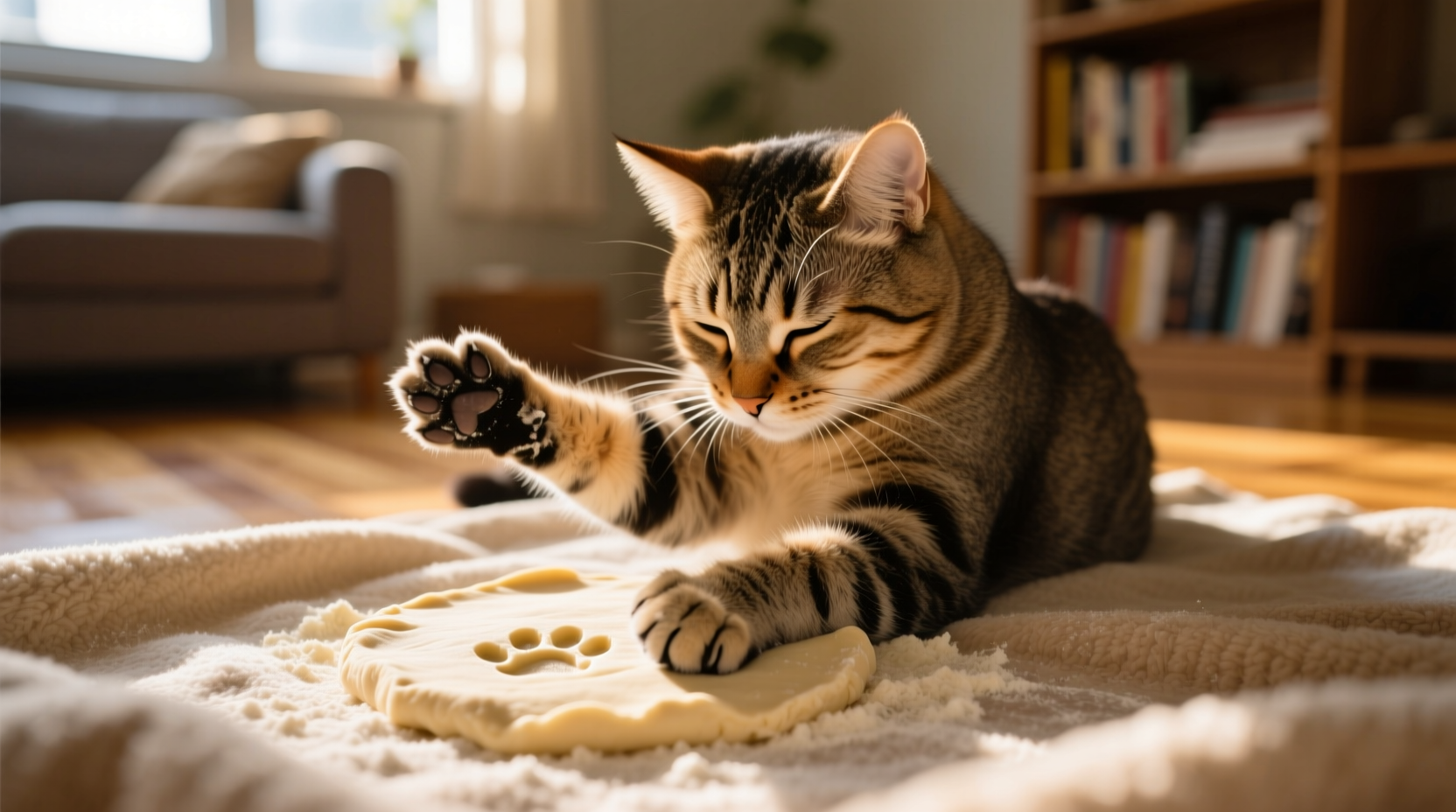
Kneading begins in the first days of life. Newborn kittens instinctively press against their mother’s mammary glands to stimulate milk flow. This action triggers the release of oxytocin in the nursing queen, enhancing milk production. For the kitten, it’s a survival mechanism tied directly to nourishment and warmth.
As cats mature, they often retain this behavior well into adulthood. Even after weaning, many cats continue to knead soft surfaces—especially when relaxed or preparing to rest. The act becomes less about feeding and more about emotional association. The sensation of pressing mimics the comfort and security experienced during nursing, making it a self-soothing ritual.
“Kneading is one of the clearest examples of neoteny in domestic cats—the retention of juvenile behaviors into adulthood due to selective breeding and close human companionship.” — Dr. Sarah Thompson, Feline Ethologist
This persistence suggests that cats don’t merely remember kittenhood; they emotionally re-experience it through tactile stimulation. When your cat kneads you, they may be expressing deep trust, viewing you as a parental figure who provides safety and care.
Emotional and Psychological Triggers for Kneading
Beyond its origins in infancy, kneading serves several psychological functions in adult cats:
- Stress relief: Repetitive motions like kneading can reduce anxiety, much like humans might tap their fingers or twirl their hair when nervous.
- Comfort seeking: Cats often knead before settling down to sleep, using the motion to create a cozy, nest-like impression in bedding or fabric.
- Expression of contentment: A purring cat mid-knead is likely in a state of profound relaxation, signaling they feel safe and happy in their environment.
In multi-cat households, kneading may also reflect social hierarchy or bonding. A subordinate cat might knead near a dominant one as a non-threatening gesture, reinforcing group cohesion. Similarly, cats who share sleeping spaces often knead the same spots, layering their scents and creating a communal “safe zone.”
Tip: If your cat kneads excessively during stressful events (e.g., storms or visitors), provide a designated comfort item like a heated pad or pheromone-treated blanket.Territorial Marking: Scent Glands and Ownership
Cats possess scent glands in multiple locations, including between their paw pads. When they knead, these glands release pheromones—chemical signals that communicate information to other animals. To humans, the act may seem purely affectionate, but from a feline perspective, it's also an act of ownership.
By kneading a couch, bed, or even your thigh, your cat is marking the surface as part of their territory. This isn’t aggression—it’s reassurance. The familiar scent helps them feel grounded in their space. In wild or feral populations, such marking reduces conflict by clearly defining boundaries without direct confrontation.
This territorial aspect explains why some cats become particular about where they knead. They may reject new furniture until it carries enough of their scent, or insist on kneading only certain family members. It’s not personal preference alone; it’s olfactory identity.
Do’s and Don’ts of Managing Kneading Behavior
| Do | Don’t |
|---|---|
| Provide soft blankets or mats for kneading | Yell at or punish your cat for kneading |
| Trim claws regularly to minimize scratches | Force your cat off your lap abruptly |
| Use positive reinforcement when they use appropriate surfaces | Apply sticky tape or deterrents on all furniture |
| Observe patterns—kneading may signal fatigue or anxiety | Assume all kneading indicates happiness (context matters) |
Physical Comfort and Nesting Instincts
Long before domestication, wild ancestors of modern cats sought secure resting places. Pressing down on leaves, grass, or dirt helped flatten the area, remove debris, and detect hidden threats like insects or snakes. This nesting instinct persists today, even in indoor-only cats.
When your cat kneads before lying down, they’re engaging in a form of environmental preparation. Though unnecessary on a plush sofa, the behavior remains hardwired. Some experts believe this routine helps regulate body temperature by adjusting airflow beneath them or improving insulation.
Cats with outdoor access often display more pronounced kneading on natural substrates like soil or sun-warmed stone. Indoor cats transfer this behavior to rugs, pillows, or laps—any surface that offers slight give under pressure.
Mini Case Study: Luna, the Apartment-Dwelling Tabby
Luna, a three-year-old tabby living in a high-rise apartment, exhibited intense kneading behavior every evening around 8 PM. Her owner, Maria, noticed she always targeted the same wool-blend throw on the living room armchair. Concerned about fabric damage, Maria tried redirecting her to a fleece mat—but Luna refused.
After consulting a feline behaviorist, Maria learned that Luna associated the throw with her nighttime routine: lights dimming, soft music, and gentle petting. The wool retained heat and carried both Maria’s and Luna’s combined scent—a sensory anchor. Instead of replacing the blanket, Maria began placing a protective cotton liner underneath and trimming Luna’s claws weekly. Within weeks, the behavior continued without damage, and Maria gained appreciation for its emotional importance.
When Kneading Might Signal a Problem
While kneading is generally healthy, sudden changes in frequency, intensity, or context warrant attention. Excessive kneading—especially if accompanied by vocalization, drooling, or lethargy—can sometimes indicate:
- Pain or discomfort: Older cats with arthritis may knead obsessively in an attempt to soothe sore muscles.
- Hormonal fluctuations: Unspayed females may knead more during heat cycles, mimicking mating postures.
- Cognitive decline: Senior cats with feline cognitive dysfunction (FCD) may revert to repetitive kitten behaviors.
If your cat starts kneading in unusual places (e.g., walls or hard floors), avoids touch during the act, or seems disoriented afterward, consult a veterinarian. These signs could point to neurological or metabolic issues requiring medical evaluation.
Tip: Monitor any change in kneading habits alongside diet, litter box use, and activity levels—they’re often early indicators of illness.Step-by-Step Guide: Creating a Kneading-Friendly Environment
- Identify preferred surfaces: Observe where your cat naturally kneads—this helps you choose suitable alternatives if needed.
- Introduce soft, washable mats: Place them near resting areas or on frequently used furniture.
- Incorporate familiar scents: Rub the mat with a cloth from your clothing to add your scent, increasing acceptance.
- Rotate textures: Offer options like fleece, memory foam, and knitted wool to see what your cat prefers.
- Maintain hygiene: Wash kneading surfaces regularly to prevent odor buildup, which can deter use.
- Protect sensitive areas: Use removable covers on sofas or apply claw caps if scratching becomes an issue.
Frequently Asked Questions
Why does my cat drool when kneading?
Drooling during kneading is common and usually harmless. It stems from deep relaxation, often linked to positive memories of nursing. As long as your cat is otherwise healthy, excessive salivation during this behavior is a sign of extreme comfort—not illness.
Is it okay to let my cat knead me?
Yes, if both you and your cat are comfortable. However, sharp claws can cause discomfort or minor injuries. To enjoy the bonding moment safely, keep claws trimmed, wear thicker clothing, or place a folded towel between you and your cat.
Do all cats knead?
No—not all cats knead. The behavior varies by individual temperament, early life experiences, and breed tendencies. Some cats never develop the habit, while others begin later in life due to environmental changes or increased stress.
Expert Insight: The Emotional Language of Cats
“Kneading is a window into a cat’s inner world. It’s not just muscle memory—it’s emotional communication. When a cat chooses to make biscuits on your lap, they’re saying, ‘I am safe here. You are my person.’ That kind of trust is rare and precious.” — Dr. Elena Ruiz, Veterinary Behavior Specialist
This sentiment underscores the deeper value of seemingly simple behaviors. In a species often misunderstood as aloof, kneading stands out as a voluntary, intimate gesture—one that bridges the gap between instinct and affection.
Conclusion: Embracing the Biscuit-Making Ritual
Your cat’s kneading is far more than a cute quirk. It’s a complex interplay of biology, emotion, and instinct that connects them to their past and expresses their present well-being. Rather than discouraging it, consider how you can support this natural behavior in a way that benefits both of you.
Appreciate the trust it represents. Protect your skin and furniture with practical solutions. And most importantly, recognize the quiet message your cat is sending each time they press their paws into your leg: you are their sanctuary.
💬 Does your cat have a unique kneading habit? Share your story in the comments—let’s celebrate the little rituals that make cat ownership so special.








