Cat owners often observe their feline companions rhythmically pushing their paws into soft surfaces—blankets, pillows, laps—with a deliberate, almost meditative motion. This behavior, known as kneading, is commonly associated with nursing kittens who press against their mother’s belly to stimulate milk flow. Yet many adult cats continue this practice well into maturity, sometimes even decades after weaning. While it may seem odd or purely habitual, kneading in adult cats is deeply rooted in biology, emotion, and instinct. Understanding why your cat still kneads can deepen your bond and help you interpret their emotional state more accurately.
The Evolutionary Roots of Kneading
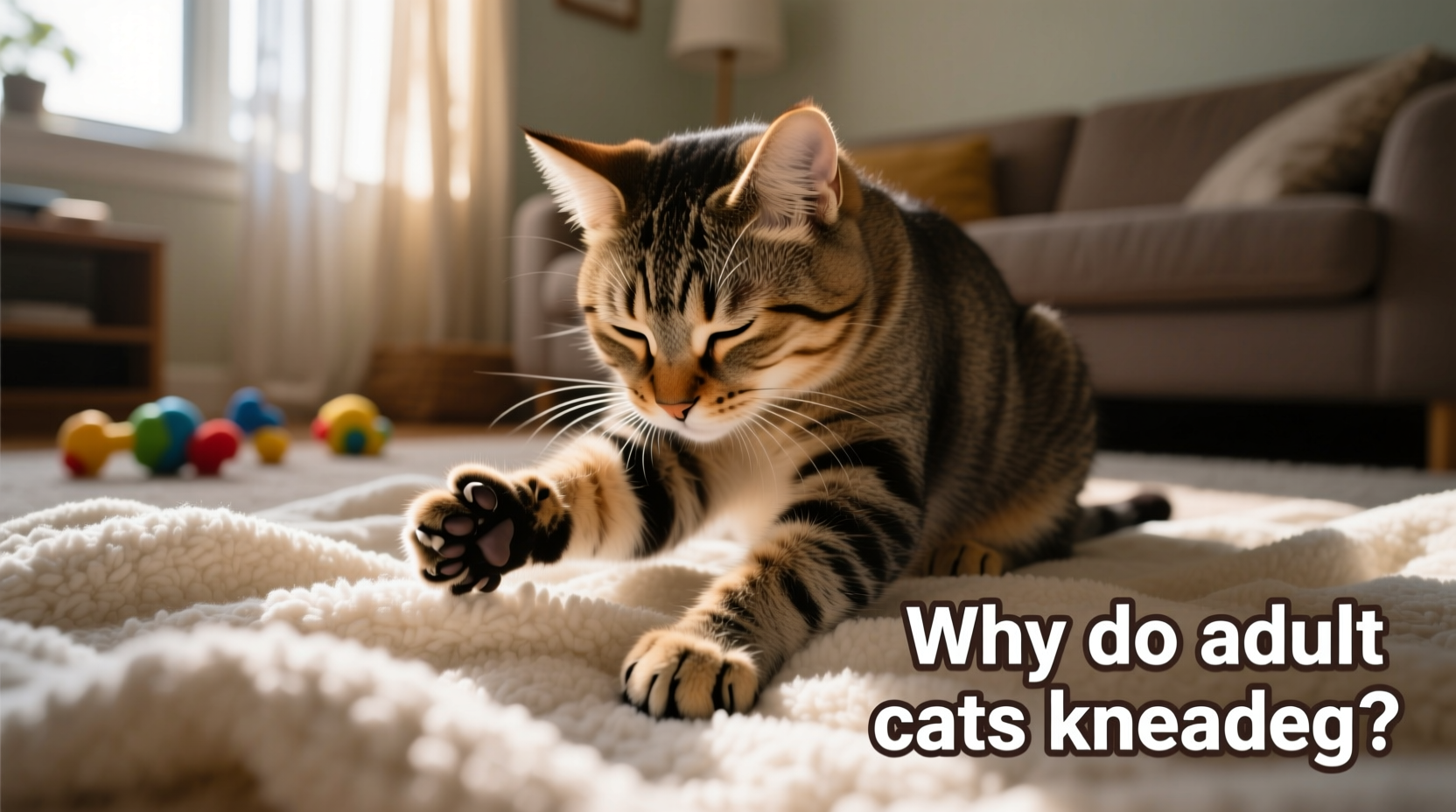
Kneading begins in kittenhood as a survival mechanism. When nursing, kittens use their front paws to massage the mammary glands of their mother, encouraging milk production. This tactile stimulation is crucial during the early weeks of life when nutrition directly impacts growth and immune development. The action becomes strongly associated with comfort, warmth, and nourishment.
As cats mature, they retain this motor pattern despite no longer needing milk. From an evolutionary standpoint, behaviors that reinforce safety and contentment are often preserved—even if their original function fades. In the wild, felids may have used similar motions to tamp down grass or leaves to create a secure sleeping area, suggesting that kneading could also serve a nesting purpose. Though domesticated cats don’t need to build nests, the instinct remains embedded in their neural pathways.
“Kneading is one of the most enduring vestiges of kittenhood. It’s not just muscle memory—it’s emotional recall.” — Dr. Lena Torres, Feline Behavior Specialist
Emotional Comfort and Stress Relief
For adult cats, kneading is frequently a self-soothing behavior triggered by feelings of relaxation or mild anxiety. When a cat settles onto a soft blanket or your lap and begins to rhythmically push its paws, it’s often signaling deep contentment. The motion releases endorphins, creating a calming effect similar to how humans might rock back and forth or twirl their hair when relaxed.
This behavior is especially common before sleep or after positive interactions such as petting or feeding. In some cases, cats will knead when reintroduced to a familiar environment after travel or during thunderstorms, indicating that the act helps regulate emotional stress. By engaging in a behavior linked to early security, cats anchor themselves in a sense of safety.
Tip: If your cat starts kneading during stressful events like vet visits or storms, allow them access to a favorite blanket—they may use it to self-regulate.Territorial Marking Through Scent Glands
Beyond comfort, kneading serves a communicative function. Cats possess scent glands in the soft pads of their paws that release pheromones—chemical signals undetectable to humans but meaningful to other cats. Each time a cat presses into a surface, it deposits these unique chemical markers, effectively claiming the object or person as part of their trusted territory.
This explains why cats often prefer specific blankets, furniture spots, or even certain family members for kneading. They aren’t merely choosing softness; they’re marking what belongs to them in a subtle, olfactory language. In multi-cat households, observing which areas are frequently kneaded can reveal social hierarchies and preferred zones of control.
Interestingly, this territorial aspect doesn't stem from aggression. Instead, it reflects familiarity and ownership in a peaceful context. A cat that kneads you is not asserting dominance—it's integrating you into its inner circle of trust.
Physical Needs and Nesting Instincts
Though less pronounced than in wild ancestors, the nesting drive persists in domestic cats. Female cats, whether spayed or intact, may exhibit increased kneading before resting, mimicking the process of flattening foliage to create a safe birthing den. Even males display this behavior, suggesting it's not strictly reproductive but rather a generalized preparation for rest.
The physical sensation of compression may also provide feedback about surface stability and comfort. Older cats or those with joint issues sometimes knead more deliberately, possibly testing cushioning before lying down. Additionally, the repetitive motion may improve circulation in the paw muscles, offering minor therapeutic benefits over time.
| Trigger | Behavioral Purpose | Common Contexts |
|---|---|---|
| Nursing memory | Emotional comfort | After eating, during petting, pre-sleep |
| Scent marking | Territorial claim | On owner’s lap, favorite furniture |
| Stress reduction | Self-soothing | Post-travel, loud noises, new pets |
| Nesting instinct | Preparation for rest | Before lying down, in quiet corners |
| Physical assessment | Surface evaluation | On new bedding, uneven surfaces |
When Kneading Becomes Problematic: Managing Claws and Overstimulation
While kneading is generally harmless, it can become uncomfortable if your cat uses extended claws. Some cats instinctively retract them during the motion; others do not, leading to snagged clothing or scratched skin. Rather than discouraging the behavior entirely—which could disrupt your cat’s emotional regulation—consider practical solutions.
Regular nail trims every 2–3 weeks significantly reduce discomfort. Alternatively, soft vinyl nail caps like Soft Paws can be applied temporarily and are safe for indoor cats. Placing a thick towel or cat-safe blanket between your lap and the cat creates a barrier without rejecting the bonding experience.
Be mindful of overstimulation. Some cats become so absorbed in kneading that they may bite or drool excessively, especially if interrupted abruptly. Allow the session to end naturally unless it becomes too intense. Watch for tail flicking, flattened ears, or skin twitching—these are signs your cat may be nearing sensory overload.
Tip: Place an old sweatshirt or fleece blanket on your lap during cuddle sessions—it gives your cat something soft to knead while protecting your clothes.Mini Case Study: Bella the Anxious Rescue Cat
Bella, a five-year-old domestic shorthair adopted from a shelter, exhibited frequent vocalization and hiding during her first months in a new home. Her owner noticed she only began to relax when given a woolen throw blanket. Within weeks, Bella started kneading the blanket daily, often while perched near a window. Over time, her overall anxiety decreased, and she became more interactive.
Her veterinarian suggested that the combination of texture, warmth, and the repetitive motion provided both tactile and psychological grounding. The blanket became a conditioned cue for safety, much like a human might clutch a stress ball. By supporting rather than suppressing the kneading, Bella’s owner helped her transition into a confident, affectionate companion.
How to Encourage Healthy Kneading Habits
You can nurture this natural behavior in ways that benefit both you and your cat. Here’s a checklist to promote positive kneading experiences:
- Provide designated kneading zones: Offer plush mats, heated beds, or worn clothing items with your scent.
- Maintain claw health: Trim nails regularly or use nail caps to prevent damage.
- Avoid punishment: Never scold or push your cat away mid-knead—it undermines trust.
- Introduce textures gradually: Some cats prefer fleece, others cotton or knitted fabrics. Experiment to see what your cat favors.
- Respect boundaries: If your cat stops suddenly, don’t force continuation. Let them lead the interaction.
Step-by-Step Guide: Creating a Kneading-Friendly Environment
- Observe patterns: Note when and where your cat typically kneads (e.g., after meals, before naps).
- Select appropriate materials: Choose non-snagging, washable fabrics like microfiber or tightly woven cotton.
- Assign a dedicated item: Give a specific blanket or pillow solely for kneading to strengthen association.
- Add personal scent: Rub the item on your face or wear it briefly to transfer your pheromones.
- Place strategically: Position the item in calm areas—away from high foot traffic or loud appliances.
- Monitor usage: Replace the item if it becomes soiled or frayed to maintain hygiene and appeal.
Frequently Asked Questions
Is kneading a sign of illness in adult cats?
Generally, no. Kneading is a normal, healthy behavior. However, excessive or sudden-onset kneading accompanied by vocalization, disorientation, or loss of appetite may indicate neurological issues or pain. Consult a veterinarian if the behavior appears compulsive or out of character.
Why does my cat drool when kneading?
Drooling during kneading is common and usually indicates extreme relaxation. It harks back to kittenhood, when sucking and swallowing were part of feeding. As long as the drool isn’t foul-smelling or accompanied by mouth lesions, it’s typically nothing to worry about.
Can I stop my cat from kneading if it bothers me?
It’s better to redirect than suppress. Instead of stopping the behavior, place a thick pad between your leg and the cat’s paws, or gently move them to a nearby cushion. Abruptly ending kneading may increase stress, especially if it’s a coping mechanism.
Conclusion: Embracing Your Cat’s Unique Language
Kneading is far more than a quirky leftover from kitten days—it’s a multifaceted behavior woven from instinct, emotion, and communication. When your adult cat pushes its paws into a blanket like a newborn seeking milk, it’s expressing trust, comfort, and belonging. Recognizing this act as a form of feline expression allows you to respond with empathy rather than frustration.
By understanding the biological roots and emotional significance behind kneading, you gain insight into your cat’s inner world. Simple adjustments—like offering a soft surface or trimming sharp claws—can make shared moments more enjoyable for both of you. More importantly, allowing this behavior fosters a deeper connection built on mutual respect and care.
💬 Have a story about your cat’s kneading habits? Share your experience in the comments—your insights might help fellow cat lovers understand their pets better.








