
Cat owners often observe their feline companions rhythmically pressing their paws into soft surfaces—blankets, pillows, laps—with a slow, almost meditative motion. This behavior, known as kneading, is commonly referred to as “making biscuits” due to its resemblance to dough preparation. While endearing, it raises a natural question: Why does my cat knead blankets like a kitten? The answer lies in a blend of early developmental instincts, emotional regulation, and evolutionary biology. Understanding the behavioral science behind this habit offers insight into your cat’s emotional state, social bonding, and innate survival mechanisms.
The Origins of Kneading: A Kittenhood Reflex
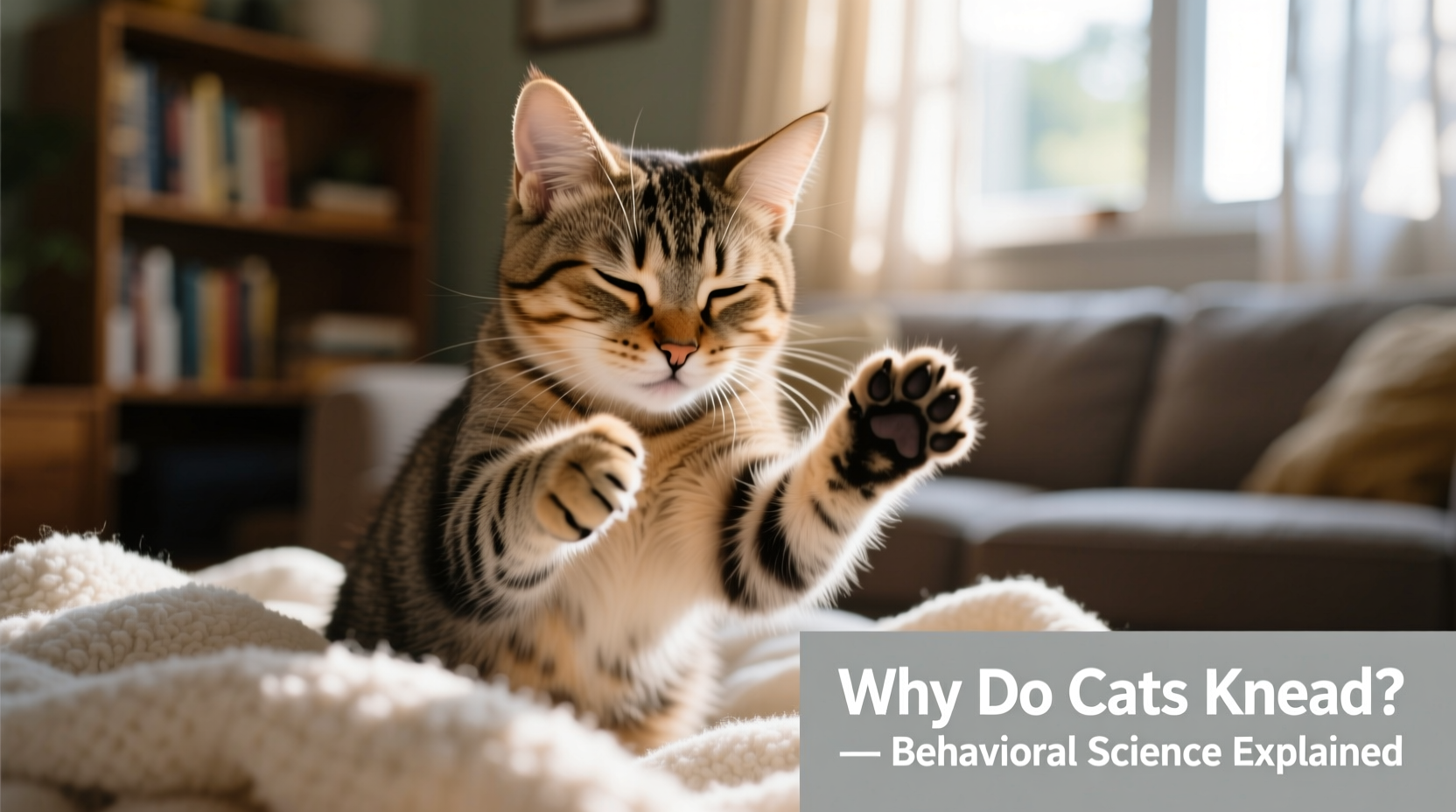
Kneading begins in the first days of life. Newborn kittens instinctively press their tiny paws against their mother’s mammary glands to stimulate milk flow during nursing. This rhythmic motion is crucial—it ensures nourishment and strengthens the bond between mother and offspring. The tactile feedback from kneading also helps kittens locate teats and maintain position while feeding.
This early experience imprints a deep association between kneading, comfort, and safety. As cats mature, the physical need for nursing disappears, but the behavior often persists. Adult cats may continue to knead when they feel secure, relaxed, or affectionate—situations that psychologically echo the safety of kittenhood.
“Kneading is one of the clearest examples of neoteny in cats—the retention of juvenile behaviors into adulthood. It reflects both emotional comfort and deep-seated instinct.” — Dr. Sarah Ellis, Feline Behavior Scientist, University of Lincoln
Behavioral Functions of Kneading in Adult Cats
In adult cats, kneading serves multiple psychological and physiological purposes beyond its original survival function. These include:
- Emotional self-soothing: The motion can reduce stress and anxiety, acting as a calming ritual similar to human habits like rocking or fidgeting.
- Territory marking: Cats have scent glands in their paw pads. Kneading releases pheromones that mark the surface—and by extension, the person or object—as familiar and safe.
- Nesting preparation: In the wild, cats would pat down grass or leaves to create a soft sleeping area. Domestic cats retain this nesting instinct, even if the surface is already comfortable.
- Stretching and muscle maintenance: The repetitive motion engages shoulder, forelimb, and paw muscles, promoting flexibility and circulation.
Scent Communication and Social Bonding
Cats are highly olfactory-driven animals. Their world is navigated largely through scent, and kneading plays a role in chemical communication. When a cat presses its paws into a blanket—or your lap—it deposits invisible chemical signals via interdigital glands. These pheromones convey messages such as “this space is safe,” “I belong here,” or “this person is part of my social group.”
This behavior reinforces social bonds. A cat that kneads you is not only expressing contentment but also integrating you into its personal territory. It’s a subtle yet profound gesture of trust. Unlike overt displays such as purring or grooming, kneading is a quiet affirmation of belonging.
Interestingly, cats may avoid kneading in unfamiliar or stressful environments. The absence of this behavior in new settings can indicate hesitation or discomfort, making it a useful behavioral cue for observant owners.
When Kneading Signals Stress or Overstimulation
While kneading is typically a sign of relaxation, context matters. In some cases, excessive or sudden kneading can indicate underlying stress. For example, a cat may begin kneading intensely after a loud noise, a visitor’s arrival, or a change in routine. In these moments, the behavior functions as a coping mechanism—a way to regain a sense of control and familiarity.
Similarly, some cats knead when they are overstimulated during petting. If stroking continues past their tolerance threshold, kneading may escalate into scratching or biting. This shift occurs because the initial pleasure turns into sensory overload, and the cat reverts to an instinctive motor pattern to manage discomfort.
| Context | Interpretation | Action for Owner |
|---|---|---|
| During purring on your lap | Contentment, bonding | Allow the behavior; enjoy the moment |
| After a loud noise or change | Stress response | Provide a quiet space; minimize disturbances |
| Escalates to scratching | Overstimulation | Pause petting; give space |
| Avoids kneading in new home | Uncertainty or anxiety | Introduce familiar scents; allow gradual adjustment |
Practical Guide: Managing Kneading Comfortably
While kneading is natural, it can sometimes be uncomfortable—especially when claws are involved. Here’s how to support your cat’s instinctual behavior while protecting yourself and your furniture.
- Trim claws regularly: Keeping nails blunt reduces the risk of scratches without interfering with natural behavior.
- Use protective barriers: Place a thick blanket or cushion between your lap and the cat if kneading becomes painful.
- Provide designated kneading zones: Offer soft, washable mats or old towels in favorite resting spots to redirect the behavior.
- Encourage scratching posts: These help shed claw sheaths and satisfy tactile needs, potentially reducing aggressive kneading.
- Respond calmly to overstimulation: Watch for tail flicking or skin rippling—early signs that petting should stop.
Mini Case Study: Luna, the Rescue Cat
Luna, a three-year-old domestic shorthair adopted from a shelter, initially avoided physical contact. Her new owner, Mark, noticed she never settled on laps or soft furniture. After two weeks, he introduced a fleece throw that had been lightly sprayed with synthetic feline facial pheromones (Feliway). One evening, Luna climbed onto the couch, sniffed the blanket, and began slow, deliberate kneading—her first sign of true comfort in the home.
Over the next month, the behavior increased in frequency and duration. She eventually began kneading on Mark’s legs during quiet evenings. Her veterinarian noted that this progression mirrored typical attachment development in rescued cats. The return of kneading signaled that Luna no longer felt threatened and had begun to form a secure bond.
This case illustrates how kneading can serve as a behavioral milestone in emotional recovery. For adopters of rescue cats, the reappearance of kitten-like behaviors often marks a turning point in integration and trust-building.
Expert Insights on Feline Emotional Expression
Feline emotions are complex but often understated. Unlike dogs, cats rarely display overt excitement or submission. Instead, they communicate through subtle body language and repetitive actions like kneading, grooming, and slow blinking.
“Cats don’t just live in the moment—they carry forward emotional imprints from early life. Kneading is a window into their inner world. When a cat kneads you, it’s saying, ‘You are my safe place.’ That’s a profound level of trust.” — Dr. Karen Overall, Veterinary Behavioral Medicine Specialist
Research in feline cognitive science suggests that cats form strong associative memories tied to sensory experiences. The texture of a blanket, the warmth of a lap, or the scent of a familiar person can trigger kneading as a conditioned response to past comfort. This explains why some cats knead more in specific locations or with certain people—even after long separations.
FAQ: Common Questions About Cat Kneading
Is kneading a sign of dominance?
No. Kneading is not a dominance behavior. It is rooted in infantile comfort-seeking and scent marking, not social hierarchy. Cats do not use kneading to assert control over people or other pets.
Why does my cat suck on the blanket while kneading?
This is a common extension of nursing behavior. Some cats retain the oral component of feeding, especially if weaned early. As long as the material isn’t ingested, it’s generally harmless. However, excessive fabric consumption (wool-sucking) may require veterinary evaluation.
Should I discourage kneading if it hurts?
You shouldn’t punish the behavior, as it’s instinctive and emotionally meaningful. Instead, manage it humanely—use nail caps, provide alternative surfaces, or gently redirect. Suppressing natural behaviors can increase stress and damage trust.
Checklist: Supporting Healthy Kneading Behavior
To ensure your cat can express this natural behavior safely and comfortably, follow this checklist:
- ✅ Provide soft, textured surfaces for kneading (e.g., fleece blankets, memory foam pads)
- ✅ Trim claws every 2–3 weeks or use soft nail covers
- ✅ Observe context: note when and where kneading occurs to assess emotional state
- ✅ Avoid startling or interrupting your cat mid-knead, especially if purring
- ✅ Introduce pheromone diffusers in multi-cat households to reduce tension and encourage positive behaviors
- ✅ Monitor for changes: sudden increase or cessation of kneading may signal health or emotional issues
Conclusion: Embracing the Language of Kneading
Kneading is far more than a quirky feline habit—it’s a deeply ingrained behavior shaped by evolution, emotion, and early experience. When your cat presses its paws into a blanket or nestles into your lap with rhythmic motions, it’s revisiting the safest moments of its life. It’s also marking you as part of its trusted circle, using scent and touch to say, “This is home.”
Understanding the behavioral science behind kneading transforms a simple observation into a richer appreciation of your cat’s inner world. Rather than viewing it as a nuisance, recognize it as a form of communication—a quiet declaration of comfort, trust, and love.
💬 Does your cat knead at specific times or in unique ways? Share your observations in the comments—your experience could help other cat owners better understand this fascinating behavior.








