
Cat owners often find themselves both amused and puzzled when their feline companion settles into their lap and begins rhythmically pushing their paws in and out against a soft surface—blanket, pillow, or even bare skin. This behavior, affectionately known as “making biscuits,” is more than just a quirky quirk; it’s deeply rooted in biology, emotion, and instinct. While kneading may look like a simple repetitive motion, it carries layers of meaning that trace back to kittenhood and reflect your cat’s emotional state, comfort level, and even social communication.
Understanding why cats knead can deepen the bond between pet and owner. It reveals how cats express trust, mark territory, and self-soothe. But it also raises practical questions: Is kneading normal? Should you discourage it? And what if it becomes painful due to claws? This article explores the science and psychology behind this common feline behavior, offering insight into what your cat is trying to communicate every time they start “baking” on your favorite throw.
The Origins of Kneading: A Behavior Rooted in Survival
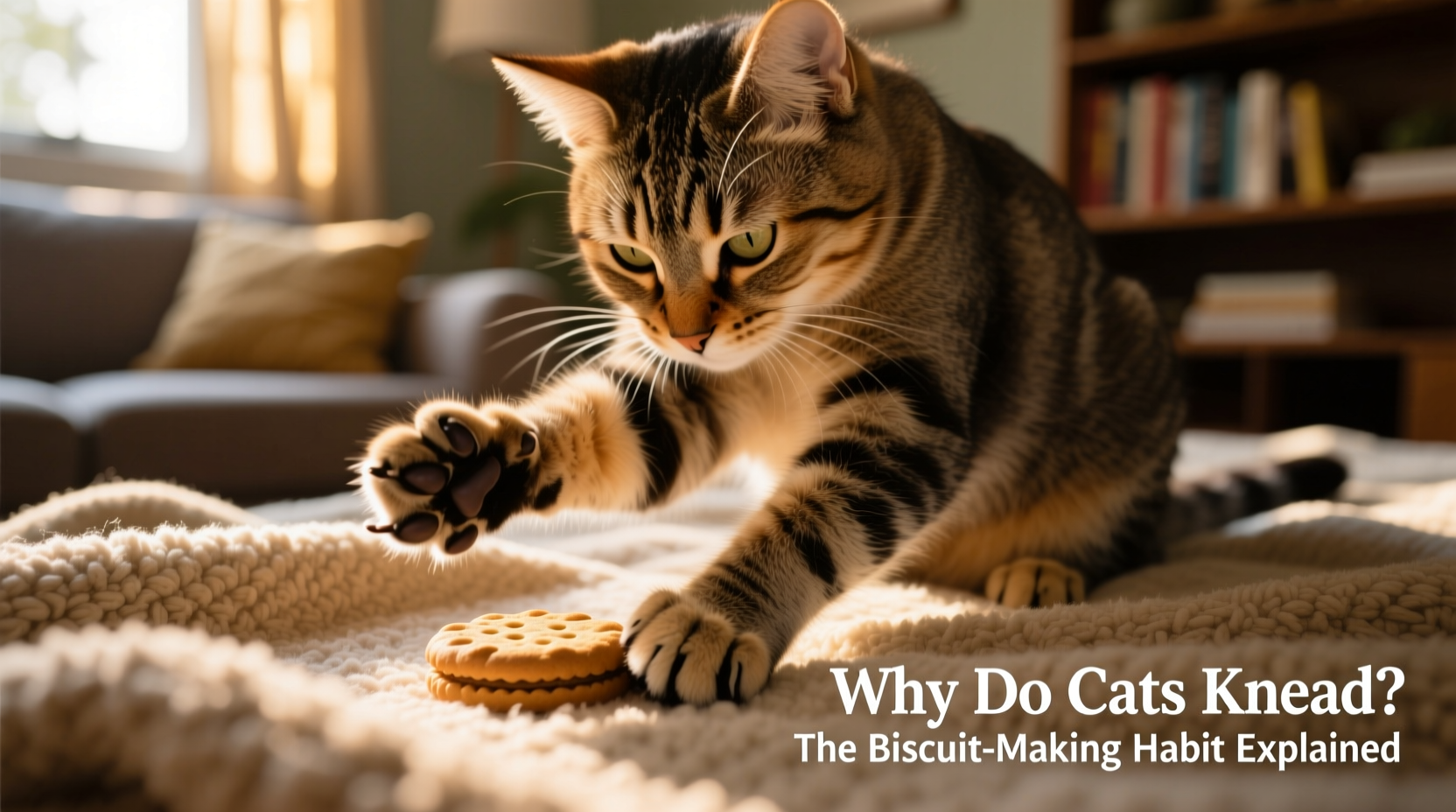
Kneading begins in the earliest days of a cat’s life. Newborn kittens instinctively push their paws against their mother’s mammary glands to stimulate milk flow. This rhythmic motion is essential for survival—it ensures nourishment during a critical developmental stage. The action is tied to warmth, safety, and sustenance, forming a powerful positive association in the kitten’s mind.
As cats grow, they retain this behavior into adulthood, even though they no longer need milk. When adult cats knead soft surfaces, they are often reliving the comfort and security of nursing. The act triggers feelings of relaxation and contentment, much like a human might suck their thumb or wrap themselves in a familiar blanket for emotional comfort.
“Kneading is one of the clearest examples of a neonatal behavior that persists into adulthood because it’s linked to deep emotional rewards.” — Dr. Sarah Ellis, Feline Behavior Scientist, University of Lincoln
This early-life imprint explains why many cats purr while kneading. The two behaviors—purring and paw-pushing—are frequently paired because both originated during nursing. Purring serves as a signal to the mother that the kitten is feeding well, while kneading helps extract milk. Together, they form a feedback loop of calm and connection that cats carry with them throughout life.
Why Adult Cats Continue to Knead: Beyond Instinct
While the roots of kneading lie in infancy, adult cats engage in the behavior for multiple overlapping reasons. It’s not merely a leftover reflex—it serves several functional and emotional purposes in a domestic setting.
1. Emotional Comfort and Stress Relief
Just as humans have habits that soothe anxiety—fidgeting, rocking, or hugging a pillow—cats use kneading as a self-calming mechanism. When faced with change, stress, or unfamiliar environments, a cat may begin kneading to ground themselves emotionally. The rhythmic motion releases endorphins, promoting a sense of well-being.
2. Scent Marking and Territory Claiming
Cats have scent glands located in the pads of their paws. Each time they press into a surface, they deposit pheromones—chemical signals that mark the object (or person) as part of their safe, familiar territory. When your cat kneads your lap, they aren’t just showing affection; they’re claiming you as “theirs” in the most feline way possible.
3. Nesting and Preparation for Rest
In the wild, cats would trample down grass, leaves, or snow to create a soft, secure sleeping spot. Kneading mimics this nesting behavior. Even in the safety of a modern home, the instinct remains. Your cat may knead before lying down, fluffing an imaginary bed just as their ancestors did in the wild.
4. Affection and Bonding
Kneading is often directed toward people the cat trusts. If your cat chooses your lap over the couch, it’s a sign of deep attachment. Combined with purring, half-closed eyes, and slow blinks, kneading is part of a broader language of feline affection—one that doesn’t rely on meows or physical closeness alone.
Tip: Never punish or stop your cat from kneading. It’s a natural, comforting behavior. Instead, redirect gently if claws become an issue.When Kneading Becomes a Problem: Managing Claws and Overstimulation
While kneading is generally harmless, it can sometimes lead to discomfort—especially when sharp claws dig into skin. Some cats become so entranced by the motion that they don’t realize they’re causing pain. Others may combine kneading with gentle biting or suckling fabric, which can damage clothing or bedding.
Here’s how to manage kneading without discouraging the behavior entirely:
- Trim your cat’s nails regularly – Keeping claws short reduces the risk of scratches during kneading sessions.
- Use a protective barrier – Place a thick blanket or cushion between your lap and the cat if direct contact becomes uncomfortable.
- Redirect to a designated surface – Encourage your cat to knead a plush toy or soft mat by rewarding them when they do.
- Discourage suckling on fabrics – If your cat chews or ingests fabric while kneading, consult a vet. This could indicate anxiety or pica, a condition where animals eat non-food items.
It’s also important to watch for signs of overstimulation. Some cats become hyper-focused during kneading and may lash out if touched unexpectedly. If your cat suddenly stops, flattens their ears, or flicks their tail, give them space. They’re not being aggressive—they’re signaling that the moment has passed.
Do’s and Don’ts of Cat Kneading: A Practical Guide
| Do’s | Don’ts |
|---|---|
| Allow kneading as a natural expression of comfort | Never punish or yell at your cat for kneading |
| Provide soft surfaces like blankets or beds for kneading | Don’t declaw your cat to stop kneading—it’s inhumane and unnecessary |
| Clip claws regularly to prevent injury | Don’t ignore signs of stress or compulsive behavior |
| Encourage bonding by staying calm during kneading | Don’t force interaction if your cat seems overstimulated |
| Observe patterns—kneading may increase during changes in routine | Don’t assume all kneading is playful; it can signal anxiety |
Real-Life Example: How One Cat’s Kneading Revealed Hidden Anxiety
Sophie, a 4-year-old tabby, had always been a quiet but affectionate cat. Her owner, Jenna, noticed that after moving to a new apartment, Sophie began kneading obsessively—up to six times a day, often on the same wool blanket, which she eventually started chewing.
At first, Jenna thought it was a sign of contentment. But when Sophie began losing weight and avoiding other cats at the window, she consulted a veterinary behaviorist. The diagnosis: environmental stress triggered displacement behavior. Kneading, once soothing, had become compulsive—a way for Sophie to cope with the loss of her familiar territory.
With environmental enrichment—vertical spaces, pheromone diffusers, and scheduled playtime—Sophie’s kneading returned to normal levels. The blanket-chewing stopped, and she resumed her usual routine. This case highlights that while kneading is typically healthy, dramatic changes in frequency or intensity can signal deeper issues.
Tip: Monitor changes in kneading behavior. Sudden increases or destructive patterns may require veterinary evaluation.Step-by-Step: Creating a Kneading-Friendly Environment
If you want to support your cat’s natural instincts while protecting your furniture and skin, follow this simple guide:
- Identify preferred surfaces – Notice where your cat naturally likes to knead. Is it your sweater? A particular cushion? Use this insight to choose replacements.
- Introduce a kneading mat – Purchase or make a soft, washable pad filled with polyester fiberfill. Some cats prefer textured fabrics like fleece or faux sheepskin.
- Use positive reinforcement – Reward your cat with treats or praise when they knead the designated item.
- Rotate scented items – Rub the mat with a cloth from your clothes to add your scent, making it more appealing.
- Maintain claw health – Trim claws every 2–3 weeks and provide scratching posts to keep them worn down naturally.
- Observe behavioral context – Note whether kneading happens during relaxation, after meals, or during stressful events. This helps assess emotional needs.
Over time, your cat will learn to associate the mat with comfort, reducing unwanted kneading on inappropriate surfaces.
Frequently Asked Questions About Cat Kneading
Is kneading a sign that my cat wants food or attention?
Not usually. Kneading is primarily a self-soothing or territorial behavior, not a demand. However, if your cat learns that kneading gets a response (like petting or treats), they may repeat it for attention. Observe the full context—purring and closed eyes suggest contentment, while meowing and pacing may indicate a separate need.
Why does my cat drool when kneading?
Drooling during kneading is common and usually harmless. It’s often linked to the nursing reflex—kittens salivate while feeding, and adult cats may mimic this when deeply relaxed. As long as the drool isn’t excessive or accompanied by illness symptoms, it’s a sign of extreme comfort.
Do all cats knead, or is it breed-specific?
Most cats knead at some point, but the frequency varies widely. Some breeds, like Siamese and Ragdolls, are known for being particularly affectionate and prone to kneading. However, individual personality and early life experiences play a bigger role than breed. Cats who were weaned early or experienced trauma may knead more—or avoid it altogether.
Conclusion: Embrace the Biscuits
Kneading is more than a funny habit—it’s a window into your cat’s inner world. It speaks of trust, comfort, and continuity from kittenhood to adulthood. When your cat makes biscuits on your lap, they’re not just pushing paws into fabric; they’re sharing a piece of their emotional history.
Rather than seeing kneading as a nuisance, reframe it as a compliment. Your cat feels safe with you. They associate you with warmth and nourishment. That’s a rare and meaningful bond.
By understanding the reasons behind the behavior and managing it thoughtfully, you can preserve both your cat’s well-being and your own comfort. Celebrate the little rituals that make cat ownership unique. After all, there’s no higher praise in feline culture than being chosen as someone’s personal dough board.
💬 Does your cat knead? Share your favorite “biscuit-making” moment in the comments below—we’d love to hear your story!








