Cat owners often find themselves both amused and slightly perplexed when their feline companions start rhythmically pressing their paws into a soft surface—be it a blanket, a lap, or even a pillow. This endearing behavior, affectionately called “making biscuits,” is more than just a quirky habit. It’s a deeply rooted instinct with origins stretching back to kittenhood and even earlier, to the wild ancestors of domestic cats. Understanding why cats knead requires delving into evolutionary biology, early development, and emotional expression. This article explores the science behind kneading, its survival advantages in ancestral environments, and what it means when your cat performs this ritual on your favorite sweater.
The Origins of Kneading: A Behavior Born in Kittenhood
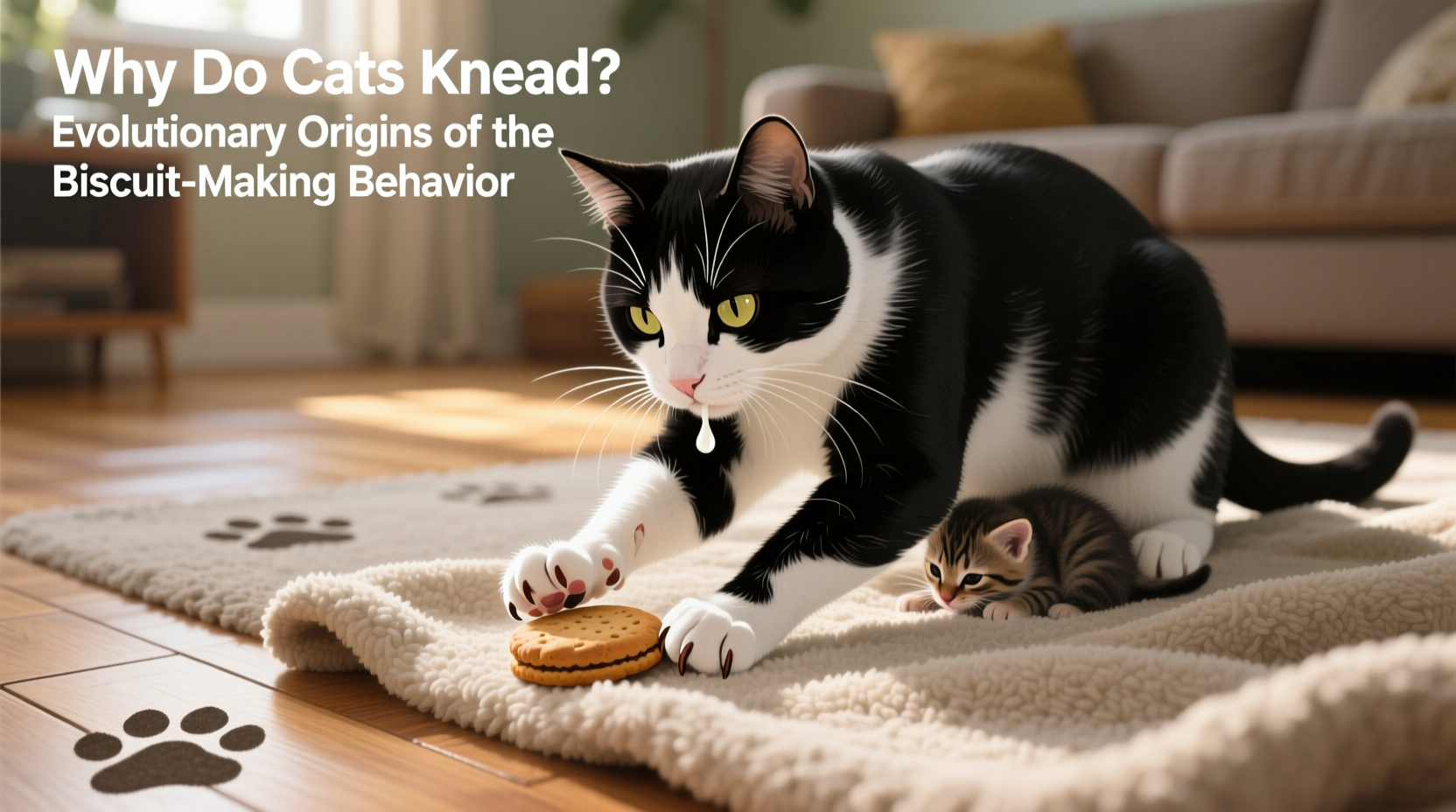
Kneading begins in the earliest days of a cat’s life. Newborn kittens are blind and deaf, relying almost entirely on touch and scent to locate their mother and nurse. To stimulate milk flow from the mammary glands, kittens rhythmically press their front paws against their mother’s belly. This action triggers the release of oxytocin, the hormone responsible for milk letdown. Over time, this motion becomes associated not only with nourishment but also with warmth, safety, and comfort.
Because this behavior is so strongly linked to survival and emotional security during a critical developmental stage, many cats retain the urge to knead well into adulthood—even when they no longer need milk. The act becomes a self-soothing mechanism, evoking the same feelings of contentment experienced during nursing.
Tip: If your cat kneads while purring and half-closed eyes, it's a sign of deep relaxation and trust—this is one of the highest compliments a cat can give.Evolutionary Advantages of Kneading in Wild Ancestors
While modern housecats live in climate-controlled homes with plush beds, their behaviors are shaped by millions of years of evolution. The ancestors of today’s domestic cats—such as the African wildcat (*Felis lybica*)—lived in harsh environments where survival depended on adaptability and resourcefulness. Kneading likely served multiple practical purposes beyond stimulating milk flow:
- Nest preparation: Female cats preparing to give birth would trample down grass, leaves, or snow to create a soft, insulated nest for their kittens. This tamping-down motion closely resembles kneading and helped conceal the den from predators while regulating temperature.
- Scent marking: Cats have scent glands in the pads of their paws. When they knead, they deposit pheromones onto the surface, effectively marking it as safe and familiar. In the wild, this could signal to other cats that a territory is occupied or help a mother keep track of her nesting site.
- Testing surface stability: Before settling down, wild cats needed to ensure their resting spot was free of hidden threats like insects, sharp objects, or unstable ground. Kneading allowed them to assess texture and firmness through tactile feedback.
These adaptive functions increased survival odds for both kittens and adults, reinforcing kneading as a hardwired behavior passed down through generations—even when the original context no longer applies.
Emotional and Psychological Triggers in Adult Cats
In domestic settings, kneading persists not because cats need to prepare nests or stimulate milk, but because the action is emotionally rewarding. When an adult cat kneads a soft blanket or curls up on a human’s lap, it’s often exhibiting signs of deep contentment. The rhythmic motion may trigger neural pathways associated with early comfort, effectively acting as a form of emotional regulation.
Interestingly, not all cats knead equally. Some never develop the habit, while others do it frequently and vigorously. Factors influencing this include:
- Weaning age: Kittens weaned earlier may retain kneading behavior more strongly, possibly due to incomplete transition from infantile behaviors.
- Early socialization: Cats who had positive, nurturing interactions with their mothers are more likely to associate kneading with safety.
- Personality: More anxious or sensitive cats may use kneading as a coping mechanism during stress or change.
“Kneading is a window into a cat’s emotional world. It’s not just a reflex—it’s a behavioral echo of security, attachment, and biological memory.” — Dr. Sarah Thompson, Feline Behavioral Scientist, Cornell University College of Veterinary Medicine
The Role of Scent Marking in Kneading
Beyond nostalgia and comfort, kneading serves a subtle communicative function. As mentioned, the paw pads contain sebaceous glands that secrete pheromones—chemical signals used for territorial and social communication. When a cat kneads your blanket, your sweater, or even your thigh, it’s subtly marking that object (or person) as part of its trusted environment.
This isn’t aggression or dominance; it’s affiliation. In multi-cat households, you might observe cats kneading in shared resting areas, reinforcing group cohesion through overlapping scent profiles. From an evolutionary standpoint, this helped wild cats maintain social bonds within loose colonies and reduce conflict over resources.
For indoor cats, who lack access to large territories or complex social hierarchies, kneading becomes a way to assert psychological ownership over safe spaces—and people they love.
When Kneading Becomes a Problem: Managing Sharp Claws and Overstimulation
While kneading is natural and usually harmless, it can sometimes lead to discomfort—especially when claws are involved. Some cats extend their claws while kneading, which can snag fabrics or scratch skin. Others become so absorbed in the behavior that they don’t notice when their human is no longer comfortable.
| Issue | Why It Happens | Solutions |
|---|---|---|
| Claw damage to furniture or skin | Natural extension of claws during deep kneading; not intentional aggression | Trim claws regularly; place a thick blanket between cat and skin; use claw caps |
| Excessive or obsessive kneading | Stress, anxiety, or strong emotional attachment | Provide alternative outlets (e.g., cat beds with soft textures); consult a vet if sudden increase occurs |
| Kneading accompanied by biting or drooling | Intense emotional release, often tied to early nursing memories | Generally harmless unless aggressive; monitor for signs of overstimulation |
Mini Case Study: Luna, the Anxious Apartment Cat
Luna, a 3-year-old domestic shorthair living in a high-rise apartment in Chicago, began kneading excessively after her owner started working from home. Previously, she had minimal interaction during the day and slept alone. With constant human presence, she developed a strong attachment and would knead her owner’s arm for up to 20 minutes at a time—often drawing blood with her claws.
Her veterinarian ruled out medical causes and suggested behavioral management. The owner began trimming Luna’s claws weekly and introduced a fleece mat treated with calming feline pheromones (Feliway). Within three weeks, Luna shifted most of her kneading to the mat. The behavior didn’t stop—but it became less intrusive and more contained.
This case illustrates how environmental changes can amplify instinctive behaviors and how simple interventions can redirect them without suppressing the cat’s emotional needs.
Practical Checklist: Supporting Healthy Kneading Behavior
To ensure kneading remains a positive experience for both cat and owner, follow this actionable checklist:
- ✅ Trim your cat’s claws every 2–3 weeks to minimize scratches.
- ✅ Provide soft, washable surfaces specifically for kneading (e.g., fleece blankets, padded beds).
- ✅ Avoid punishing or startling your cat during kneading—it’s a calming behavior, not misbehavior.
- ✅ Use pheromone diffusers if your cat seems anxious or overly dependent.
- ✅ Rotate kneading materials to keep them clean and fresh-smelling.
- ✅ Observe body language: flattened ears or tail flicking may indicate overstimulation—gently disengage if needed.
Frequently Asked Questions
Do all cats knead?
No, not all cats knead. While it’s common, some cats never develop the behavior. This doesn’t indicate poor health or emotional issues—it simply reflects individual variation in temperament and early experience.
Why does my cat drool when kneading?
Drooling during kneading is typically a sign of extreme relaxation and a strong association with kittenhood. Just as suckling triggered saliva production, the motion of kneading can reactivate that physiological response in deeply content cats.
Can kneading be a sign of pain or illness?
Rarely. Kneading itself is not a symptom of disease. However, if a cat suddenly starts kneading obsessively, especially in new locations or with agitation, it could indicate anxiety or cognitive changes—particularly in older cats. Consult a veterinarian if the behavior is abrupt or paired with other unusual symptoms.
Conclusion: Honoring an Ancient Instinct in Modern Companionship
Kneading is far more than a cute quirk—it’s a living relic of feline evolution, connecting today’s pampered pets to their wild ancestors and earliest moments of life. When your cat makes biscuits on your lap, it’s expressing trust, comfort, and biological memory in one rhythmic gesture. By understanding the deep roots of this behavior, we gain insight into the emotional lives of our cats and learn to support them in ways that honor their instincts.
Instead of discouraging kneading, consider how you can make space for it—both physically and emotionally. Offer soft surfaces, maintain claw care, and recognize the profound significance behind those gentle pushes of tiny paws. In doing so, you’re not just tolerating a habit; you’re participating in a millennia-old ritual of safety, belonging, and connection.
💬 Does your cat knead? Share your story or tips in the comments below—your experience could help another cat lover understand their furry companion better.








