
If you’ve noticed your cat pawing at the floor around their food bowl, nudging blankets over it, or even pushing objects nearby to obscure it after a meal, you’re not alone. This peculiar behavior—often mistaken for mischief or fussiness—is actually rooted in deep-seated feline instincts. While cats don’t bury their food like they do waste in a litter box, the act of covering or “hiding” their food bowl is a meaningful expression of natural survival behaviors passed down from their wild ancestors. Understanding why your cat does this can deepen your bond and help you create a more secure feeding environment.
The Evolutionary Roots of Food Concealment
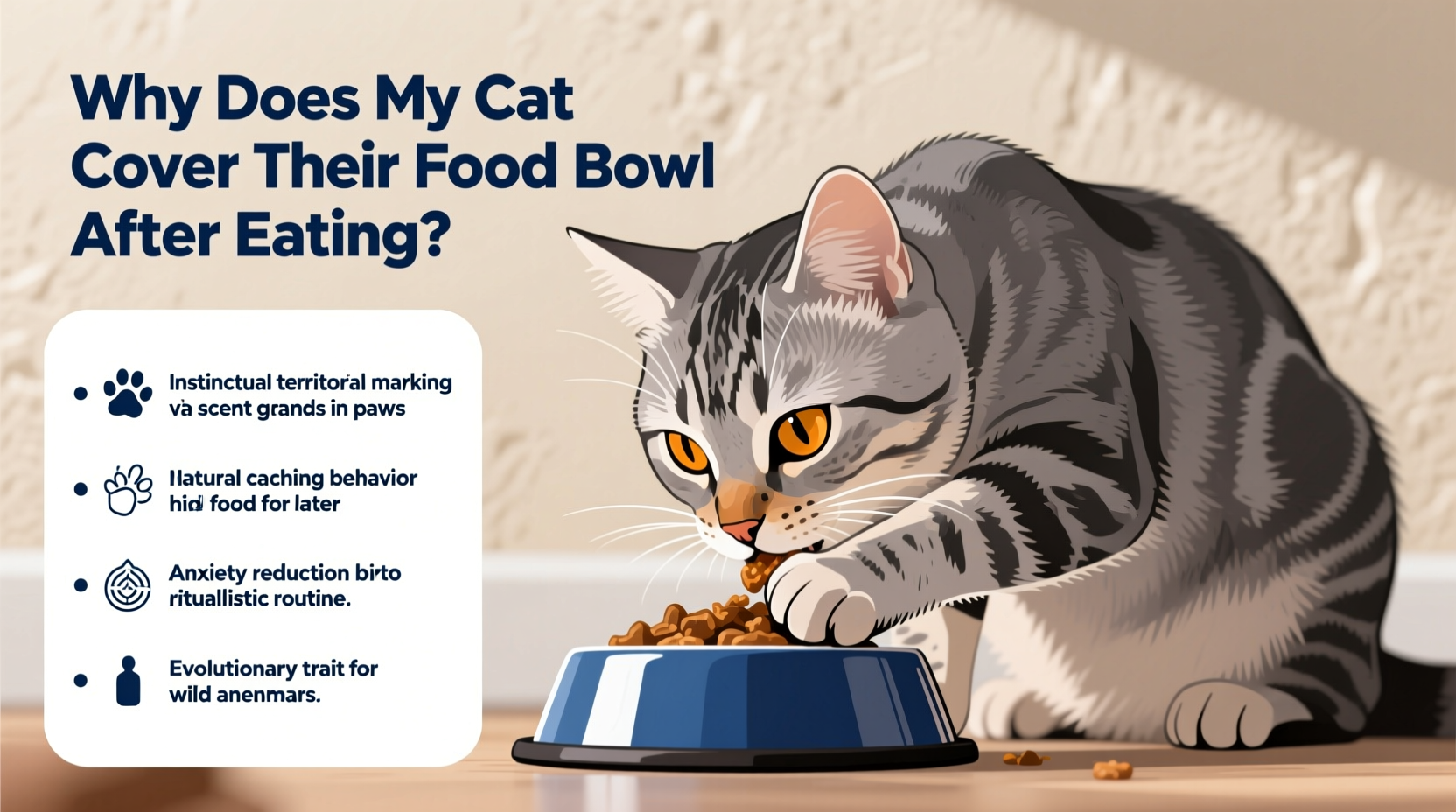
Cats are descendants of solitary hunters who relied on stealth and discretion to survive. In the wild, leftover food poses a significant risk. The scent of uneaten prey can attract larger predators or scavengers, putting the cat in danger. To mitigate this threat, wild felines developed the instinct to hide or bury excess food, using dirt, leaves, or debris to mask its smell and location.
Domestic cats retain this instinct, even though they no longer face the same threats. When your cat paws at the floor near their bowl or pushes nearby items toward it, they’re mimicking the motion of burying food. Since most indoor environments lack soil or sand, cats adapt by using whatever is available—carpet fibers, rugs, toys, or even your hand if it’s close enough.
“Even in safe, domestic settings, a cat’s brain operates with ancient survival programming. Covering food is not random; it’s an echo of self-preservation.” — Dr. Lydia Chen, Feline Behavior Specialist
This behavior is especially common in multi-cat households or homes with frequent foot traffic, where the cat may feel less secure during mealtimes. The act of attempting to conceal food is a subconscious effort to reduce perceived vulnerability.
Why Cats Don’t Use Litter-Like Actions for Food
You might wonder: if cats bury their waste so meticulously, why don’t they just use the litter box to cover their food? The answer lies in behavioral distinction. Burying waste is primarily about eliminating scent to avoid detection by predators or rivals. In contrast, hiding food is about protecting resources and minimizing competition.
In multi-cat environments, dominant cats often leave food out in the open as a display of control, while subordinate cats are more likely to attempt to hide leftovers. This subtle social signaling reinforces hierarchy and reduces conflict. Your cat may be trying to say, “This isn’t here,” to avoid drawing attention—not because the food is unappetizing, but because possessing uneaten food could provoke tension.
Environmental Triggers That Influence the Behavior
While instinct plays the largest role, your cat’s surroundings can amplify or suppress the tendency to cover their food bowl. Key environmental factors include:
- Feeding location: High-traffic areas or spots near loud appliances (like washing machines) can make cats feel exposed.
- Bowl placement: Bowls too close to walls or furniture may limit pawing space, leading to frustration or incomplete attempts.
- Competition: Other pets or people approaching during meals heighten stress, increasing post-meal concealment efforts.
- Bowl type: Deep or narrow bowls may cause whisker fatigue, making cats eager to finish quickly and “hide” the source.
Real Example: Luna the Anxious Tabby
Luna, a 3-year-old tabby living in a busy Brooklyn apartment, consistently pushed her fleece blanket over her stainless steel bowl after every meal. Her owner initially thought she was finicky or playing. After consulting a feline behaviorist, they realized Luna felt exposed during meals—her bowl was in the middle of the kitchen, where family members frequently walked by.
By relocating her bowl to a quieter corner behind a bookshelf and adding a small rug beneath it to simulate “digging ground,” Luna’s covering behavior decreased significantly. She still occasionally nudged the rug edge, but no longer fully obscured the bowl. This adjustment didn’t eliminate instinct—it respected it, reducing her need to compensate.
When Is This Behavior a Sign of a Problem?
While food-covering is typically normal, it can sometimes indicate underlying issues if accompanied by other symptoms. Watch for:
| Normal Behavior | Potential Red Flags |
|---|---|
| Pawing gently at floor or nearby fabric after eating | Aggressive scratching, biting, or attacking the bowl |
| Leaving food but showing interest in future meals | Sudden refusal to eat or consistent food abandonment |
| Behavior occurs occasionally, especially in open spaces | Happens every time, even in secluded areas |
| No vocalization or signs of distress | Meowing, growling, or pacing before/after eating |
If your cat exhibits red-flag behaviors, consult a veterinarian. Medical conditions such as dental pain, nausea, or gastrointestinal discomfort can make eating unpleasant, prompting your cat to reject or hide food not out of instinct, but discomfort.
How to Support Your Cat’s Natural Instincts
Rather than discouraging this behavior, consider ways to accommodate it. Respecting your cat’s instincts fosters emotional well-being and reduces stress. Here’s how to create a feeding environment that aligns with their natural needs:
- Choose the right location: Feed your cat in a quiet, secure area away from household noise and foot traffic.
- Provide digging alternatives: Place a small tray of organic soil or sand near the feeding zone (but not mixed with food) so your cat can perform burial motions safely.
- Use appropriate bowls: Opt for wide, shallow dishes made of stainless steel or ceramic to prevent whisker stress.
- Control portion sizes: Serve meals in amounts your cat will finish, reducing the instinctual need to hide leftovers.
- Maintain routine: Predictable feeding times reduce anxiety and reinforce security.
Step-by-Step: Creating a Cat-Friendly Feeding Zone
Follow these steps to design a feeding space that respects your cat’s instincts while keeping your home clean and functional:
- Assess current feeding area: Note proximity to noise, foot traffic, and other pets.
- Select a new location: Choose a quiet corner with visual barriers (e.g., behind a side table or under a window bench).
- Add a textured mat: Place a washable rug or rubber shelf liner under the bowl to simulate natural substrate for pawing.
- Introduce a “burial station” (optional): A small sandbox or sensory bin nearby allows safe digging without mess.
- Monitor behavior: Observe changes in eating patterns and covering habits over one to two weeks.
- Adjust as needed: If anxiety persists, consider elevated platforms or enclosed feeders for added security.
FAQ: Common Questions About Food-Covering Behavior
Is it normal for cats to cover dry food but not wet food?
Yes. Dry kibble produces less odor than wet food, so the instinct to hide it may be weaker. However, some cats treat both the same, depending on individual personality and environment. The behavior is more about ritual and security than scent intensity.
Should I stop my cat from pawing around their bowl?
No. Interrupting this behavior can increase stress. Instead, redirect it by providing acceptable outlets, like a textured mat or designated digging area. Forcing suppression may lead to anxiety-related issues like overgrooming or avoidance of meals.
Do all cats exhibit this behavior?
No. Like many instinctive actions, food-covering varies by temperament, upbringing, and environment. Confident, well-socialized cats in secure homes may never show it. Others, especially those with outdoor experience or rescue backgrounds, may display it more frequently.
Action Checklist: Supporting Your Cat’s Feeding Instincts
- ✅ Evaluate your cat’s current feeding location for stress triggers
- ✅ Move the food bowl to a quieter, secluded area if needed
- ✅ Replace deep bowls with wide, shallow ones to reduce whisker fatigue
- ✅ Add a soft rug or mat under or near the bowl for pawing comfort
- ✅ Serve measured portions to minimize leftover food
- ✅ Observe your cat for signs of medical or behavioral issues
- ✅ Consult a vet or behaviorist if the behavior becomes obsessive or aggressive
“Understanding feline behavior isn’t about changing cats to fit our world—it’s about adapting our world to respect theirs.” — Dr. Raj Patel, Veterinary Ethologist
Conclusion: Honor the Instinct, Enhance the Bond
Your cat’s habit of covering their food bowl isn’t quirky or irrational—it’s a window into their evolutionary past and emotional present. By recognizing this behavior as a natural, adaptive response rather than a nuisance, you take a meaningful step toward empathetic pet care. Small adjustments in feeding setup and routine can go a long way in helping your cat feel safe, respected, and understood.
Instead of asking, “Why does my cat do this?” try asking, “What is my cat trying to tell me?” The answer may not involve words, but it speaks volumes about trust, security, and instinct. When we listen closely—even to the quiet scratch of paws on carpet—we build deeper, more compassionate relationships with our feline companions.
💬 Have a story about your cat’s unique food habits? Share your experience in the comments and help other cat owners understand this fascinating behavior.








