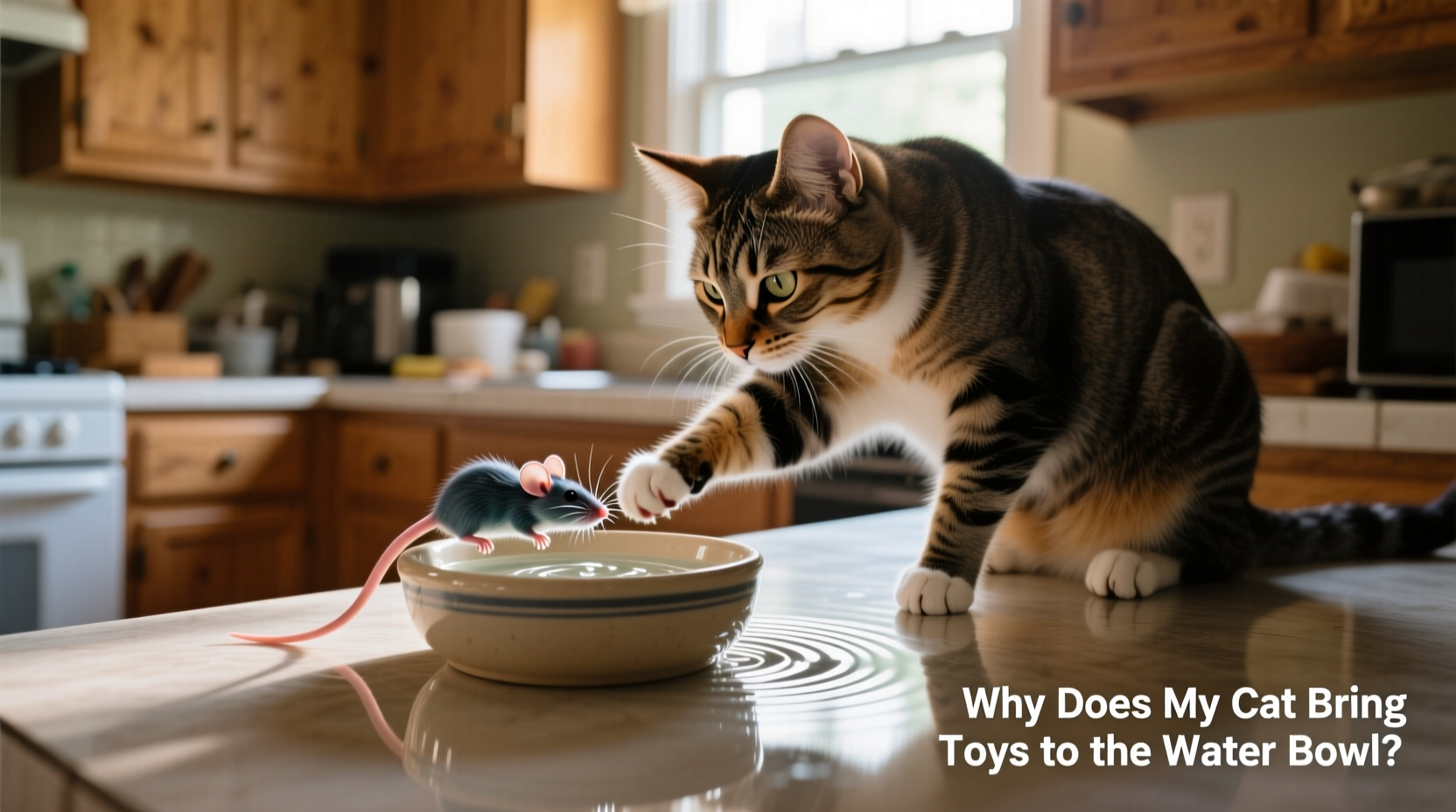
If you’ve ever walked into your kitchen only to find your cat’s favorite plush mouse floating in the water bowl, you’re not alone. This peculiar habit—bringing toys to the water dish—is surprisingly common among domestic cats. While it may seem random or even slightly obsessive, this behavior is rooted in instinct, environment, and individual personality. Understanding why your cat engages in this ritual can deepen your bond and help you create a more enriching home for your feline companion.
Cats are creatures of both habit and hidden motivation. What looks like playfulness or confusion often reflects deeper psychological and evolutionary patterns. From hunting simulations to territorial marking, the act of depositing toys near or in water sources reveals layers of feline communication and comfort-seeking.
The Instinctual Roots of Toy-Bringing Behavior
To understand why cats bring toys to their water bowls, we must first revisit their ancestry. Domestic cats evolved from solitary hunters who relied on stealth, precision, and resource management. In the wild, prey was not just food—it was a valuable possession that needed protection. Mother cats teach their kittens to carry prey to safe zones, often away from scavengers or rival predators. This instinct doesn’t vanish in housecats; instead, it transforms.
When your cat picks up a toy and carries it to the water bowl, they may be treating that space as a “safe zone.” The area around their food and water is typically one of the few consistently secure spots in their territory. By placing their toy there, they’re mimicking the ancestral act of safeguarding prized items. It’s not about the water itself but the perceived safety of the location.
In multi-pet households, this behavior becomes even more pronounced. A cat may feel compelled to stash toys near essential resources (like water) because those areas are less likely to be invaded by other animals. Even if no conflict exists, the subconscious drive to protect valued objects persists.
Tip: Observe when your cat brings toys to the water bowl—is it after playtime, during quiet hours, or when another pet is nearby? Timing can reveal underlying motivations.Water as a Sensory Anchor: Why the Bowl?
It’s not just any corner of the house that attracts toy deposits—it’s specifically the water bowl. This preference isn’t arbitrary. Water plays a unique sensory role in a cat’s environment. Unlike food bowls, which are emptied and cleaned frequently, water bowls often remain filled and accessible 24/7. Their constant presence makes them a stable landmark in a cat’s mental map of the home.
Additionally, many cats are drawn to the sound and movement of water. Some prefer drinking from dripping faucets or circulating fountains, indicating a natural fascination with flowing liquid. When a toy lands in still water, the resulting ripple might provide subtle stimulation—especially for indoor cats lacking environmental variety. The tactile feedback of dipping a paw into water to retrieve a toy adds an interactive dimension to play.
Moreover, scent plays a crucial role. A cat’s nose is far more sensitive than ours. The water bowl accumulates traces of saliva, whisker particles, and ambient odors over time, creating a personalized scent marker. Placing a toy there essentially “claims” it within their olfactory territory.
“Cats use multimodal signals—sight, sound, smell, and touch—to navigate their world. Depositing toys at key locations like water bowls combines several of these senses into a meaningful ritual.” — Dr. Lena Patel, Feline Ethologist
Common Triggers Behind the Behavior
While instinct lays the foundation, specific environmental factors can amplify or initiate toy-carrying habits. Recognizing these triggers helps owners respond appropriately rather than dismiss the behavior as odd.
- Play arousal: After intense sessions with wand toys or chase games, cats often seek a place to “store” their captured prize. The water bowl becomes a default drop-off point.
- Lack of designated toy zones: Cats thrive on structure. Without baskets or shelves assigned for toy storage, they improvise using familiar landmarks.
- Attention-seeking: If bringing a toy to the water bowl once resulted in interaction (e.g., you laughed or picked it out), repetition may be reinforced through positive reinforcement—even unintentional.
- Anxiety or insecurity: Changes in routine, new pets, or loud noises can prompt cats to engage in displacement behaviors, including relocating toys to secure areas.
- Breed tendencies: Certain breeds, such as Bengals and Siamese, exhibit higher object-carrying rates due to their strong prey drive and vocal, expressive nature.
Mini Case Study: Bella the Rescue Cat
Bella, a three-year-old domestic shorthair adopted from a shelter, began bringing her crinkle balls to the water bowl shortly after moving into her new home. Her owner, Maria, initially thought it was a phase. But when Bella started doing it multiple times a day—even waking up at night to move toys—Maria grew concerned.
After consulting a veterinary behaviorist, Maria learned that Bella’s past included living in a crowded foster environment where resources were competitive. Though she now had her own space, the instinct to guard valuable items remained. The solution wasn’t to stop the behavior but to redirect it. Maria placed a small basket next to the water bowl labeled “Bella’s Treasure Box.” Within days, Bella began using the basket instead, occasionally glancing at the water bowl as if confirming its proximity.
This case illustrates how seemingly quirky actions often stem from adaptive survival strategies. With empathy and minor environmental adjustments, owners can support their cats without suppressing natural impulses.
Do’s and Don’ts: Managing Toy-to-Water Transfers
| Do’s | Don’ts |
|---|---|
| Provide alternative “safe zones” like cozy beds or elevated perches with toy baskets. | Yell at or punish your cat for placing toys in the water—this increases stress. |
| Use puzzle feeders or rotating toy bins to satisfy hunting and caching instincts. | Remove all toys hoping the behavior will stop—deprivation leads to boredom. |
| Keep the water bowl clean and fresh to discourage contamination from soggy toys. | Assume the behavior means your cat is unhappy—it may simply be expressing normal feline quirks. |
| Engage in daily interactive play to simulate the hunt-capture-store cycle. | Ignore sudden changes—if a previously calm cat starts obsessively hoarding toys, consult a vet. |
Step-by-Step Guide to Redirecting the Habit
If toy-soaked water is becoming a hygiene issue or disrupting your routine, consider gently guiding your cat toward healthier alternatives. Here’s a five-step approach backed by animal behavior principles:
- Observe and record: For one week, note when, where, and how often your cat moves toys to the water bowl. Include context: time of day, recent activity, presence of people or pets.
- Create a designated toy station: Place a small container or basket near your cat’s favorite resting spot. Fill it with a few appealing toys and add a sprinkle of catnip to encourage interest.
- Use positive association: Whenever you see your cat near the toy station, offer praise or a treat. Do not force interaction—let curiosity lead.
- Rotate toys weekly: Introduce novelty by swapping out toys every few days. Cats are more likely to value and store items they don’t see constantly.
- Maintain consistency: Continue reinforcing the new zone for at least four weeks. Habits take time to shift, especially when tied to deep-seated instincts.
Success isn’t measured by eliminating the behavior entirely but by offering a preferred outlet. Most cats will naturally gravitate toward the easier, rewarded option when given clear choices.
Tip: Try placing a second water bowl in a different room. Sometimes, cats choose the primary bowl simply because it’s the most prominent fixture.Frequently Asked Questions
Is it normal for cats to put toys in their water bowl?
Yes, it’s quite common and generally harmless. This behavior stems from instinctual drives to protect valued objects in secure locations. As long as the toys are non-toxic and removed promptly, there’s usually no cause for concern.
Could this behavior indicate a medical problem?
Rarely—but significant changes in behavior should always prompt a vet visit. Obsessive toy-hoarding, combined with lethargy, appetite loss, or litter box issues, could signal anxiety, cognitive decline, or pain. Isolated toy placement near water, however, is typically behavioral, not medical.
Should I stop my cat from doing this?
Not necessarily. Instead of stopping the behavior, aim to redirect it. Suppressing natural expressions of feline psychology can lead to frustration or stress-related issues. Offer better alternatives and let your cat make the choice.
Expert Insight: The Emotional Language of Cats
Dr. Alan Torres, a certified feline behavior consultant with over 15 years of clinical experience, explains: “We tend to interpret cat behavior through a human lens. But when a cat brings a toy to the water bowl, they aren’t being ‘quirky’—they’re communicating. They’re saying, ‘This is mine,’ ‘I feel safe here,’ or ‘I want you to notice what I’ve done.’ These acts are part of their emotional vocabulary.”
“Understanding feline behavior isn’t about fixing what’s broken. It’s about listening in a language we’re only beginning to speak fluently.” — Dr. Alan Torres, Certified Feline Behavior Consultant
Conclusion: Embracing the Quirks
Your cat bringing toys to the water bowl isn’t a malfunction—it’s a window into their inner world. Far from being random, this behavior connects ancient survival strategies with modern domestic life. Rather than viewing it as messy or inconvenient, consider it a form of expression, a blend of instinct, security, and subtle communication.
By observing closely, providing thoughtful alternatives, and respecting your cat’s need to express natural behaviors, you foster a healthier, more trusting relationship. Every soggy toy tells a story. Listen to it. Learn from it. And maybe, just maybe, smile when you find that feather teaser bobbing in the water—it means your cat feels at home.
💬 Have a cat that brings toys to the water bowl? Share your story or best tip in the comments below—your experience could help another cat parent understand their furry companion better!








