
Cats are affectionate companions, but their way of expressing love doesn’t always align with human expectations. One of the most common frustrations among cat owners is being bitten during what starts as a pleasant petting session. You’re gently stroking your cat’s back, she’s purring—then suddenly, she whips around and sinks her teeth into your hand. This behavior isn’t random or malicious. It’s typically a sign of overstimulation, a condition where sensory input becomes too intense for your cat to tolerate. Understanding this phenomenon is key to building a more harmonious relationship with your feline friend.
Overstimulation occurs when prolonged or inappropriate petting overwhelms a cat’s nervous system. Unlike dogs, cats have very specific preferences about where, how long, and how intensely they enjoy physical contact. When these boundaries are crossed—even unintentionally—their instinctive response can shift from relaxation to self-defense. Recognizing the signs early and adjusting your interactions accordingly can prevent bites and deepen mutual trust.
The Science Behind Feline Overstimulation
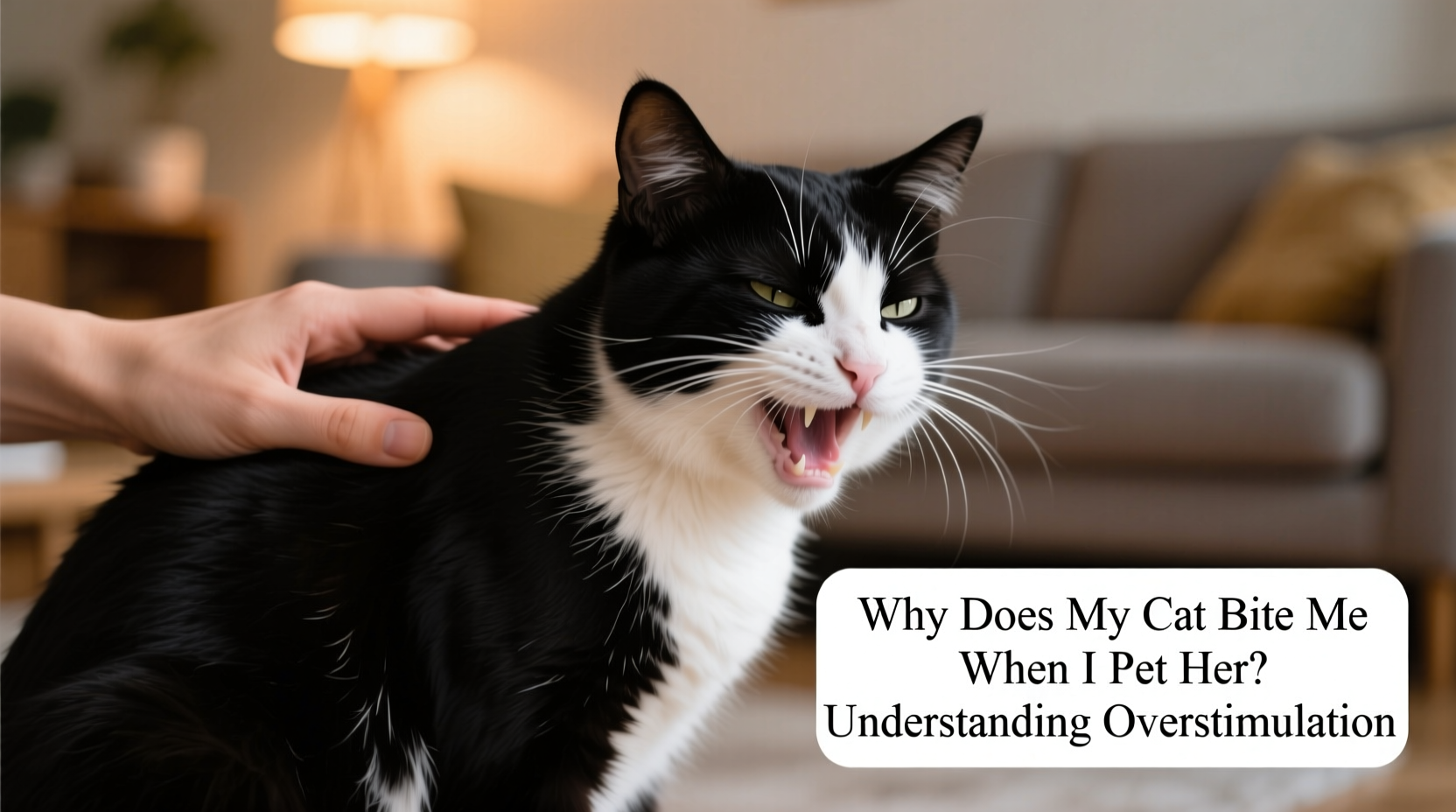
Cats have highly sensitive nerve endings concentrated in certain areas of their bodies, particularly along the spine, tail base, and abdomen. These regions evolved for survival—detecting predators, navigating tight spaces, and regulating body temperature. As a result, repeated touching in these zones can quickly become irritating, even if the cat initially seemed to enjoy it.
Dr. Karen Overall, a veterinary behaviorist, explains:
“Cats don’t have an off-switch for sensory input. Once stimulation crosses a threshold, their only option is to shut it down—often through aggression.”This means that what feels like soothing petting to you might register as painful or threatening to your cat after just a few minutes.
Additionally, cats process touch differently than humans. Their skin is connected to muscles via a thin layer of tissue called the cutaneous trunci muscle, which allows them to twitch their skin to dislodge pests. When you stroke this area repeatedly, especially near the tail, it triggers involuntary spasms. Over time, this sensation builds discomfort, prompting defensive behavior such as biting or scratching.
Recognizing Early Warning Signs
Most cats give subtle cues before resorting to biting. Learning to read these signals allows you to stop petting before overstimulation escalates. These signs may be easy to miss, especially if you're focused on the pleasurable aspects of interaction.
- Tail flicking or lashing: A slow swish may indicate interest, but rapid side-to-side movement signals agitation.
- Ears flattening or rotating backward: This is one of the clearest indicators of discomfort.
- Skin rippling: Especially along the back, this reflex shows heightened sensitivity.
- Restlessness or shifting position: Your cat may start to squirm or reposition her body away from your hand.
- Dilated pupils: While not always visible, sudden pupil expansion can reflect stress.
- Low growling or soft hissing: Verbal warnings are late-stage signals—act immediately.
Many owners mistake purring during these moments as a sign of continued enjoyment. However, cats often purr when stressed or anxious as a self-soothing mechanism. Purring combined with tense body language should be interpreted as a mixed signal—not consent to continue petting.
Common Triggers of Overstimulation
Not all petting leads to overstimulation, but certain patterns increase the risk significantly. Identifying these triggers helps tailor your approach to your cat’s individual tolerance levels.
| Trigger | Why It Causes Overstimulation | How to Avoid |
|---|---|---|
| Petting near the tail base | Highest concentration of nerve endings; easily overloads sensory pathways | Limit strokes to head and neck; avoid lower back unless cat initiates |
| Prolonged sessions (over 1–3 minutes) | Sensory fatigue accumulates even with gentle touch | Keep petting brief; allow breaks between touches |
| Fast or deep rubbing | Mimics aggressive grooming or irritation from parasites | Use light, slow strokes in the direction of fur growth |
| Petting a sleeping or resting cat | Interrupts relaxation; reduces ability to regulate stimuli | Let cat choose when to engage; wait for invitation |
| Forced interaction | Removes sense of control, increasing anxiety | Only pet when cat rubs against you or presents herself |
A Real-Life Example: Mia and Her Cat Luna
Mia adopted Luna, a three-year-old domestic shorthair, six months ago. She loved spending time with her new companion but was confused and hurt when Luna would suddenly bite her during cuddle sessions. Initially, Mia thought Luna was being spiteful or unpredictable. After consulting a feline behavior consultant, she learned to observe Luna’s body language.
She noticed that Luna would begin with relaxed purring, then her tail would slowly start twitching at the tip. Within seconds, her ears would flatten slightly, and her skin would ripple. If Mia stopped petting at that point, Luna would stretch and walk away calmly. But if she continued, Luna would spin and bite.
Armed with this knowledge, Mia adjusted her routine. She limited petting to 30-second intervals, focused only on Luna’s head and chin, and respected her space when she walked away. Over two weeks, the biting incidents dropped from daily to zero. “I realized I wasn’t doing anything wrong,” Mia said. “I just needed to speak her language.”
Step-by-Step Guide to Prevent Overstimulation Bites
Changing your petting habits takes consistency, but the results are worth it. Follow this timeline to build safer, more enjoyable interactions:
- Observe baseline behavior (Days 1–3): Spend time watching your cat without touching. Note how she reacts to others, where she likes to be touched, and how long she tolerates contact.
- Initiate only with invitation (Ongoing): Wait for your cat to rub against you, head-butt, or sit nearby before petting. Never pick up or restrain her for affection.
- Start with safe zones (Day 4 onward): Begin with the head, cheeks, and under the chin—areas rich in scent glands that cats use for bonding.
- Limit duration (First 2 weeks): Pet for no more than 15–30 seconds. Stop *before* any warning signs appear.
- Pause and reassess: After each round, pull your hand back and wait. If your cat leans in again, you may resume briefly. If she walks away, let her go.
- Gradually extend tolerance (Weeks 3–6): Only increase time if your cat consistently seeks more contact. Never force progression.
- Introduce new areas cautiously: If desired, test the shoulders or upper back—but stop immediately if signs of discomfort emerge.
Do’s and Don’ts of Cat Petting
| Do’s | Don’ts |
|---|---|
| Wait for your cat to initiate contact | Force petting when she’s lying down or focused elsewhere |
| Pet the head, cheeks, and chin | Rub the belly or base of the tail unless invited |
| Keep strokes slow and light | Use fast, repetitive motions or deep pressure |
| Stop at the first sign of tail flicking or ear movement | Continue petting because “she was purring a second ago” |
| Respect her need to walk away | Chase or restrain her to keep cuddling |
FAQ: Common Questions About Cat Biting During Petting
Is my cat aggressive if she bites me when I pet her?
Not necessarily. Most cats who bite during petting are not displaying true aggression but reacting to overstimulation or discomfort. True aggression involves stalking, hissing, or unprovoked attacks. Overstimulation bites are usually quick nips followed by retreat, not sustained attacks.
Can I train my cat to tolerate longer petting sessions?
Some cats can gradually increase their tolerance through careful desensitization. However, every cat has a biological limit. The goal should be mutual comfort, not forcing your cat to endure something she dislikes. Focus on quality, not quantity, of interaction.
Why does my cat bite me but not other family members?
This often comes down to differences in petting style. Others may touch less frequently, avoid sensitive areas, or respond faster to warning signs. It could also reflect your cat’s unique bond with each person—some cats reserve certain behaviors for their primary caregiver.
Expert Insight: Respecting Feline Autonomy
Dr. Elizabeth Stelow, Chief of Clinical Animal Behavior at UC Davis School of Veterinary Medicine, emphasizes the importance of consent in human-cat interactions:
“Cats aren’t small dogs. They didn’t evolve to seek constant approval or physical closeness. When we insist on petting beyond their comfort zone, we undermine trust. Letting them say ‘no’ is how we earn their ‘yes.’”
This perspective shifts the focus from controlling behavior to fostering communication. A cat who feels heard is far less likely to resort to biting as a last resort.
Checklist: Building a Bite-Free Bond With Your Cat
- ✅ Learn your cat’s individual petting preferences
- ✅ Watch for early warning signs (tail, ears, skin)
- ✅ Limit petting to 30 seconds or less at first
- ✅ Focus on head and neck areas only
- ✅ Stop *before* your cat shows distress
- ✅ Allow breaks between touches
- ✅ Reward calm departures with treats or praise
- ✅ Never punish biting—it teaches fear, not better behavior
Conclusion: A New Approach to Feline Affection
Your cat’s bite isn’t a rejection of your love—it’s a plea to understand her limits. By recognizing overstimulation for what it is—a neurological response, not defiance—you open the door to deeper connection. The most affectionate cats aren’t those who tolerate endless petting, but those who choose to return for more because they feel safe and respected.
Start today by observing your cat’s next interaction. Notice the flick of her tail, the turn of her ear, the moment she decides to leave. Honor those signals. In doing so, you won’t just reduce bites—you’ll cultivate a relationship built on empathy, patience, and mutual trust.
💬 Have a story about learning your cat’s petting limits? Share your experience in the comments—your insight could help another owner build a gentler, kinder bond with their feline friend.








