
Squirrels are among the most vocal small mammals in both urban parks and forested areas. Their sharp, abrupt calls often punctuate quiet mornings or afternoons, prompting curiosity from birdwatchers, hikers, and backyard observers alike. While these sounds may seem random or merely noisy, they serve critical functions in squirrel communication. Understanding squirrel vocalizations reveals a complex system of warnings, territorial claims, social bonding, and mating signals. Decoding these sounds offers insight into animal behavior and enhances our awareness of wildlife dynamics right outside our windows.
The Science Behind Squirrel Vocalizations
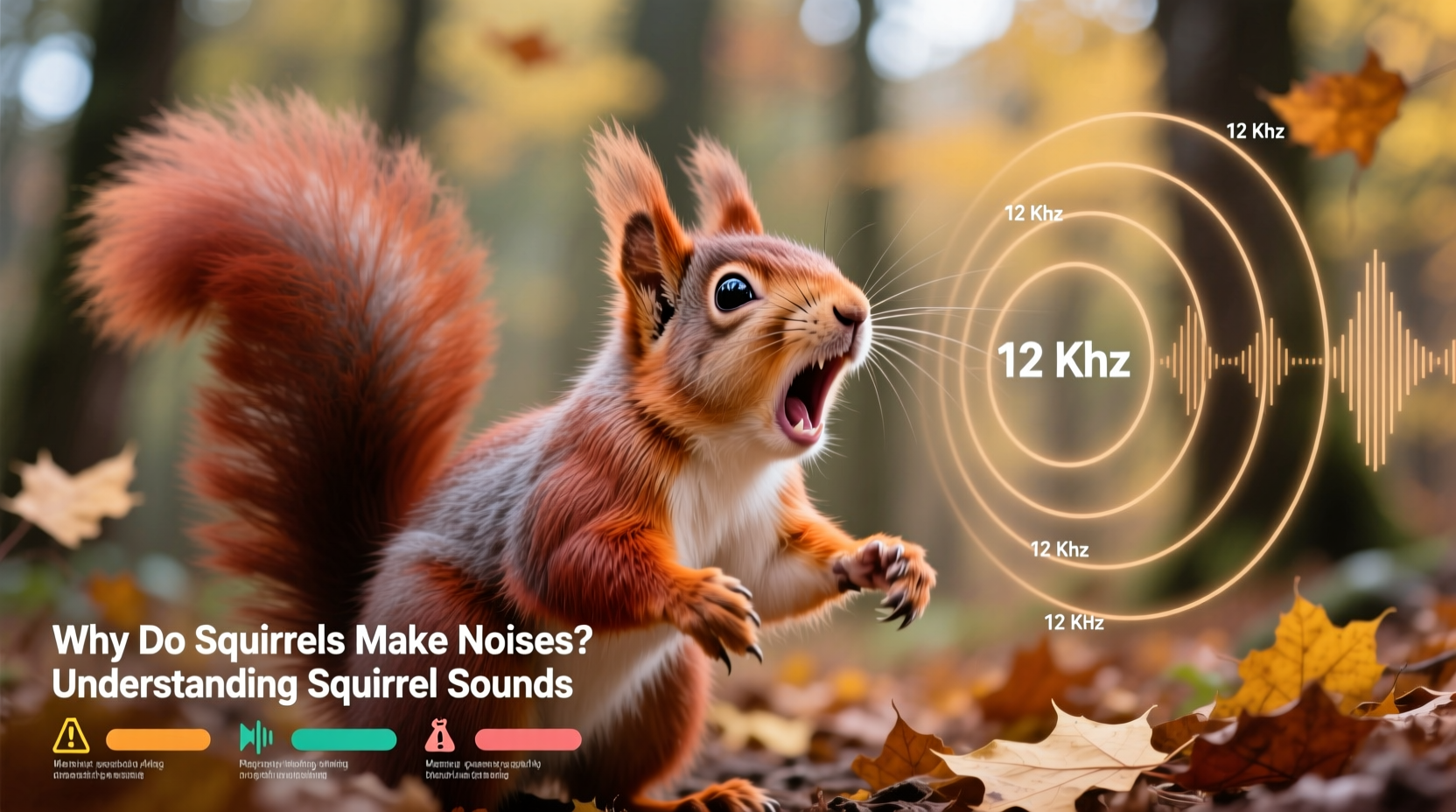
Squirrels produce a variety of sounds using their larynx and respiratory system, modulating pitch, duration, and repetition to convey different messages. These vocalizations fall into distinct categories: alarm calls, contact calls, mating calls, and distress signals. Research in behavioral ecology shows that squirrels, particularly Eastern gray squirrels (*Sciurus carolinensis*), use sound strategically depending on context—predator presence, social interactions, or environmental changes.
Unlike birds with melodic songs, squirrel sounds are often high-pitched, staccato, or chattering. These noises travel well through dense foliage and alert other squirrels quickly. Scientists have recorded and analyzed these calls using spectrograms, which visualize frequency and duration. Studies at the University of Alberta and Cornell Lab of Ornithology confirm that squirrels modify their calls based on predator type—differentiating between aerial threats like hawks and ground predators such as cats or foxes.
“Squirrel alarm calls aren’t just noise—they’re sophisticated signals that encode information about threat level, location, and urgency.” — Dr. Jessica Watson, Behavioral Ecologist, University of British Columbia
Common Types of Squirrel Sounds and What They Mean
Squirrel vocalizations can be grouped into several recognizable patterns. Each serves a specific communicative purpose and is often accompanied by body language such as tail flicking or foot stomping.
- Quaa: A drawn-out “meh”-like call used during low-level threats or when leaving an area. It may signal general unease.
- Moan: A soft, guttural sound made during social encounters, often between mother and offspring.
- Alarm Barking (Ku-ku-ku): Rapid, repetitive barks indicating immediate danger. Often heard when a cat or human approaches too closely.
- Seet Call: A high-pitched whistle, almost like a hiss, used specifically for aerial predators. This call is quieter and harder for predators to locate.
- Mating Chatter: A rapid series of chirps and squeaks used during courtship rituals, especially in spring.
- Distress Scream: A loud, piercing cry emitted when caught or injured—designed to startle predators and attract attention.
How Squirrels Use Sound in Social and Survival Contexts
Squirrel communication extends beyond mere noise-making; it plays a vital role in survival and community structure. In densely populated areas, squirrels rely on vocal cues to maintain spacing and reduce conflict. For example, repeated barking near a food source may deter rivals without physical confrontation.
Alarm calls serve a dual function: warning kin and signaling to the predator that it has been detected, reducing the chance of a surprise attack. This concept, known as the “perception advertisement hypothesis,” suggests that squirrels call not only to warn others but also to tell predators, “I see you—don’t bother.”
Interestingly, squirrels can recognize individual voices. Field studies show that siblings and neighboring squirrels respond more urgently to familiar alarm calls than to those of strangers. This indicates a level of social recognition uncommon in many small mammals.
Case Study: Urban Squirrel Communication in Toronto Parks
In a 2021 study conducted across High Park and Trinity Bellwoods, researchers observed that urban squirrels adapted their calling behavior based on human activity. In high-traffic zones, squirrels used shorter, higher-frequency alarm calls to avoid drawing human attention while still alerting others. In quieter green spaces, longer barks were common. The study concluded that squirrels exhibit behavioral plasticity, adjusting their vocal strategies to suit environmental noise and predation risk.
Decoding Squirrel Sounds: A Practical Guide
Learning to identify squirrel sounds takes patience and attentive listening. Here’s a step-by-step method to begin interpreting what squirrels are “saying” around you.
- Choose a Quiet Observation Spot: Sit in a park, backyard, or nature trail where squirrels are active. Morning and late afternoon are peak activity times.
- Listen for Patterns: Note whether the sound is repetitive (alarm), isolated (contact), or continuous (distress).
- Observe Body Language: Pair sounds with visual cues—tail flicks, freezing in place, or running vertically up a tree.
- Identify the Trigger: Was a cat, bird, or person nearby? Did another squirrel approach?
- Keep a Log: Record date, time, sound type, and context. Over time, patterns will emerge.
| Sound Type | Description | Likely Meaning |
|---|---|---|
| Repetitive Barking | \"Kuk-kuk-kuk\" in quick succession | Predator alert (ground threat) |
| High-Pitched Seet | Short, whistle-like hiss | Aerial predator detected |
| Soft Moaning | Low, groaning sound | Parent-offspring communication |
| Chirping Series | Rapid squeaks during pursuit | Mating or territorial chase |
| Long Quaa Call | Sustained \"meh\" tone | Departure or mild disturbance |
Common Misconceptions About Squirrel Noises
Many people assume squirrels are simply “annoyed” or “chattering for no reason.” This misunderstanding overlooks the functional richness of their vocal repertoire. One widespread myth is that all squirrel barking is directed at humans. In reality, humans are rarely the intended audience—these calls are meant for other squirrels. Another misconception is that squirrels are always aggressive when vocalizing. While some sounds defend territory, others express fear, curiosity, or social reassurance.
Additionally, some believe that urban squirrels are “louder” due to city life. However, research shows they often become quieter, using subtler calls to avoid detection in noisy environments. Their adaptability underscores intelligence and situational awareness.
FAQ
Do squirrels make different sounds at night?
Squirrels are diurnal and typically silent at night. If you hear noises after dark, it may be raccoons, opossums, or flying squirrels—though the latter are nearly silent. True daytime squirrels do not vocalize significantly after sunset.
Can I mimic squirrel calls to communicate with them?
While possible to imitate basic alarm calls (e.g., using a kiss-click for a seet), doing so can cause unnecessary stress. Frequent false alarms disrupt natural behavior and may lead squirrels to ignore real threats. It’s best to observe rather than interfere.
Why do squirrels chatter when they see me?
This is usually an alarm bark. The squirrel sees you as a potential threat and is warning others. It may also be signaling that it has spotted you, discouraging a stealthy approach. Habituated squirrels in parks may bark less over time.
Tip: Use binoculars and remain still to observe squirrel behavior without triggering alarm calls. Movement is often the trigger, not your presence alone.Final Thoughts: Listening to Nature’s Subtle Language
Understanding why squirrels make noises transforms a common backyard experience into a window into animal cognition and survival strategy. These small creatures are not merely reacting—they are communicating with precision, adapting to their surroundings, and maintaining complex social networks through sound. By learning to interpret their calls, we deepen our connection to the natural world and gain respect for the intelligence of even the most familiar wildlife.
Next time you hear a squirrel bark, pause and listen. Look around. You might catch a glimpse of a stalking cat, a circling hawk, or two squirrels engaged in a territorial dance. Each sound tells a story—one we’ve long overlooked but are now beginning to understand.
💬 What squirrel sounds have you noticed in your neighborhood? Share your observations and recordings in the comments to help build a collective understanding of local squirrel behavior.








