
Squirrels are a familiar sight in backyards, parks, and wooded areas across North America and beyond. Their energetic movements, bushy tails, and distinctive vocalizations make them hard to ignore. One of the most curious behaviors people observe is a squirrel chattering aggressively at birds—especially when a crow, jay, or hawk lands nearby. At first glance, it might seem like random noise or simple annoyance. But behind that chatter lies a complex system of communication rooted in survival, resource protection, and territorial defense.
This behavior isn't just about irritation—it's a calculated strategy. Squirrels use vocalizations and body language to assert dominance, warn off competitors, and protect their food caches and nesting sites. Understanding why squirrels chatter at birds requires delving into their social structure, ecological needs, and evolutionary adaptations. This article explores the science behind this fascinating interaction, breaking down the motivations, mechanisms, and implications of squirrel-bird dynamics in shared habitats.
The Language of Squirrel Chatter
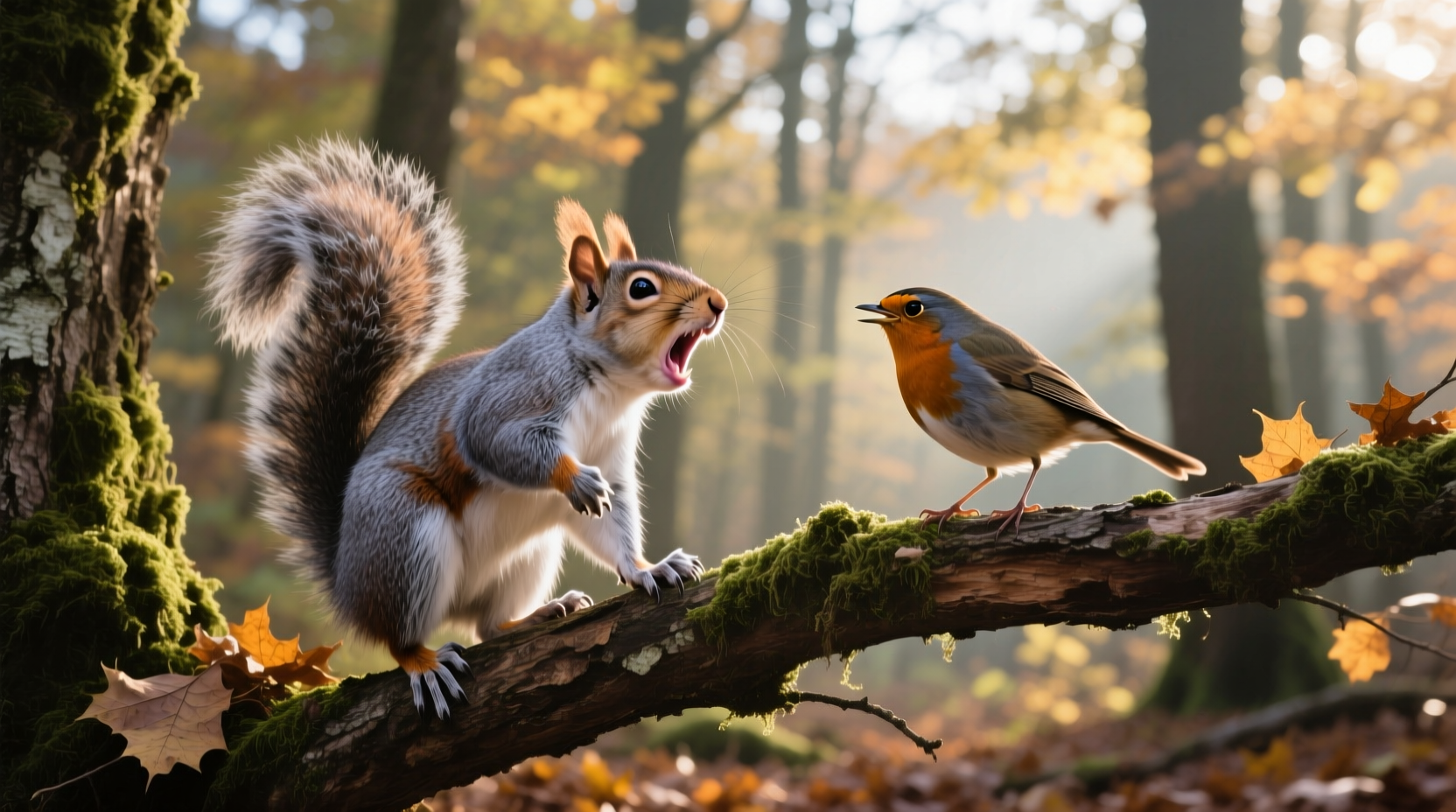
Squirrel vocalizations are far more sophisticated than they appear. Researchers have identified several distinct types of calls, each serving a specific function. The most common sounds include:
- Alarm calls – High-pitched, rapid chirps used to signal danger.
- Distress calls – Loud, prolonged shrieks emitted when caught or injured.
- Mating calls – Softer, repetitive sounds used during breeding season.
- Agonistic calls – Harsh, scolding chatters directed at rivals or intruders.
When a squirrel chatters at a bird, it’s typically using an agonistic or alarm call. These sounds serve dual purposes: to intimidate the perceived threat and to alert other squirrels in the vicinity. Studies from the University of California, Davis show that eastern gray squirrels (Sciurus carolinensis) modify their calls based on the type of predator or competitor present. For example, they produce different frequencies and rhythms when reacting to aerial predators like hawks versus ground threats like cats—or even rival animals like birds near their territory.
“Squirrel vocalizations are not random noise. They contain detailed information about the nature, location, and urgency of a threat.” — Dr. Jessica Watson, Behavioral Ecologist, UC Davis
Territorial Instincts and Resource Defense
Squirrels are highly territorial, especially when resources are limited. While they don’t maintain rigidly defined boundaries like some mammals, they do establish home ranges centered around critical assets: food caches, nesting sites (dreys or tree cavities), and access to mates. Birds, particularly corvids like blue jays and crows, pose a direct threat to these resources.
Corvids are intelligent, opportunistic foragers known to raid squirrel nests for eggs or young and steal buried nuts. Even non-predatory birds such as cardinals or sparrows may inadvertently encroach on feeding zones, triggering defensive responses. When a squirrel detects a bird near its cache or drey, it initiates a chattering display to assert ownership and discourage further approach.
This behavior is especially pronounced in late summer and fall, when squirrels are actively caching food for winter. A single gray squirrel may bury thousands of nuts each season, relying on spatial memory and scent cues to retrieve them later. Any interference—from birds, other squirrels, or animals—can jeopardize their winter survival. Hence, the chattering serves as both a warning and a deterrent.
Tip: If you notice frequent squirrel-bird conflicts in your yard, consider placing bird feeders away from trees or areas where squirrels nest to reduce competition.Communication Beyond Aggression: The Role of Mobbing
Chattering at birds isn’t always purely territorial—it can also be part of a broader survival strategy known as mobbing. Mobbing occurs when smaller animals collectively harass a potential predator to drive it away. Squirrels often engage in mobbing behavior when they spot raptors such as red-tailed hawks or owls perched nearby.
In these cases, multiple squirrels may converge on the area, emitting loud, repetitive chatters while flicking their tails rapidly. This conspicuous behavior serves several functions:
- It alerts other squirrels and small animals to the presence of a predator.
- It signals to the predator that it has been detected, reducing its chances of a successful ambush.
- It may confuse or annoy the predator enough to prompt it to leave the area.
Interestingly, birds themselves participate in mobbing. Chickadees, jays, and titmice often join squirrels in harassing owls or hawks. In some documented cases, squirrels and birds have been observed engaging in coordinated mobbing—despite being competitors at other times. This illustrates the complexity of interspecies relationships in urban and woodland ecosystems, where cooperation and conflict coexist.
Species-Specific Interactions: Who Gets Chattered At—and Why?
Not all birds provoke the same response from squirrels. The intensity and frequency of chattering depend heavily on the species involved. Below is a breakdown of common bird-squirrel interactions:
| Bird Species | Threat Level to Squirrels | Typical Squirrel Response |
|---|---|---|
| Crow / Blue Jay | High | Persistent chattering; tail flicking; pursuit if close to nest |
| Hawk / Owl | Very High | Loud alarm calls; mobbing behavior; hiding |
| Sparrow / Finch | Low | Rarely vocalizes; may ignore unless near food cache |
| Woodpecker | Medium | Occasional chattering if occupying a preferred tree cavity |
| Dove / Pigeon | Low | Minimal reaction; occasional curiosity |
The table highlights how risk assessment drives squirrel behavior. Crows and jays are considered high-risk due to their intelligence and tendency to scavenge nests. Hawks and owls represent direct predation threats. In contrast, small seed-eating birds rarely compete for the same resources or pose physical danger, so squirrels largely tolerate their presence.
Real-World Example: The Backyard Feeder Conflict
Consider a suburban backyard in early autumn. A homeowner installs a bird feeder filled with sunflower seeds under a large oak tree—a favorite haunt of a resident gray squirrel named “Patch” (named for a scar on his ear). Every morning, Patch visits the base of the tree to collect fallen seeds, which he buries in shallow holes around the garden.
One afternoon, a group of blue jays discovers the feeder. They begin swooping in, scattering seeds widely. Some land directly on the ground, foraging near Patch’s hidden caches. Within minutes, Patch appears on a low branch, tail twitching, emitting a series of sharp, staccato chatters. He descends and circles the jays, vocalizing loudly. The jays eventually retreat to the feeder, but remain alert.
Over the next few days, Patch increases his patrols. He begins chattering at any bird that lands within 15 feet of the tree. He even digs up and relocates several of his deeper caches to a flower bed farther from the feeder. This real-world scenario demonstrates how territorial behavior, food protection, and learned experience shape squirrel responses to avian neighbors.
How Squirrels Assess Threats: Sensory and Cognitive Factors
Squirrel decision-making is guided by a combination of instinct and learned experience. Their ability to distinguish between harmless and dangerous birds relies on acute senses and cognitive processing.
- Vision: Squirrels have excellent peripheral vision and can detect movement from great distances. They use visual cues like wing shape and flight patterns to identify predator species.
- Hearing: They recognize the calls of predatory birds and respond accordingly. Playback experiments show squirrels react more strongly to hawk screeches than to songbird melodies.
- Memory: Squirrels remember locations where threats have appeared before and adjust their behavior—avoiding certain trees or altering foraging times.
Moreover, younger squirrels learn appropriate responses by observing adults. Juvenile squirrels initially react fearfully to all birds but gradually refine their reactions through trial and error. This learning curve explains why older squirrels tend to be more selective and efficient in their chattering—only engaging when truly necessary.
Checklist: What to Do If You Observe Frequent Squirrel-Bird Conflict
If you’re observing intense or disruptive interactions between squirrels and birds in your yard, consider the following steps:
- ✅ Place bird feeders at least 10–15 feet away from trees or structures squirrels use to access them.
- ✅ Use squirrel-proof feeders or baffles to reduce competition over food.
- ✅ Provide separate feeding zones—for birds in open areas, for squirrels on the ground or on dedicated platforms.
- ✅ Avoid leaving pet food or spilled seeds outdoors, which can intensify territorial disputes.
- ✅ Monitor nesting activity in spring; avoid disturbing areas where squirrels or birds are raising young.
Frequently Asked Questions
Do squirrels ever attack birds?
While rare, squirrels have been documented attacking birds—particularly nestlings or injured adults. Gray squirrels may invade nests to eat eggs or young birds, especially when food is scarce. Adult squirrels usually avoid physical confrontation with healthy birds due to injury risk.
Can birds understand squirrel chattering?
Yes, many birds can interpret squirrel alarm calls. Research shows that chickadees, nuthatches, and even deer alter their behavior when they hear squirrel distress calls, indicating cross-species communication plays a role in ecosystem-wide predator awareness.
Is squirrel chattering harmful to birds?
No, the chattering itself poses no physical harm. However, persistent harassment may cause birds to avoid certain areas, indirectly affecting their feeding or nesting success. In balanced ecosystems, these interactions help regulate space usage among species.
Conclusion: Respecting Nature’s Balance
The next time you hear a squirrel chattering at a bird, take a moment to appreciate the intricate web of survival playing out in your backyard. That seemingly noisy outburst is a finely tuned survival mechanism—part warning, part defense, and part communication. It reflects millions of years of evolution shaping how animals share space, compete for resources, and coexist in dynamic environments.
Understanding these behaviors doesn’t just satisfy curiosity—it fosters greater respect for wildlife and informs better decisions about how we design outdoor spaces. By minimizing artificial competition (like unguarded feeders) and preserving natural habitats, we allow these species to interact on their own terms, maintaining the delicate balance of urban and rural ecosystems.
💬 Have you witnessed squirrels chattering at birds in your neighborhood? Share your observations in the comments and contribute to a deeper understanding of animal behavior in shared environments.








