Red pandas are among the most endearing animals in the animal kingdom, known for their bushy tails, masked faces, and playful demeanor. One of their most captivating behaviors is standing upright on their hind legs—a pose often shared widely across social media. While it may look like a simple photo opportunity or an act of curiosity, this behavior serves several important biological and social functions. Understanding why red pandas stand up reveals deeper insights into their communication, defense mechanisms, and environmental interactions.
The Anatomy Behind the Upright Posture
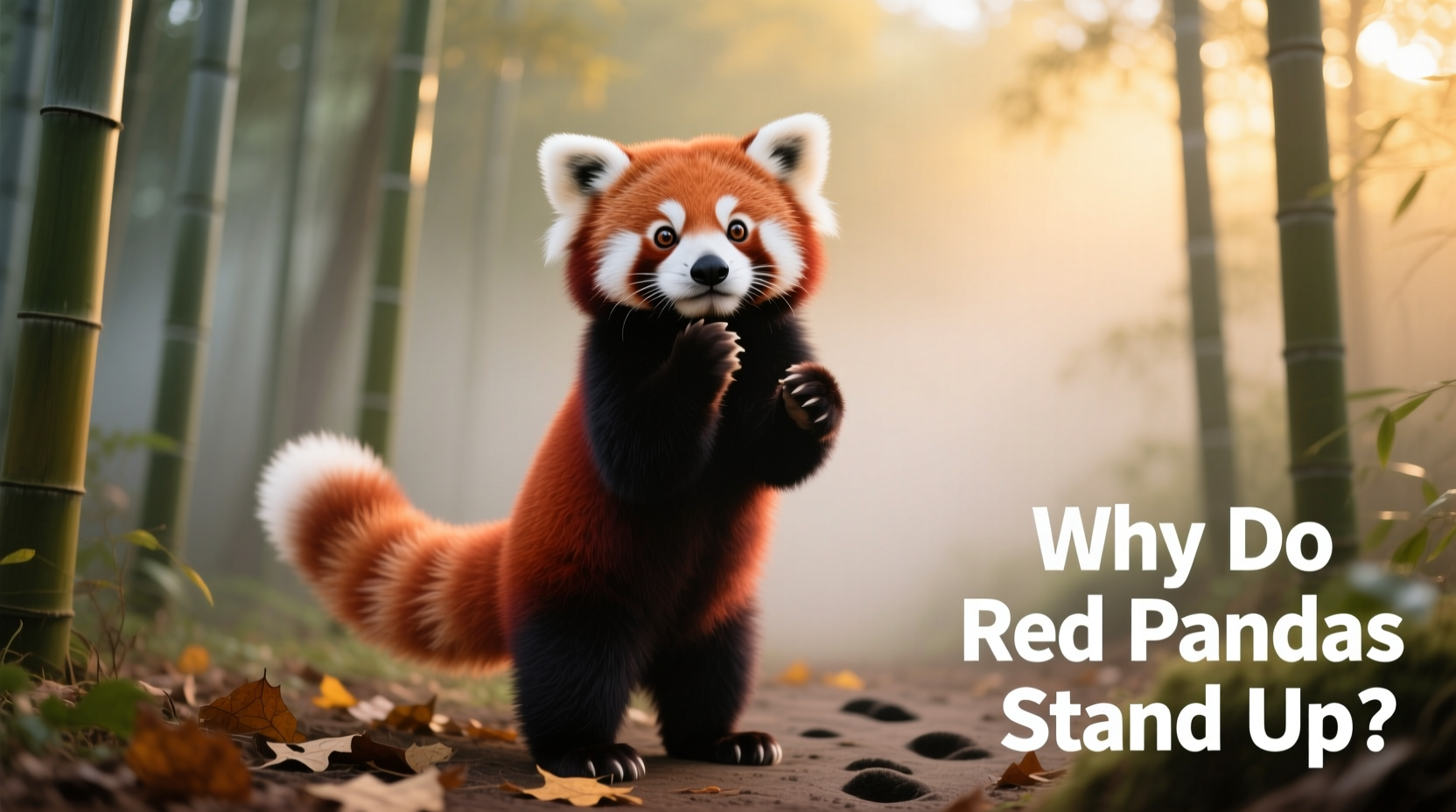
Red pandas (Ailurus fulgens) possess a unique skeletal and muscular structure that allows them to balance on their hind limbs temporarily. Their strong hind legs, flexible spine, and long tail—which acts as a counterbalance—enable brief bipedal stances. Unlike primates, they don’t walk upright regularly; instead, this posture is situational and functional.
This ability is not merely a party trick. It’s rooted in evolutionary adaptation. In their natural habitat—temperate forests of the Himalayas and southwestern China—red pandas navigate dense underbrush and uneven terrain. Standing up helps them gain a better vantage point over tall grasses or rocky outcrops, allowing them to scan for predators or locate food sources such as bamboo shoots, berries, and insects.
Tip: When observing red pandas in zoos or videos, note how quickly they return to all fours—this upright stance is momentary and energy-intensive.Communication and Social Signaling
One of the primary reasons red pandas stand up is to communicate. These solitary animals use body language extensively to convey messages without direct contact, minimizing conflict in overlapping territories.
- Threat display: When feeling threatened, a red panda may rear up to appear larger and more intimidating to potential predators like snow leopards or birds of prey.
- Scent marking visibility: Red pandas have scent glands on the soles of their feet. Standing allows them to place these marks higher on trees or rocks, making them more detectable to other red pandas.
- Mating signals: During breeding season, males may stand to assess females or demonstrate dominance through posturing.
“Body postures like standing upright are critical non-vocal communication tools in red pandas, especially since they’re largely silent creatures.” — Dr. Lena Torres, Behavioral Zoologist at the Global Wildlife Conservation Institute
Environmental Awareness and Foraging Behavior
Standing on two legs gives red pandas a significant advantage when exploring their surroundings. By elevating their head and neck, they improve their line of sight and olfactory reach. This is particularly useful in thick forest canopies where visibility is limited.
In captivity, red pandas are often seen standing when presented with new objects or during feeding times. This behavior indicates heightened curiosity and sensory evaluation. They use their front paws like hands to investigate items, much like raccoons or primates, enhancing tactile feedback while maintaining an upright position briefly.
| Context | Purpose of Standing | Duration |
|---|---|---|
| Predator detection | Improved visual scanning | 5–15 seconds |
| Feeding novelty | Object investigation | 10–30 seconds |
| Social encounter | Display of size or intent | Variable, up to 1 minute |
| Scent marking | Elevated gland placement | 10–20 seconds |
A Mini Case Study: Observations at the Chengdu Research Base
At the Chengdu Research Base of Giant Panda Breeding, researchers conducted a six-month observational study on red panda behavior. One individual, a male named Lumi, consistently stood upright when keepers approached with enrichment toys.
Lumi would rise slowly, balancing carefully while extending his forepaws toward the object. Once he made contact, he often used one paw to manipulate the toy while remaining partially upright. This behavior was absent when familiar food items were introduced, suggesting that novelty triggers exploratory standing.
Interestingly, younger red pandas exhibited this posture more frequently than adults, indicating that it may also be part of learning and motor development. Juveniles practiced balance and coordination through short bouts of bipedalism, refining skills needed for climbing and escaping threats.
Defense Mechanism: The Illusion of Size
Despite their charm, red pandas face real dangers in the wild. Their small size—typically 3–6 kg (7–13 lbs)—makes them vulnerable to predators. To compensate, they employ several defensive tactics, with standing being a key component.
When startled, a red panda may leap back and immediately stand, puffing out its fur to appear larger. Combined with vocalizations like huff-quacks or hisses, this creates a startling effect meant to deter attackers. The sudden change in silhouette disrupts predator expectations, buying precious seconds for escape.
This reflexive response is especially common in older juveniles and subadults who are no longer protected by maternal care but haven't yet established secure territories.
Tip: Never attempt to provoke a red panda into standing—it's a stress response, not a performance.Step-by-Step: How Red Pandas Use Standing in Threat Response
- Detection: The red panda hears or smells a potential threat.
- Assessment: It freezes momentarily, then rises onto hind legs to get a better view.
- Intimidation: Fur bristles, body expands visually, and warning sounds may be emitted.
- Decision: If the threat persists, it will either flee rapidly using trees as escape routes or drop to all fours and retreat.
- Recovery: After safety is confirmed, normal locomotion resumes within seconds.
Common Misconceptions About Upright Behavior
Many people assume red pandas stand up because they are friendly, begging for food, or mimicking humans. However, these interpretations anthropomorphize natural instincts. In reality:
- They do not stand to beg—they lack the domestication traits seen in pets.
- It is not a sign of submission; rather, it's often linked to assertiveness or alertness.
- While entertaining, the behavior should not be encouraged in captivity through food rewards, as it may increase stress levels.
Frequently Asked Questions
Do red pandas walk on two legs like humans?
No, red pandas do not walk bipedally. They only stand briefly for specific purposes such as looking around, investigating objects, or displaying defensively. Their anatomy isn't adapted for sustained upright movement.
Is standing a sign of illness or imbalance?
Occasional standing is normal and healthy. However, if a red panda frequently loses balance, trembles while upright, or shows difficulty moving afterward, it could indicate neurological or musculoskeletal issues and should be evaluated by a veterinarian.
Can red pandas recognize human faces when standing?
There is no conclusive evidence that red pandas recognize individual humans by facial features. However, they can associate people with routines (e.g., feeding times), and standing may occur more frequently when familiar caregivers approach due to anticipation, not recognition.
Action Checklist: What You Can Do to Support Red Panda Welfare
- ✅ Educate others about natural red panda behaviors to reduce anthropomorphic myths.
- ✅ Support conservation organizations working to protect red panda habitats in Nepal, India, Bhutan, and China.
- ✅ Avoid sharing or promoting viral videos that encourage unnatural behaviors through baiting or handling.
- ✅ Visit accredited zoos that prioritize species-appropriate environments and enrichment programs.
- ✅ Report illegal wildlife trade sightings involving red pandas to local authorities or global networks like CITES.
Conclusion: Appreciating Behavior Beyond the Cuteness
The image of a red panda standing on its hind legs tugs at heartstrings worldwide—but beneath that charm lies a complex set of survival strategies. From scanning the forest floor to asserting presence without confrontation, every instance of bipedal posture carries meaning. As fascination with these animals grows, so does the responsibility to understand them not just as internet icons, but as wild creatures with intricate behavioral needs.
💬 What did you learn about red panda behavior today? Share your thoughts or experiences observing red pandas—and help spread awareness about their true nature beyond the viral videos.








