It’s common to hear someone say, “My dog is so jealous when I talk to other people,” or “My cat totally knows she did something wrong—look at that guilty face!” These statements reveal a deep-seated tendency: attributing human emotions, intentions, and thoughts to animals. This phenomenon, known as anthropomorphism, is widespread among pet owners. But why do we do it? What drives us to see our pets not just as animals, but as emotional beings with complex inner lives similar to our own? The answer lies in a blend of evolutionary psychology, social bonding, cognitive development, and emotional needs.
Anthropomorphism—the attribution of human characteristics to non-human entities—is not a flaw in thinking. Rather, it reflects fundamental aspects of how humans perceive and relate to the world. When applied to pets, this tendency strengthens bonds, enhances caregiving, and helps us interpret ambiguous behaviors. Yet, it also raises questions about accuracy, animal welfare, and the limits of projection.
The Evolutionary Roots of Anthropomorphism
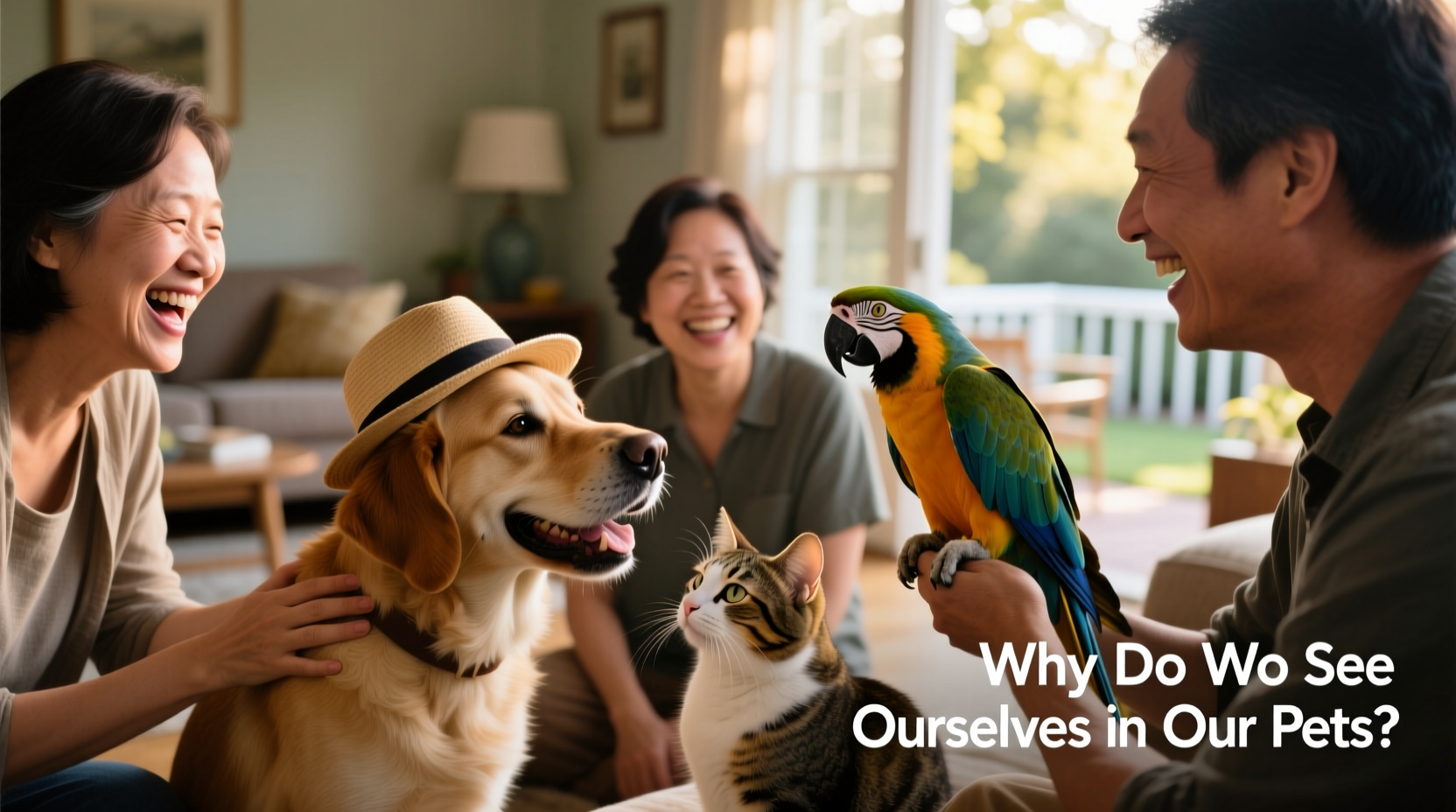
Humans are inherently social creatures. Our survival throughout evolution depended on reading others’ intentions, predicting behavior, and forming alliances. As a result, our brains are finely tuned to detect agency—signs of intentionality and consciousness—even where none may exist. This hyper-sensitive agency detection system explains why we see faces in clouds, assign motives to storms, or believe a robot feels sadness when its lights dim.
When it comes to pets, especially dogs and cats, this system activates strongly. Their expressive eyes, responsive body language, and ability to react to human cues make them prime candidates for perceived sentience. A dog tilting its head might not be “curious” in the human sense, but we interpret it that way because it resembles a human gesture associated with attentiveness.
Evolutionarily, misreading a non-sentient being as sentient was less costly than failing to recognize a sentient threat or ally. Over time, this cognitive bias became embedded in human psychology. We err on the side of assuming mind-like qualities because it helped our ancestors navigate complex social environments.
“We are wired to see minds, not just bodies. It’s easier for us to think a dog feels guilt than to accept that it’s simply reacting to your tone of voice.” — Dr. Laurie Santos, Cognitive Scientist, Yale University
How Attachment Shapes Perception of Pet Personalities
Anthropomorphism intensifies with emotional closeness. The stronger the bond between a person and their pet, the more likely they are to ascribe complex emotions and moral reasoning to the animal. This is particularly evident in single-person households, elderly individuals, or those who view their pets as family members rather than animals.
Attachment theory, originally developed to explain human relationships, applies here. Secure attachment leads to consistent care, empathy, and communication—even if one party cannot reciprocate linguistically. When a pet owner says, “He missed me while I was gone,” they’re not necessarily stating objective fact; they’re expressing their own emotional experience through the lens of the pet’s behavior.
This projection serves a psychological function: it reduces loneliness, increases perceived control, and validates the caregiver’s efforts. If a pet “appreciates” affection, then the love poured into caring for it feels meaningful and returned.
Tip: Recognizing your own emotional needs can help you distinguish between your pet’s actual behavior and your interpretation of it.The Role of Personality Attribution in Daily Care
We don’t just anthropomorphize emotions—we construct full personalities for our pets. One dog is “shy,” another is “a drama queen,” a cat is “independent,” or “moody.” These labels go beyond biology; they reflect narrative frameworks we use to make sense of unpredictable behavior.
Interestingly, research shows that people consistently rate their pets’ personalities using the same five-factor model used in human psychology: openness, conscientiousness, extraversion, agreeableness, and neuroticism. While animals don’t possess human cognition, they do exhibit behavioral consistencies across contexts—what scientists call “temperament.”
The leap from temperament to personality occurs when owners overlay human motivations. For example, a cat avoiding visitors isn’t “rude”—it may be cautious by nature. But calling it “aloof” adds a social judgment rooted in human norms.
| Observed Behavior | Temperament (Scientific View) | Anthropomorphized Interpretation |
|---|---|---|
| Dog whines at door | Separation distress, learned behavior | “He’s lonely and misses me” |
| Cat knocks object off table | Exploratory play, motor reflex | “She’s doing it to annoy me” |
| Bird sings at sunrise | Territorial signaling, mating call | “He’s happy and greeting the day” |
| Rabbit thumps cage | Alarm response, fear | “He’s mad I didn’t let him out” |
The danger arises when these interpretations lead to inappropriate expectations or discipline. A dog punished for “being spiteful” after urinating indoors may actually be stressed or untrained. Misunderstanding the root cause harms both animal and relationship.
Neurological and Emotional Mirroring in Human-Pet Interactions
Brain imaging studies reveal that when people interact with their pets, the same neural circuits activate as when they interact with human children or close companions. The release of oxytocin—a hormone linked to bonding, trust, and affection—increases in both humans and dogs during mutual gaze, reinforcing emotional connection.
This biochemical feedback loop encourages nurturing behavior and deepens attachment. Because we feel genuine love and empathy toward our pets, our brains naturally simulate their internal states using our own emotional repertoire. This process, called “mentalizing” or “theory of mind,” allows us to imagine what others are feeling—but only based on our own experiences.
So when a dog cowers after chewing a shoe, owners often interpret this as guilt. However, studies show that what looks like guilt is actually a response to the owner’s scolding tone or posture. The dog has learned that certain human expressions predict punishment and reacts submissively—not because it understands wrongdoing, but because it wants to de-escalate conflict.
“Dogs don’t have a moral sense of right and wrong. They have a behavioral sense of what works and what doesn’t. The ‘guilty look’ is appeasement, not remorse.” — Dr. Alexandra Horowitz, Dog Cognition Researcher, Barnard College
Benefits and Risks of Anthropomorphism
Anthropomorphism isn’t inherently bad. In moderation, it fosters compassion, improves animal welfare, and motivates better care. People who see their pets as emotionally rich beings are more likely to invest time in training, nutrition, veterinary visits, and enrichment.
However, over-anthropomorphizing carries risks:
- Misinterpreting needs: Dressing a dog in sweaters year-round may seem loving, but it ignores natural thermoregulation.
- Emotional burden: Assuming a pet “feels abandoned” during travel may cause unnecessary guilt or anxiety in the owner.
- Poor training outcomes: Believing a cat “holds grudges” prevents effective behavior modification.
- Projection of trauma: Some owners unconsciously attribute their past emotional pain to pets, complicating care decisions.
The key is balance: embracing emotional connection without losing scientific grounding.
Tip: Ask yourself: “Is my pet acting this way because of emotion, instinct, or learning—or am I projecting?” Reflect before reacting.A Real-Life Example: The Case of Max the Rescue Dog
Sarah adopted Max, a mixed-breed rescue, after he was found wandering near a highway. He was fearful, avoided eye contact, and barked aggressively at men wearing hats. Sarah believed Max had been abused by a man in a baseball cap and was “traumatized” and “angry.” She spoke to him gently, saying, “I know you don’t trust people, but we’ll heal together.”
While her empathy was valid, a behaviorist later explained that Max’s reactions were likely due to lack of early socialization, not memory of a specific abuser. His aggression wasn’t hatred—it was fear-based reactivity shaped by limited exposure during critical developmental windows.
By shifting from narrative (“he hates men”) to behavioral science (“he’s under-socialized”), Sarah adjusted her training approach. She used positive reinforcement to build confidence around different stimuli, including hats. Within months, Max improved significantly—not because he “forgave,” but because his environment changed.
This case illustrates how anthropomorphism can motivate care but must be tempered with evidence-based understanding to achieve real progress.
How to Healthily Engage with Your Pet’s “Personality”
You don’t need to stop seeing your pet as special or emotionally expressive to practice responsible pet ownership. Instead, adopt a dual perspective: embrace the emotional bond while respecting biological reality.
- Observe objectively: Keep a journal of behaviors, noting context, triggers, and outcomes without immediate interpretation.
- Learn species-specific communication: Understand canine tail wags, feline ear positions, or rabbit thumping as signals, not emotions.
- Consult professionals: Work with veterinarians or certified trainers when behavior issues arise, rather than relying on emotional narratives.
- Use analogies carefully: Saying “he’s excited” is fine; saying “he’s throwing a tantrum” imposes human social rules.
- Reflect on your own feelings: Notice when your pet’s behavior triggers guilt, frustration, or nostalgia—these may be projections.
- ✅ Express love and empathy freely
- ✅ Use human-like terms casually in conversation
- ✅ Seek scientific explanations for persistent behavior issues
- ✅ Avoid punishing pets for “intentions” you assume they have
- ✅ Balance emotional storytelling with factual observation
Frequently Asked Questions
Do pets really understand human emotions?
Pets, especially dogs, are highly attuned to human emotional cues such as tone of voice, facial expressions, and body language. They learn to associate these signals with outcomes (e.g., calm voice = safety, raised voice = danger). While they respond empathetically—often comforting distressed owners—they don’t comprehend emotions intellectually the way humans do.
Is it harmful to treat my pet like a child?
Treating your pet with love and care is beneficial. However, problems arise when human expectations override species-specific needs. A dog needs walks, sniffing, and mental stimulation—not birthday parties or college funds. Meeting biological and behavioral needs should come before symbolic rituals.
Can animals feel guilt, shame, or jealousy?
Current evidence suggests animals experience primary emotions like fear, joy, anger, and disgust. Complex emotions like guilt or shame require self-awareness and moral evaluation, which are not supported by animal cognition research. Behaviors resembling jealousy (e.g., a dog pushing between owner and guest) may reflect resource guarding or attention-seeking, not emotional envy.
Conclusion: Embracing Connection Without Illusion
Anthropomorphism is a testament to the depth of human empathy and our desire for meaningful relationships. It reflects not ignorance, but a profound capacity to care. Pets enrich our lives in ways that transcend logic—they offer unconditional presence, comfort, and joy. Attributing human-like qualities to them is part of how we honor that bond.
Yet true respect for animals means seeing them clearly: as sentient beings with their own evolutionary histories, instincts, and ways of experiencing the world. We can love our pets deeply while recognizing that their minds operate differently from ours. By blending heart and science, we create relationships that are not only emotionally fulfilling but also ethically sound and behaviorally effective.
🚀 Take a moment today to observe your pet without interpreting—just watch. Notice their movements, rhythms, and responses. Then, combine that observation with love. That’s where compassionate, informed care begins.








