Knee pain affects millions of people across all age groups. Whether it creeps in after a long walk, flares up during exercise, or lingers daily, understanding the root cause is essential for lasting relief. The knee is one of the most complex joints in the body—bearing weight, enabling motion, and absorbing impact. When something goes wrong, even simple tasks like climbing stairs or standing from a chair can become difficult. This article explores the most common reasons behind knee discomfort, outlines practical ways to find relief, and details both conservative and medical treatment paths.
Common Causes of Knee Pain
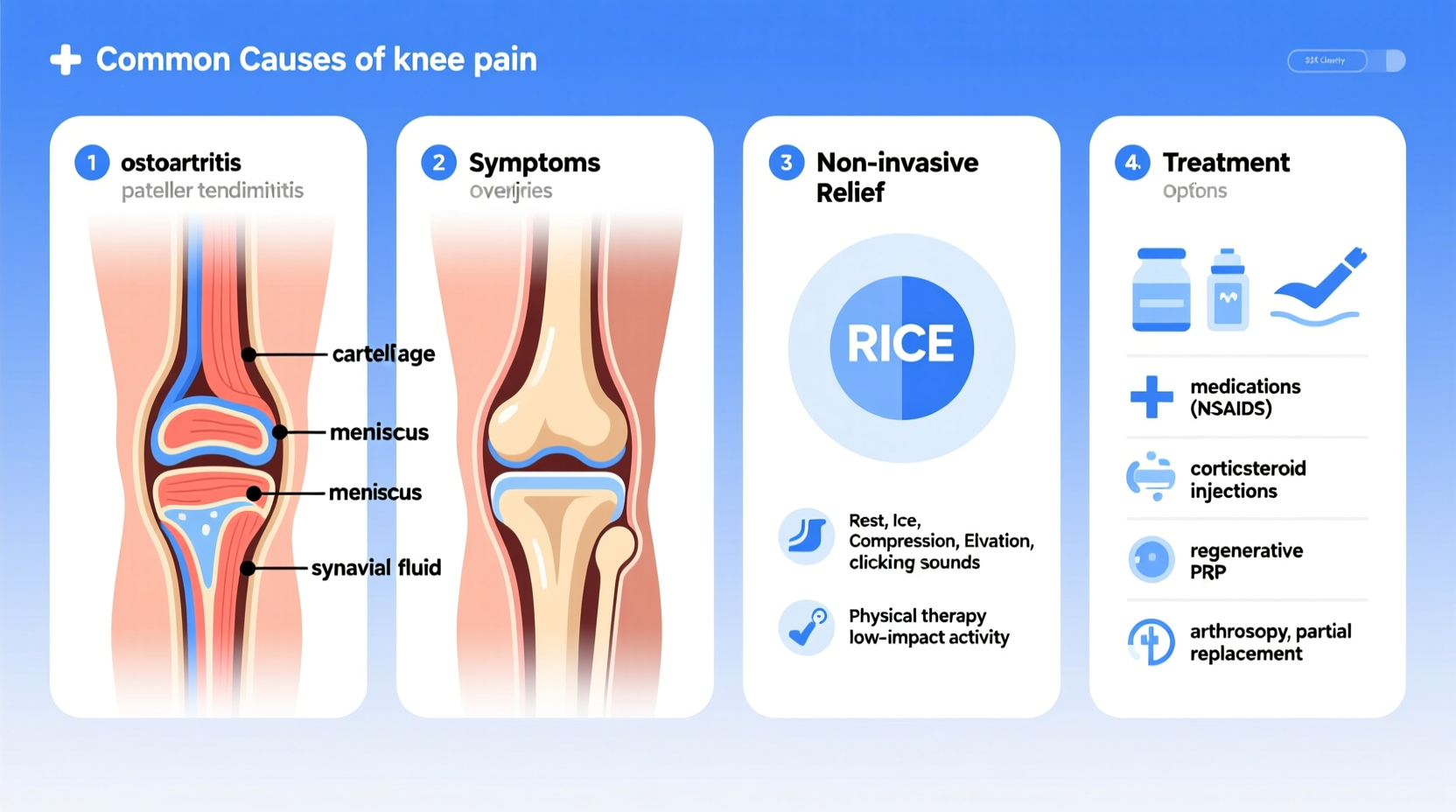
Knee pain doesn’t stem from a single source. It can result from injury, overuse, degenerative conditions, or systemic diseases. Identifying the underlying issue is the first step toward effective management.
- Osteoarthritis: The most frequent form of arthritis affecting the knee, this condition occurs when cartilage wears down over time, leading to pain, stiffness, and swelling.
- Ligament Injuries: The anterior cruciate ligament (ACL) and medial collateral ligament (MCL) are commonly injured during sports or sudden movements, causing sharp pain and instability.
- Tendonitis: Often called \"jumper’s knee,\" this inflammation of the tendons results from repetitive stress, especially in athletes.
- Meniscus Tears: The meniscus acts as a shock absorber; tears often occur with twisting motions and may produce clicking, locking, or swelling.
- Bursitis: Inflammation of the bursae—small fluid-filled sacs that cushion the joint—can cause localized swelling and tenderness.
- Gout and Pseudogout: Crystalline deposits in the joint trigger sudden, intense pain, typically in the lower joint space.
- Iliotibial (IT) Band Syndrome: Common among runners, this involves irritation of a thick band running down the outer thigh, leading to lateral knee pain.
“Knee pain is rarely just about the knee. Biomechanics, alignment, and overall joint health play critical roles in both onset and recovery.” — Dr. Alan Reyes, Orthopedic Specialist
Immediate Relief Strategies at Home
For mild to moderate knee discomfort, several self-care techniques can reduce pain and inflammation without medication or surgery.
Tip: Use the R.I.C.E. method—Rest, Ice, Compression, and Elevation—for acute flare-ups or post-injury care.Apply ice packs for 15–20 minutes every few hours during the first 48 hours to minimize swelling. A compression wrap provides support but should not be overly tight. Elevating the leg above heart level helps drain excess fluid. Over-the-counter NSAIDs like ibuprofen may offer temporary relief but should not be used long-term without medical supervision.
Gentle range-of-motion exercises, such as seated knee extensions or ankle pumps, maintain circulation and prevent stiffness. Avoid high-impact activities until symptoms improve.
Treatment Options by Severity
The right treatment depends on the diagnosis, severity, and lifestyle demands. Here's a breakdown of approaches based on condition progression.
| Severity Level | Recommended Treatments | When to Seek Medical Help |
|---|---|---|
| Mild (occasional discomfort) | Home care, stretching, activity modification | If pain persists beyond 2 weeks |
| Moderate (daily pain, limits function) | Physical therapy, bracing, corticosteroid injections | Immediately if swelling or instability occurs |
| Severe (chronic pain, deformity, immobility) | Surgical evaluation (e.g., arthroscopy, joint replacement) | Urgently if unable to bear weight |
Step-by-Step Guide to Managing Chronic Knee Pain
Long-term knee health requires a proactive approach. Follow this timeline to regain control and reduce flare-ups.
- Week 1: Assess & Document Symptoms
Track when pain occurs, its intensity (use a 1–10 scale), and any triggers (stairs, sitting, weather). - Week 2: Begin Low-Impact Movement
Incorporate walking, swimming, or cycling for 20–30 minutes daily to improve joint lubrication and muscle support. - Week 3: Strengthen Supporting Muscles
Add targeted exercises: straight-leg raises, heel slides, and mini squats (with support). Focus on quadriceps and hamstrings. - Week 4: Consult a Professional
Visit a physical therapist or orthopedic doctor for gait analysis and personalized rehab plan. - Ongoing: Maintain & Prevent
Continue exercises, monitor weight, wear supportive footwear, and avoid prolonged kneeling or squatting.
Real-Life Example: Recovering from Runner’s Knee
Samantha, a 34-year-old recreational runner, began experiencing sharp pain on the front of her knee after increasing her mileage. Initially dismissing it as fatigue, she continued training—until descending stairs became painful. After a visit to a sports medicine clinic, she was diagnosed with patellofemoral pain syndrome (PFPS), commonly known as runner’s knee.
Her treatment plan included two weeks of reduced running, daily icing, and a prescribed set of hip and quad strengthening exercises. She also switched to more supportive running shoes and incorporated cross-training. Within six weeks, her pain decreased significantly, and she resumed running with a structured, gradual return-to-run program.
This case highlights how early intervention and proper rehabilitation can prevent minor issues from becoming chronic problems.
Do’s and Don’ts for Knee Health
| Do’s | Don’ts |
|---|---|
| Warm up before physical activity | Ignore persistent pain |
| Maintain a healthy weight | Engage in high-impact exercise with poor form |
| Wear supportive, well-fitted shoes | Sit for hours with knees bent sharply |
| Strengthen leg muscles gradually | Use steroid injections frequently |
Frequently Asked Questions
Can losing weight really help knee pain?
Yes. Every pound of body weight exerts about 4 pounds of pressure on the knee during walking. Losing even 10 pounds can significantly reduce strain and slow cartilage degeneration, especially in osteoarthritis patients.
When is knee surgery necessary?
Surgery is typically considered when conservative treatments fail, there’s structural damage (like a torn ACL or severe meniscus tear), or joint degeneration severely impacts quality of life. Total knee replacement is usually reserved for advanced arthritis cases.
Are knee braces effective?
Braces can provide stability and offload pressure from damaged areas. For example, unloader braces help those with medial compartment arthritis. However, they should complement—not replace—exercise and proper biomechanics.
Prevention Checklist
- ✅ Maintain strong quadriceps and hamstrings
- ✅ Use proper technique during exercise and lifting
- ✅ Wear appropriate footwear for your activity
- ✅ Avoid sudden increases in physical activity
- ✅ Keep body weight within a healthy range
- ✅ Practice low-impact cross-training (e.g., swimming, cycling)
Conclusion
Knee pain is common, but it’s not something you must accept as inevitable. From everyday wear-and-tear to sports injuries and degenerative disease, understanding the cause empowers better decisions about care. Whether through home remedies, physical therapy, or medical intervention, relief is achievable. Most importantly, long-term joint health hinges on consistent habits—movement, strength, and mindful activity choices.
💬 Have you found a strategy that eased your knee pain? Share your experience below—your insight could help someone take their first pain-free step.








