
At first glance, a hamster with bulging cheeks may look comically overburdened—like a tiny rodent trying to smuggle an entire meal out of sight. But this peculiar behavior is far more than a quirky party trick. It’s a highly evolved survival mechanism rooted in biology, instinct, and environmental adaptation. Understanding why hamsters stuff their cheeks requires delving into their natural history, anatomy, and behavioral ecology. From the structure of their expandable cheek pouches to the pressures of life in the wild, every aspect of this behavior serves a purpose refined by millions of years of evolution.
The Evolutionary Roots of Cheek Stuffing
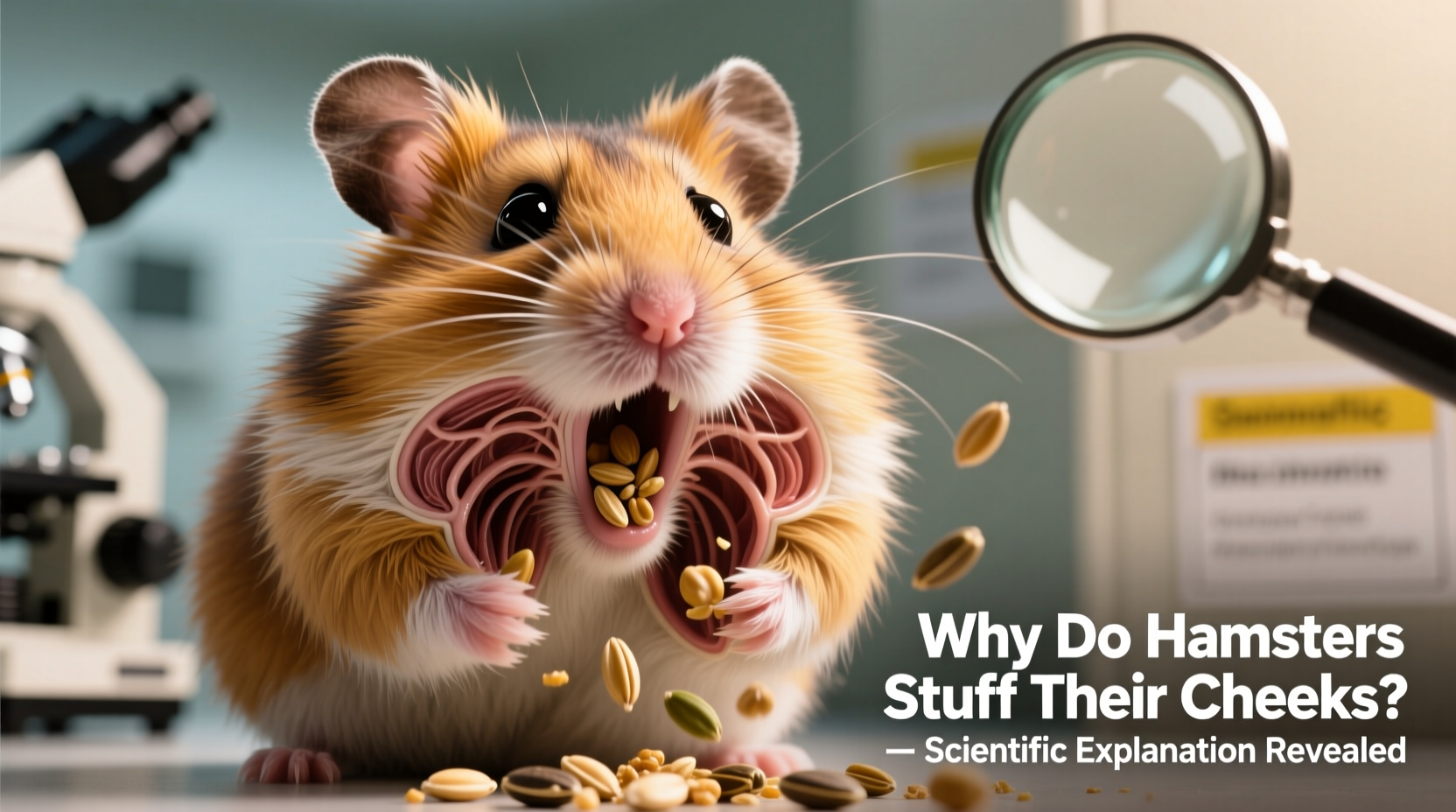
Hamsters are native to arid and semi-arid regions of Eastern Europe and Central Asia, including parts of Syria, Greece, and Mongolia. In these environments, food sources are often scarce and unpredictable. For small prey animals like hamsters, time spent foraging exposes them to predators such as owls, foxes, and snakes. To minimize risk, hamsters have evolved to gather as much food as possible in a single outing and transport it quickly back to the safety of their burrows.
This behavior, known as \"larder hoarding,\" is common among rodents but is especially pronounced in hamsters due to their specialized cheek pouches. Unlike squirrels that bury nuts or mice that scatter food, hamsters use internal storage to carry provisions efficiently. The ability to stuff large volumes of food into stretchy cheek pockets allows them to reduce the number of trips outside their den—cutting down on exposure and energy expenditure.
“Cheek pouches are a brilliant evolutionary adaptation. They allow hamsters to exploit patchy food resources while minimizing predation risk.” — Dr. Lena Petrov, Behavioral Ecologist at the Institute of Rodent Studies
Anatomy of the Cheek Pouch: Nature’s Built-In Grocery Bags
The secret behind the hamster’s impressive stuffing capacity lies in a unique anatomical feature: the cheek pouch. These are not simple folds of skin but complex, muscular sacs that extend from the mouth all the way back to the shoulders. In some species, such as the Syrian hamster (*Mesocricetus auratus*), the fully expanded pouch can hold up to half the animal's body weight in food.
The pouches are lined with soft, elastic tissue and controlled by a network of muscles that allow precise opening, filling, and emptying. A sphincter-like muscle at the entrance prevents food from falling out during movement. When full, the pouches stretch laterally, giving the hamster its characteristic puffed-cheek appearance.
Interestingly, the inner lining of the cheek pouch is devoid of salivary glands, which prevents premature digestion of stored food. This ensures that seeds, grains, and vegetables remain intact until they’re safely deposited in the nest.
Tip: Avoid feeding sticky or sugary foods to your hamster—these can adhere to the cheek pouch lining and cause impaction or infection.Behavioral Triggers and Natural Instincts
Even domesticated hamsters, generations removed from the wild, retain the instinct to stuff their cheeks. This persistence underscores how deeply ingrained the behavior is in their genetic programming. In captivity, where food is abundant and predators nonexistent, hamsters still exhibit food-carrying behaviors when presented with novel or preferred items.
Studies have shown that hamsters are more likely to fill their cheeks when:
- Food is scattered rather than placed in a bowl
- New or high-value foods (like sunflower seeds) are introduced
- They perceive competition—even from other pets in another room
- Environmental stressors, such as loud noises, trigger alertness
This suggests that the behavior isn’t just about hunger—it’s also driven by opportunity and perceived scarcity. Even in safe environments, the brain interprets certain cues as signals to “gather now, eat later.”
Real Example: The Case of Max the Over-Stuffer
Max, a pet Syrian hamster owned by a family in Colorado, became known for stuffing his cheeks with an entire day’s ration of pellets during feeding time. Despite having constant access to food, he would rush to collect as much as possible, scurrying back and forth between the bowl and his nesting area. His owner initially worried he wasn’t eating enough, but after monitoring his weight and observing him emptying his pouches in the nest, it became clear that Max was simply acting on instinct.
After switching to a feeding strategy that involved placing food directly in the nesting box and reducing auditory distractions during mealtimes, Max gradually reduced his stuffing behavior—though he never stopped completely. This case illustrates how environment can modulate innate behaviors, even if it can’t eliminate them.
Physiological Limits and Health Risks
While cheek stuffing is natural, it isn’t without risks—especially in captivity. Pet owners should be aware of potential complications arising from prolonged or improper use of cheek pouches.
| Condition | Description | Prevention |
|---|---|---|
| Cheek Pouch Impaction | Food becomes lodged and rots, causing swelling and infection | Avoid hard, sharp, or sticky foods; inspect pouches weekly |
| Pouch Eversion | The pouch turns inside out, often requiring veterinary surgery | Prevent trauma; avoid handling by the cheeks |
| Dental Injury | Overfilling can strain jaw muscles or damage molars | Monitor for drooling, lopsided pouches, or refusal to eat |
Signs of cheek pouch problems include foul odor, visible swelling, discharge, or one-sided bulging that doesn’t subside after several hours. If any of these occur, prompt veterinary consultation is essential.
Step-by-Step Guide to Supporting Healthy Cheek Use
As a responsible hamster owner, you can support your pet’s natural behaviors while minimizing health risks. Follow this sequence to ensure safe and instinctually satisfying cheek usage:
- Choose appropriate foods: Offer dry, non-sticky items like plain pellets, oats, and small seed pieces. Avoid yogurt drops, honey sticks, or cooked pasta.
- Scatter feed occasionally: Place food in multiple spots to encourage natural foraging and moderate pouch use.
- Inspect pouches gently: Once a week, use a flashlight to check inside the cheek opening for trapped debris (do not insert tools).
- Provide a secure nesting area: Ensure the hideout is quiet and enclosed so your hamster feels safe depositing food.
- Monitor behavior changes: Sudden cessation of stuffing or excessive pouch retention may indicate pain or illness.
Comparative Biology: How Hamsters Compare to Other Rodents
While many rodents store food, few do so using internal cheek pouches. Here’s how hamsters stack up against other species:
- Squirrels: Use external caching—burying nuts in the ground. No cheek pouches.
- Beavers: Carry food in their mouths or paws; rely on underwater food caches.
- Chipmunks: Have cheek pouches similar to hamsters but use them primarily for short-distance transport.
- Gerbillas: Store food in cheek pouches but to a lesser extent and with less elasticity.
Hamsters stand out for the sheer capacity and efficiency of their pouches. Unlike chipmunks, whose pouches are fur-lined and used mainly for seeds, hamsters can transport a wider variety of food types—including moist vegetables—without leakage, thanks to tight muscular control.
Frequently Asked Questions
Can hamsters sleep with food in their cheeks?
No, hamsters do not sleep with food still in their cheeks. They always empty their pouches before resting. If you notice persistent bulging overnight, it could indicate impaction and requires immediate attention.
How long can a hamster keep food in its cheeks?
Typically, food is transported within minutes. While pouches can technically hold food for several hours, healthy hamsters will unload their cargo as soon as they reach a safe location. Delayed emptying may signal discomfort or obstruction.
Do all hamster species have the same cheek pouch size?
No. Syrian hamsters have the largest pouches relative to body size, followed by Chinese and Roborovski dwarfs. Campbell's and Winter White dwarfs have slightly smaller pouches but still use them effectively.
Expert Insight: The Cognitive Side of Food Hoarding
Recent research has revealed that cheek stuffing isn’t purely reflexive—it involves decision-making. A 2022 study published in *Animal Cognition* demonstrated that hamsters prioritize higher-calorie foods when filling their pouches, suggesting an ability to assess nutritional value on the fly.
“They don’t just grab whatever’s nearby. They make rapid assessments about what’s worth carrying. It’s a form of spatial and nutritional intelligence.” — Dr. Arjun Mehta, Neuroethology Researcher, University of Edinburgh
This cognitive layer adds depth to our understanding: cheek stuffing isn’t just a mechanical act but a calculated strategy shaped by both instinct and learning.
Conclusion: Respecting Instinct in Modern Care
The sight of a hamster with cheeks full of food is more than adorable—it’s a window into a finely tuned survival system. By understanding the science behind this behavior, pet owners can provide environments that honor their animals’ natural instincts while safeguarding their health. Recognizing that stuffing is not greed, but preparation, allows us to appreciate hamsters not just as pets, but as resilient little survivors shaped by evolution.
🚀 Take action today: Audit your hamster’s diet and habitat. Are you supporting their natural behaviors safely? Share your experiences or questions below—your insights could help fellow caregivers create better lives for these remarkable creatures.








