
Dog owners around the world know that familiar moment: you speak to your dog, and almost instantly, they cock their head to one side, ears perked, eyes wide with curiosity. This endearing gesture is more than just a cute reflex—it’s a window into the complex cognitive and emotional world of canines. While it may seem like simple mimicry or playfulness, research in animal behavior and psychology reveals that head tilting is a multifaceted response tied to hearing, social bonding, and even problem-solving. Understanding this behavior offers deeper insight into how dogs perceive human communication and interact with their environment.
The Science Behind Canine Head Tilting
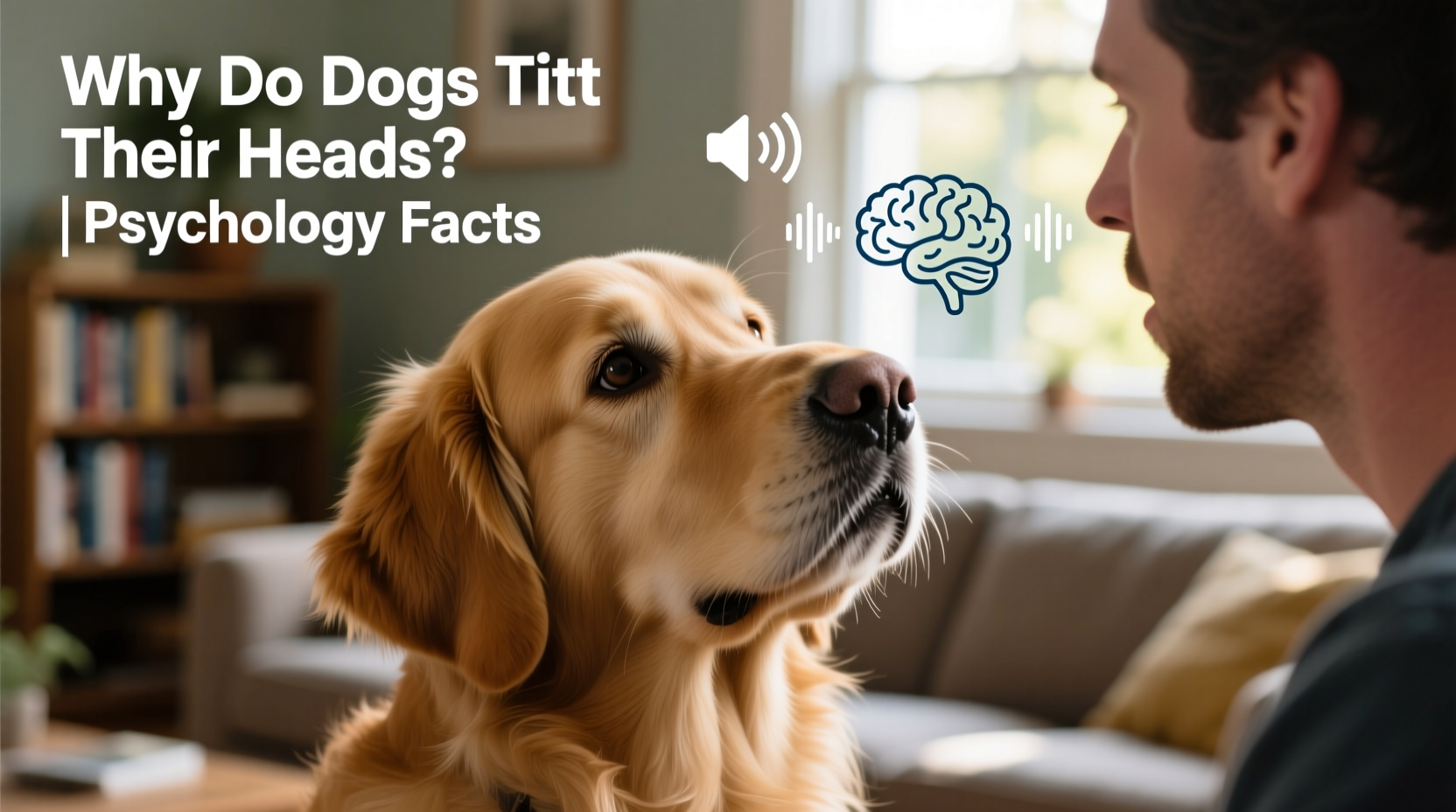
Head tilting in dogs is not random; it's a deliberate action influenced by auditory processing, visual perception, and social cognition. When a dog hears a sound—especially a human voice—they often adjust their head position to better locate the source. Unlike humans, many dog breeds have muzzles that partially obstruct their line of sight, particularly downward. By tilting their head, dogs can shift their ears forward and align their eyes more directly with the speaker’s face, improving both auditory focus and visual cues like lip movements and facial expressions.
Studies suggest that dogs are highly attuned to human vocal tones and inflections. A 2016 study published in *Current Biology* found that dogs process human speech using similar brain regions as humans do, particularly distinguishing between emotional tone and word meaning. The head tilt may serve as a physical manifestation of this cognitive effort—a way for dogs to “tune in” more precisely to what we’re saying, especially when the words are unfamiliar or emotionally charged.
Tip: If your dog tilts their head frequently during conversations, they’re likely trying to understand you better—respond with clear, calm speech and positive reinforcement.How Hearing and Anatomy Influence the Tilt
A dog’s ear structure plays a crucial role in head tilting. Breeds with long, floppy ears (like Basset Hounds or Cocker Spaniels) may tilt more often than those with erect ears (like German Shepherds), because their ear flaps can muffle sounds. Tilting helps reposition the ears to capture sound waves more effectively, much like cupping a hand behind your ear to hear better.
Additionally, skull shape affects visibility. Brachycephalic breeds (short-nosed dogs like Pugs or Bulldogs) have a different facial angle, which may reduce obstruction and lead to less frequent tilting. Conversely, dolichocephalic dogs (long-nosed breeds like Collies or Greyhounds) often tilt their heads more noticeably to see under their muzzles when focusing on a person’s mouth or hands.
This anatomical explanation doesn’t negate emotional or cognitive components—it complements them. The tilt isn't just about hearing or seeing better; it’s part of a broader strategy to gather information in real time.
“Dogs are masters of cross-modal perception—they integrate what they hear with what they see. The head tilt is often the physical sign of that integration.” — Dr. Brian Hare, Cognitive Neuroscientist & Founder of Duke Canine Cognition Center
Social Bonding and Learned Behavior
Beyond sensory input, head tilting has a strong social dimension. Dogs are acutely aware of human reactions, and behaviors that elicit positive responses tend to be repeated. If a dog tilts their head and receives affection, laughter, or treats, they learn that this action brings rewards. Over time, the behavior becomes reinforced—not necessarily because they’re confused, but because they’ve discovered an effective way to engage their humans.
This learned component explains why some dogs appear to “perform” the tilt on cue, even without a new sound or command. It’s not deception, but rather adaptive social intelligence. Dogs use subtle body language to communicate, and the head tilt may function as a nonverbal signal of attention, empathy, or anticipation.
In multi-dog households, researchers have observed that only certain individuals consistently tilt their heads, suggesting personality differences. More attentive or socially motivated dogs may use the gesture more frequently as part of their interaction repertoire.
When Head Tilting Signals Deeper Engagement
Not all head tilts are equal. The context matters. A slow, deliberate tilt while you're speaking may indicate deep concentration, especially if paired with stillness and focused eye contact. In contrast, a quick, repetitive tilt might signal excitement or confusion—particularly if followed by a bark or paw lift.
Dogs also tilt more often when hearing high-pitched voices, unusual words, or commands they rarely hear. For example, saying “Do you want to go to the vet?” might trigger a head tilt even if the dog doesn’t understand the words, simply because the tone or phrase pattern stands out from everyday speech.
Medical Considerations: When Tilting May Signal a Problem
While occasional head tilting is normal, persistent or uncontrolled tilting—especially when accompanied by loss of balance, circling, or disorientation—can indicate underlying health issues. One of the most common causes is vestibular disease, which affects the inner ear and balance system. Ear infections, tumors, or inflammation can disrupt the vestibular apparatus, leading to chronic head tilting.
Another possible cause is neurological disorders such as seizures or brain lesions. If a dog suddenly begins tilting their head constantly—even at rest—or shows signs of discomfort, a veterinary evaluation is essential.
| Behavior | Normal? | Potential Red Flags |
|---|---|---|
| Occasional tilt during conversation | Yes | None |
| Frequent tilting with alert posture | Yes (especially in attentive breeds) | Only if new or excessive |
| Constant tilt, even when resting | No | Vestibular disease, infection |
| Tilt with stumbling or nausea | No | Requires immediate vet care |
Mini Case Study: Max the Border Collie and the Word Association Test
Max, a six-year-old Border Collie from Boulder, Colorado, participated in a local university’s canine cognition study. Researchers played recordings of his owner saying various words—some associated with activities (e.g., “walk,” “treat”), others neutral (“chair,” “window”). High-speed cameras recorded Max’s reactions.
Results showed that Max tilted his head 78% of the time when hearing novel or ambiguous words, compared to only 22% with familiar commands. Interestingly, he tilted more when the emotional tone was uncertain—such as a surprised “Oh?” versus a cheerful “Good boy!” The tilt duration correlated with how long he maintained eye contact, suggesting it was part of his information-processing routine.
His owner reported that Max received lots of praise when he tilted, which may have amplified the behavior. However, the study confirmed that even without social feedback, Max still tilted during initial exposure to new sounds, supporting the idea that the behavior originates from genuine cognitive engagement.
Actionable Tips for Dog Owners
Understanding why dogs tilt their heads empowers owners to enhance communication and strengthen bonds. Here are practical steps to make the most of this natural behavior:
Tip: Use consistent verbal cues and positive reinforcement when your dog shows attentive behaviors like head tilting.- Observe context: Note when and why your dog tilts. Is it during commands? Emotional tones? New environments?
- Minimize background noise: Reduce distractions so your dog can focus on your voice, making communication clearer.
- Use facial expressions: Pair words with exaggerated mouth movements or gestures to aid understanding.
- Avoid over-rewarding: While it’s tempting to praise every tilt, reserve rewards for actual comprehension to prevent performative behavior.
- Check ear health: Clean your dog’s ears regularly and watch for signs of infection, especially in floppy-eared breeds.
Checklist: Is Your Dog’s Head Tilting Normal?
- ✅ Occurs occasionally during interactions
- ✅ Paired with alert posture and eye contact
- ✅ Stops after a few seconds
- ✅ No balance issues or disorientation
- ✅ Happens more with unfamiliar words or tones
- ❌ Persistent tilt lasting minutes or hours
- ❌ Accompanied by vomiting, circling, or falling
- ❌ Begins suddenly with no prior history
If any red flags apply, schedule a vet visit immediately.
Frequently Asked Questions
Is head tilting a sign of intelligence in dogs?
While not a direct measure of IQ, head tilting often correlates with attentiveness and problem-solving behavior. Dogs that tilt more may be more engaged in decoding human communication, which reflects social intelligence. Breeds known for high trainability—like Border Collies, Poodles, and German Shepherds—often exhibit frequent head tilts, supporting this link.
Do puppies tilt their heads too?
Yes, but less consistently. Young dogs are still developing auditory and motor coordination. As they grow and learn to associate sounds with meaning, head tilting becomes more refined and purposeful. Early exposure to varied speech patterns can encourage sharper listening skills.
Can I train my dog to tilt their head on command?
Yes, through positive reinforcement. Hold a treat near your dog’s ear and say a cue like “tilt.” As they follow the treat upward and sideways, their head will naturally incline. Reward immediately. With repetition, they’ll associate the word with the movement. However, avoid overuse—this should remain a fun trick, not a stress-inducing demand.
Conclusion: Listening Beyond Words
The head tilt is one of the most expressive behaviors in the canine repertoire—a blend of biology, learning, and emotional connection. Far from being mere cuteness, it reflects a dog’s active effort to understand our world. Whether adjusting their ears to catch a whisper or seeking reassurance in our tone, dogs use this small motion to bridge the species gap.
By recognizing the psychology behind the tilt, we become better listeners ourselves. We learn to appreciate the depth of canine perception and the silent dialogue that unfolds in everyday moments. Next time your dog cocks their head, pause and consider: they’re not just hearing you—they’re trying to understand you.
💬 Have a story about your dog’s head tilt? Share your experience in the comments—your insights could help fellow dog lovers deepen their bond with their pets!








