
If you’ve ever spoken to your dog and seen that familiar, slightly off-kilter head tilt—ears perked, eyes locked on yours—you’re not alone. This universally recognized gesture tugs at heartstrings and sparks curiosity in equal measure. But beyond its undeniable charm, the head tilt is more than just a photogenic quirk. It’s a window into how dogs perceive sound, process language, and communicate with humans. Scientists, veterinarians, and animal behaviorists have studied this behavior for years, uncovering layers of meaning beneath the surface of what appears to be simple cuteness.
The head tilt isn’t random. It’s a calculated response rooted in anatomy, auditory processing, and social learning. While no single explanation fits every dog or situation, a combination of factors—from ear structure to emotional intelligence—helps explain why so many dogs perform this endearing maneuver when we speak to them.
The Anatomy Behind the Tilt
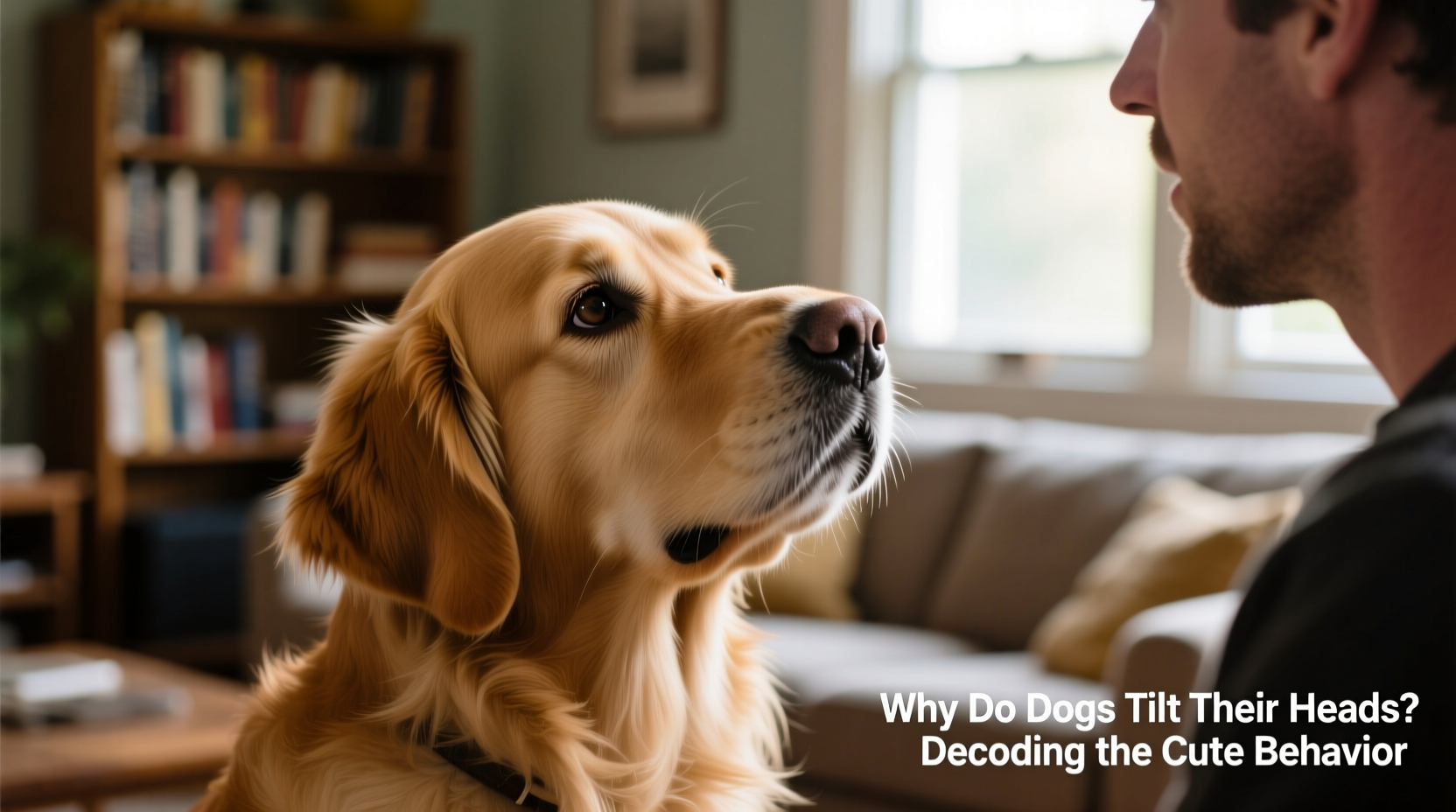
Dogs don’t hear exactly like humans do. Their ear shape, placement, and internal hearing mechanisms vary significantly across breeds, influencing how they interpret sound. The position of a dog’s ears plays a crucial role in sound localization—the ability to determine where a noise is coming from. When a dog tilts its head, it subtly alters the orientation of its ears, helping it pinpoint the source of a sound more accurately.
In dogs with long, floppy ears—such as Basset Hounds or Cocker Spaniels—the outer ear flaps can partially obstruct sound waves entering the ear canal. By tilting their heads, these dogs may adjust the angle of their ears to allow sounds to travel more directly into the auditory system. Think of it like adjusting an antenna for better reception.
Conversely, dogs with erect ears, like German Shepherds or Siberian Huskies, often tilt less frequently. Their naturally upright ears are already optimized for sound capture, reducing the need for physical adjustment. However, even these breeds will tilt under certain circumstances, suggesting that auditory mechanics are only part of the story.
Tip: If your dog tilts its head excessively or seems disoriented, consult a veterinarian—it could indicate an ear infection or neurological issue.Cognitive Processing and Language Recognition
Research suggests that dogs don’t just respond to tone—they can recognize specific words. A landmark 2016 study conducted at Eötvös Loránd University in Hungary used MRI scans to show that dogs process vocabulary and intonation in brain regions similar to humans. When dogs heard familiar commands spoken in a praising tone, both the left hemisphere (associated with word meaning) and reward centers lit up.
This cognitive complexity helps explain why dogs might tilt their heads during conversation. They’re not merely reacting to volume or pitch—they’re actively trying to extract meaning from human speech. The tilt may reflect mental concentration, much like a person furrowing their brow while solving a puzzle. It’s a physical manifestation of focused listening.
Dr. Stanley Coren, a prominent canine psychologist and author of *The Intelligence of Dogs*, notes: “When a dog tilts its head while you’re speaking, it’s likely trying to reconcile what it hears with what it expects. Familiar words trigger recognition, but novel phrases require extra processing.”
“Dogs are constantly mapping human sounds to outcomes—like treats, walks, or scolding. The head tilt often occurs when they’re piecing together those associations.” — Dr. Brian Hare, Canine Cognition Researcher, Duke University
Social Reinforcement and Learned Behavior
While biology sets the stage, social interaction fine-tunes the performance. Many dogs learn that tilting their heads elicits positive reactions from humans—laughter, affection, treats. Over time, this behavior becomes reinforced through operant conditioning. Even if the initial tilt was spontaneous or reflexive, repeated rewards teach the dog that “head tilt = attention.”
This is especially common in household pets who spend significant time around people. A dog doesn’t need to fully understand a word to associate the act of tilting with being petted or praised. In some cases, dogs may perform the gesture even when no new information is being conveyed—simply because it works.
A real-world example illustrates this well: Max, a five-year-old Border Collie mix adopted from a shelter, rarely tilted his head during his first months in his new home. His owners introduced training using verbal cues and high-value rewards. Over time, Max began tilting his head whenever they used key phrases like “want to go outside?” or “treat time.” Eventually, he started doing it preemptively—even when no treat was offered—just to prompt a reaction. His behavior evolved from genuine curiosity to strategic engagement.
Signs Your Dog’s Tilt Is Learned vs. Instinctive
| Learned Behavior | Instinctive Response |
|---|---|
| Occurs primarily when seeking attention or rewards | Appears during sudden or unfamiliar sounds |
| Happens more around familiar people | Triggered by environmental noises (e.g., doorbell, bird chirp) |
| Repeats consistently after praise or treats | Variates in angle and frequency depending on sound direction |
| May stop if ignored over time | Persists regardless of human response |
Breed Differences and Individual Variation
Not all dogs tilt their heads equally. Some breeds seem predisposed to the gesture, while others rarely do it. Brachycephalic breeds—those with short snouts and wide skulls like Pugs and Boston Terriers—are more likely to tilt frequently. One theory suggests their facial structure limits peripheral vision, prompting them to adjust head position to see human faces more clearly during interaction.
Elongated breeds, such as Greyhounds or Whippets, tend to tilt less, possibly due to superior forward vision and streamlined ear positioning. However, individual personality plays a major role. Outgoing, socially engaged dogs are more prone to expressive behaviors, including head tilting, compared to reserved or anxious individuals.
Interestingly, older dogs may tilt more as their hearing declines. Just as humans cup their ears to catch faint sounds, aging dogs may rely on head adjustments to compensate for reduced auditory sensitivity. This adaptation underscores the functional purpose behind what many assume is purely aesthetic behavior.
When the Head Tilt Warrants Concern
While occasional head tilting is normal, persistent or uncontrolled tilting can signal underlying health issues. A dog that holds its head crookedly without stimulus, especially if accompanied by circling, loss of balance, or vomiting, may be suffering from vestibular disease or an inner ear infection.
Common causes include:
- Otitis interna (inner ear inflammation)
- Ear mites or wax buildup
- Tumors affecting the vestibular system
- Neurological disorders such as strokes or seizures
If your dog suddenly begins tilting its head continuously—even when resting—or shows signs of discomfort when touched near the ears, seek veterinary care promptly. Early diagnosis improves treatment outcomes significantly.
Tip: Regular ear cleaning and check-ups can prevent infections that lead to abnormal head tilting. Use vet-approved solutions and avoid cotton swabs.Step-by-Step: Monitoring Your Dog’s Head Tilt Behavior
- Observe Frequency: Note how often your dog tilts its head and in what contexts (e.g., during speech, sudden noises).
- Track Triggers: Identify patterns—does it happen more with certain words, tones, or people?
- Assess Symmetry: Check whether the tilt favors one side consistently, which could indicate an ear problem.
- Note Duration: Brief, momentary tilts are normal; prolonged tilts lasting minutes or hours are concerning.
- Consult a Professional: If changes in behavior coincide with imbalance, disorientation, or lethargy, schedule a vet visit.
Frequently Asked Questions
Do all dogs tilt their heads?
No, not all dogs do. While many exhibit the behavior, some never tilt their heads. This variation depends on breed, hearing ability, temperament, and learned habits. Dogs with excellent hearing or minimal social motivation may not feel the need to adjust their posture to engage with sounds.
Can dogs understand what we say when they tilt their heads?
Dogs can recognize specific words and tones, especially those linked to routines or rewards. The head tilt often coincides with active listening, suggesting they are processing both the content and emotional context of speech. However, comprehension is limited to learned associations rather than full grammatical understanding.
Is head tilting a sign of intelligence?
Not directly. While intelligent dogs may be quicker to associate words with meanings—and thus more likely to tilt in response to speech—the gesture itself reflects attentiveness more than IQ. Curiosity and social bonding are stronger predictors of head tilting than raw cognitive ability.
Practical Tips for Understanding Your Dog’s Communication
Recognizing the reasons behind head tilting empowers owners to strengthen their bond with their pets. Here’s a checklist to help you interpret and respond appropriately:
- ✅ Pay attention to timing—does the tilt follow a particular word or sound?
- ✅ Observe body language: relaxed posture indicates curiosity; tension may suggest confusion or anxiety.
- ✅ Use consistent verbal cues during training to reinforce word recognition.
- ✅ Avoid over-rewarding the tilt if it becomes manipulative—balance affection with structured interaction.
- ✅ Schedule annual ear exams to rule out medical causes of frequent tilting.
Conclusion: More Than Just Cute
The dog’s head tilt is one of the most beloved behaviors in the human-canine relationship. But beneath its surface charm lies a complex interplay of anatomy, cognition, and social learning. It’s a testament to how finely attuned dogs are to our voices, our emotions, and our expectations. Whether they’re deciphering a command, chasing a faint sound, or simply asking for a scratch behind the ears, the head tilt speaks volumes about their desire to connect.
Understanding this behavior deepens our appreciation for the intelligence and emotional sensitivity of dogs. It reminds us that even the smallest gestures carry meaning in the silent dialogue we share with our pets.
💬 Have a dog that tilts on cue? Share your story or observations in the comments below—we’d love to hear how your pup communicates!








