Dog owners know that moment well: you say something in an unusual tone, rattle a treat bag, or simply ask your dog if they want dinner — and suddenly, their head tilts to one side like a curious robot recalibrating. It’s undeniably charming, often prompting smiles, photos, and even viral videos. But beyond the cuteness, there’s real science at play. The head tilt isn’t just a performance for attention; it’s a complex behavior rooted in canine cognition, anatomy, and emotional intelligence. Understanding why dogs tilt their heads reveals much about how they perceive the world, communicate with us, and form deep bonds with their human companions.
The Anatomy of a Canine Head Tilt
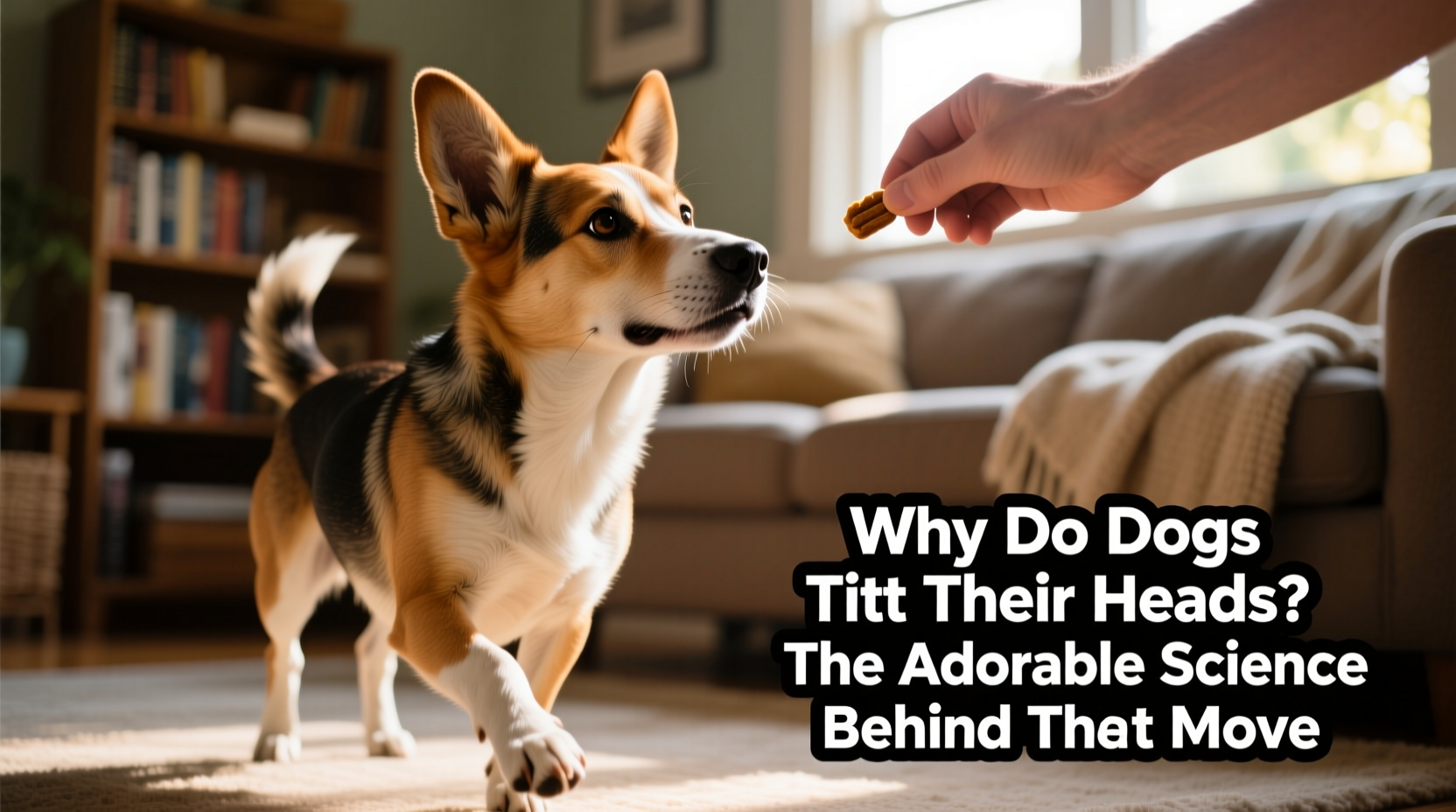
A dog’s head tilt is more than a quirk — it’s a physical adjustment influenced by skull shape, ear structure, and facial features. Brachycephalic breeds (those with short snouts, like Pugs or Bulldogs) tend to tilt less frequently than dolichocephalic breeds (long-snouted dogs like Collies or Greyhounds). This difference lies in how much their muzzles obstruct their field of vision.
When a dog hears a sound or sees movement but can't fully process it visually, especially from below eye level, they may tilt their head to adjust their line of sight. By shifting the angle, they reduce muzzle obstruction and gain a clearer view of a person’s face, particularly the mouth and eyes. This visual readjustment helps them pick up on subtle cues during communication.
Similarly, floppy-eared breeds like Beagles or Spaniels may tilt their heads to reposition their ears and improve sound localization. Dogs rely heavily on auditory input, and a slight head rotation can help them pinpoint where a noise is coming from by altering how sound waves enter each ear canal.
Tip: If your dog tilts their head frequently in quiet environments, monitor for potential hearing changes — persistent tilting could signal an ear infection or neurological issue.Hearing and Sound Processing: Tuning Into Human Speech
Dogs don’t understand language the way humans do, but they are remarkably skilled at recognizing patterns in speech. Research from Eötvös Loránd University in Hungary found that dogs process human voices in brain regions similar to those used by humans. They distinguish not only *what* we say but also *how* we say it — our tone, pitch, and emotional inflection.
When a dog hears an unfamiliar word or an unusual intonation — such as a high-pitched “Who’s a good boy?” — they may tilt their head as part of active listening. This motion helps them focus auditory attention, much like a person cupping their ear. Scientists believe the tilt fine-tunes their ability to detect sound direction and frequency, especially when trying to isolate a voice amid background noise.
Studies suggest that dogs learn to associate certain words with actions through repetition and positive reinforcement. A head tilt might occur when they hear a word they almost recognize — a kind of mental “buffering” as they search their memory for context. For example, if you usually say “walk” before grabbing the leash, but today you say “stroll,” your dog might tilt their head, trying to match the new word with the familiar routine.
“Dogs are not just reacting to tone — they’re decoding meaning. The head tilt often happens when they're mentally processing ambiguous signals.” — Dr. Sophia Yin, Veterinary Behaviorist
Social Bonding and Emotional Intelligence
One of the most compelling theories behind the head tilt ties into social cognition. Dogs have evolved alongside humans for over 30,000 years, developing unique skills for reading our emotions and intentions. The head tilt may be a socially strategic gesture — a way to engage, empathize, and strengthen the bond between pet and owner.
Observational studies show that dogs are more likely to tilt their heads when spoken to in a friendly, engaging tone, especially when eye contact is involved. This suggests the behavior is not purely reflexive but responsive to social context. In multi-dog households, some dogs learn that tilting their head results in laughter, treats, or affection — reinforcing the behavior through positive feedback.
Interestingly, dogs who are more attuned to human emotions — often described as “sensitive” or “intuitive” — tend to tilt their heads more frequently. These dogs appear to use the gesture as part of a broader set of communicative tools, including tail wags, ear movements, and paw lifts, to express curiosity or seek clarification.
Moreover, the asymmetry of the tilt — whether to the left or right — may carry significance. Some researchers propose that dogs tilt to the right when processing positive emotions and to the left when encountering novel or confusing stimuli, based on hemispheric brain specialization. While still under investigation, this lateralization hints at deeper cognitive processing behind what appears to be a simple gesture.
When Is the Head Tilt Learned vs. Instinctive?
Not all head tilts are created equal. Some arise from instinctive sensory adjustments, while others develop through learning and reinforcement. Puppies may begin tilting their heads as early as eight weeks old, often in response to high-pitched sounds or sudden movements. Over time, those whose tilts are met with smiles, pets, or treats are more likely to repeat the behavior — effectively training themselves to perform it on cue.
This learned component explains why some dogs seem to “perform” the tilt on demand, especially around visitors or cameras. It becomes a conditioned response, much like sitting or shaking hands. However, even trained behaviors often originate in genuine curiosity. A dog might initially tilt because they’re puzzled, then continue doing so because they’ve learned it gets a rewarding reaction.
To distinguish between instinctive and learned tilting, observe the context:
- Instinctive tilt: Occurs during moments of concentration, such as tracking a sound, watching a bird, or interpreting a command.
- Learned tilt: Happens on cue, after a pause in conversation, or when someone reaches for a phone — often followed by a hopeful stare.
Both types are normal and typically harmless. But if a dog begins tilting excessively without stimulation, or holds their head crooked constantly, it may indicate a medical concern such as vestibular disease, ear infection, or neurological disorder.
Medical Considerations: When to Be Concerned
While occasional head tilting is a natural part of canine behavior, persistent or uncontrolled tilting warrants veterinary evaluation. A constant head tilt — especially when accompanied by circling, loss of balance, vomiting, or abnormal eye movements — could signal an underlying health issue.
| Condition | Symptoms | Action |
|---|---|---|
| Otitis Interna (Inner Ear Infection) | Head tilt, scratching ears, discharge, imbalance | Veterinary exam, antibiotics or antifungals |
| Vestibular Disease | Sudden head tilt, stumbling, nausea | Supportive care; often resolves on its own |
| Brain Lesion or Tumor | Progressive tilt, seizures, behavioral changes | Imaging (MRI/CT), specialist referral |
| Poorly Fitted Collar | Intermittent tilt after neck pressure | Switch to harness, avoid tight collars |
If your dog has never tilted their head before and suddenly starts doing so multiple times a day, schedule a vet visit. Early diagnosis can prevent complications, especially in older dogs prone to vestibular syndrome — sometimes called “old dog vertigo.”
Tip: Avoid pulling on your dog’s leash or using choke collars, as repeated neck strain may contribute to nerve irritation affecting head posture.Mini Case Study: Bella the Border Collie
Bella, a six-year-old Border Collie, was known among her family for her dramatic head tilts whenever anyone said the word “squirrel” — even in unrelated sentences. Her owners noticed she rarely tilted at other times, only responding to that specific trigger. Curious, they recorded her reactions and shared the video with a canine cognition researcher.
Analysis revealed that Bella associated the word “squirrel” with intense excitement and outdoor chases. The high-pitched, urgent tone used when saying it triggered both auditory focus and anticipatory behavior. Her head tilt wasn’t random; it was a precise response to a learned vocal cue linked to action. Over time, Bella began tilting preemptively, as if asking, “Did you mean it this time?”
When her owners tried saying “squirrel” in a flat, monotone voice, Bella didn’t react. But when they whispered it excitedly, she snapped to attention and tilted instantly. This demonstrated that the behavior was tied not just to the word, but to its emotional delivery — a sophisticated level of auditory discrimination.
Expert Insight: What Science Says About the Head Tilt
Dr. Brian Hare, founder of the Duke Canine Cognition Center, emphasizes that the head tilt reflects dogs’ unique evolutionary adaptation to human environments.
“The head tilt is a window into how dogs have become experts at reading us. They’re not just pets — they’re social problem solvers who use every tool available, including body language, to navigate human relationships.” — Dr. Brian Hare, Cognitive Scientist
Neuroimaging studies support this view. Functional MRI scans show increased activity in dogs’ temporal cortex — associated with sound processing — during head tilting episodes. Simultaneously, areas linked to reward and social bonding light up, suggesting the behavior is both perceptual and emotionally driven.
Frequently Asked Questions
Do all dogs tilt their heads?
No, not all dogs tilt their heads regularly. Breed anatomy, personality, hearing ability, and individual experience influence how often a dog exhibits this behavior. Some dogs never tilt, while others do it frequently.
Is head tilting a sign of intelligence?
It can be. Frequent head tilting often correlates with attentiveness and problem-solving behavior. Dogs that tilt more may be more engaged in understanding human communication, though it doesn’t necessarily mean they’re “smarter” overall.
Should I encourage my dog to tilt their head?
In moderation, yes — if it’s a natural response. But avoid repeatedly triggering the behavior just for entertainment. Constantly prompting head tilts could lead to neck strain or reinforce obsessive habits, especially in eager-to-please breeds.
Checklist: Healthy Head Tilting vs. Warning Signs
- ✅ Occasional tilt during conversation or sound detection — normal.
- ✅ Tilting followed by alert posture and responsiveness — healthy engagement.
- ✅ Stops after a few seconds — typical duration.
- ❌ Constant tilt held for minutes or hours — consult a vet.
- ❌ Accompanied by walking in circles, falling, or eye twitching — seek immediate care.
- ❌ Begins suddenly in an older dog with no prior history — possible vestibular issue.
Conclusion: Appreciate the Gesture, Understand the Meaning
The next time your dog tilts their head, take a moment to appreciate what’s really happening beneath the surface. That adorable angle is more than a photo op — it’s a blend of evolutionary adaptation, sensory refinement, and emotional connection. Whether they’re fine-tuning their hearing, adjusting their vision, or seeking a deeper bond with you, the head tilt is a testament to how finely tuned dogs are to human life.
By understanding the science behind this behavior, we become better observers and caregivers. We learn to distinguish between playful quirks and potential health concerns, and we deepen our appreciation for the intelligent, feeling beings we share our homes with.
💬 Have a favorite story about your dog’s head tilt? Share it in the comments — let’s celebrate the science and sweetness of our furry friends together.








