
Dogs greet each other in ways that often make humans cringe—chief among them, the now-familiar ritual of butt-sniffing. To us, it may seem odd or even unhygienic, but for dogs, this behavior is not only normal—it’s a critical component of their social interaction. Far from being random or impolite, this act is rooted in biology, chemistry, and evolutionary necessity. Understanding why dogs engage in this behavior reveals much about how they perceive the world, communicate with one another, and form social bonds.
The Role of Scent in Canine Communication
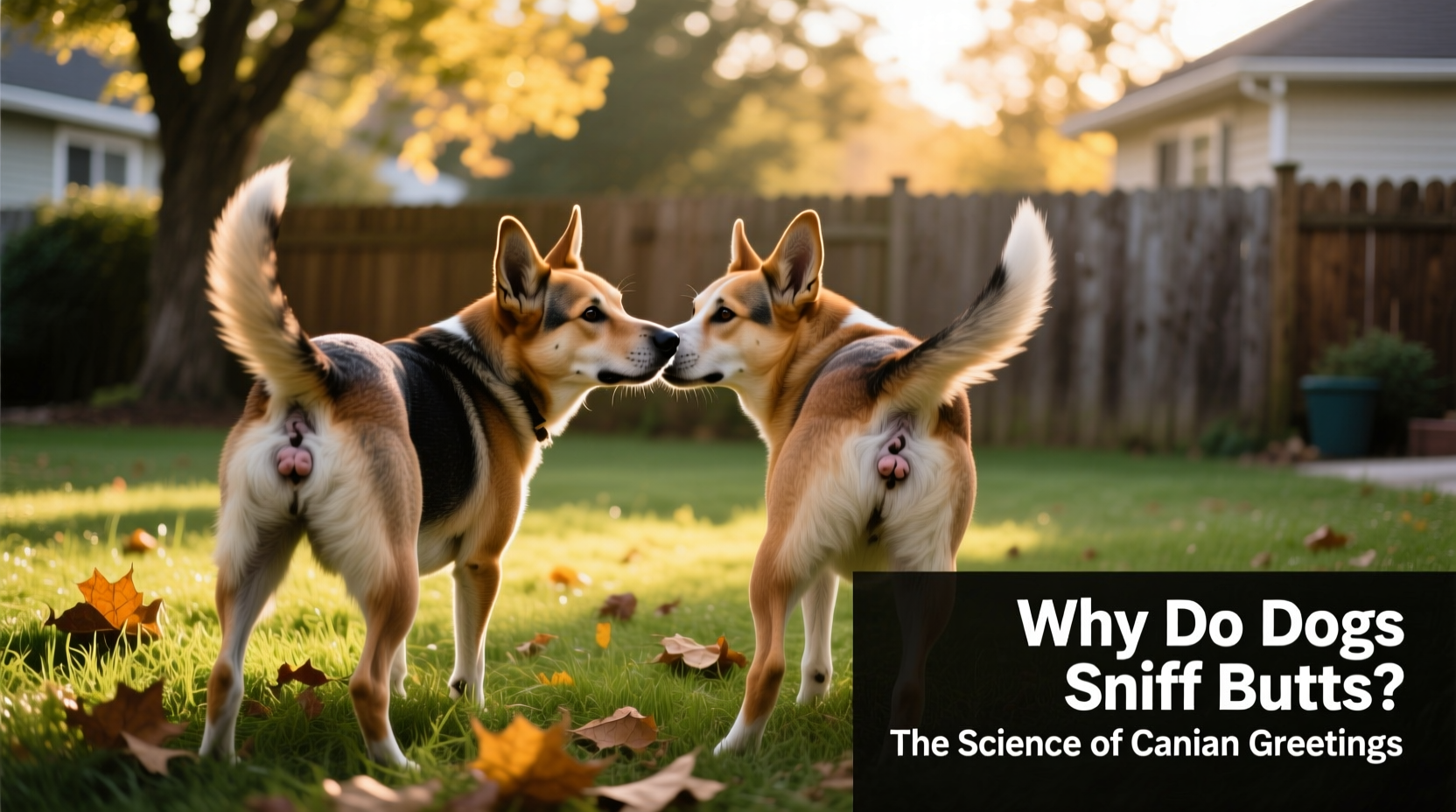
While humans rely heavily on visual cues and spoken language, dogs operate primarily through scent. Their olfactory system is vastly superior to ours: a dog’s nose contains up to 300 million olfactory receptors, compared to about 6 million in humans. Additionally, they possess a specialized organ called the vomeronasal (or Jacobson’s) organ, located in the roof of the mouth, which allows them to detect pheromones and other chemical signals that are imperceptible to people.
This heightened sense of smell enables dogs to gather detailed information from their environment—information that goes far beyond simple identification. When two dogs meet, they don’t “read the room” visually; they *sniff* it. And the most information-rich location on another dog? The anal region.
Tip: Never interrupt your dog when it’s sniffing another dog during a greeting—this is a vital part of their social process.Anal Glands and Chemical Signatures
The key to understanding butt-sniffing lies in the presence of anal glands—two small sacs located on either side of a dog’s anus. These glands secrete a strong-smelling fluid that is expelled during defecation, but also in small amounts when a dog is excited, stressed, or meeting another animal.
This secretion contains a complex cocktail of chemicals, including fatty acids, proteins, and volatile organic compounds. More importantly, it carries individualized biochemical markers that convey specific details about the dog producing it. Think of it as a biological barcode embedded in scent form.
When one dog sniffs another’s rear end, it’s effectively scanning that barcode. From just a few seconds of investigation, a dog can learn:
- The other dog’s sex and reproductive status
- Its age and general health
- Its emotional state (calm, anxious, aggressive)
- Dietary habits
- Recent social interactions
- Potential illness markers (such as infections or digestive issues)
In essence, the anal gland secretions serve as a personal profile—an olfactory résumé that answers the questions: Who are you? How are you feeling? Are you a threat?
“Sniffing the perianal area is the canine equivalent of shaking hands, exchanging business cards, and reading a person’s social media bio—all in three seconds.” — Dr. Alexandra Horowitz, Cognitive Scientist and Author of *Inside of a Dog*
Why Butt-Sniffing Is Socially Necessary
In wild canids like wolves and coyotes, accurate assessment of social partners is crucial for survival. Misreading intentions could lead to conflict, injury, or exclusion from the pack. Domestic dogs have retained this instinctual need to gather intelligence before engaging socially.
Unlike humans, who might start a conversation with “Hi, I’m Sam,” dogs begin with a silent, scent-based interrogation. This initial exchange helps prevent misunderstandings. A dog that approaches another without first gathering scent information risks appearing threatening or unpredictable.
Consider a real-world example:
Mini Case Study: Two Dogs Meet at the Park
Baxter, a 4-year-old Golden Retriever, approaches Luna, a shy rescue Border Collie, at the dog park. Before Baxter can wag his tail or play-bow, Luna turns slightly away, tucking her tail. Baxter pauses, then moves slowly to sniff her rear. After a brief investigation—lasting no more than five seconds—he steps back, wags loosely, and offers a play bow. Luna relaxes, wags in return, and the two begin to run together.
What happened in those five seconds? Baxter learned that Luna was female, spayed, slightly anxious, but healthy and not displaying aggression. That information allowed him to adjust his approach—avoiding direct eye contact and frontal approach, which can be intimidating. His respectful sniffing gave Luna time to feel safe, turning a potentially tense encounter into a friendly one.
Common Misconceptions About Butt-Sniffing
Despite its importance, many dog owners try to discourage or stop this behavior, often out of embarrassment or misunderstanding. Some common myths include:
| Misconception | Reality |
|---|---|
| It’s rude or unclean | It’s a biologically programmed, hygienic form of communication in the canine world |
| Dogs should be trained not to do it | Preventing it can increase anxiety and miscommunication between dogs |
| Only dominant dogs sniff others | All dogs, regardless of temperament, engage in and benefit from mutual sniffing |
| It spreads disease | No evidence supports this; disease transmission occurs through other means like saliva or feces |
Interfering with this natural behavior—by pulling on the leash, scolding, or forcing face-to-face greetings—can disrupt the dog’s ability to assess risk and comfort, potentially leading to fear-based reactions or aggression.
Tip: Allow dogs at least 5–10 seconds of mutual sniffing during introductions, preferably starting from the side or rear, not head-on.A Step-by-Step Look at a Canine Greeting Sequence
A typical, healthy dog-to-dog greeting follows a predictable pattern governed by instinct and social etiquette. Here’s how it unfolds:
- Initial Approach: One dog approaches from the side or at an angle, avoiding direct eye contact or frontal charge.
- Olfactory Investigation: The approaching dog moves toward the rear of the other to sniff the anal region, gathering chemical data.
- Reciprocal Sniffing: The second dog returns the gesture, ensuring both parties have exchanged information.
- Body Language Assessment: With scent data processed, dogs evaluate posture, tail position, ear orientation, and facial expression.
- Social Decision: Based on all input, they decide whether to disengage, remain neutral, or initiate play.
This sequence minimizes conflict by allowing both animals to make informed decisions. Skipping steps—especially the sniffing phase—increases the likelihood of miscommunication.
Do All Dogs Sniff Butts Equally?
While butt-sniffing is universal among healthy dogs, the intensity and duration can vary based on breed, personality, and experience. For example:
- Socially confident dogs may perform a quick sniff and move on to play.
- Anxious or under-socialized dogs may avoid sniffing altogether or become fixated on it, indicating uncertainty.
- Senior dogs may tolerate less sniffing due to discomfort or reduced mobility.
- Breed differences in olfactory sensitivity (e.g., Bloodhounds vs. Pugs) may influence how deeply they investigate.
Even dogs raised in isolation will attempt to sniff upon first meeting another dog, suggesting the behavior is innate rather than learned.
Expert Insights on Canine Olfactory Behavior
Research in canine cognition continues to underscore the centrality of smell in dog behavior. In controlled studies, dogs have demonstrated the ability to distinguish between identical twins based solely on scent, detect early-stage cancers, and identify changes in blood sugar levels in diabetics.
“The dog’s world is written in odors, not visuals. We underestimate their reliance on smell at the cost of misunderstanding their actions.” — Dr. Gregory Berns, Neuroscientist and Author of *How Dogs Love Us*
From this perspective, refusing to let dogs sniff each other is akin to blindfolding them during a job interview. They’re being asked to make critical judgments without access to their primary source of information.
Practical Checklist for Dog Owners
To support healthy canine socialization, follow these guidelines when your dog meets others:
- ✅ Allow time for mutual sniffing before intervening
- ✅ Keep leashes loose to reduce tension during greetings
- ✅ Avoid forcing face-to-face meetings, especially with unfamiliar dogs
- ✅ Watch for calming signals (licking, turning away, yawning) that indicate stress
- ✅ Supervise interactions but don’t dominate them—let the dogs communicate
- ✅ Be patient with shy dogs; they may need repeated, low-pressure exposure
- ✅ Consult a behaviorist if your dog shows aggression or extreme fear during greetings
Frequently Asked Questions
Is butt-sniffing a sign of dominance?
No. While popular belief once labeled this behavior as “dominance-related,” modern ethology rejects this idea. Sniffing is informational, not hierarchical. Both “dominant” and “submissive” dogs engage in it equally. It’s a standard part of canine protocol, not a power move.
Can excessive sniffing be a problem?
In most cases, brief sniffing is healthy. However, if a dog becomes obsessive—sniffing excessively, mounting, or refusing to disengage—it may signal anxiety, overarousal, or lack of social skills. In such cases, structured training with a certified behavior consultant can help establish better boundaries.
Should I be concerned if my dog doesn’t want to be sniffed?
Some dogs, particularly those with past trauma or medical conditions (like anal gland inflammation), may flinch or move away when approached. This is a valid boundary. Respect it, and avoid forcing interactions. Work with a vet or trainer to rule out pain or fear-based causes.
Conclusion: Respecting the Science of Canine Connection
Dogs don’t shake hands. They don’t smile politely or exchange names. Instead, they press their noses to one of the most chemically rich zones on another dog’s body and extract a wealth of information in seconds. What looks strange to us is, in fact, a sophisticated, efficient, and deeply evolved form of communication.
By understanding the science behind butt-sniffing, we honor our dogs’ natural instincts and support their emotional well-being. Rather than suppress this behavior, we should allow space for it—on walks, at parks, and during playdates. In doing so, we let dogs be dogs, navigating their world in the way nature intended.
💬 Have you observed interesting greeting behaviors between dogs? Share your experiences or questions in the comments—let’s deepen our understanding of canine communication together.








