Dogs exhibit a range of instinctive behaviors that often puzzle their human companions. One such action—kicking their hind legs after defecating—is both common and curious. While it may look like they're trying to scratch an itch or bury their waste, there’s far more going on beneath the surface. This seemingly odd ritual is deeply rooted in canine evolution and serves a crucial purpose in territorial communication. By understanding the science behind this behavior, dog owners can gain deeper insight into their pets’ natural instincts and social signaling.
The Mechanics of the Post-Poop Kick
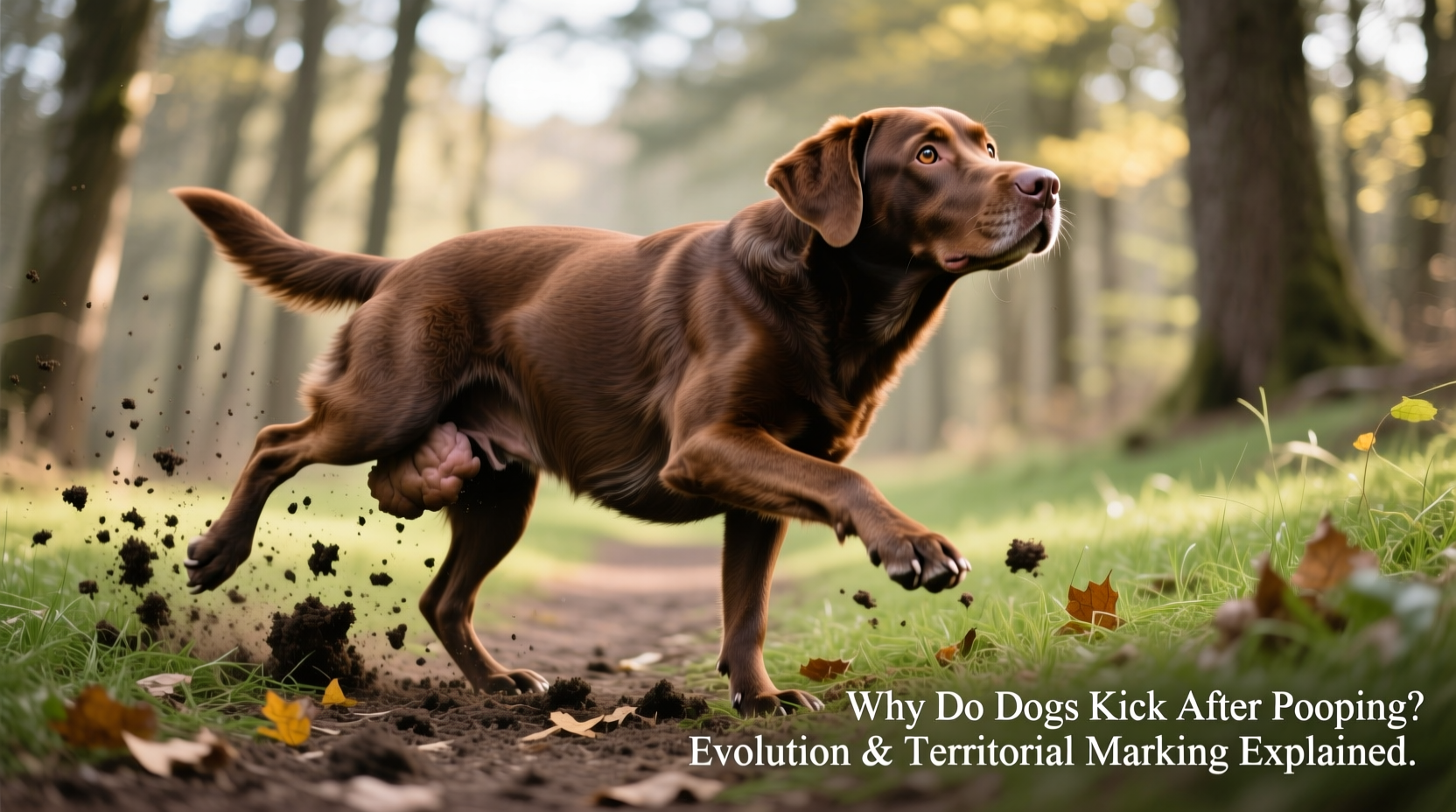
After finishing their business, many dogs perform a distinctive backward kicking motion using their hind legs. They dig their paws into the ground, often sending dirt, grass, or debris flying behind them. Unlike scratching for comfort or digging a hole, this movement is deliberate and repetitive, typically lasting just a few seconds.
This behavior isn’t random. It’s a form of **scent marking** that leverages both chemical and mechanical signals. While feces themselves contain olfactory information, the kicking amplifies and disperses that message across a wider area. The physical disturbance of the ground also leaves a visible sign—a small patch of scuffed earth—that other dogs can see and smell.
Tip: If your dog kicks vigorously after elimination, ensure their nails are trimmed regularly to prevent strain on their joints or paw injuries.Evolutionary Roots: From Wolves to Domestic Dogs
To understand why dogs kick after pooping, we must look back to their wild ancestors. Modern domestic dogs (Canis lupus familiaris) share a close genetic lineage with gray wolves (Canis lupus), pack animals that rely heavily on non-verbal communication. In the wild, visual cues are limited, especially in dense forests or at night, so scent becomes the primary mode of long-distance messaging.
Wolves and other wild canids use urine, feces, and glandular secretions to mark territory boundaries and signal reproductive status. The act of scratching the ground after defecation likely evolved as a way to enhance these signals. By disturbing the soil, they not only spread their scent but also leave behind pheromones from glands located in their paw pads.
Dr. Patricia McConnell, a renowned animal behaviorist, explains:
\"Scent marking isn't just about ownership—it's about reducing conflict. A clear olfactory signal says, 'I was here, I’m healthy, and this area is occupied,' which helps avoid unnecessary confrontations.\"
Domestication has softened some of these instincts, but the core behaviors remain. Even well-fed, house-trained dogs retain the urge to communicate through scent, demonstrating how deeply ingrained these evolutionary traits are.
The Science of Scent: How Kicking Spreads Information
Dogs possess an extraordinary sense of smell—up to 100,000 times more sensitive than humans. Their vomeronasal organ (also known as Jacobson’s organ) allows them to detect pheromones and other chemical signals invisible to us. When a dog kicks the ground after defecating, they’re engaging in a multi-layered communication strategy:
- Fecal scent dispersion: The force of kicking flings microscopic particles of feces into the air and surrounding terrain, increasing the radius of detectable odor.
- Paw pad secretions: Sweat glands between the toes release unique chemical signatures that identify the individual dog by age, sex, health, and emotional state.
- Ground disturbance: Scratching creates a visual marker and exposes new soil layers, which absorb and prolong the release of scent over time.
This combination turns a simple bathroom break into a complex broadcast. Other dogs passing through the area can “read” this message, gathering detailed information without ever encountering the original dog.
| Mechanism | Purpose | Sensory Impact on Other Dogs |
|---|---|---|
| Fecal particle scattering | Extends scent reach | Indicates recent presence and diet |
| Paw gland secretion | Personal identification | Reveals identity and hormonal status |
| Soil disruption | Creates lasting marker | Signals active territory use |
| Visual footprint | Supplements olfactory cue | Draws attention to the marked zone |
Marking Territory: More Than Just Ownership
While popularly described as \"marking territory,\" this behavior serves broader social functions. It's not merely about claiming space like a human putting up a fence. Instead, it’s part of a dynamic communication network among dogs in a given area.
In urban environments, where multiple dogs frequent the same parks or sidewalks, these scent posts help maintain social order. A dominant dog might leave more frequent or pronounced marks, while younger or submissive dogs may avoid overlapping signals. Some dogs even adjust their own marking behavior based on what they sniff—increasing their urine volume when detecting unfamiliar scents, a phenomenon known as “counter-marking.”
Kicking after defecation intensifies this message. Because the act requires energy and visibility, it may function as a **confidence display**—a way of saying, “I’m strong enough to waste time doing this, and I’m not afraid of who might come along.”
“We underestimate how much dogs rely on scent-based diplomacy. What looks like a quirky habit is actually a sophisticated system of passive communication.” — Dr. Alexandra Horowitz, canine cognition researcher and author of *Inside of a Dog*
Real-World Example: Max the Terrier in City Park
Consider Max, a 3-year-old Jack Russell Terrier who walks daily in a busy city park. Every morning, he pauses at his usual corner near the oak tree, squats, and then vigorously kicks up mulch with his back legs. His owner initially thought he was trying to bury the waste, but Max never covers it completely.
Over time, the park staff noticed a consistent patch of disturbed mulch in that spot. Other dogs routinely stop to investigate, often lifting their leg immediately afterward. One day, a new dog—an unneutered male Labrador—passed through and urinated directly over Max’s site. The next day, Max spent extra time kicking and added a urine mark of his own.
This scenario illustrates how kicking contributes to an ongoing **territorial dialogue**. Max isn’t defending a literal domain, but he is asserting his regular presence. The interaction with the Labrador shows how dogs respond to challenges in this silent exchange.
When Kicking Becomes Excessive: Behavioral Considerations
While occasional kicking is normal, excessive or obsessive marking behavior may indicate underlying issues. Dogs that kick repeatedly in one spot, seem anxious during elimination, or mark indoors may be responding to stress, competition, or changes in their environment.
Common triggers include:
- New pets or people in the home
- Changes in routine
- Exposure to unfamiliar dogs during walks
- Lack of spaying or neutering
If a dog begins marking inside the house—especially on vertical surfaces—this shifts from natural communication to problematic behavior. In such cases, consulting a veterinarian or certified animal behaviorist is advisable to rule out medical causes (like urinary tract infections) and address psychological factors.
Tip: Neutering can reduce territorial marking in male dogs by up to 60%, according to studies from the American Veterinary Medical Association.Step-by-Step: How to Respond to Natural Marking Behavior
If your dog kicks after pooping, there’s no need to discourage the behavior unless it leads to injury or property damage. Instead, support healthy expression through these steps:
- Observe without interference: Let your dog complete the kicking motion naturally during walks. Interrupting can cause frustration or confusion.
- Maintain paw health: Check paws regularly for cuts, thorns, or overgrown nails, especially if walking on rough terrain.
- Provide consistent routines: Predictable walk schedules reinforce confidence and reduce anxiety-driven over-marking.
- Avoid punishment: Never scold your dog for kicking—it’s an instinctive act, not defiance.
- Use positive reinforcement: Reward calm, appropriate elimination with praise or treats to strengthen good habits.
FAQ: Common Questions About Canine Kicking Behavior
Do all dogs kick after pooping?
No, not all dogs exhibit this behavior. Some breeds or individuals are more prone to it due to genetics, temperament, or environmental influences. Others may simply express marking differently, such as through urine or rubbing their bodies on surfaces.
Is kicking the same as burying waste?
Not exactly. True burial involves covering feces completely, which some dogs do occasionally. Kicking is more about spreading scent than hiding it. In fact, the goal is the opposite: to make the deposit more noticeable to other dogs.
Should I stop my dog from kicking on public paths?
Unless they’re damaging property or creating a hazard, there’s no need to intervene. This is natural canine behavior. However, always clean up solid waste when required by local laws—even if your dog wants to advertise it!
Conclusion: Respecting Instinct in a Domestic World
The sight of a dog kicking up dirt after a bowel movement might seem comical or perplexing, but it’s a window into a rich world of silent communication shaped by thousands of years of evolution. Far from being a meaningless quirk, this behavior plays a vital role in how dogs navigate their social environments, assert presence, and avoid conflict.
As pet owners, understanding these instincts allows us to appreciate our dogs not just as companions, but as animals with complex sensory lives. Rather than suppress natural actions, we can guide them appropriately—supporting healthy expression while maintaining harmony in shared spaces.
💬 Have you noticed your dog kicking after pooping? Share your observations or questions in the comments—let’s decode canine behavior together!








