Dogs eating grass is one of the most common yet misunderstood behaviors in canine companionship. From backyard grazing to sudden lawn munching during walks, nearly every dog owner has witnessed this at least once. While some assume it’s a sign of illness or poor diet, others believe it’s a natural instinct. The truth lies somewhere in between — and often, not where popular myths suggest.
Despite decades of observation and research, misconceptions persist: that grass-eating always leads to vomiting, that it indicates a nutritional deficiency, or that it's purely a self-medicating behavior. This article separates fact from fiction using veterinary science, behavioral studies, and real-world observations to give dog owners a clear, accurate understanding of this widespread habit.
The Science Behind Grass-Eating in Dogs
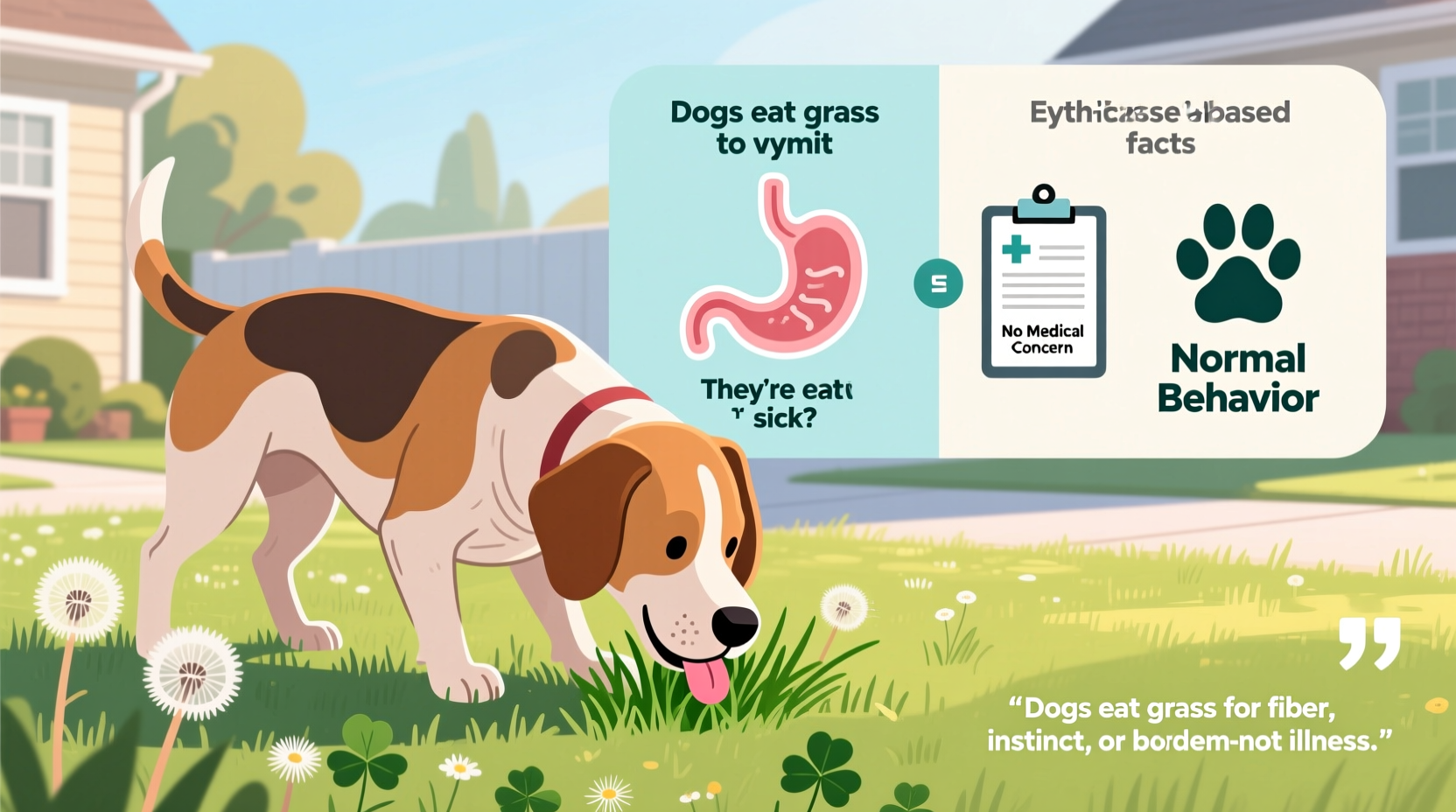
Grass consumption among dogs is remarkably common. A 2007 study published in Applied Animal Behaviour Science surveyed over 1,500 dog owners and found that 68% of healthy dogs regularly ate grass, with only 22% showing signs of illness beforehand and just 9% vomiting afterward. These findings challenge the long-held assumption that dogs eat grass primarily to induce vomiting.
From an evolutionary standpoint, dogs are omnivores with carnivorous roots. Their ancestors, like wolves, consumed plant material indirectly through the stomach contents of herbivorous prey. Modern domestication hasn’t erased this tendency — many dogs still show interest in vegetation, suggesting that occasional grass-eating may be a normal, non-pathological behavior.
Dr. Karen Sueda, a board-certified veterinary behaviorist at VCA Animal Hospitals, explains:
“Eating grass is generally a normal behavior for dogs. In most cases, it’s not linked to illness, nor does it usually lead to vomiting. It’s more likely an inherited trait or simply a matter of taste and texture.”
The gastrointestinal tract of dogs is capable of processing small amounts of plant matter. While they lack the enzymes to fully digest cellulose, incidental ingestion of grass doesn’t harm them — especially if the grass is free of pesticides, fertilizers, or parasites.
Myth vs. Reality: Common Misconceptions About Dogs and Grass
Over time, several myths have taken root in pet owner communities. Let’s examine and clarify the most persistent ones.
| Myth | Reality |
|---|---|
| Dogs eat grass because they’re sick. | Most dogs eat grass when perfectly healthy. Only a minority show illness before grazing, and even fewer vomit as a result. |
| Eating grass means my dog has a dietary deficiency. | No scientific evidence supports this. Dogs on balanced commercial diets still eat grass. Fiber supplementation rarely reduces the behavior. |
| Grass-eating is a form of self-medication to purge toxins. | While possible in rare cases, there’s no consistent data proving dogs use grass as an emetic tool. Most consume it casually and without consequence. |
| If my dog eats grass, I should stop them immediately. | Unless the grass is treated with chemicals or the dog shows distress, intervention isn’t necessary. Obsessive grass-eating may warrant evaluation, but casual grazing is normal. |
The persistence of these myths often leads to unnecessary worry or misguided interventions, such as switching diets unnecessarily or punishing natural behavior. Understanding the reality helps owners respond appropriately — or not at all.
When Grass-Eating Might Signal a Problem
While occasional grass consumption is typically harmless, certain patterns may indicate underlying issues. Behavioral and medical red flags include:
- Obsessive or compulsive grass-eating (multiple times daily, regardless of environment)
- Consuming large quantities rapidly
- Immediate vomiting after every episode
- Signs of gastrointestinal distress: diarrhea, lethargy, loss of appetite
- Eating non-grass items like dirt, feces, or plastic alongside grass (pica)
In such cases, a veterinary consultation is warranted. Possible causes could include:
- Gastrointestinal disorders — such as inflammatory bowel disease or pancreatitis.
- Parasitic infections — like hookworms or giardia, which can cause nausea or discomfort.
- Anxiety or stress — dogs may develop displacement behaviors, including excessive licking or grazing, when anxious.
- Dietary imbalance — though rare with commercial diets, poor nutrient absorption can create unusual cravings.
A Real Example: Max, the Labrador with a Lawn Habit
Max, a three-year-old Labrador Retriever, began eating grass intensely after his family moved to a new home. His owner, concerned about potential poisoning or digestive issues, brought him to the vet after noticing frequent vomiting. Initial tests revealed no parasites or physical illness. However, upon further discussion, the veterinarian learned that Max had been left alone for longer periods post-move and showed other anxiety signs — pacing, whining, and reluctance to settle.
The diagnosis? Environmental stress manifesting as compulsive grass consumption. With behavioral modification techniques — increased exercise, mental stimulation, and a gradual desensitization routine — Max’s grass-eating decreased significantly within six weeks. No dietary changes were needed.
This case illustrates how context matters. While grass itself wasn’t harmful, the pattern signaled an emotional need, not a digestive one.
Safe Practices for Dog Owners
Since grass-eating is common and usually benign, the best approach is prevention-focused safety rather than suppression. Follow these guidelines to protect your dog while allowing natural behaviors.
Step-by-Step Guide: Ensuring Safe Grass Access
- Inspect the lawn — Ensure your yard is free of chemical treatments like herbicides, pesticides, or synthetic fertilizers. Opt for pet-safe alternatives if needed.
- Check for toxic plants — Some ornamental grasses or garden plants (e.g., lilies, azaleas, sago palms) are poisonous. Remove or fence off hazardous species.
- Supervise outdoor time — Especially in public parks or neighbors’ yards, where chemical use isn’t controlled.
- Provide alternatives — Offer safe chew toys or edible dog-friendly greens like wheatgrass grown indoors.
- Monitor frequency and response — If your dog eats grass occasionally and shows no ill effects, no action is needed. Track changes over time.
Never punish your dog for eating grass. Doing so can increase anxiety and damage trust. Instead, redirect gently if you’re concerned about location or safety.
Checklist: Is Your Dog’s Grass-Eating Safe?
- ✅ Grass is untreated with chemicals
- ✅ Dog appears healthy (bright eyes, normal appetite, regular bowel movements)
- ✅ Eating grass occasionally, not obsessively
- ✅ No immediate vomiting or distress after consumption
- ✅ Up-to-date on deworming and vet checkups
- ✅ No ingestion of foreign objects alongside grass
If all boxes are checked, your dog is likely engaging in normal behavior. If not, schedule a vet visit to rule out medical or psychological causes.
Expert Insights and Veterinary Consensus
Veterinarians increasingly agree that grass-eating in dogs is not inherently dangerous. Dr. Joseph Wakshlag, former chief nutritionist at Cornell University College of Veterinary Medicine, notes:
“We’ve seen generations of dogs eat grass with no adverse effects. As long as the environment is safe, there’s no reason to discourage the behavior. It’s part of who they are.”
He adds that while some dogs may vomit after eating grass, it’s often due to mechanical irritation — rapid swallowing of coarse blades — rather than a deliberate attempt to purge. The act of vomiting may be coincidental, not intentional.
Nutritionally, dogs don’t require grass in their diet. However, adding fiber-rich vegetables like pumpkin or green beans can support digestive health if owners are seeking natural supplements. But again, this won’t necessarily stop grass-eating, as the motivation is often behavioral or sensory.
Frequently Asked Questions
Does eating grass hurt my dog?
Not usually. Small amounts of clean, chemical-free grass are harmless. Risks arise only if the grass is contaminated, eaten excessively, or if the dog has an underlying condition.
Should I stop my dog from eating grass?
Not unless it becomes obsessive or occurs in unsafe environments. Discouraging natural behaviors without cause can increase stress. Focus on safety instead of elimination.
Can I grow safe grass for my dog at home?
Yes. Growing wheatgrass, oat grass, or barley grass indoors in a pot gives your dog a clean, controlled source. Many pet stores sell “pet grass” kits designed specifically for this purpose.
Conclusion: Embracing Natural Behavior with Informed Care
Dogs eat grass for reasons that are often simpler than we assume. Whether driven by instinct, curiosity, texture preference, or mild anxiety, the behavior is typically normal and not a sign of illness. The myths linking grass consumption directly to vomiting or nutritional gaps have been largely debunked by veterinary science.
As responsible owners, our role isn’t to eliminate every quirky habit but to understand it, assess risk, and respond wisely. By ensuring safe environments, monitoring patterns, and consulting professionals when needed, we can support our dogs’ well-being without overreacting to natural tendencies.
💬 Have a story about your dog and grass-eating? Share your experience in the comments — your insight might help another pet owner feel more at ease.








