
Dogs twitch, whimper, and paddle their legs in their sleep—behaviors that often make owners smile and wonder: are they dreaming? The answer is almost certainly yes. Like humans, dogs experience complex sleep cycles, including rapid eye movement (REM) sleep, the stage most closely associated with vivid dreaming. This is especially true for puppies, who spend a significantly larger portion of their rest time in REM than adult dogs. Understanding why dogs dream so much—and what occurs during puppy REM sleep—reveals important insights into their cognitive development, emotional processing, and overall well-being.
The Science Behind Canine Sleep Cycles
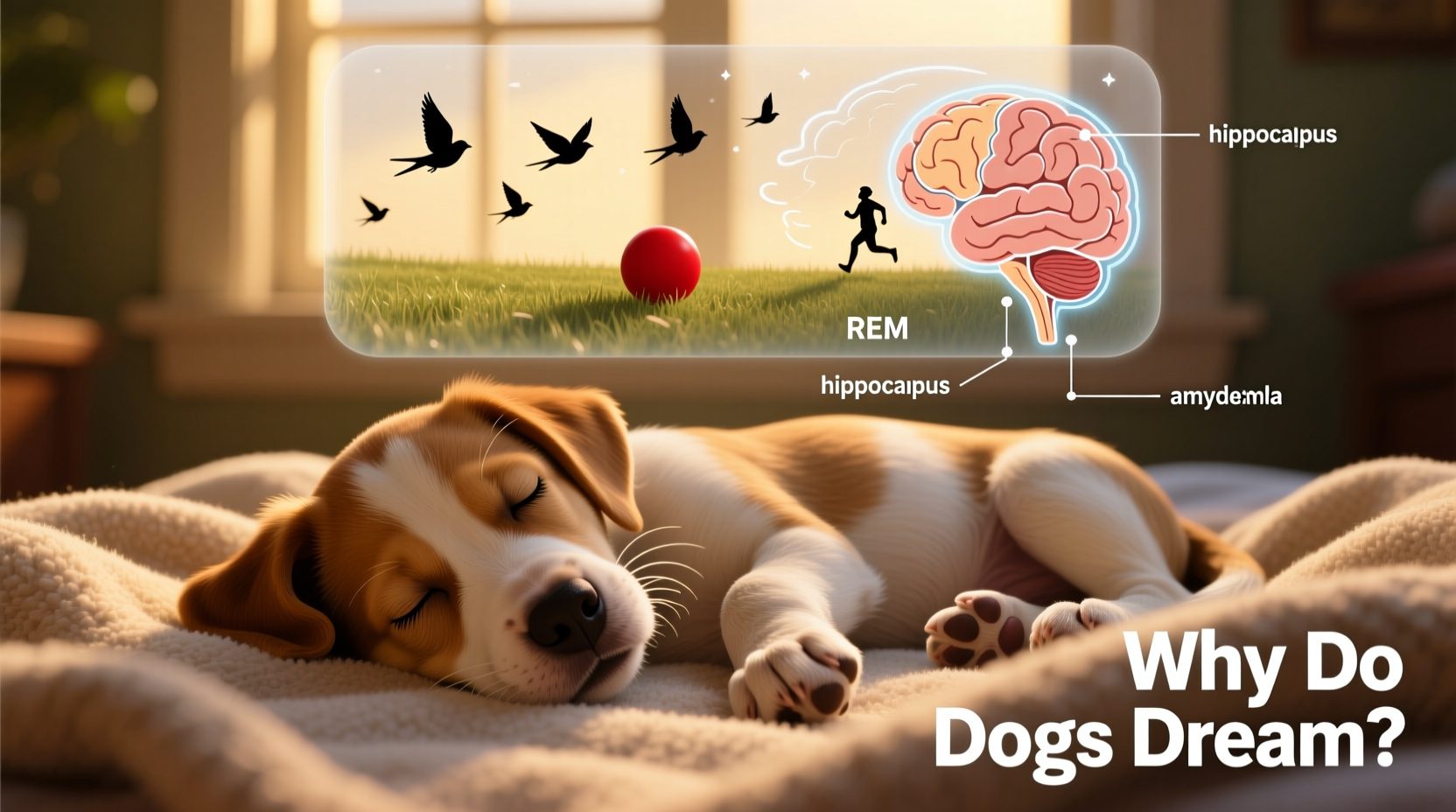
Dogs, like humans and many mammals, cycle through multiple stages of sleep: light sleep, deep sleep, and REM sleep. These phases repeat throughout the night, forming a predictable pattern essential for physical recovery, memory consolidation, and neurological health.
In adult dogs, REM sleep accounts for approximately 10–12% of total sleep time. Puppies, however, can spend up to 50% of their sleep in REM. This dramatic difference underscores the importance of dreaming during early development. During REM, brain activity spikes to levels comparable to wakefulness. Neural circuits fire rapidly, reinforcing learning pathways and simulating real-world experiences in a safe, internal environment.
Studies using electroencephalography (EEG) have confirmed that dogs exhibit brainwave patterns during REM that mirror those seen in humans when dreaming. These include theta waves in the hippocampus—a region critical for memory—and bursts of activity across the cortex. Researchers at the Massachusetts Institute of Technology observed that rats replayed maze-running sequences in their sleep, suggesting that dreams serve as mental rehearsals. Similar mechanisms are believed to occur in dogs, particularly after new training sessions or environmental exposure.
Tip: If your dog twitches or whimpers during sleep, resist waking them—interrupting REM can disrupt memory processing and leave them disoriented.What Happens During Puppy REM Sleep?
Puppies sleep an average of 18–20 hours per day, and a large proportion of that time is dedicated to REM. This intense dreaming phase supports several key developmental functions:
- Neural pruning and synaptic strengthening: As the puppy’s brain grows, unused neural connections are eliminated while important ones are reinforced. REM sleep helps optimize this process by activating relevant circuits through simulated experiences.
- Motor skill refinement: Even though muscles are largely paralyzed during REM (a protective mechanism called atonia), small twitches in paws, whiskers, and facial muscles suggest the brain is practicing movements—running, biting, playing—that will be essential in waking life.
- Emotional regulation: Early life involves sensory overload. Dreams may help process novel stimuli—new sounds, smells, people—by integrating them into coherent memory networks, reducing fear responses over time.
- Social bonding rehearsal: Puppies often dream about interactions with littermates, humans, or other animals. These dreams may strengthen social recognition and communication skills before they’re needed in real encounters.
Dr. Stanley Coren, a prominent canine psychologist and author of How Dogs Think, explains: “Puppy brains are like sponges absorbing everything. REM sleep is where much of that absorption gets organized. It’s not just rest—it’s active learning.”
“We’ve seen EEG patterns in sleeping puppies that resemble those of humans recalling episodic memories. This suggests they aren’t just reacting—they’re mentally reliving experiences.” — Dr. Adrian Morrison, Veterinary Neuroscientist, University of Pennsylvania
Why Do Dogs Dream So Much Compared to Adults?
The frequency and intensity of dreaming in dogs, especially puppies, stem from both biological necessity and lifestyle factors. Unlike adult dogs, puppies face a steep learning curve. In their first few months, they must master house training, social cues, obedience commands, and environmental navigation—all while undergoing rapid physical growth.
This cognitive load demands extensive offline processing. Just as students consolidate lecture material during sleep, puppies use dreams to reinforce daytime lessons. A puppy that spent the afternoon learning “sit” or encountering a vacuum cleaner may replay those events in dreams, embedding them more deeply into long-term memory.
Moreover, puppies lack the ability to regulate arousal effectively. Their nervous systems are still maturing, making them prone to overstimulation. REM sleep provides a controlled space to desensitize to stressors without real-world consequences. For example, a dream about a loud noise might allow the brain to practice calming responses, reducing anxiety upon future exposure.
| Age Group | Average Daily Sleep | Estimated REM Percentage | Purpose of Increased REM |
|---|---|---|---|
| Newborn Puppies (0–4 weeks) | 20–22 hours | ~50% | Brain development, sensory integration |
| Young Puppies (2–6 months) | 18–20 hours | 30–40% | Learning reinforcement, motor coordination |
| Adult Dogs (1+ years) | 12–14 hours | 10–12% | Memory maintenance, emotional balance |
| Senior Dogs (7+ years) | 14–16 hours | 8–10% | Neuroprotection, cognitive preservation |
The decline in REM with age parallels human development. Human infants spend about 50% of sleep in REM; by adulthood, it drops to 20–25%. Dogs follow a similar trajectory, indicating evolutionary conservation of sleep-based learning mechanisms across species.
Recognizing Dreaming in Your Dog: Signs and Myths
Most dog owners have witnessed signs of dreaming: rhythmic leg kicks, soft barks, ear flicks, or rapid eye movements beneath closed lids. These behaviors typically begin 20 minutes into a sleep cycle and last 1–5 minutes, aligning with typical REM durations.
However, not all nocturnal movements are dreams. It’s important to distinguish between normal REM activity and potential medical concerns such as seizures. The following checklist can help identify healthy dreaming:
Dreaming Behavior Checklist
- Intermittent, brief muscle twitches (especially in limbs or face)
- Soft vocalizations (whimpers, mumbles, quiet barks)
- Eye movement under eyelids
- Responsive to gentle calling after waking
- Smooth transition back to alertness
In contrast, seizure activity tends to be prolonged, rigid, and accompanied by loss of bladder control, excessive drooling, or unresponsiveness. Seizures also rarely occur during relaxed naps and often happen when awake or in deep non-REM sleep.
Tip: Record a short video if you're unsure whether your dog is dreaming or seizing. Veterinarians can often differentiate based on movement patterns and context.Common Myths About Dog Dreams
- Myth: Dogs only dream about food.
Reality: While food-related dreams likely occur, research suggests dogs dream about daily activities—chasing squirrels, walking with owners, playing with other dogs. - Myth: All breeds dream equally.
Reality: Smaller dogs and puppies dream more frequently, possibly due to faster brainwave cycles and higher metabolic rates. - Myth: You should wake a dog having a nightmare.
Reality: Unless the dog is at risk of injury, let them finish the cycle. Abrupt awakening can cause confusion or defensive reactions.
Supporting Healthy Sleep and Dreaming in Dogs
Just as quality sleep enhances human cognition, optimal rest supports a dog’s mental and physical health. Disrupted sleep can impair learning, increase anxiety, and weaken immune function. Owners play a crucial role in creating conditions conducive to restorative sleep, especially during the formative puppy stage.
Step-by-Step Guide to Improving Canine Sleep Quality
- Establish a consistent sleep schedule: Feed, walk, and settle your dog at regular times to regulate circadian rhythms.
- Provide a quiet, dark sleeping area: Minimize noise and light disruptions, especially during daytime naps.
- Use a supportive bed: Orthopedic foam helps prevent joint strain, promoting deeper, uninterrupted sleep.
- Limited evening stimulation: Avoid high-energy play or training right before bedtime to ease transition into rest.
- Morning mental exercise: Engage your dog with puzzle toys or scent games to reduce nighttime restlessness from unmet cognitive needs.
- Monitor health: Conditions like arthritis, anxiety, or respiratory issues can fragment sleep. Consult your vet if sleep disturbances persist.
“Sleep isn’t downtime for a puppy—it’s prime time for brain building. A well-rested puppy learns faster, behaves better, and bonds more securely.” — Dr. Karen Overall, Veterinary Behavioral Medicine Specialist
Frequently Asked Questions
Do dogs remember their dreams?
There’s no evidence that dogs recall dreams the way humans do. However, the content of dreams likely influences behavior indirectly by reinforcing memories and emotional associations formed during waking hours.
Can I influence what my dog dreams about?
Indirectly, yes. Dogs tend to dream about recent or emotionally significant experiences. Positive daytime interactions—play, training, affection—are more likely to generate pleasant dreams. Traumatic events may lead to nightmares, underscoring the need for gentle socialization.
Is it normal for older dogs to dream less?
Yes. As dogs age, total sleep increases but REM percentage decreases. This mirrors natural neurological slowing. However, sudden changes in sleep behavior—like excessive vocalizing or agitation—should be evaluated by a veterinarian, as they may indicate cognitive dysfunction or pain.
Real-Life Example: Max the Rescue Puppy
Max, a 12-week-old mixed breed rescued from a rural shelter, exhibited extreme fear of stairs and vacuum cleaners. His foster owner implemented a structured routine: morning training sessions, afternoon socialization walks, and a calm bedtime ritual. Within two weeks, Max began sleeping more soundly. One night, his owner noticed him softly barking and “running” in his sleep—movements that mirrored his daytime stair-climbing exercises. Over the next few days, Max showed marked improvement in confidence, successfully ascending stairs without hesitation. His foster noted, “It was like he practiced in his dreams and woke up ready to try again.”
This case illustrates how REM sleep can bridge learning and real-world application, turning anxiety into competence through subconscious rehearsal.
Conclusion: Honoring the Hidden Work of Canine Dreams
Dogs dream so much—not out of whimsy, but necessity. Especially in puppies, REM sleep is a vital engine of development, shaping brains, refining behaviors, and processing the overwhelming flood of new experiences. Every twitch, bark, and flicker of the eyes during sleep represents active neural construction, laying the foundation for a balanced, intelligent, and emotionally resilient companion.
By understanding and protecting your dog’s sleep, you’re not just ensuring rest—you’re nurturing their mind. Create a sanctuary for sleep, respect their dream cycles, and recognize that even in stillness, your dog is hard at work becoming the best version of themselves.
💬 Have you noticed your dog dreaming? What behaviors do they display? Share your observations in the comments—your experiences could help others understand the secret world of canine sleep.








