
Dogs are more than just pets—they're family members with rich emotional and cognitive lives. One of the most endearing sights for any dog owner is watching their furry companion twitch, whimper, or paddle their legs in their sleep. These behaviors often spark curiosity: Are dogs really dreaming? If so, what could they possibly be dreaming about? Modern neuroscience offers compelling answers. Based on studies of canine brain activity, sleep patterns, and behavioral observations, scientists now have strong evidence that dogs not only dream but likely replay daily experiences—much like humans do.
The Science Behind Canine Sleep Cycles
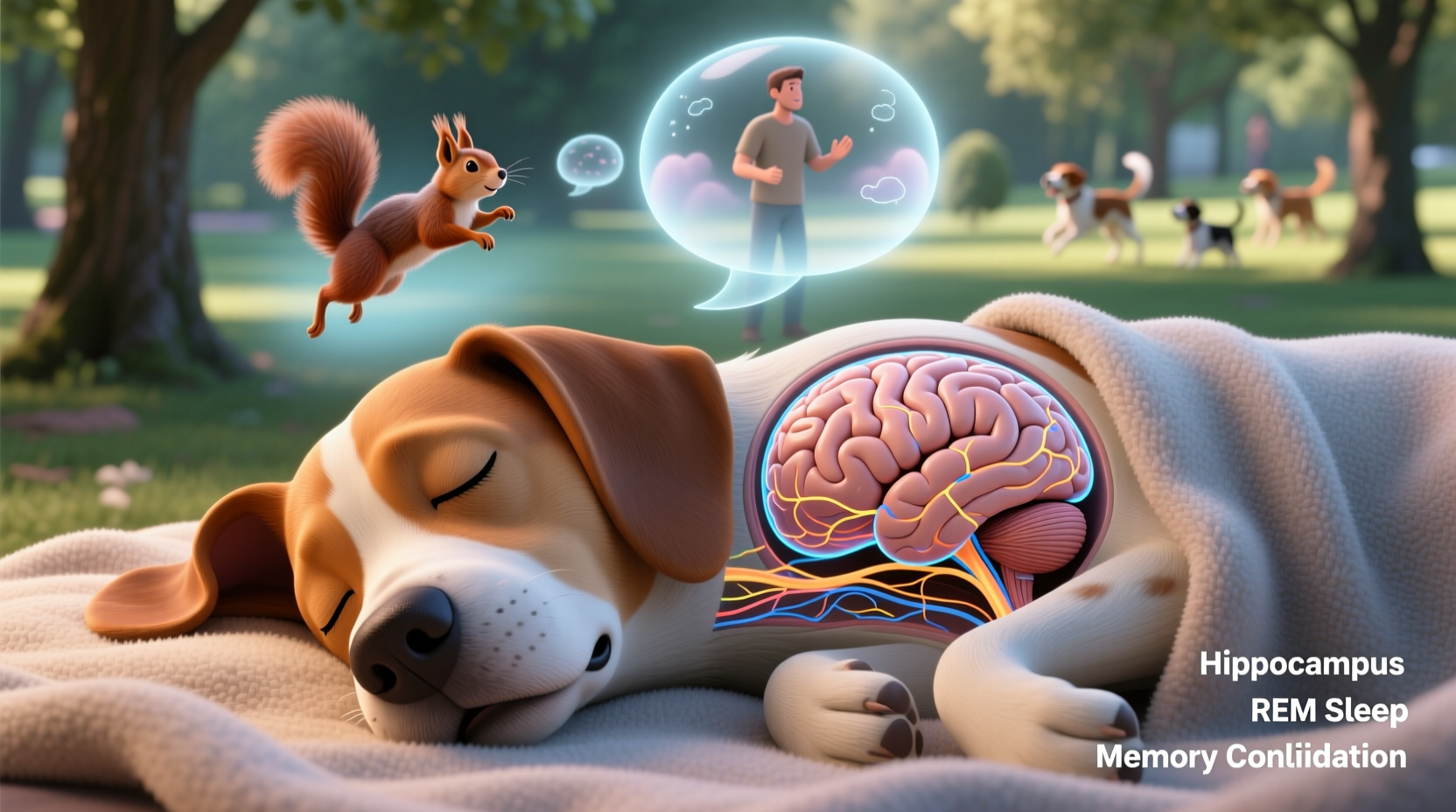
Dogs, like humans, experience multiple stages of sleep, including rapid eye movement (REM) sleep—the phase most closely associated with vivid dreaming. During REM sleep, brain activity spikes, resembling wakefulness, while the body remains largely paralyzed to prevent acting out dreams. This temporary muscle atonia is controlled by the brainstem, specifically the pons, which inhibits motor neurons during REM.
Studies conducted at MIT in the early 2000s on rats demonstrated that neural firing patterns during REM sleep mirrored those recorded while the animals navigated mazes while awake. When researchers blocked the pons, preventing muscle inhibition, the sleeping rats began to move as if running through the maze—suggesting they were physically enacting their dreams. While direct electrode studies on dogs are limited for ethical reasons, similar brainwave patterns observed via EEG confirm that dogs enter REM sleep and exhibit comparable neural activity.
A typical dog sleep cycle lasts about 20–30 minutes, significantly shorter than the human 90-minute cycle. Puppies and older dogs spend more time in REM sleep, which may explain why they twitch and vocalize more frequently during rest. Small breeds tend to have more frequent but shorter REM bursts, while larger breeds experience longer, deeper dream phases.
What Are Dogs Dreaming About?
Given the structural similarities between human and canine brains—particularly in the limbic system, which governs emotions and memory—it's highly probable that dogs dream about events from their waking lives. Researchers believe that dogs replay familiar activities such as chasing squirrels, playing fetch, walking with their owners, or reacting to other animals.
Dr. Stanley Coren, a prominent canine psychologist and author of *The Intelligence of Dogs*, explains:
“Dogs’ dreams likely reflect their daily experiences. If your dog barks or runs in their sleep, they’re probably dreaming about chasing something or defending their territory—just as you might dream about work or social interactions.” — Dr. Stanley Coren, Canine Behavior Researcher
Because dogs rely heavily on scent, sound, and motion in their perception of the world, their dreams may be multisensory replays of walks in the park, encounters with other dogs, or even searching for hidden treats. A dog who loves car rides might dream of wind blowing through their fur; one trained in agility could mentally rehearse navigating tunnels and jumps.
Tip: Avoid waking a dreaming dog unless necessary. Interrupting REM sleep can cause confusion or defensive reactions due to sudden disorientation.Signs Your Dog Is Dreaming
While not every twitch indicates a dream, certain behaviors strongly suggest REM sleep and active dreaming:
- Leg twitching or paddling motions – Often mimics running or chasing.
- Whimpering, growling, or soft barking – May indicate excitement or confrontation in a dream.
- Facial movements – Twitching whiskers, jaw chomping, or ear flicks suggest sensory engagement.
- Rapid eye movement beneath closed lids – A definitive marker of REM sleep.
- Irregular breathing patterns – Breathing may speed up or become shallow during intense dream sequences.
These signs usually last 1–5 minutes and occur cyclically throughout a nap or night’s sleep. The frequency and intensity vary based on breed, age, and daily stimulation. Highly active dogs or those undergoing training often show more pronounced dream behaviors, likely due to increased mental processing needs.
Do All Dogs Dream the Same Way?
No two dogs dream identically, just as no two humans do. Individual personality, breed tendencies, and life experiences shape dream content. For example:
| Breed/Type | Likely Dream Themes | REM Activity Level |
|---|---|---|
| Herding Dogs (e.g., Border Collie) | Chasing livestock, responding to commands, navigating obstacles | High – frequent twitching and vocalizations |
| Hunting Breeds (e.g., Labrador Retriever) | Retrieving, tracking scents, swimming | Very High – prolonged leg movements |
| Guard Dogs (e.g., German Shepherd) | Patrolling, alerting, confronting strangers | Moderate-High – occasional growling or barking |
| Toy Breeds (e.g., Chihuahua) | Interactions with owners, reacting to sounds, playful escapes | Frequent but brief – short REM bursts |
| Puppies | Exploring new environments, learning commands, playing | Very High – underdeveloped pons allows more movement |
This variation underscores that dreaming is tied to lived experience. A rescue dog with past trauma may exhibit anxious dream behaviors, while a well-socialized pet typically shows calm, playful dream patterns.
When Dreaming Might Signal a Problem
While dreaming is normal, some sleep-related behaviors warrant attention. Not all movements during sleep are dreams—some may indicate medical or neurological issues.
Seizures during sleep differ from dreaming in several key ways:
- Duration: Seizures often last longer than 2–3 minutes; dream twitches are brief.
- Symmetry: Seizures typically involve rigid, symmetrical convulsions; dream movements are fluid and asymmetrical.
- Recovery: After a seizure, dogs appear disoriented, drool excessively, or pace for minutes to hours. After dreaming, they wake normally.
- Eyes: During seizures, eyes may remain open and glazed; during REM, eyes dart rapidly beneath closed lids.
If you're unsure whether your dog is dreaming or seizing, record the episode and consult your veterinarian. Conditions like epilepsy, cognitive dysfunction syndrome (especially in seniors), or sleep disorders can mimic or disrupt dreaming.
Mini Case Study: Max the Rescue Beagle
Max, a three-year-old beagle adopted from a rural shelter, initially showed erratic sleep behavior. His new owner reported frequent screaming, thrashing, and waking in panic. At first, these were assumed to be nightmares from past neglect. However, after a veterinary neurologist reviewed a video of an episode, Max was diagnosed with nocturnal frontal lobe epilepsy—not dreaming gone awry, but actual seizures.
After starting anti-seizure medication, Max’s nighttime episodes ceased, and his REM sleep normalized. He now exhibits gentle paw twitches and soft whines—typical dream signs—followed by peaceful awakenings. This case highlights the importance of distinguishing between normal dreaming and pathological conditions.
How to Support Healthy Dreaming in Dogs
Dreaming plays a vital role in memory consolidation, emotional regulation, and learning—just as it does in humans. To support healthy sleep and dreaming, consider the following checklist:
Checklist: Promoting Healthy Sleep and Dreaming- Provide a quiet, comfortable sleeping area away from noise and light.
- Maintain a consistent daily routine, including feeding and walk times.
- Ensure adequate physical and mental exercise during the day.
- Avoid overstimulation before bedtime (e.g., intense play or loud TV).
- Monitor for changes in sleep patterns, especially in senior dogs.
- Visit the vet annually to rule out underlying health issues affecting sleep.
Environmental enrichment during the day directly impacts dream quality. Dogs exposed to varied stimuli—new people, places, sounds, and puzzles—are more likely to have complex, engaging dreams. Conversely, under-stimulated dogs may have fragmented or restless sleep.
FAQ: Common Questions About Dog Dreams
Do puppies dream more than adult dogs?
Yes. Puppies spend a much higher proportion of their sleep in REM because their brains are rapidly processing new information. Their underdeveloped pons also means less muscle inhibition, leading to exaggerated movements like kicking and squeaking.
Can dogs have nightmares?
While we can’t know for sure, dogs displaying fear-based behaviors during sleep—such as yelping, cowering, or waking abruptly—may be experiencing distressing dreams. Traumatic pasts can influence negative dream content. Providing a safe, reassuring environment helps reduce anxiety-related dreaming.
Should I comfort my dog if they seem distressed in a dream?
It’s best not to wake them. Instead, speak softly from a distance once they awaken naturally. Sudden awakening can trigger confusion or defensive snapping. If nightmares are frequent, consult a vet or animal behaviorist.
Conclusion: Honoring the Inner Lives of Dogs
The science is clear: dogs dream. Their brainwaves, behaviors, and biology align too closely with human sleep patterns to dismiss these nocturnal movements as mere reflexes. What they dream about—chasing rabbits, greeting their owners, exploring backyards—is likely a reflection of their daily joys, fears, and curiosities.
Understanding that dogs have rich inner lives deepens our empathy and improves how we care for them. By supporting healthy sleep, respecting their dream states, and recognizing when something might be wrong, we honor not just their bodies, but their minds.
💬 Observe your dog tonight. What do you think they’re dreaming about? Share your stories and insights in the comments—let’s learn together about the secret world of dog dreams.








