
Deer are among the most observant and cautious animals in the wild. Their survival depends on acute senses and instinctive behaviors that allow them to respond quickly to danger. One of the most distinctive actions deer exhibit is foot stomping—a sharp, deliberate tap of a front hoof against the ground. While it may seem like a minor gesture, this behavior carries significant meaning in deer communication and survival strategy. Understanding why deer stomp their feet provides valuable insight into their social structure, threat response, and environmental awareness.
The Purpose Behind the Stomp
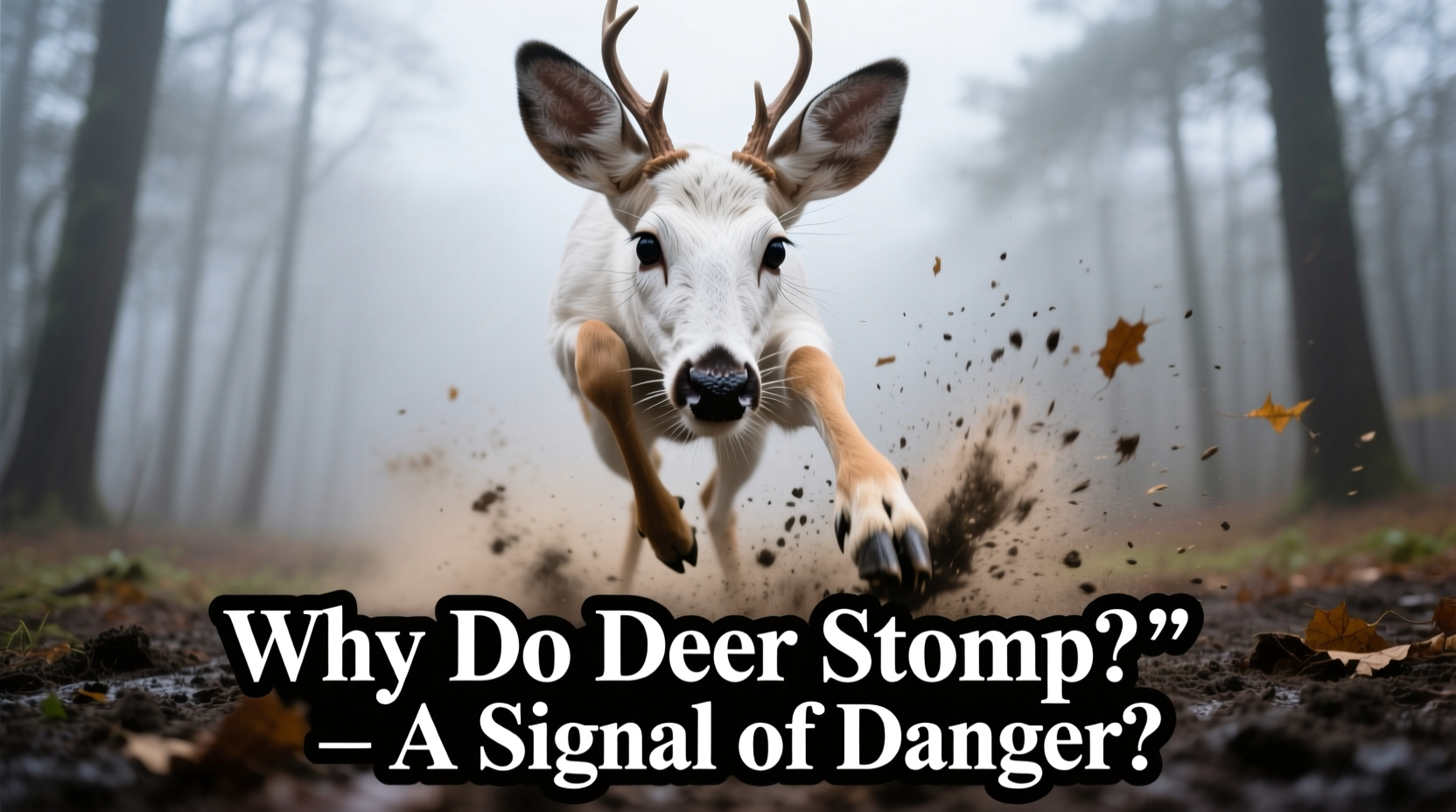
Foot stomping in deer is primarily a warning signal. When a deer detects something unusual—such as a potential predator, unfamiliar sound, or sudden movement—it may lift its front leg and forcefully strike the ground. This action produces both an audible thud and subtle vibrations through the soil. The purpose? To alert other deer in the vicinity of possible danger.
This behavior is especially common in white-tailed deer, which rely heavily on non-vocal communication. Unlike some animals that use loud calls to warn others, deer often remain silent to avoid drawing attention. Foot stomping allows them to send a discreet but effective message: “Something’s wrong—be alert.”
Interestingly, the stomp isn’t just a one-time reaction. A deer may repeat the motion multiple times if the perceived threat persists. Each stomp reinforces the alert and can trigger a chain reaction among nearby deer, leading to a coordinated freeze, flee, or investigate response.
Tip: If you're observing deer in the wild and notice repeated foot stomping, quietly retreat—this is a clear sign the animal feels threatened.Communication Beyond Alarm: Social Signaling
While alarm signaling is the most recognized reason for foot stomping, it also plays a role in intraspecies communication. Bucks, particularly during the rutting season, may stomp to assert dominance or challenge rivals. In these cases, the stomp is part of a broader display that includes head bobbing, snorting, and parallel walking.
Female deer (does) may also stomp to discipline fawns or redirect their attention. For example, if a fawn wanders too far or investigates something potentially dangerous, the mother might deliver a quick stomp to signal caution without vocalizing and attracting predators.
In social groups, frequent stomping can indicate heightened anxiety within the herd. Observing patterns of stomping across multiple individuals helps researchers assess overall herd stress levels, especially in areas with high human activity or predator presence.
How Deer Use Multiple Senses in Conjunction with Stomping
Foot stomping rarely occurs in isolation. It is typically accompanied by other behavioral cues:
- Head raising: The deer lifts its head high to improve visibility and scent detection.
- Ears forward: Pinpointing the source of noise or movement.
- Nostril flaring: Drawing in air to analyze scents more effectively.
- Snorting: An explosive exhalation through the nose, often paired with stomping to amplify the warning.
Together, these signals form a multi-channel alert system. The combination increases the likelihood that nearby deer will detect and respond appropriately—even if they didn’t hear the initial stomp.
“Deer are masters of subtlety. A single stomp can set off a cascade of awareness across a feeding group, often before any visible threat appears.” — Dr. Laura Simmons, Wildlife Biologist, University of Montana
Stomping as a Defensive Strategy
Beyond communication, foot stomping serves a tactical function. By creating noise and vibration, a deer may attempt to flush out a hidden predator. If a coyote or bobcat is lying in wait, the sudden disturbance could force it to move, revealing its position. Once the threat is visible, the deer can make a more informed decision—whether to flee, stand ground, or reposition.
This investigative stomping is more common in mature deer with prior experience. Younger deer tend to react with immediate flight, while older individuals often pause, stomp, and assess before acting. This demonstrates learned behavior and situational intelligence.
In some documented cases, repeated stomping has deterred predators entirely. The message implied is: “I see you, and I’m ready.” Predators relying on stealth may abandon the hunt when their cover is compromised.
Environmental and Human Influences on Stomping Behavior
Human development has altered deer behavior in measurable ways. In suburban or peri-urban areas, deer frequently stomp in response to non-predatory stimuli—like rustling trash bags, barking dogs, or passing vehicles. Over time, habituation may reduce stomping frequency in high-traffic zones, but it remains prevalent near forest edges and transitional habitats.
Conversely, in regions with high predator density—such as areas with growing coyote or mountain lion populations—stomping rates increase significantly. Researchers monitoring trail camera footage have noted clusters of stomping events preceding predator sightings, suggesting anticipatory behavior based on scent or distant sounds.
| Cause of Stomping | Description | Associated Behaviors |
|---|---|---|
| Potential Threat | Unfamiliar sight, sound, or smell | Head raised, ears alert, snorting |
| Social Dominance | Buck asserting status during rut | Neck bulging, parallel walking, grunting |
| Fawn Discipline | Does correcting young | Low grunt, nudge, stare |
| Investigative Action | Testing whether threat is real | Repeated stomps, slow approach |
Mini Case Study: Trail Camera Insights
In a 2022 field study conducted in the Appalachian foothills, researchers installed motion-activated cameras near known deer trails. Over six weeks, they recorded 147 distinct foot-stomping events. Of those, 68% occurred within 90 seconds of a predator scent being introduced (via controlled placement of coyote urine).
One notable observation involved a mature doe who stomped three times after freezing mid-step. Within 15 seconds, two other does in the same clearing lifted their heads and began scanning. No vocalizations were made, yet the entire group moved silently into thicker brush. Ten minutes later, a juvenile coyote passed through the original feeding site.
This case illustrates how stomping functions as a silent alarm system—efficient, low-risk, and highly effective in coordinating group safety without drawing direct attention.
Step-by-Step: What Happens When a Deer Stomps?
- Detection: The deer senses something unusual via sight, sound, or smell.
- Freeze Response: It stops moving and stands rigid to assess the environment.
- Stomping Initiation: The front hoof strikes the ground once or repeatedly.
- Alert Transmission: Nearby deer pick up vibrations and visual cues.
- Group Reaction: Other deer raise heads, stop feeding, or begin retreating.
- Decision Point: The initiating deer decides to flee, continue watching, or resume normal activity.
FAQ
Do all deer species stomp their feet?
Most North American deer species, including white-tailed deer, mule deer, and black-tailed deer, exhibit foot stomping. However, it is less common in elk and moose, which rely more on vocalizations and size-based deterrence.
Is foot stomping always a sign of fear?
Not necessarily. While it's often linked to alarm, stomping can also express irritation, dominance, or curiosity. Context matters—observe accompanying body language to interpret correctly.
Can humans mimic deer stomping?
Hunters sometimes use artificial \"distractor stomps\" with sticks or boots to simulate deer behavior and draw curious bucks into view. However, overuse can spook animals if done unnaturally.
Tip: When hiking in deer territory, avoid sudden movements. If a deer stomps at you, remain still and slowly back away to de-escalate tension.Conclusion
Foot stomping is far more than a reflexive twitch—it’s a sophisticated tool in the deer’s behavioral toolkit. Whether issuing a silent alarm, challenging a rival, or testing the shadows for danger, this action reflects the animal’s deep-rooted instincts and social intelligence. For wildlife enthusiasts, hunters, and conservationists alike, recognizing the meaning behind the stomp fosters greater respect for deer and their adaptive strategies in an ever-changing landscape.
💬 Have you observed deer stomping in your area? Share your experience or insights in the comments to help build a deeper understanding of this fascinating behavior.








