You're sitting in your kitchen at night when suddenly a dark shape launches from the corner and zips toward your face. Your instinctive recoil is immediate—panic sets in as you realize it was a flying cockroach. But why would it fly directly at you? It feels intentional, almost aggressive. The truth, however, is far less personal. Cockroach flight isn't a targeted attack; it's a clumsy, often desperate attempt at escape or navigation gone awry. Understanding this behavior requires insight into their biology, environment, and survival instincts.
The Science Behind Cockroach Flight
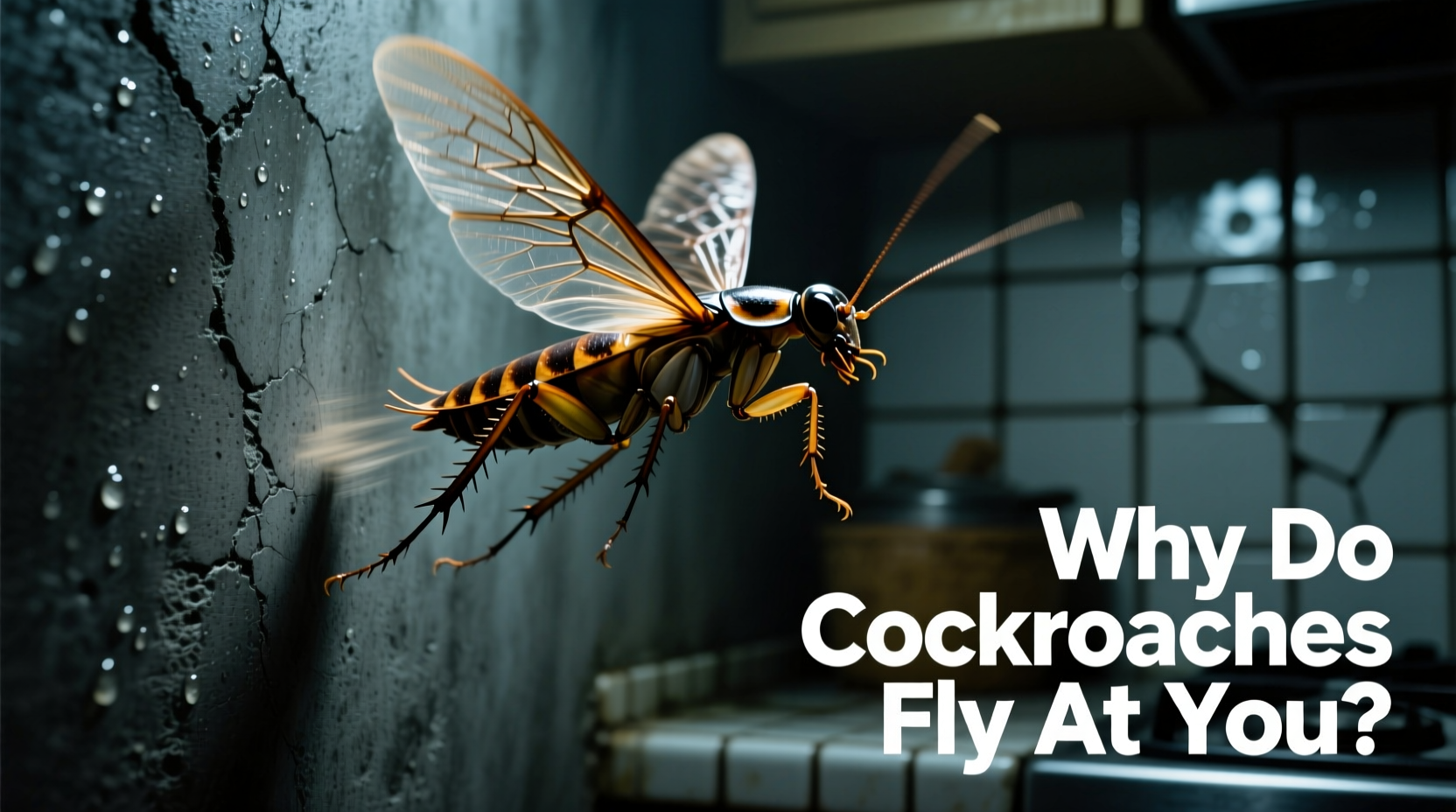
Not all cockroaches can fly, but those that do possess wings tucked beneath protective outer shells called tegmina. Species such as the American cockroach (*Periplaneta americana*), Australian cockroach, and Smokybrown cockroach are capable of flight. However, their flying ability varies greatly by species, temperature, humidity, and motivation.
Cockroach flight is not powered by precision or agility like birds or insects such as dragonflies. Instead, it’s more accurately described as gliding or erratic flapping. They typically launch themselves from elevated surfaces—like countertops or shelves—and use gravity-assisted descent with intermittent wing beats to cover distance quickly. This explains why they often appear to \"fly at you\"—they’re not aiming for you, but rather dropping from above in a trajectory that crosses your space.
“Cockroaches don’t have the neural control for targeted flight. What looks like aggression is just poor aerodynamic control combined with panic.” — Dr. Lena Patel, Entomologist at the University of Florida
Common Misconceptions About Flying Cockroaches
Many people believe cockroaches deliberately target humans when they fly. This myth stems from fear and misunderstanding. In reality, cockroaches are repelled by human presence. Their sudden movement toward a person is usually coincidental and influenced by several factors:
- Poor vision: Cockroaches rely on light gradients and motion detection, not sharp eyesight. They can’t distinguish faces or intentions.
- Escape reflex: When startled, they flee using the fastest route available—even if it means launching into open air.
- Air currents: Body heat and movement create convection currents that may subtly influence their glide path.
- Height advantage: From cabinets or walls, downward trajectories naturally intersect with standing humans.
Which Cockroach Species Can Fly?
Flight capability varies widely across over 4,000 known cockroach species. Below is a comparison of common household species and their flying behaviors:
| Species | Can Fly? | Flight Behavior | Common Habitat |
|---|---|---|---|
| American Cockroach | Yes (adults) | Glides from heights; strong fliers in warm conditions | Kitchens, basements, sewers |
| German Cockroach | No | Wings present but non-functional; relies on running | Indoors near food/water sources |
| Smokybrown Cockroach | Yes | Strong, sustained flight; attracted to light | Attics, trees, roof eaves |
| Australian Cockroach | Yes | Flies short distances; prefers gliding | Damp outdoor areas, garages |
| Oriental Cockroach | Limited | Females wingless; males can flutter weakly | Cool, damp basements, drains |
Temperature plays a crucial role: most flying species require ambient temperatures above 85°F (29°C) to become airborne. This explains why indoor sightings of flying roaches peak in summer months or in heated buildings during winter.
Real-World Example: The Midnight Kitchen Encounter
Jamal, a homeowner in Houston, Texas, reported seeing a large cockroach dive from his kitchen cabinet one evening as he opened the fridge. “It flew straight at my head,” he said. “I screamed and swatted, but it just bounced off the wall and scurried away.”
Upon inspection, an exterminator identified the pest as an American cockroach that had entered through a gap near the plumbing vent. The insect had been resting on top of the cabinet, sensing vibrations from Jamal’s footsteps. When the fridge light turned on, the sudden brightness triggered its escape response. It launched itself—not at Jamal, but downward in a panic-induced glide. Due to its position and lack of directional control, its path intersected with Jamal’s upper body.
This case illustrates how environmental cues, combined with limited flight control, create the illusion of aggression.
How to Prevent Flying Cockroach Encounters
Preventing unwanted aerial encounters involves both exclusion and habitat modification. Cockroaches seek warmth, moisture, and food—all commonly found indoors. By disrupting these attractants, you reduce the likelihood of infestation and unexpected flights.
- Seal entry points: Use caulk to close gaps around windows, doors, pipes, and vents.
- Reduce humidity: Install exhaust fans in bathrooms and kitchens; fix leaks promptly.
- Eliminate food sources: Store food in sealed containers and clean crumbs nightly.
- Manage lighting: Turn off unnecessary outdoor lights at night, which attract flying roaches.
- Inspect high areas: Check ceiling corners, attic spaces, and above cabinets where roaches rest before accidental takeoffs.
Checklist: Immediate Actions to Reduce Flying Roach Risk
- ✅ Vacuum cracks and crevices weekly
- ✅ Install door sweeps and window screens
- ✅ Remove cardboard boxes (they retain moisture and attract roaches)
- ✅ Use dehumidifiers in basements and crawl spaces
- ✅ Trim tree branches touching the house (aerial access routes)
Frequently Asked Questions
Do cockroaches actually aim for people when they fly?
No. Cockroaches lack the visual acuity and cognitive ability to target individuals. Any perceived direct flight is coincidental, often due to their launch angle and poor steering. They are far more likely to flee than confront.
Are flying cockroaches more dangerous than non-flying ones?
Not inherently. Both types can carry pathogens and trigger allergies. However, flying species like the American cockroach tend to travel farther and invade homes from external sources, potentially introducing more contaminants.
Can I get rid of flying cockroaches without pesticides?
Yes, though it requires diligence. Focus on sanitation, sealing entry points, and using traps (such as sticky monitors or bait stations). For severe cases, professional pest control may be necessary to locate nests in hard-to-reach areas like attics or wall voids.
Understanding Behavior to Regain Control
Fear of flying cockroaches is understandable—but it’s rooted more in surprise than actual threat. These insects aren’t malicious; they’re survivors reacting to stimuli with limited tools. Their flight is not pursuit, but evasion. Recognizing this removes some of the emotional charge and allows for rational, effective responses.
By understanding what triggers their movement and how their bodies function, homeowners can design environments that discourage infestation. Simple changes—like turning off porch lights, storing pet food properly, and keeping attics dry—can dramatically reduce encounters.
“People fear what they don’t understand. Educating yourself about cockroach behavior is the first step toward peace of mind.” — Dr. Marcus Tran, Urban Pest Management Specialist
Take Action Before the Next Sighting
The next time you see a cockroach take flight, resist the urge to panic. Instead, use it as a signal: there’s likely a larger population nearby, and your home may offer resources they’re exploiting. Address the root causes now to prevent recurring issues.
💬 Have a story about a flying cockroach encounter? Share your experience and solutions below. Your insight could help others overcome fear and find practical fixes.








