
If you’ve ever been jolted awake at 3 a.m. by the sound of paws skittering across hardwood floors, only to find your cat tearing through the house like a tiny, furry racecar, you’re not alone. This sudden burst of frenetic activity—commonly known as “the zoomies”—often peaks in the dead of night, leaving owners puzzled and slightly sleep-deprived. While it may seem random or even mischievous, this behavior is deeply rooted in feline biology, instinct, and natural energy rhythms. Understanding why cats experience these nocturnal bursts can help owners better support their pets’ well-being while preserving their own sanity.
The Science Behind the 3 a.m. Zoomies
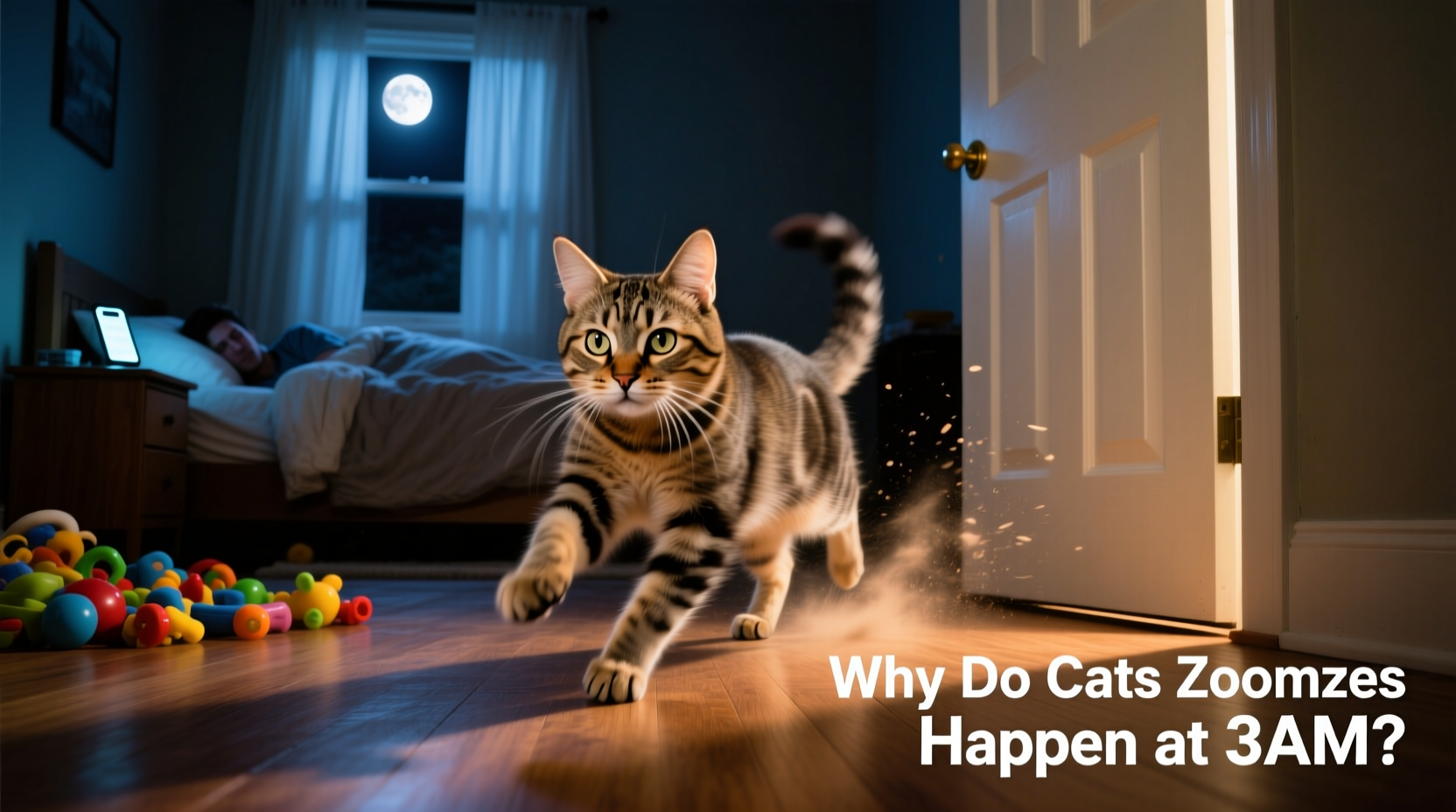
Cats are crepuscular by nature, meaning they are most active during twilight hours—dawn and dusk. However, many domestic cats shift toward nocturnal activity patterns, especially when left alone during the day. The 3 a.m. zoomies often represent a convergence of biological timing, accumulated energy, and environmental cues.
In the wild, felines rely on short, explosive bursts of energy to hunt prey. These high-intensity movements are essential for survival and are encoded into their nervous systems. Even well-fed indoor cats retain this instinct. When their internal clock signals peak alertness—and household distractions are minimal—they seize the opportunity to simulate hunting: chasing invisible enemies, pouncing on socks, or sprinting from room to room.
Neurologically, the release of adrenaline and endorphins during these episodes reinforces the behavior, making it both physically satisfying and mentally stimulating for the cat. It’s not rebellion or mischief—it’s a natural expression of pent-up energy that wasn’t discharged during daylight hours.
“Cats don’t have off switches for instinct. The 3 a.m. zoomies are a glimpse into their evolutionary past—a hardwired need to hunt, chase, and survive.” — Dr. Lena Torres, Feline Behavior Specialist
Feline Energy Cycles: How Cats Naturally Burn Calories
Unlike humans, who typically follow a steady diurnal rhythm (active during the day, asleep at night), cats operate on a polyphasic sleep schedule. They nap frequently throughout the day—up to 15–16 hours—but remain light sleepers, ready to spring into action at any moment. This fragmented rest pattern allows them to conserve energy for brief periods of intense activity.
Their energy output isn’t distributed evenly. Instead, it follows a cyclical model:
- Rest Phase (70–80% of the day): Light naps, grooming, observation.
- Alert Phase (10–15%): Stalking, playing, exploring.
- Hyperactive Phase (5–10%): Full-speed chases, pouncing, vertical leaps.
When daytime stimulation is limited—due to owner absence, lack of toys, or insufficient playtime—this hyperactive phase often gets delayed until the quietest part of the night. That’s when the living room becomes a racetrack and your sleeping body an obstacle course.
Tip: Engage your cat in vigorous play sessions just before bedtime to redirect energy into structured activity.Environmental Triggers That Amplify Nighttime Hyperactivity
While biology sets the stage, environment directs the performance. Several factors can trigger or worsen the frequency and intensity of 3 a.m. zoomies:
- Low household noise: At night, reduced auditory stimuli make cats more sensitive to small sounds—rustling blankets, creaking floors—which they may interpret as prey movement.
- Lack of mental enrichment: Cats deprived of puzzle feeders, climbing structures, or interactive toys accumulate cognitive tension that manifests physically.
- Solitary confinement: Indoor-only cats without companionship may use nighttime activity to self-soothe or combat boredom.
- Feeding schedules: If fed in the evening, some cats associate lights-out with mealtime, triggering alertness and post-meal energy spikes.
A study published in *Applied Animal Behaviour Science* found that cats with scheduled evening play sessions showed a 68% reduction in nighttime hyperactivity over six weeks. This underscores the importance of proactive engagement rather than reactive frustration.
Managing the Midnight Madness: A Step-by-Step Guide
While you can’t eliminate the zoomies entirely—nor should you, as they’re healthy and normal—you can influence when and how intensely they occur. Follow this timeline to reshape your cat’s energy cycle:
- 5:00–6:00 p.m.: High-Intensity Play
Use wand toys, laser pointers, or crinkle balls to simulate hunting. Aim for 10–15 minutes of continuous chase-and-capture play. End with a “kill” (letting the cat catch the toy) to provide psychological closure. - 7:00 p.m.: Dinner Time
Feed after play to mimic the natural sequence of hunt → eat → groom → sleep. Consider portioning meals using timed feeders to prevent late-night begging. - 8:00–9:00 p.m.: Calming Routine
Introduce low-stimulation activities: gentle brushing, soft music, or pheromone diffusers (like Feliway) to signal wind-down time. - 10:00 p.m.: Secure the Environment
Close bedroom doors if needed, remove hazardous objects from common zoomie paths, and ensure blinds or curtains aren’t dangling temptations. - Morning Reset
Upon waking, engage in 5 minutes of calm interaction—no chasing—to reinforce diurnal bonding.
Do’s and Don’ts of Handling Nocturnal Zoomies
| Do’s | Don’ts |
|---|---|
| Encourage daytime play with rotating toys | Punish or shout during zoomies (increases anxiety) |
| Use food puzzles to extend feeding time | Leave strings, wires, or small objects within reach |
| Create vertical spaces (cat trees, shelves) | Ignore signs of stress or compulsive behavior |
| Establish consistent daily routines | Allow complete freedom in bedrooms at night if disruptive |
| Monitor for changes in frequency or aggression | Assume all nighttime activity is abnormal |
Real-Life Example: Managing Max’s Midnight Marathons
Max, a 3-year-old tabby living in a downtown apartment, began disrupting his owner’s sleep with nightly sprints starting at 2:45 a.m. His routine included solo days, evening petting, and dinner at 8 p.m.—but no structured play. After consulting a veterinary behaviorist, Max’s owner implemented a new schedule: a 15-minute feather wand session at 6:30 p.m., followed by delayed feeding at 7:15 p.m. Within two weeks, the 3 a.m. episodes dropped from five nights a week to one. By week six, Max was consistently sleeping through the night.
This case illustrates how minor adjustments to timing and engagement can realign a cat’s energy output without medication or restriction.
When Zoomies Signal Something Else: Red Flags to Watch For
While occasional zoomies are normal, certain patterns may indicate underlying issues:
- Excessive frequency: Multiple episodes per night, every night.
- Aggressive behavior: Biting, scratching, or attacking people mid-zoom.
- Vocalization: Yowling or meowing frantically during runs.
- Disorientation: Bumping into walls, appearing confused afterward.
These symptoms could point to medical conditions such as hyperthyroidism, hypertension, cognitive dysfunction (especially in senior cats), or neurological disorders. Always consult a veterinarian if behavioral changes accompany the hyperactivity.
FAQ: Common Questions About Cat Zoomies
Are 3 a.m. zoomies normal for adult cats?
Yes. Even mature cats experience periodic bursts of energy. As long as the behavior is brief, non-destructive, and doesn’t interfere with health, it’s considered typical feline expression. Kittens and young adults tend to exhibit them more frequently due to higher baseline energy levels.
Can I train my cat to stop the zoomies completely?
You shouldn’t try to eliminate them entirely. The zoomies serve important physical and mental functions. Instead, focus on redirecting the energy into appropriate times and spaces. Training involves shaping routines, not suppressing instincts.
Will getting a second cat help reduce nighttime activity?
It might—but not always. Some cats play well together and tire each other out. Others become more territorial or stressed. Introducing a companion should be done carefully and never solely to solve behavioral issues. Enrichment and human interaction are often more effective solutions.
Action Plan: Checklist for Reducing Late-Night Zoomies
Implement this checklist over 2–4 weeks to gradually shift your cat’s energy cycle:
- ✅ Schedule two 10-minute play sessions daily (evening one being most intense)
- ✅ Rotate toys weekly to maintain novelty
- ✅ Install window perches for daytime visual stimulation
- ✅ Feed main meal after final play session
- ✅ Use automatic feeders or puzzle bowls to extend eating time
- ✅ Diffuse calming pheromones in shared spaces
- ✅ Record episode frequency to track progress
- ✅ Consult a vet if behavior escalates or changes suddenly
Conclusion: Embracing the Quirks of Cat Ownership
The 3 a.m. zoomies are more than a nuisance—they’re a testament to your cat’s vibrant instincts and untamed spirit. Rather than viewing them as a disruption, consider them a window into the complex world of feline energy cycles. With thoughtful scheduling, environmental enrichment, and a touch of patience, you can harmonize your cat’s natural rhythms with your need for rest. These bursts of joy, though inconvenient, reflect a healthy, stimulated animal expressing its true nature.
💬 Have a funny or clever way you’ve managed your cat’s midnight sprints? Share your story in the comments—your tip might help another sleep-deprived cat parent find peace!








