
Cats are among the most enigmatic pets, capable of moments of serene elegance and sudden bursts of chaotic energy. From perching in cardboard boxes to sitting perfectly within taped outlines on the floor, their behavior often leaves owners puzzled—and amused. One of the most commonly observed quirks is a cat deliberately sitting inside a drawn circle, whether it's on the carpet, tile, or even a plate. But why?
The truth is, many of these seemingly odd actions stem from deeply rooted instincts, sensory preferences, and psychological needs. Understanding them isn’t just entertaining—it fosters better care, strengthens bonds, and reduces stress for both cats and their humans.
The Circle Phenomenon: Illusion, Instinct, or Curiosity?
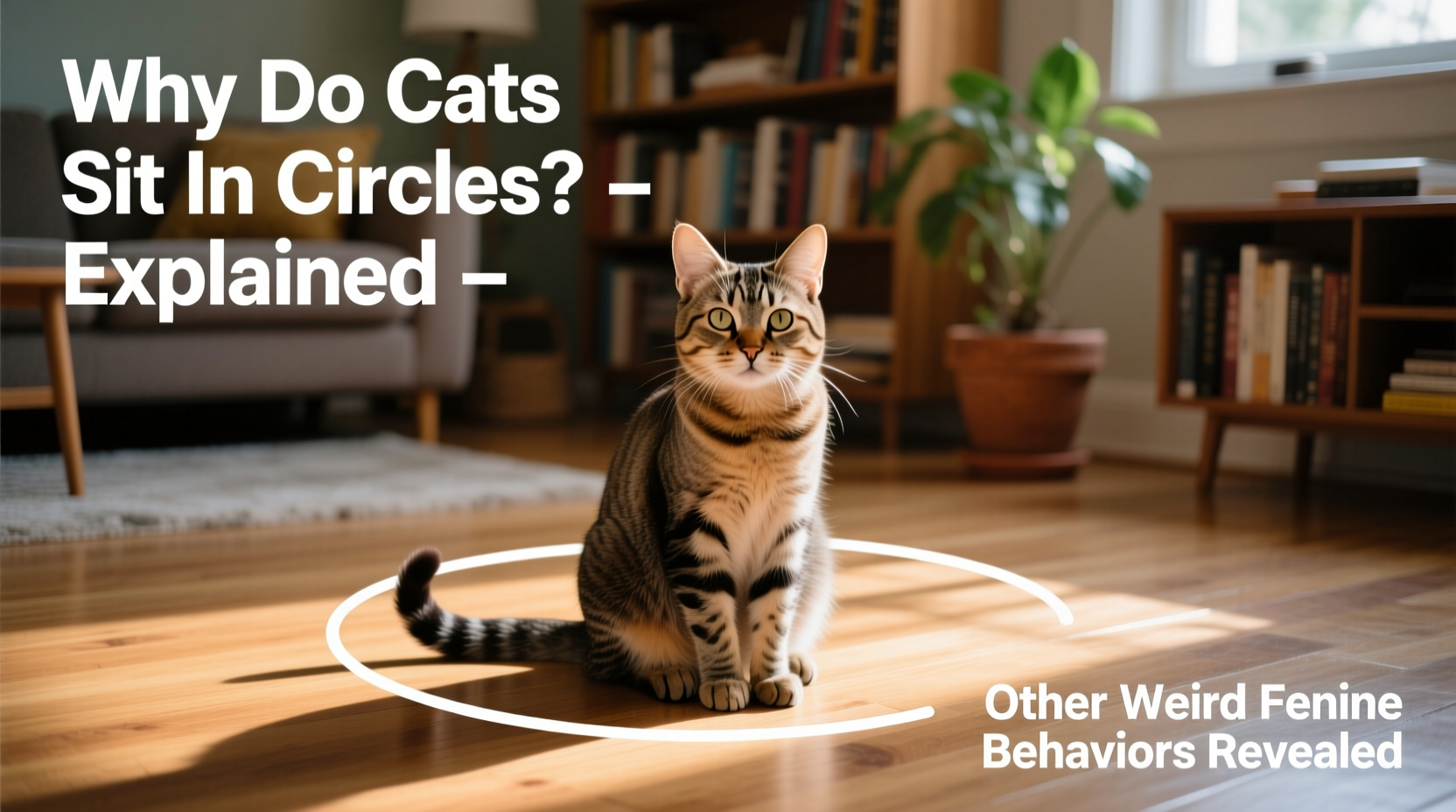
The internet has been captivated by videos of cats stepping into taped circles on the floor, often hesitating at first before settling down inside. This viral trend sparked debate: Are cats attracted to circles, or is there more going on?
Researchers and animal behaviorists suggest that cats aren’t necessarily drawn to the shape itself but respond to contrast, boundaries, and perceived safety. A circle drawn in tape creates a visual boundary—similar to the edge of a rug or mat—which many cats instinctively respect or investigate. Once they enter, the defined space may mimic the enclosed feeling of a den or shelter, offering psychological comfort.
“Cats are highly sensitive to spatial cues. A simple outline can simulate containment, which appeals to their need for secure resting spots.” — Dr. Sarah Bennett, Feline Behavior Specialist, Cornell University College of Veterinary Medicine
This behavior overlaps with their attraction to boxes, sinks, and baskets—all confined spaces that provide warmth, security, and a vantage point for observation.
Tip: If your cat seems anxious, try placing a circular mat or low-sided container in a quiet area. The defined boundary might encourage relaxation.Top 5 Bizarre Cat Behaviors and What They Really Mean
Beyond the circle obsession, cats exhibit a range of behaviors that puzzle even seasoned owners. Here’s what’s really happening beneath the surface.
1. The “Loaf” Position: Paws Tucked, Tail Wrapped
When a cat sits with all four paws neatly tucked under its body, resembling a bread loaf, it’s often seen as cute—but it’s also functional. This posture conserves body heat, protects vital organs, and keeps the cat ready to spring into action if needed. It’s a sign of contentment *and* alertness.
- Relaxed loaf: Eyes half-closed, slow blinking—deeply calm.
- Tense loaf: Ears slightly back, tail twitching—ready to react.
2. Sudden “Zoomies” (Midnight Madness)
Ever been startled awake by your cat sprinting through the house at 3 a.m.? These explosive bursts of energy, known as “zoomies,” are normal. Cats are crepuscular—most active at dawn and dusk—and domestic life doesn’t erase their hunting instincts. Without large territories to patrol or prey to chase, pent-up energy finds release in short, frantic sprints.
Environmental enrichment—like scheduled play sessions with wand toys—can reduce the frequency and intensity of these episodes.
3. Kneading with Paws (Making Biscuits)
Kneading is a carryover from kittenhood, when kittens press against their mother’s belly to stimulate milk flow. Adult cats continue this behavior when relaxed, often on soft surfaces—or human laps. It’s a sign of deep comfort and trust.
Some cats drool while kneading, another infantile reflex linked to nursing. While harmless, sharp claws can be an issue.
Tip: Place a thick blanket or cushion between your lap and the cat’s paws to protect your skin during kneading sessions.4. Bringing Dead Prey to You
Finding a mouse or bird on your pillow is unsettling—but not a sign of aggression. In feline social structure, caregivers share food. Your cat may view you as an inept hunter and is “helping” by bringing you prey. Alternatively, it could be demonstrating skill or leaving a gift.
While you can’t stop hunting instincts entirely, keeping cats indoors or using bell collars can reduce wildlife casualties.
5. Staring Without Blinking
A long, unblinking gaze from a cat isn’t rudeness—it’s communication. Slow blinks, especially when mirrored by humans, signal trust. Conversely, a hard, unwavering stare can indicate tension or territorial challenge.
To de-escalate, try the “cat blink”: soften your eyes and slowly close them. Many cats will return the gesture, signaling peace.
Sensory Science: How Cats Perceive Their Environment
Cat behavior is heavily influenced by their superior senses. Understanding these helps decode their actions.
They have up to nine times more rod cells in their eyes than humans, making them exceptional at detecting motion in low light. Their hearing covers frequencies up to 64 kHz (humans top out around 20 kHz), allowing them to hear ultrasonic calls from rodents.
But perhaps most crucial is their sense of smell and touch. Whiskers (vibrissae) are deeply innervated and help cats navigate tight spaces. That’s why some cats hesitate before entering a circle—they’re assessing the space with their whiskers and vision before committing.
| Sense | Capability | Behavioral Impact |
|---|---|---|
| Vision | Excellent night vision, motion detection | React to subtle movements; prefer dim lighting |
| Hearing | Detects high-frequency sounds | Responds to rodent squeaks, crinkling bags |
| Smell | Olfactory bulb 14x larger than humans’ | Uses scent marking, avoids strong perfumes |
| Touch (Whiskers) | Sensitive to air currents and space | Avoids tight spaces if whiskers are compressed |
Case Study: Luna and the Tape Circle Experiment
Maria, a pet owner in Portland, noticed her rescue cat Luna avoided open spaces in the living room. After reading about the circle phenomenon, she used blue painter’s tape to create a 24-inch circle on the hardwood floor near the window—a high-traffic area Luna usually skipped.
Within hours, Luna approached, sniffed the edge, stepped in cautiously, and sat for over 20 minutes, watching birds outside. Over the next week, Maria observed Luna returning to the circle daily, even when the tape was removed—suggesting the mental association persisted.
“It was like she finally claimed that spot,” Maria said. “She used to hide under the couch when guests came. Now she lounges right in the middle of the room.”
This small change improved Luna’s confidence, illustrating how minor environmental adjustments can significantly impact feline well-being.
Decoding Common Misunderstood Behaviors
Many cat actions are mislabeled as “weird” when they’re actually logical responses to instinct or environment. Below is a checklist to assess and respond appropriately.
Actionable Checklist: Responding to Strange Cat Behaviors
- ✅ Observe context: Is the cat relaxed, tense, or playful?
- ✅ Check the environment: Are there new smells, noises, or changes in routine?
- ✅ Rule out pain: Sudden behavioral shifts (e.g., aggression, litter box avoidance) may indicate medical issues.
- ✅ Provide alternatives: If your cat sits in sinks or boxes, offer cozy cat beds or hammocks in preferred locations.
- ✅ Avoid punishment: Cats don’t connect discipline with past actions. Redirect instead.
For example, if your cat consistently sits in laundry baskets, place a soft blanket inside and position it near a heat source. You’re working with their instincts, not against them.
FAQ: Frequently Asked Questions About Odd Cat Habits
Why does my cat sit in boxes smaller than itself?
Cats seek warmth and security. Even if a box appears too small, the confined space provides insulation and a sense of protection. As long as the cat can breathe and move slightly, it’s likely comfortable.
Is it normal for cats to lick plastic bags or packaging?
Sometimes. The static charge on plastic can carry faint food odors, and the texture may mimic prey. However, ingesting plastic is dangerous. Store such items out of reach and provide safe chewing alternatives like cat-safe grass or rubber toys.
Do cats really see ghosts or things we can’t?
Not literally. But their heightened senses allow them to detect subtle stimuli—like drafts, high-pitched sounds, or shadows—that humans miss. A cat staring at a blank wall may be tracking a draft or a tiny insect.
Step-by-Step: Creating a Cat-Friendly Environment
Understanding behavior is only half the solution. Applying that knowledge improves quality of life. Follow this timeline to optimize your home:
- Week 1: Observe your cat’s routines. Note where they sleep, eat, and avoid. Identify patterns in “odd” behaviors.
- Week 2: Introduce one enrichment item—such as a cardboard fort, perch, or puzzle feeder—in a frequently visited area.
- Week 3: Add interactive play sessions twice daily (5–10 minutes each) using wand toys to satisfy hunting instincts.
- Week 4: Assess changes. Has anxiety decreased? Are destructive behaviors reduced? Adjust placements or toys as needed.
- Ongoing: Rotate toys monthly to prevent boredom and maintain engagement.
This structured approach transforms confusing habits into opportunities for connection and improvement.
Conclusion: Embracing the Quirks
Cats don’t act randomly. Every head bump, chirp, and circle-sitting moment carries meaning shaped by evolution, environment, and individual personality. Rather than dismissing these behaviors as strange, viewing them through a lens of empathy and science deepens our relationship with these complex animals.
Next time you see your cat perched in a perfect circle—drawn or imagined—remember: it’s not just a meme. It’s a glimpse into a mind finely tuned to safety, warmth, and subtle cues we often overlook.
💬 Have a story about your cat’s quirkiest habit? Share it in the comments—your experience might help another confused but loving cat owner feel a little less alone.








