
Cats have a peculiar affinity for cardboard boxes—especially ones that seem far too small to accommodate their bodies. From sleek Siamese to fluffy Maine Coons, felines of all sizes will contort themselves into spaces that appear physically improbable. This behavior, while endlessly amusing to humans, is more than just whimsy. It’s a fascinating intersection of animal psychology, evolutionary biology, and even basic physics. Understanding why cats engage in this seemingly paradoxical act reveals deeper insights into their needs, instincts, and perception of safety.
The sight of a cat curled tightly into a shoebox or wedged into a shipping container barely larger than its torso is common enough to be a meme. But behind the humor lies a complex set of motivations. Cats don’t simply enjoy tight spaces—they rely on them. Whether it's stress reduction, thermoregulation, or territorial marking, the reasons are both practical and instinctual. And when physics enters the equation, the phenomenon becomes even more intriguing: how can a solid-bodied animal fit into a space smaller than itself?
The Psychology of Confinement: Safety in Small Spaces
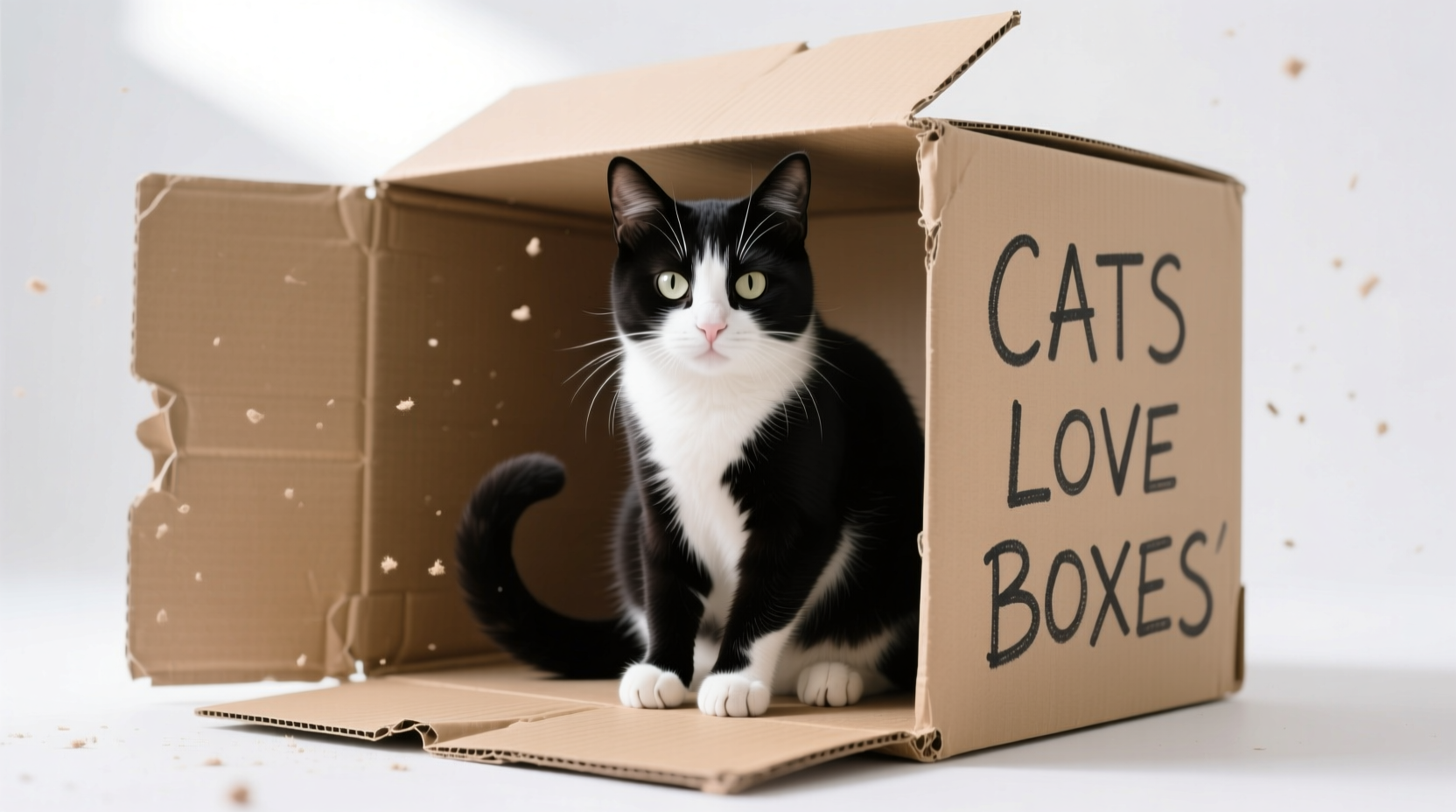
Cats are predators, yes—but they’re also prey animals in the wild. Their survival depends on vigilance and access to secure hiding spots. In domestic environments, where threats are minimal, this instinct doesn’t vanish. Instead, it manifests in behaviors like seeking out enclosed spaces. A box offers walls on multiple sides, limiting exposure and providing a vantage point to observe without being seen.
Research from the University of Utrecht found that shelter cats given access to hiding boxes adapted to new environments faster and exhibited lower stress levels than those without. The study concluded that \"hiding is a coping mechanism in stressful situations.\" For a cat, a box—even one too small to fully enter—isn't judged by comfort alone but by perceived security.
“Cats don’t assess space based on human ergonomics. They evaluate it through the lens of control and concealment.” — Dr. Sarah Ellis, Feline Behavior Scientist, University of Lincoln
This explains why a cat may perch halfway inside a tiny box, rear legs dangling outside, yet remain perfectly content. The partial enclosure still satisfies the psychological need for refuge. The box acts as a symbolic boundary between safety and exposure, not necessarily a full-body shelter.
Thermodynamics and the Warmth Factor
Another critical factor is temperature regulation. The average domestic cat has a preferred thermal zone between 86°F and 97°F (30–36°C), significantly warmer than typical room temperatures. Cardboard, despite its flimsy appearance, is an excellent insulator due to trapped air pockets within its layered structure. When a cat curls into a tight ball inside a box, it minimizes surface area exposed to cooler air, reducing heat loss through convection and radiation.
This behavior aligns with principles of thermodynamics: minimizing energy expenditure to maintain core body temperature. By choosing confined spaces, cats create microclimates that help retain body heat. Even if the box is too small, the proximity of the walls reflects radiant heat back toward the cat’s body, enhancing warmth retention.
Tip: If your cat frequently seeks out tight spaces, consider providing insulated pet beds or heated pads during colder months to support natural thermoregulation.Physics of Flexibility: How Cats Fit Where They Shouldn’t
From a biomechanical standpoint, cats are remarkably adaptable. Unlike humans, whose rigid ribcages and broad shoulders limit spatial navigation, cats possess highly flexible spines and loosely attached clavicles (collar bones). These anatomical features allow them to compress their torsos and twist into compact shapes. Their shoulder girdle isn’t fused to the rest of the skeleton, enabling significant lateral movement and compression.
When a cat approaches a small box, it doesn’t attempt to fit its entire body at once. Instead, it uses a sequence of motions: front paws in, chest compressed, hindquarters angled outward. The spine curves laterally or vertically, redistributing mass efficiently. This process leverages principles of fluid dynamics and material deformation—cats essentially behave like non-Newtonian fluids under pressure, conforming to available space.
In physics terms, this relates to the concept of **packing efficiency**. While rigid objects follow strict geometric constraints, living organisms can alter shape to maximize volume utilization. A cat doesn’t need the box to match its resting dimensions; it only needs enough structural integrity to support partial containment while allowing adaptive posture.
Comparative Anatomy: Why Humans Can’t Do What Cats Do
| Feature | Cats | Humans |
|---|---|---|
| Clavicle Attachment | Not rigidly connected; allows shoulder compression | Fused to sternum; limits shoulder flexibility |
| Spinal Vertebrae Count | 53 vertebrae; high flexibility | 33 vertebrae; limited range of motion |
| Rib Cage Rigidity | Flexible cartilage; compressible under pressure | Bony structure; resists deformation |
| Muscle-to-Bone Ratio | High muscle elasticity; rapid repositioning | Lower elasticity; slower adaptation |
This table highlights key physiological differences that enable cats to achieve postures impossible for humans. Their ability to “flow” into spaces stems from evolutionary adaptations for hunting in dense brush and escaping predators through narrow crevices.
Instinct Meets Environment: The Role of Scent and Territory
A box isn’t just a physical object—it’s a sensory canvas. Cardboard absorbs scents quickly, including a cat’s own pheromones released from facial glands when they rub against surfaces. By occupying a box, even briefly, a cat marks it as part of its territory. This scent-marking reinforces a sense of ownership and familiarity, further enhancing the feeling of security.
Additionally, new boxes carry residual odors from packaging, shipping, or storage—scents that stimulate a cat’s curiosity. The crinkling sound of cardboard also provides auditory feedback that mimics rustling leaves or small prey movements, triggering investigative behavior. Once inside, the combination of novel smells, tactile feedback, and acoustic properties creates a stimulating microenvironment.
- Cats often prefer boxes that have been untouched by other pets or humans.
- Freshly arrived packages are particularly attractive due to lingering outdoor odors.
- Boxes placed near windows or doorways offer strategic observation points.
Real-World Example: The Office Cat Phenomenon
In a tech startup in Portland, Oregon, management introduced a resident office cat named Miso to improve employee morale. Within days, Miso developed a routine: every morning, she would claim the smallest available box—often one meant for headphones or adapters—and settle in for hours. Despite repeated attempts to provide larger, cushioned beds, Miso consistently returned to compact spaces.
After consulting a veterinary behaviorist, the team learned that Miso associated small boxes with predictability in a dynamic environment. The open-plan office had constant foot traffic, phone calls, and sudden noises—all stressors for a sensitive feline. The tiny box, positioned under a desk, offered visual cover and reduced auditory input. Over time, staff began leaving appropriately sized enclosures in quiet corners, leading to noticeable improvements in Miso’s relaxation and social interaction.
This case illustrates how environmental design impacts feline well-being. Even in safe, enriched homes, cats seek micro-sanctuaries. Respecting this need enhances their quality of life far more than plush toys or automated feeders ever could.
Actionable Tips for Cat Owners
Tip: Rotate boxes regularly to maintain novelty. A stale box loses its appeal; a fresh one reignites exploration.- Provide multiple box options: Use varying sizes and orientations (open-top, side-entry) to cater to different moods.
- Enhance insulation: Line boxes with soft towels or fleece during winter for added warmth.
- Respect boundaries: Never force a cat out of a box. Doing so undermines trust and increases anxiety.
- Use boxes for training: Place treats inside to encourage positive associations, especially for shy or rescued cats.
- Monitor for overuse: If a cat hides excessively, it may signal underlying stress or illness.
Frequently Asked Questions
Is it harmful for cats to sit in boxes that are too small?
No, as long as the cat can enter and exit freely, there’s no physical harm. Cats self-regulate and will leave if uncomfortable. However, ensure sharp edges or staples are removed to prevent injury.
Do all cats like boxes, or is it breed-specific?
While individual preferences vary, most cats exhibit some level of attraction to enclosed spaces. It’s rooted in species-wide instincts rather than breed traits. Even large wild felines like leopards seek sheltered dens.
Can I use boxes for enrichment or play?
Absolutely. Create multi-box mazes, cut viewing holes, or connect them with tunnels. These setups stimulate mental activity and mimic natural exploration patterns.
Conclusion: Embracing the Quirks of Feline Physics
The image of a cat squeezed into a comically undersized box is more than internet fodder—it’s a window into the elegant interplay of biology, physics, and emotion. What appears illogical to us is, for cats, a perfectly rational choice driven by millennia of evolution. They aren’t defying space; they’re optimizing it.
By understanding the science behind this behavior, we become better caregivers. We learn to see confinement not as restriction but as comfort, and tight spaces not as inconveniences but as sanctuaries. The next time your cat disappears into a container half its size, resist the urge to intervene. Instead, appreciate the moment: you’re witnessing nature’s solution to stress, cold, and uncertainty—one cardboard box at a time.
💬 Have a story about your cat’s favorite box? Share your experience in the comments and join the conversation on feline behavior and care!








