Cats sitting in cardboard boxes is one of the most iconic and endearing quirks of cat ownership. From social media memes to scientific studies, the image of a cat curled up in a box too small for its body has become a cultural phenomenon. But beyond the cuteness, there’s real science—and instinct—behind this behavior. Feline experts, veterinarians, and animal behaviorists have spent years studying why cats are so drawn to confined spaces like boxes, shipping containers, drawers, and even plastic packaging. The answer lies in a combination of biology, psychology, and evolutionary adaptation.
Understanding this seemingly simple act reveals deeper insights into how cats perceive safety, manage stress, regulate body temperature, and express natural hunting instincts. Whether your cat prefers a shoebox or a large appliance container, their choice isn’t random—it’s rooted in survival mechanisms that date back thousands of years.
The Science of Safety: Why Enclosed Spaces Calm Cats
Cats are both predators and prey animals. In the wild, they hunt smaller creatures but remain vulnerable to larger predators such as birds of prey, coyotes, and even other cats. This dual role has shaped their need for secure hiding spots where they can observe their surroundings without being seen. Boxes provide exactly that: an enclosed space with limited entry points, allowing cats to feel protected while maintaining visual control over their environment.
A 2014 study conducted at Utrecht University in the Netherlands explored stress levels in shelter cats. Researchers found that cats given access to cardboard boxes adapted to their new environment significantly faster than those without boxes. The study measured stress using the Cat-Stress-Score (CSS), which evaluates posture, activity, and vocalization. Cats with boxes showed lower stress scores within just three days.
“Providing hiding places is essential for promoting welfare in cats. A simple cardboard box can have a profound impact on reducing stress during transitions.” — Dr. Claudia Vinke, Veterinarian and Feline Behavior Researcher, Utrecht University
This research underscores a critical point: boxes aren’t just toys—they’re tools for emotional regulation. When faced with unfamiliar people, loud noises, or environmental changes, cats retreat into boxes not out of whimsy, but as a coping mechanism.
Tip: If you're introducing a new cat to your home, place a few open boxes in quiet areas to help them feel safe and reduce anxiety.Thermoregulation: Staying Warm in Small Spaces
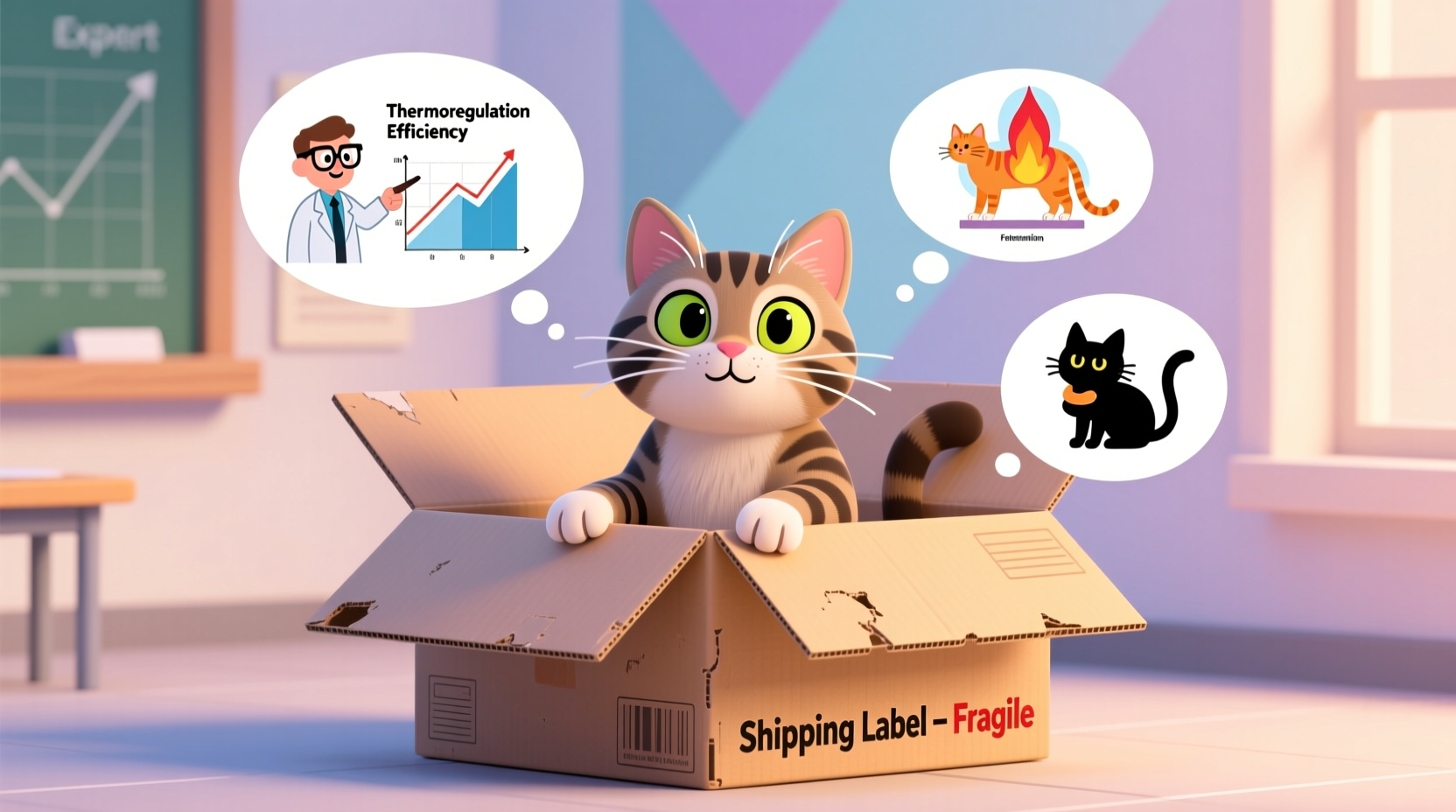
Another key reason cats love boxes ties directly to their physiology. Domestic cats have a preferred ambient temperature range between 86°F and 97°F (30°C–36°C), much higher than typical human indoor settings, which average around 68°F–72°F. To maintain their ideal body temperature, cats seek out warm, insulated environments.
Cardboard is a natural insulator. When a cat curls up inside a box, their body heat becomes trapped within the confined space, creating a cozy microclimate. This is especially important for kittens, older cats, or short-haired breeds that lose heat more quickly. Even indoor cats, despite central heating, often experience cooler floor surfaces and drafts near windows or doors.
In colder months, it's common to see cats choosing boxes over plush beds. While soft bedding may look comfortable to humans, it doesn’t retain heat as effectively as the air pocket created inside a box. The walls of the box also block airflow, minimizing convective heat loss—a crucial factor for small-bodied animals with high surface-area-to-volume ratios.
How Temperature Influences Box Preference
| Environmental Temp | Cat Behavior | Box Use Likelihood |
|---|---|---|
| < 65°F (18°C) | Seeking warmth, curling tightly | High |
| 65°F–75°F (18°C–24°C) | Active, relaxed resting | Moderate |
| > 75°F (24°C) | Stretching out, panting | Low (may prefer cool tile instead) |
The data shows a clear correlation between ambient temperature and the frequency of box use. However, even in warmer conditions, some cats still choose boxes—not for warmth, but for the sense of security they offer.
Hunting Instincts and Ambush Behavior
Beyond comfort and temperature, boxes tap into a cat’s innate predatory drive. In the wild, felines rely on stealth and surprise when stalking prey. They use cover—bushes, rocks, logs—to conceal themselves before launching an attack. A box acts as artificial cover, satisfying the same psychological need.
Observe a cat near a box: they may peer out from the edge, ears forward, eyes tracking movement. This isn’t just curiosity—it’s surveillance. The box becomes a base of operations, a vantage point from which they monitor household activity. Sudden movements, rustling bags, or even a dropped pen can trigger a mock-pounce, reinforcing the box as a strategic location.
This behavior is particularly evident in multi-cat households. Dominant cats may claim the best boxes as territory, while more timid individuals wait for opportunities to occupy them. It’s not uncommon to see two cats attempting to share a single box, demonstrating how highly valued these spaces are—even if logic suggests it’s too small.
Mini Case Study: The Office Cat and the Shipping Crate
In a tech startup in Portland, Oregon, an office cat named Miso developed a reputation for claiming every incoming shipment box. Employees began leaving packages unopened near her favorite corner, knowing she’d “inspect” them before anyone else. After a stressful week involving construction noise and new staff, Miso disappeared for several hours. She was eventually found deep inside a large electronics crate, only poking her head out when her primary caregiver approached.
Her veterinarian later explained that the noise had elevated her stress hormones, and the box provided a sensory buffer—reducing auditory input and creating a den-like atmosphere. Once the environment stabilized, Miso returned to her usual routine, though she continued to patrol the mailroom daily. Her behavior highlights how boxes serve as both refuge and ritual in a cat’s life.
Enrichment and Mental Stimulation
Cats thrive on environmental enrichment—stimuli that engage their senses and encourage natural behaviors. A plain cardboard box offers endless possibilities: climbing, scratching, peeking, squeezing, and exploring. Unlike manufactured cat furniture, boxes are novel and temporary, triggering curiosity through neophilia, the attraction to new objects.
Each box is different in size, shape, smell, and texture. Some have tape residue, others carry scents from previous contents (like paper or food products), all of which intrigue a cat’s powerful sense of smell. Tearing at the edges satisfies their urge to scratch and manipulate objects, mimicking prey capture or nest-building behaviors.
To maximize enrichment, rotate boxes regularly. Cut multiple openings to create tunnels, stack them into forts, or place treats inside to encourage exploration. Avoid using tape-heavy boxes, as ingesting adhesive can be harmful if chewed excessively.
- Use non-toxic markers to draw shapes or patterns for visual engagement
- Add crumpled paper inside for tactile stimulation
- Place toys nearby to encourage interactive play after exiting the box
- Replace boxes weekly to prevent soiling or structural collapse
Checklist: Creating a Cat-Friendly Box Environment
- Choose clean, chemical-free cardboard boxes without sharp edges
- Remove all tape, staples, and plastic liners
- Position boxes in quiet but accessible areas (e.g., living room corners, bedroom floors)
- Vary sizes to allow for full-body tucks or stretching options
- Introduce one box at a time to monitor interest and safety
- Inspect regularly for wear, droppings, or chewing damage
- Recycle and replace boxes every 7–10 days
Frequently Asked Questions
Is it safe for cats to sit in boxes?
Yes, in most cases. Cardboard boxes are generally safe as long as they are clean, free of toxic residues, and structurally sound. Supervise young kittens or aggressive chewers to prevent ingestion of cardboard or adhesives. Never use boxes that stored chemicals, cleaning supplies, or pesticides.
Why does my cat sit in boxes even when better beds are available?
Cats prioritize security and insulation over human ideas of comfort. A plush bed may look inviting, but it lacks walls and boundaries. Boxes mimic dens, offering protection from perceived threats. Additionally, the confined space helps retain body heat more efficiently than open bedding.
Do all cats like boxes?
Most do, but individual preferences vary. Shy or anxious cats tend to use boxes more frequently, while bold, outgoing cats may explore them briefly before moving on. Age, health, and early life experiences also influence behavior. Feral-born cats, for example, often show stronger den-seeking tendencies due to survival conditioning.
Expert Insight: What Veterinarians Say About Box Behavior
Dr. Sarah Elliott, a board-certified veterinary behaviorist based in Chicago, emphasizes that box-sitting should not be discouraged unless it interferes with health or hygiene.
“When a cat chooses a box, they’re making a rational decision based on instinct and need. Instead of asking ‘why’ they do it, we should ask ‘what need is being met?’ More often than not, it’s about control, comfort, and calm.” — Dr. Sarah Elliott, DVM, Diplomate ACVB
She advises pet owners to view box use as a positive indicator of behavioral health. A cat that feels safe enough to nap in the middle of a room—inside a flimsy box—is likely well-adjusted. Conversely, constant hiding without interaction may signal underlying anxiety or illness and warrants further evaluation.
Conclusion: Embracing the Quirkiness of Cat Behavior
The sight of a cat squeezed into a box barely larger than their head is undeniably amusing—but it’s also profoundly meaningful. Far from a random habit, this behavior reflects centuries of evolutionary refinement, physiological necessity, and emotional intelligence. By providing boxes, we’re not indulging a silly whim; we’re supporting our cats’ mental well-being, thermal comfort, and instinctual needs.
Instead of questioning why cats love boxes, perhaps we should celebrate that they still do. In a world increasingly dominated by technology and artificial environments, the simple joy of a cardboard container reminds us that nature’s design often surpasses even the most expensive cat furniture.
💬 Have a story about your cat’s favorite box? Share your experience in the comments below—chances are, others have lived it too!








