Cats are enigmatic creatures, capable of both regal detachment and sudden bursts of playful chaos. Yet one behavior unites nearly all domestic cats, regardless of breed or upbringing: their undeniable attraction to cardboard boxes. Whether it’s a shipping container just pulled from a delivery or a tiny shoebox barely large enough to fit their body, cats will squeeze themselves inside with apparent satisfaction. This seemingly quirky habit is far more than random—it's rooted deeply in feline psychology, evolutionary biology, and environmental needs. Understanding why cats sit in boxes reveals much about their mental and emotional world.
The Evolutionary Instinct for Concealment
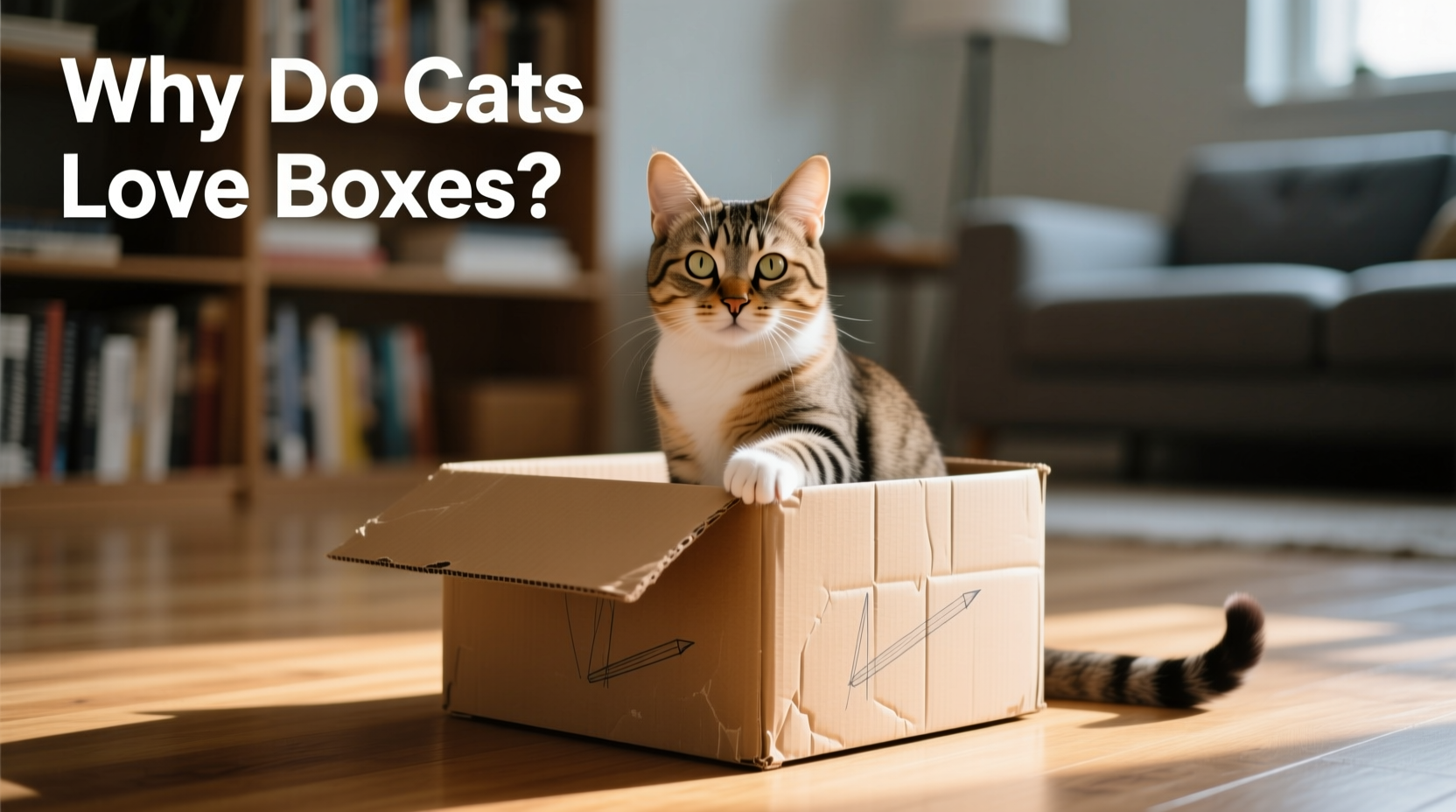
In the wild, cats are both predators and prey. Even though domestic cats have not faced life-or-death threats for generations, their instincts remain finely tuned. One of the strongest survival mechanisms passed down through evolution is the need for concealment. Small, enclosed spaces mimic natural hiding spots such as hollow logs, dense underbrush, or rock crevices—places where wild felines would rest, stalk prey, or evade larger animals.
Boxes offer a modern equivalent: a confined space that provides visual cover and physical boundaries. When a cat enters a box, it gains a sense of control over its environment. The walls limit visibility from multiple angles, reducing anxiety caused by unpredictable movements in the surrounding area. This feeling of enclosure helps mitigate stress, especially in multi-cat households or homes with frequent visitors.
“Enclosures like boxes tap into a cat’s primal need for security. Even well-socialized indoor cats retain the instinct to seek shelter when they feel uncertain.” — Dr. Sarah Thompson, Feline Behavior Specialist
Thermoregulation: The Warmth Factor
Cats prefer warmer ambient temperatures than humans do. The ideal thermal zone for a cat ranges between 86°F and 97°F (30°C–36°C), while most homes are kept around 68°F–72°F (20°C–22°C). Cardboard, despite being an unlikely material, acts as a surprisingly effective insulator. Its fibrous structure traps body heat, creating a cozy microclimate within the box.
This explains why cats often choose boxes even when alternative resting spots—like plush beds or sunny windowsills—are available. A study conducted at the University of Utrecht found that shelter cats given access to cardboard boxes showed significantly lower stress levels during their first week in a new environment compared to those without boxes. Researchers attributed this not only to psychological comfort but also to improved thermoregulation.
Tip: In cooler months, place a soft blanket inside a sturdy box to enhance warmth retention and comfort.Sensory Security and Environmental Control
Cats are highly sensitive to sensory input. Sudden noises, unfamiliar scents, or changes in routine can overwhelm their nervous systems. Enclosed spaces act as sensory buffers, dampening auditory stimuli and limiting visual distractions. Inside a box, a cat can observe its surroundings from a protected vantage point, maintaining vigilance without exposure.
This need for environmental control is particularly evident in high-stress situations. For example, after a veterinary visit, many cats immediately retreat to closets, drawers, or any available box. These spaces serve as “reset zones,” allowing them to process new smells, sounds, and physical sensations in a controlled manner.
Interestingly, the size of the box matters less than its structural integrity. Cats often prefer boxes that are slightly too small rather than ones that are oversized. A snug fit reinforces the sensation of being surrounded and protected, similar to swaddling in human infants.
Behavioral Enrichment and Play Dynamics
While safety and warmth are primary motivators, boxes also fulfill a cognitive and recreational role. Cats are natural explorers and problem solvers. A new box represents novelty—an object to investigate, manipulate, and claim. The act of squeezing in, turning around, pawing at edges, or peeking out creates mental stimulation.
This aligns with the concept of environmental enrichment, which emphasizes providing animals with opportunities to express natural behaviors. Boxes encourage stalking, pouncing, and ambushing—even if the “prey” is a dangling shoelace or a beam of sunlight. Many cat owners report that their pets spend more time interacting with the box than the toy that came inside it.
| Behavior | Purpose | Observed Frequency |
|---|---|---|
| Sitting quietly in box | Resting, thermoregulation | High |
| Peeking over edge | Surveillance, play prep | Moderate |
| Scratching inner walls | Marking territory, texture exploration | Low to moderate |
| Bringing toys into box | Stashing prey, play den creation | Variable |
Mini Case Study: Stress Reduction in Shelter Cats
A 2014 study at an animal shelter in the Netherlands introduced cardboard boxes to newly arrived cats. Half of the cats were provided with standard bedding and open resting areas; the other half received identical setups plus a plain cardboard box. Over ten days, researchers used the Cat-Stress-Score (CSS) system to evaluate anxiety levels daily.
The results were striking: cats with boxes adapted faster, vocalized less, and exhibited fewer avoidance behaviors. By day three, the box group scored an average of 3.2 on the CSS scale (indicating low stress), while the control group averaged 5.8 (moderate to high stress). The study concluded that simple, accessible enclosures significantly improve welfare during transitions.
Do’s and Don’ts of Providing Boxes for Cats
Not all boxes are equally suitable. While the appeal may seem universal, certain factors influence whether a box becomes a beloved hideout or is ignored entirely.
| Do | Don't |
|---|---|
| Use clean, dry boxes free of tape or staples | Leave plastic bags or packing materials inside |
| Offer multiple sizes to let your cat choose | Force your cat into a box if they resist |
| Place boxes in quiet, low-traffic areas | Put boxes near loud appliances or foot traffic |
| Rotate boxes weekly to maintain novelty | Use damaged or unstable boxes that could collapse |
| Add soft lining for extra comfort | Use strong adhesives or scented cardboard |
Step-by-Step Guide to Creating the Ideal Cat Enclosure
If you want to maximize your cat’s enjoyment and psychological benefit from boxes, follow this simple guide:
- Select the Right Box: Choose a sturdy cardboard container with intact flaps. Ideal height should allow your cat to curl up comfortably.
- Remove Hazards: Take off any tape, labels, or staples. Avoid boxes with ink-heavy printing or chemical residues.
- Enhance Comfort: Line the bottom with a soft towel or fleece blanket. Avoid loose fabrics that could tangle.
- Position Strategically: Place the box in a quiet corner, near a window, or beside a favorite piece of furniture.
- Introduce Gradually: Let your cat approach on their own. You can sprinkle catnip or place a familiar-smelling item inside to encourage interest.
- Monitor Use: Observe how your cat interacts with the box. Adjust location or size based on preference.
- Refresh Regularly: Replace flattened or soiled boxes every few weeks to maintain structural integrity and hygiene.
Expert Insight: The Cognitive Benefits of Enclosures
Beyond immediate comfort, enclosures support long-term mental health in cats. Dr. Elena Martinez, a veterinary ethologist, explains: “Cats thrive on predictability. When they can control their proximity to stimuli, their confidence grows. Boxes aren’t just hiding places—they’re tools for emotional regulation.”
“A cat that feels safe is a cat that explores, plays, and bonds more readily. Simple structures like boxes can be foundational to behavioral wellness.” — Dr. Elena Martinez, DVM, PhD in Animal Behavior
Frequently Asked Questions
Why does my cat sit in boxes even when they have expensive beds?
Despite cost or design, many commercial cat beds lack the high-sided, cave-like structure that mimics natural dens. Boxes provide superior boundary definition and insulation. Additionally, the novelty and DIY nature of boxes make them more engaging than predictable, mass-produced alternatives.
Is it safe for cats to chew on cardboard?
Occasional nibbling is generally harmless, especially if the cardboard is plain and untreated. However, ingesting large pieces can lead to gastrointestinal blockages. Monitor your cat and remove the box if chewing becomes excessive.
Can I use plastic containers instead of cardboard?
Some cats accept plastic bins, but they often lack breathability and insulation. Cardboard absorbs odors and moisture better and feels more natural under paw. If using plastic, ensure adequate ventilation and add soft padding.
Conclusion: Respecting the Box-Loving Mindset
The fascination cats have with boxes is not whimsy—it’s a window into their complex psychological makeup. From ancient survival instincts to modern-day stress management, the humble cardboard box fulfills essential needs for security, warmth, and control. Rather than dismissing this behavior as cute or inexplicable, we can honor it as a meaningful expression of feline identity.
By recognizing the depth behind such simple actions, pet owners can create environments that truly support their cats’ emotional well-being. A single box costs nothing, takes up little space, and yet offers immense value. In caring for our cats, sometimes the smallest gestures yield the greatest rewards.
💬 Have a story about your cat’s favorite box? Share your experience in the comments—your insight might help another cat owner understand their furry companion a little better.








