
Cats sitting in cardboard boxes is one of the most universally recognized quirks of cat ownership. Whether it's a shipping container, a shoebox, or a gift box just slightly larger than their body, felines seem irresistibly drawn to these confined spaces. While it may appear whimsical or even inexplicable, this behavior is deeply rooted in both evolutionary biology and psychological necessity. Understanding why cats exhibit this preference offers insight into their natural instincts, stress responses, and environmental needs.
Far from being a random habit, a cat’s attraction to boxes serves multiple functional purposes. From thermoregulation to security, territoriality to hunting strategy, the reasons are as complex as they are fascinating. This article explores the biological, behavioral, and emotional drivers behind this phenomenon, supported by scientific research, expert insights, and real-world observations.
The Evolutionary Roots of Box-Sitting Behavior
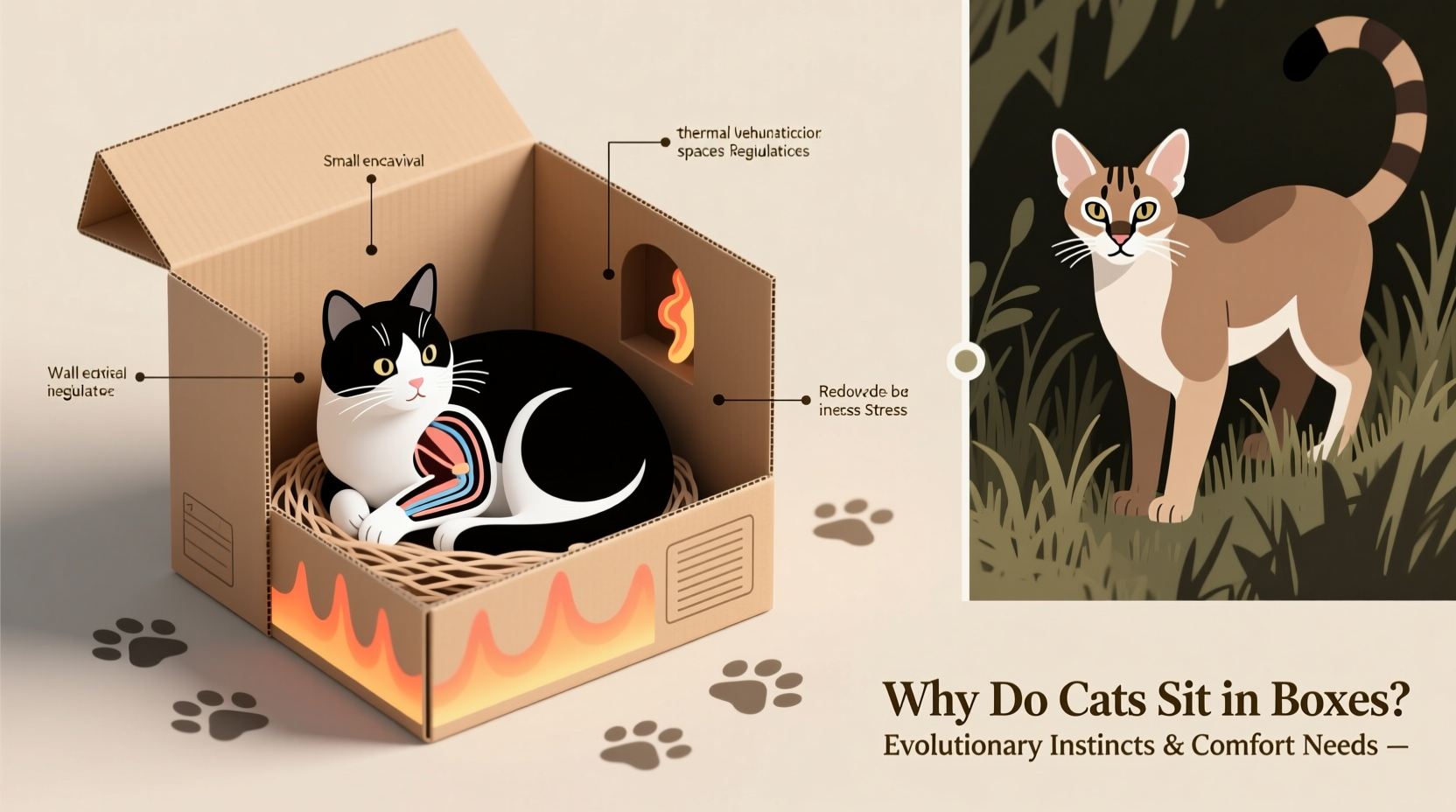
To understand why domestic cats seek out enclosed spaces like boxes, we must look back at their wild ancestors. The modern house cat (*Felis catus*) evolved from solitary, desert-dwelling hunters such as the African wildcat (*Felis lybica*). These ancestors relied on stealth, concealment, and ambush tactics to survive in open, exposed environments with limited natural cover.
In the wild, finding shelter was critical—not only for protection from predators but also for ambushing prey. Small, hidden enclosures mimic the burrows, rock crevices, and dense underbrush that wildcats historically used. A box, therefore, functions as a simulated den: a concealed vantage point where a cat can observe its surroundings without being seen.
“Enclosed spaces provide cats with a sense of control over their environment. In evolutionary terms, visibility equals vulnerability. Boxes offer a retreat where they can remain unseen while staying alert.” — Dr. Sarah Ellis, Feline Behavior Scientist, University of Lincoln
This instinct persists in domestic cats despite generations of living indoors. Even well-fed, indoor-only cats retain the same neurological wiring that prioritizes safety through concealment. When a cat enters a box, it’s not merely “playing” or seeking novelty—it’s fulfilling an innate need to minimize exposure and maximize surveillance.
Thermoregulation: The Warmth Factor
One of the most practical reasons cats love boxes is temperature regulation. Cats have a higher thermoneutral zone—the range of ambient temperatures where they don’t need to expend energy to maintain body heat—than humans. Their ideal temperature ranges between 86°F and 97°F (30°C–36°C), significantly warmer than typical indoor room temperatures.
Cardboard is a natural insulator. Its fibrous structure traps body heat, creating a microclimate that helps cats conserve energy. For a species that sleeps 12 to 16 hours a day, maintaining optimal body temperature during rest periods is essential for metabolic efficiency.
Tip: If your home is cool, provide insulated hiding spots—like lined cardboard boxes or fabric-covered cat caves—to support your cat’s natural thermoregulatory needs.A study published in *Applied Animal Behaviour Science* found that shelter cats given access to cardboard boxes showed significantly lower stress levels within the first few days of arrival compared to those without boxes. Researchers attributed part of this effect to improved thermal comfort, which reduces physiological strain and supports immune function.
Stress Reduction and Environmental Security
Modern homes, while safe, can be overwhelming for cats. Noise from appliances, foot traffic, unfamiliar visitors, or even new furniture can create sensory overload. Unlike dogs, which often seek social reassurance during stress, cats typically respond by withdrawing—a behavior known as \"avoidance coping.\"
Boxes serve as instant sanctuaries. They provide a physical barrier that dampens sound, limits visual stimuli, and creates a predictable boundary. This sense of enclosure activates the parasympathetic nervous system, helping the cat transition from a state of alertness to relaxation.
In multi-cat households, boxes also play a role in reducing social tension. Each cat may claim a box as a personal territory, minimizing direct confrontations. Even in single-cat homes, rotating access to different boxes can enrich the environment and prevent boredom-related behaviors.
| Benefit | How Boxes Help | Observed Outcome |
|---|---|---|
| Stress Reduction | Provides visual and auditory shielding | Lower cortisol levels, faster acclimation |
| Thermal Comfort | Traps body heat efficiently | Increased resting time, reduced shivering |
| Predatory Instinct | Offers concealed observation point | Stalking behavior from inside box |
| Environmental Enrichment | Introduces novelty and choice | Higher activity levels, reduced stereotypy |
Behavioral Enrichment and Cognitive Stimulation
While boxes fulfill primal needs, they also contribute to mental health. Cats are intelligent, curious animals that require cognitive engagement. A new box represents an unpredictable object—its smell, texture, shape, and sound when tapped all stimulate sensory processing.
Even after the novelty wears off, the presence of multiple boxes throughout a home allows for spatial variation, encouraging exploration and route planning. This kind of environmental complexity is crucial for preventing feline depression and anxiety, especially in indoor-only cats.
Some owners report their cats using boxes as launch pads for pouncing, makeshift beds for napping, or even interactive toys when crinkled or moved. The versatility of a simple box makes it one of the most cost-effective enrichment tools available.
Mini Case Study: Shelter Cat Acclimation Program
In a 2020 trial at a municipal animal shelter in Portland, Oregon, newly arrived cats were divided into two groups. One group received standard housing with bedding and food; the other received identical conditions plus a plain cardboard box placed in the corner of the cage.
Over seven days, staff recorded signs of stress: vocalization, hiding, refusal to eat, and avoidance of human contact. By day three, 79% of cats with boxes exhibited relaxed postures (e.g., lying on side, slow blinking), compared to only 36% in the control group. After one week, the box group showed twice the rate of adoption, suggesting lower stress improved their social behavior and adoptability.
The success led the shelter to implement \"Box Zones\" in every intake area—an initiative now adopted by several regional facilities.
Do’s and Don’ts of Providing Boxes for Cats
Not all boxes are equally suitable. To maximize benefits and ensure safety, follow these guidelines:
| Do | Don’t |
|---|---|
| Use clean, unprinted cardboard boxes | Leave staples, tape, or plastic liners inside |
| Provide multiple sizes so cats can grow into them | Use boxes with sharp edges or splinters |
| Rotate boxes weekly to maintain novelty | Force a cat into a box—they must choose freely |
| Add soft lining (old t-shirt, fleece) for comfort | Use chemical-treated wood or synthetic materials |
| Place boxes in quiet, low-traffic areas | Locate them near loud appliances or drafts |
Step-by-Step Guide: Creating a Cat-Friendly Box Environment
- Select the right size: The box should allow your cat to turn around and lie stretched out, but not so large that it loses its den-like feel.
- Remove hazards: Cut off any plastic handles, remove adhesive tape, and sand down rough edges.
- Enhance comfort: Line the bottom with a soft towel or blanket. Avoid scented detergents.
- Position strategically: Place the box with the opening facing a wall or corner, giving the cat a secure backdrop.
- Encourage use: Sprinkle a pinch of catnip or place a favorite toy inside to draw interest.
- Monitor and rotate: Replace or move the box every 5–7 days to maintain curiosity and hygiene.
Frequently Asked Questions
Is it normal for my cat to prefer boxes over expensive cat beds?
Absolutely. Most commercial cat beds lack the high sides and enclosed design that trigger a cat’s instinctual preference for sheltered spaces. A box provides more psychological security than an open cushion, regardless of price or plushness.
Should I be concerned if my cat hides in boxes frequently?
Occasional box use is healthy. However, if your cat spends excessive time hiding, avoids interaction, or shows changes in appetite or litter box habits, it could indicate chronic stress or illness. Consult a veterinarian or feline behaviorist if you notice persistent withdrawal.
Can kittens safely play in boxes?
Yes, but supervise young kittens. They may chew on cardboard, ingest glue, or get trapped if flaps collapse. Always remove tape, staples, and small parts, and avoid deep boxes where they might struggle to climb out.
Expert Insight: The Neuroscience Behind the Behavior
Recent advances in feline neuroscience help explain why boxes are so appealing. Functional MRI studies show that when cats enter confined spaces, there is increased activity in brain regions associated with reward and safety, particularly the amygdala and hippocampus.
“When a cat enters a box, it’s not just about warmth or hiding—it’s about predictability. Enclosed spaces reduce uncertainty, which directly lowers neural arousal in threat-processing areas of the brain.” — Dr. Daniel Mills, Professor of Veterinary Behavioral Medicine, University of Lincoln
This neurological response mirrors how humans feel safer in windowless rooms during thunderstorms—the reduction in sensory input creates a sense of control. For cats, whose survival once depended on avoiding detection, that feeling is hardwired.
Conclusion: Respecting Natural Instincts for Better Cat Care
The seemingly simple act of a cat sitting in a box is, in fact, a window into millions of years of evolutionary adaptation. It reflects deep-seated needs for security, warmth, and environmental mastery. Rather than dismissing this behavior as cute or quirky, responsible caregivers should recognize it as a vital component of feline well-being.
By providing accessible, safe enclosures—whether cardboard boxes, fabric tunnels, or commercially designed cat caves—owners support their pets’ mental and physical health. These small interventions can reduce stress, enhance enrichment, and strengthen the human-animal bond.
🚀 Start today: Place a clean, hazard-free box in a quiet corner of your home. Observe how your cat interacts with it. You’re not just offering a hiding spot—you’re honoring their biology. Share your experience with fellow cat lovers and advocate for instinct-based care in shelters and homes everywhere.








