Cats are creatures of mystery and contradiction—graceful yet clumsy, aloof yet affectionate, independent yet territorial. One of the most endearing and baffling behaviors they exhibit is their tendency to squeeze into boxes far too large for them. From shipping containers to cereal cartons, no cardboard fortress is safe from a cat’s investigative sprawl. But why do cats sit in boxes bigger than their bodies? The answer lies deep within feline psychology, evolutionary biology, and environmental perception.
This behavior isn’t just whimsical—it’s rooted in survival instincts, sensory processing, and emotional regulation. Understanding it offers insight not only into how cats experience the world but also how we can better meet their psychological needs as pet owners.
The Evolutionary Roots of Box-Sitting Behavior
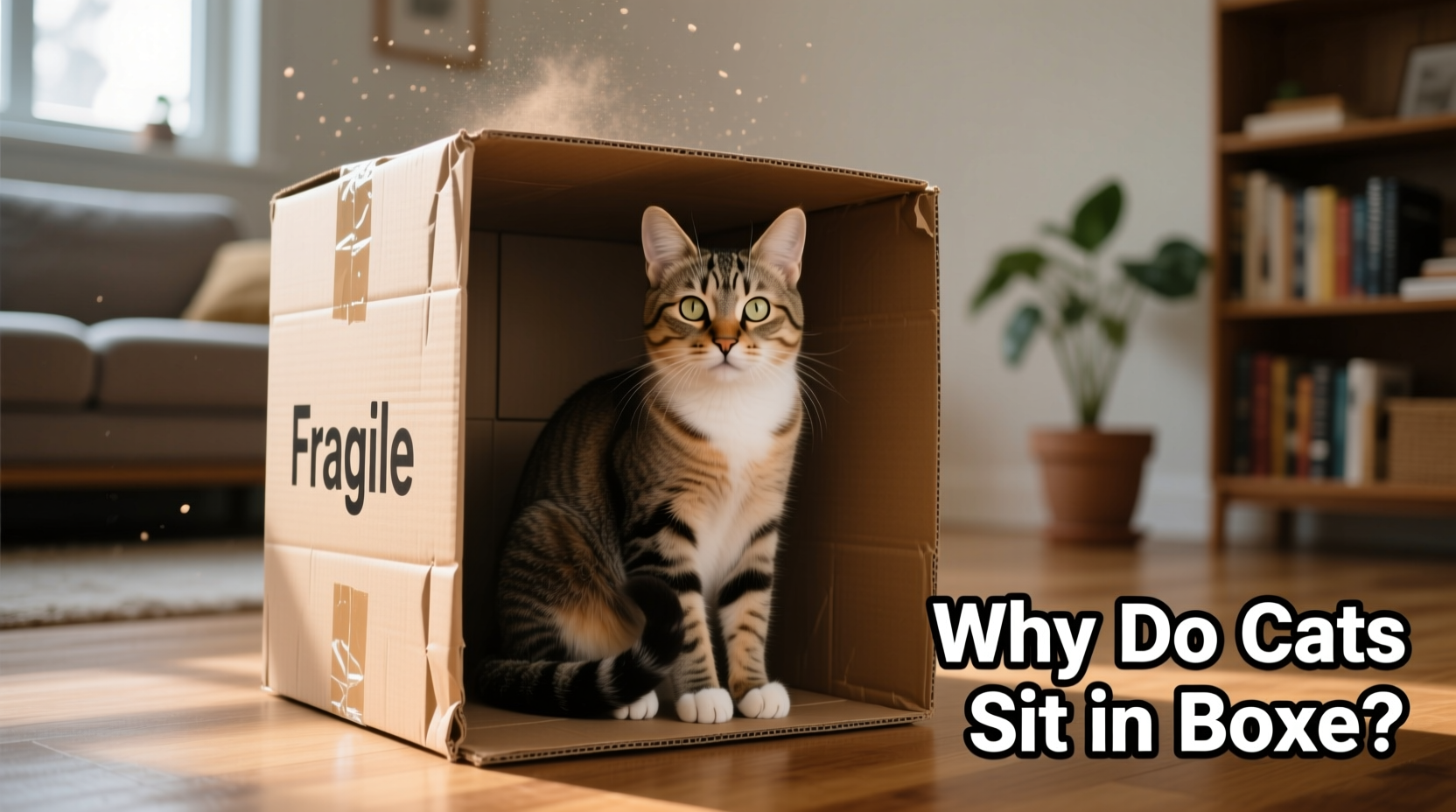
Cats, even domesticated ones, carry the genetic blueprint of solitary hunters who once roamed harsh environments where safety was never guaranteed. In the wild, small enclosures like rock crevices, hollow logs, or dense brush provided protection from predators and extreme weather. These spaces offered concealment, insulation, and a vantage point for observing surroundings without being seen.
Modern cats retain these instincts. A box—even one significantly larger than their body—represents a potential den. While it may seem inefficient for a cat to occupy a space much larger than itself, the key factor isn’t size but enclosure. The presence of walls on multiple sides creates a psychological boundary that signals safety. Even if the cat doesn’t fill the box completely, the structure satisfies an innate need for containment.
Dr. Sarah Ellis, a feline behavior expert at the University of Lincoln, explains: “Cats don’t perceive space in terms of efficiency. They assess environments based on perceived risk and control. A box gives them control over visibility and access.”
“Even in secure homes, cats remain psychologically vigilant. Enclosed spaces reduce cognitive load by limiting stimuli.” — Dr. Sarah Ellis, Feline Behavior Researcher
Thermoregulation and Comfort: Why Warmth Matters
Beyond security, temperature plays a crucial role in a cat’s decision to inhabit oversized boxes. The average domestic cat has a thermoneutral zone—the range at which it doesn’t need to expend energy regulating body temperature—between 86°F and 97°F (30°C–36°C). Most human homes are kept cooler than this, especially with air conditioning or drafty windows.
Cardboard is a natural insulator. When a cat settles into a box, the material traps body heat and reduces airflow, creating a microclimate that helps maintain optimal body temperature. This thermal benefit applies regardless of whether the box fits snugly or allows room to stretch.
In fact, research conducted at the Utrecht University Faculty of Veterinary Medicine found that shelter cats given access to cardboard boxes showed lower stress levels and adapted more quickly to new environments. The study concluded that “the provision of hiding boxes should be considered essential rather than optional in any cat-housing system.”
Tip: Place a soft blanket inside a large box to enhance warmth and comfort, especially during colder months.Sensory Processing and Environmental Control
Cats have highly sensitive nervous systems. Their hearing extends to frequencies beyond human detection, and their vision excels in low light but struggles with sudden movements and bright lights. In open rooms, especially those with high traffic or unpredictable sounds, cats can become overwhelmed.
An enclosed space acts as a sensory filter. By sitting in a box, a cat limits visual input from peripheral movement, dampens ambient noise, and gains a sense of spatial definition. This reduction in stimulation allows the cat to relax without feeling exposed.
Interestingly, many cats will position themselves so that they face the opening of the box. This orientation provides both security and situational awareness—a balance between retreat and engagement. It allows them to monitor household activity while maintaining the option to withdraw instantly.
This behavior reflects what ethologists call \"risk assessment posture\"—a stance that maximizes information intake while minimizing vulnerability. Whether the box is small enough to curl into or large enough to pace across, the functional advantage remains the same: controlled exposure.
Psychological Security in Domestic Environments
Despite living in safe homes, cats often experience low-grade chronic stress due to environmental unpredictability. Changes such as new furniture, visitors, other pets, or loud appliances can trigger anxiety. Boxes serve as psychological anchors—familiar, predictable zones where cats can regain a sense of agency.
A 2017 study published in *Animal Welfare* demonstrated that cats introduced to new environments exhibited significantly fewer stress-related behaviors (such as hiding, reduced appetite, or aggression) when provided with accessible hiding spots—including boxes—within the first 48 hours.
The researchers noted that “even when cats chose not to fully enter a box, merely being near or partially inside was associated with faster acclimatization.” This suggests that the symbolic presence of refuge is almost as important as physical occupancy.
Moreover, boxes offer a neutral territory. Unlike beds or perches that may be claimed by dominant animals, a newly arrived box is unmarked and available. For shy or subordinate cats, this accessibility makes boxes particularly valuable resources.
Real-Life Example: Luna Adjusts to a New Home
Luna, a three-year-old rescue tabby, was adopted into a household with two dogs and frequent guests. Initially, she spent most of her time under the bed, avoiding interaction. Her new owner placed several medium-sized cardboard boxes in quiet corners of the living room and bedroom, each lined with a fleece blanket.
Within days, Luna began using the boxes as observation posts. She rarely curled up tightly; instead, she lounged diagonally across them, tail draped over the edge. Over time, her confidence grew. She started greeting family members from her box perch and eventually transitioned to sitting on the sofa—still within view of her nearest box.
The box didn’t confine her—it empowered her. It became a basecamp from which she explored the world on her own terms.
Do Cats Prefer Certain Types of Boxes?
While any enclosed space can serve the purpose, certain features make some boxes more appealing than others:
- Opening size: Wide enough for easy entry but not so large that it compromises the feeling of enclosure.
- Height: Sides at least as tall as the cat’s shoulders provide better visual shielding.
- Texture: Rough inner surfaces allow scratching, which marks the space with scent glands in the paws.
- Location: Proximity to activity (but not in direct foot traffic) allows monitoring without exposure.
| Box Feature | Why It Matters | Cat Preference Level |
|---|---|---|
| Cardboard material | Insulating, scratchable, absorbent | ★★★★★ |
| Multiple openings | Escape routes increase perceived safety | ★★★★☆ |
| Small entry hole | Increases den-like feel but may deter larger cats | ★★★☆☆ |
| Elevated placement | Combines height advantage with enclosure | ★★★★★ |
| Fragile construction | May collapse, reducing trust in future boxes | ★☆☆☆☆ |
Step-by-Step: Creating the Ideal Box Environment for Your Cat
If you want to encourage healthy, stress-free behavior in your cat, follow this simple guide to optimize box usage:
- Select sturdy boxes: Choose clean, undamaged cardboard with intact flaps and solid bases.
- Modify the entrance: Cut a single large opening or two smaller ones depending on your cat’s preference for visibility vs. seclusion.
- Add soft lining: Place a removable fleece or cotton blanket inside for warmth and scent familiarity.
- Position strategically: Place the box in a quiet corner near a window or common area—close enough to household activity to avoid isolation.
- Rotate periodically: Introduce new boxes every few weeks to maintain novelty and prevent boredom.
- Respect boundaries: Never force a cat into a box or remove them abruptly while inside.
Common Misconceptions About Cats and Boxes
Several myths persist about why cats love boxes. Let’s clarify the facts:
- Myth: Cats only like boxes because they’re small and cozy.
Reality: Size is secondary to enclosure. Many cats prefer larger boxes that still offer wall coverage. - Myth: Sitting in big boxes means the cat is trying to hide.
Reality: Often, the cat is observing. Hiding implies fear; many box-sitters are relaxed and alert. - Myth: Once a cat outgrows a box, it loses interest.
Reality: Adult cats continue to use oversized boxes throughout life, suggesting the behavior is not developmental but enduring.
FAQ: Frequently Asked Questions
Is it normal for my cat to sit in a box much larger than its body?
Yes, it’s completely normal. The appeal lies in the enclosure, not the fit. As long as the box has walls on multiple sides, it fulfills the cat’s need for a defined, secure space—even if there’s plenty of extra room.
Should I be concerned if my cat spends too much time in boxes?
Not necessarily. Moderate use of boxes is healthy. However, if your cat refuses to leave the box, avoids social interaction, or shows signs of illness (loss of appetite, lethargy), consult a veterinarian. Excessive hiding can indicate underlying medical or behavioral issues.
Can I use plastic containers instead of cardboard?
Plastic bins can work if they have adequate ventilation and non-slip flooring. However, cardboard is generally preferred because it’s warmer, quieter, and allows scratching. Avoid sealed plastic containers, which can trap heat and reduce air quality.
Checklist: Cat-Friendly Box Setup
Use this checklist to ensure your cat gets the most benefit from their box:
- ✅ Sturdy, clean cardboard with no sharp edges
- ✅ At least one side wall taller than the cat’s back when sitting
- ✅ Soft, washable liner (fleece or cotton)
- ✅ Located in a low-traffic but socially connected area
- ✅ Free from strong odors (ink, cleaning residue, food packaging)
- ✅ Multiple boxes available if you have more than one cat
- ✅ Replaced or rotated every 2–4 weeks
Conclusion: Embracing the Quirks of Feline Nature
The sight of a cat lounging in a box far too large to snuggle into may seem illogical, but it speaks volumes about the complexity of feline psychology. What appears to be a simple quirk is actually a sophisticated interplay of instinct, sensory management, and emotional well-being.
By providing boxes—not just for kittens or temporary use, but as permanent fixtures in a cat’s environment—we honor their evolutionary heritage and support their mental health. We don’t need to understand every nuance of their choices to respect them. Sometimes, the best thing we can do for our cats is to leave a box out, step back, and let them decide how to use it.
💬 Have a story about your cat and their favorite box? Share your experience in the comments—celebrate the strange, wonderful logic of cats together with fellow enthusiasts!








