If you’ve ever stood in your kitchen only to be gently but insistently nudged by a cat weaving between your legs, you’re not alone. This seemingly simple gesture—rubbing against human legs—is one of the most common yet misunderstood behaviors in domestic cats. Far from random affection, this act is rich with biological, social, and emotional significance. Understanding why cats engage in this behavior offers a window into their complex world of scent communication, social bonding, and territorial instincts.
The Science Behind the Scent: How Cats Mark Their Territory
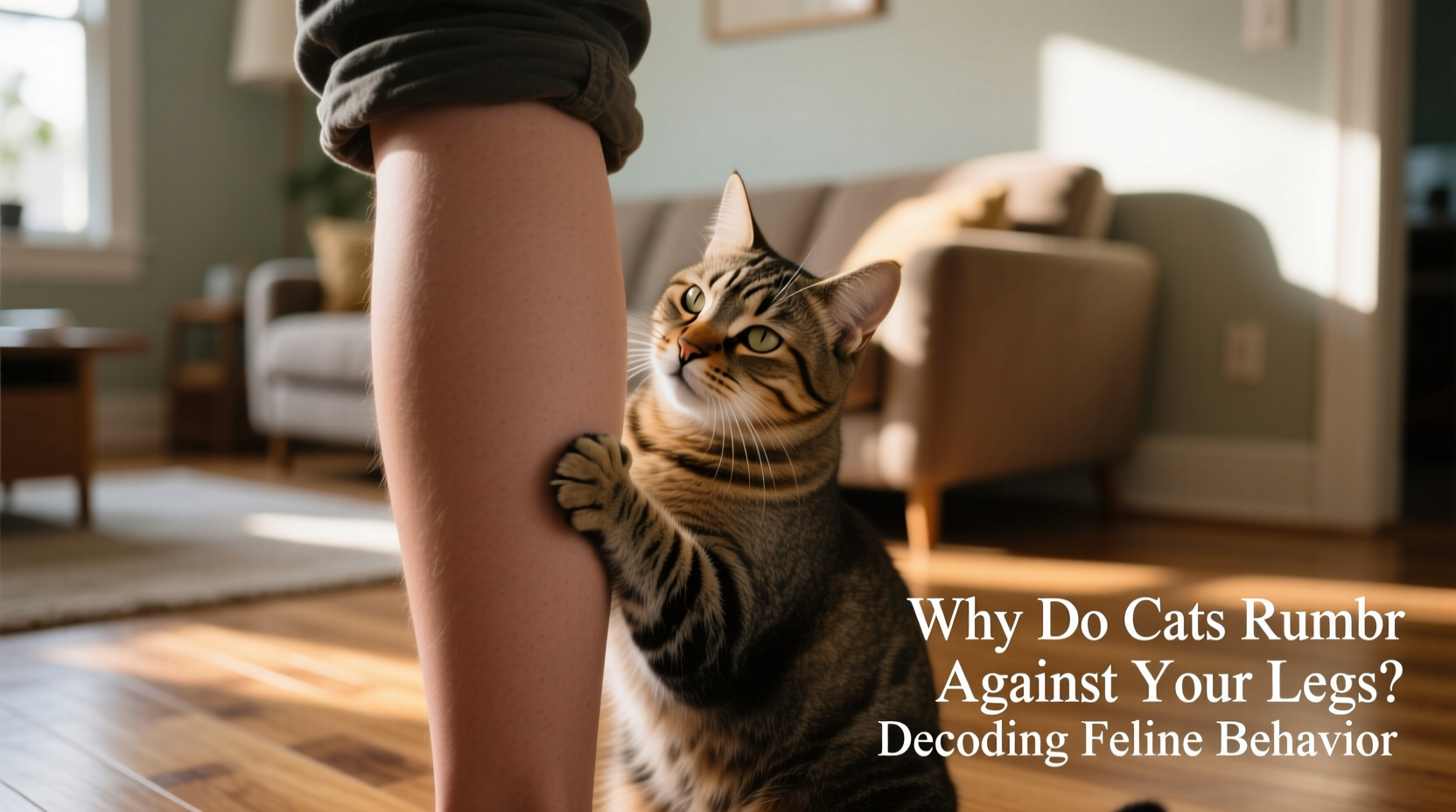
Cats possess a sophisticated olfactory system that plays a central role in how they interact with their environment. When a cat rubs its head, cheeks, or body against your legs, it’s engaging in a behavior known as “bunting.” This action deposits pheromones—chemical signals produced by glands located around the cat’s face, particularly near the temples, lips, and chin.
These facial pheromones are undetectable to humans but serve as powerful social signals to other cats. By marking you, your furniture, or doorways, your cat is essentially saying, “This is safe. This is mine.” It’s not an act of ownership in a possessive sense, but rather a way of creating a shared olfactory identity within its social group.
“Cats live in a world dominated by scent. When they rub against you, they’re integrating you into their sensory map of safety and familiarity.” — Dr. Sarah Ellis, Feline Behavior Scientist, University of Lincoln
This scent-marking behavior is calming for cats. In multi-cat households, bunting is often observed between bonded cats, reinforcing group cohesion. When directed at humans, it signifies trust and inclusion.
Social Bonding: A Sign of Trust and Affection
Unlike dogs, whose affection is often overt and energetic, cats express attachment through subtle, ritualized behaviors. Rubbing against your legs is one of the most intimate gestures a cat can offer. It’s typically reserved for individuals the cat recognizes as part of its trusted inner circle.
This behavior often begins when a cat greets you after a period of separation—such as when you return home or enter a room. The rub serves multiple purposes: acknowledgment, reassurance, and reaffirmation of the bond. In some cases, the cat may follow the rub with slow blinks or a tail held high, both of which are additional signs of contentment and trust.
Tip: If your cat rubs against you, respond with calm petting on the head or cheeks—areas where they enjoy being touched. Avoid sudden movements that might disrupt the moment.Communication Beyond Words: What Your Cat Is Telling You
Feline communication is largely nonverbal. Since cats don’t rely on vocalizations as much as body language and scent, rubbing is a key component of their expressive repertoire. Depending on context, leg-rubbing can convey different messages:
- Greeting: A quick nudge upon your arrival signals recognition and welcome.
- Request: Sometimes accompanied by meowing, the rub may precede a demand for food, play, or attention.
- Reassurance: In unfamiliar environments, a cat may rub more frequently to comfort itself by spreading its scent.
- Claiming: When guests arrive, your cat may rub against you to reinforce its claim on you as part of its social unit.
Interestingly, cats are more likely to bunt individuals who move slowly and speak softly. Fast movements or loud voices can inhibit this behavior, indicating that the cat feels less secure.
Decoding the Ritual: A Step-by-Step Look at the Behavior
Understanding the sequence of a typical leg-rubbing interaction helps clarify its purpose. Here’s how it usually unfolds:
- Approach: The cat walks toward you with a relaxed posture, often with tail upright.
- Contact: It presses its cheek or side against your leg, sometimes circling you.
- Scent Transfer: Facial glands release pheromones onto your clothing or skin.
- Follow-up: May include purring, slow blinking, or soliciting pets.
- Withdrawal: The cat may walk away calmly, having completed the social exchange.
This entire process rarely lasts more than 10–20 seconds, but it’s a complete communicative event. Skipping any step—like abruptly pulling away—can confuse or distress a sensitive cat.
Common Misinterpretations and What They Mean
Many people mistake leg-rubbing for mere attention-seeking or clinginess. However, interpreting it solely as a bid for pets misses the deeper biological function. Below is a comparison of common assumptions versus the actual motivations behind the behavior.
| Common Assumption | Actual Explanation |
|---|---|
| “My cat just wants pets.” | While physical contact may be welcomed, the primary goal is scent exchange and social bonding. |
| “It’s a sign of dominance.” | No—cats mark what they feel safe with, not what they dominate. It’s inclusion, not control. |
| “Only friendly cats do this.” | Even shy or anxious cats may bunt familiar people as a self-soothing behavior. |
| “They’re just getting my attention.” | Attention may be a secondary outcome, but the act itself is rooted in olfactory communication. |
Mini Case Study: Luna and the Morning Ritual
Luna, a 4-year-old domestic shorthair, lives with a couple in Portland. Every morning, without fail, she meets her owner at the bedroom door, circles her legs, and rubs her cheeks vigorously against her pajama pants. At first, the owner interpreted this as a demand for breakfast. But after observing Luna’s behavior closely—and noting that she does this even after being fed—it became clear the ritual was more about connection.
When the owner started responding with gentle strokes and soft speech, Luna began purring during the interaction. Over time, the greeting evolved into a consistent moment of calm before the day’s chaos. A veterinarian noted that Luna’s routine reflects strong attachment and low stress levels—key markers of a healthy human-cat relationship.
How to Respond: A Checklist for Cat Owners
To support your cat’s natural behavior and strengthen your bond, consider the following actions:
- ✅ Allow the rub to happen without rushing or stepping away.
- ✅ Return gentle touches to the head, cheeks, or under the chin—avoid touching the belly unless invited.
- ✅ Maintain a calm tone and slow movements during the interaction.
- ✅ Observe if the rub is followed by other cues (meowing, leading to food bowl) to understand combined messages.
- ✅ Avoid punishment or scolding if the cat knocks things over while weaving—this is usually unintentional.
FAQ: Common Questions About Leg-Rubbing Behavior
Why does my cat only rub against me and not my partner?
Cats form individual bonds based on experience, scent, and routine. If your cat spends more time with you or associates you with feeding or grooming, it may prefer to mark you. Encourage bonding by having your partner engage in positive interactions like feeding or gentle play.
Is it normal for cats to rub against walls or furniture too?
Absolutely. Cats bunt inanimate objects for the same reason—they’re marking their territory with facial pheromones. This is especially common around entryways, sleeping areas, and favorite resting spots.
Can excessive rubbing be a sign of a health problem?
Occasional rubbing is normal. However, if your cat begins rubbing its face excessively, shows redness, hair loss, or seems agitated, consult a vet. These could indicate skin irritation, ear mites, or anxiety-related over-grooming.
Conclusion: Embracing the Language of Scent and Touch
Cats don’t speak our language, but they communicate with remarkable clarity through actions like leg-rubbing. Each nudge is a quiet declaration: “You belong with me. This space is ours.” By learning to read these gestures, we deepen our understanding of feline psychology and enrich our relationships with these enigmatic companions.
💬 Did your cat ever surprise you with its affection? Share your story in the comments—your experience might help others decode their own cat’s unique personality.








