Many cat owners have experienced it: you begin gently stroking your cat along the base of the tail or lower back, and almost instantly, they arch their spine upward, lifting their hindquarters into the air. This subtle yet distinctive movement may seem odd at first, but it’s actually a deeply rooted behavior tied to a cat’s biology, social communication, and sensory wiring. Understanding why cats raise their backs when petted offers valuable insight into their emotional state, physical comfort, and relationship with humans.
This seemingly simple gesture is far more complex than it appears. It reflects a blend of instinct, pleasure, and nonverbal signaling that has evolved over thousands of years. By decoding this behavior, pet owners can strengthen their bond with their cats, recognize signs of contentment, and avoid misinterpreting boundaries.
The Science Behind the Arch: A Sensory Response
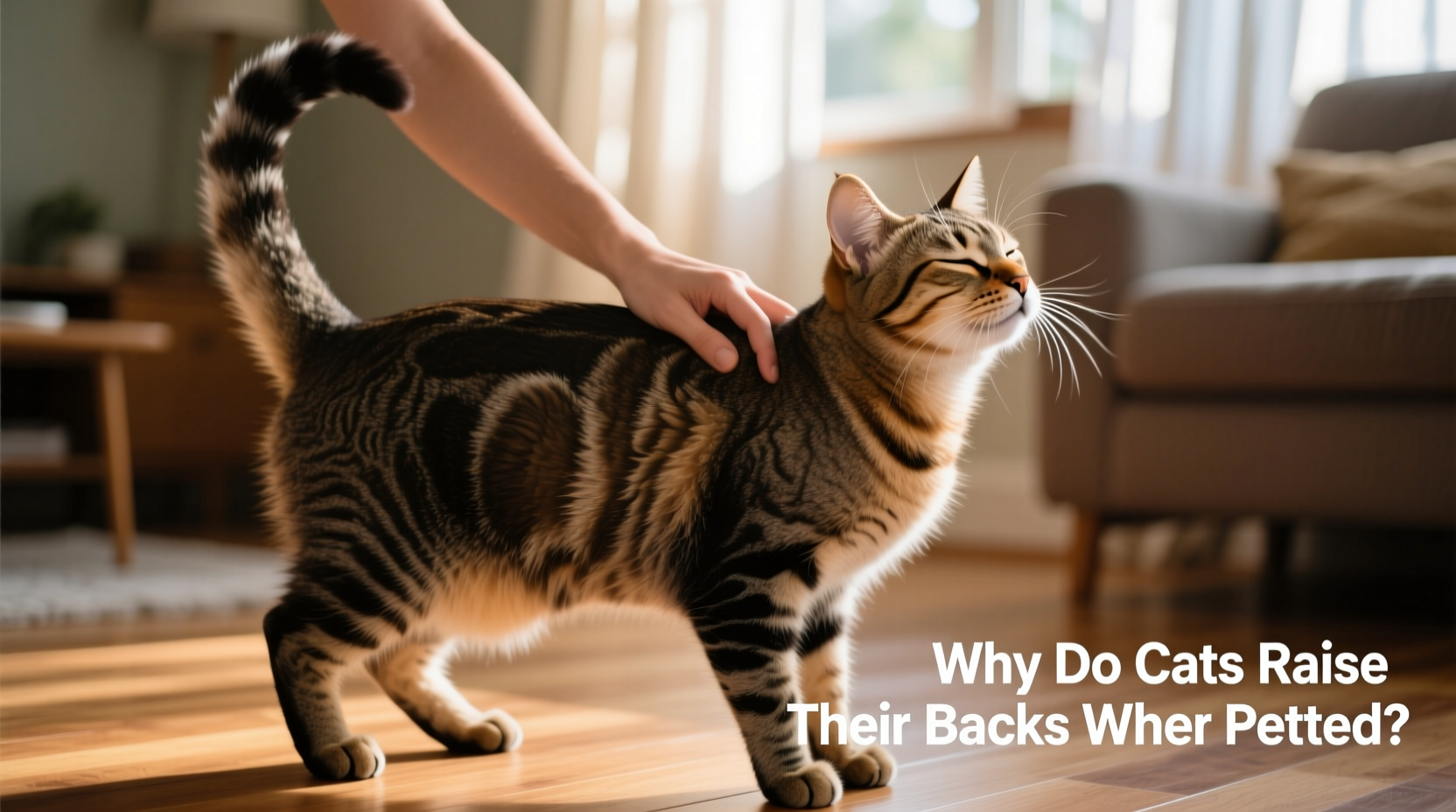
Cats possess an exceptionally sensitive nervous system, particularly in areas like the lower back and tail base. This region is densely packed with nerve endings, making it highly responsive to touch. When stroked, these nerves send signals to the brain that can trigger both physical reflexes and emotional reactions.
The act of raising the back—often referred to as \"elevator butt\"—is partly a spinal reflex. Light pressure or stimulation near the tail triggers a neuromuscular response similar to the way a human might involuntarily jerk their leg during a knee exam. In cats, this manifests as a smooth, upward arch of the spine, sometimes accompanied by tail twitching or quivering.
However, unlike a purely involuntary reflex, this behavior often carries intentional social meaning. The raised back isn’t just a reaction—it’s also a form of communication.
Tip: If your cat lifts its back when touched, continue petting gently—but watch for signs of overstimulation like tail flicking or skin rippling.Feline Communication: The Raised Back as a Social Signal
In the wild, cats rely heavily on body language to communicate with one another. The raised back posture is commonly observed during social interactions between cats, especially during greetings. When two cats meet, one may approach with a vertical tail and an arched back—a sign of friendliness and non-aggression.
When your cat raises its back while being petted, it may be mimicking this affiliative behavior. They are essentially saying, “I trust you,” or “This feels good.” It’s a gesture of openness and acceptance, indicating that they are comfortable in your presence and enjoying the interaction.
Interestingly, this posture also exposes the anal glands located near the base of the tail. While this may sound unappealing to humans, in feline society, scent marking through glandular secretions plays a crucial role in identification and bonding. By lifting their rear, cats may be inviting you to “read” their scent—essentially including you in their inner social circle.
“Cats use micro-movements to express trust. The raised back is not just a reflex—it’s an invitation to connect.” — Dr. Sarah Thompson, Feline Behavior Specialist
Do’s and Don’ts of Petting Cats Based on Their Reactions
Understanding how your cat responds to touch allows you to tailor your interactions to their preferences. Not all cats enjoy being petted in the same areas, and even those who initiate contact may become overstimulated quickly.
| Do | Don’t |
|---|---|
| Pet gently at the head, chin, and base of ears—areas most cats prefer | Avoid prolonged petting near the tail unless your cat clearly enjoys it |
| Observe body language: purring, slow blinking, and raised backs indicate enjoyment | Ignore warning signs like tail lashing, flattened ears, or skin rippling |
| Let the cat control the duration and intensity of contact | Force interaction if the cat walks away or tenses up |
| Use soft, slow strokes rather than rapid or deep rubbing | Pet unfamiliar or shy cats without permission or gradual introduction |
Mini Case Study: Bella and the Morning Ritual
Consider Bella, a three-year-old domestic shorthair adopted from a local shelter. Every morning, she approaches her owner, Emily, weaving between her legs and then turning to present her backside. Emily learned early on that a light stroke at the base of Bella’s tail prompts an immediate lift of her hindquarters, followed by purring and slow blinks.
At first, Emily found the raised back amusing but didn’t understand its significance. After consulting a veterinary behaviorist, she realized that Bella was expressing deep trust. This ritual had become Bella’s way of initiating bonding time. By responding appropriately—limiting the session to a few seconds and respecting when Bella walked away—Emily strengthened their relationship.
Over time, Bella became more affectionate overall, even initiating lap-sitting sessions, which she previously avoided. The key was recognizing that the raised back wasn’t just a quirky habit—it was a gateway to emotional connection.
Step-by-Step Guide to Reading Your Cat’s Petting Signals
To build a healthier, more respectful relationship with your cat, follow this practical sequence when interacting physically:
- Approach calmly: Let your cat come to you. Avoid sudden movements or forced handling.
- Start with safe zones: Begin petting on the head, under the chin, or behind the ears—areas most cats find comforting.
- Observe initial reactions: Look for signs of relaxation such as purring, half-closed eyes, or kneading.
- Test sensitivity: Gently stroke toward the lower back. Watch for the raised-back response.
- Monitor for overstimulation: Be alert to tail flicking, skin rippling, ear flattening, or sudden grooming.
- Respect boundaries: Stop petting before discomfort escalates. Allow breaks between interactions.
- Reinforce positive experiences: Offer treats or verbal praise after calm interactions to build trust.
FAQ: Common Questions About Cats Raising Their Backs
Is it normal for my cat to raise its back every time I pet it?
Yes, especially if you’re touching the lower back or tail base. Many cats exhibit this response due to heightened nerve sensitivity and social instinct. As long as your cat appears relaxed and doesn’t show signs of distress, it’s a normal and healthy reaction.
Why does my cat sometimes bite or scratch right after raising its back?
This sudden shift is often due to overstimulation. The same area that triggers pleasure can become overwhelming if touched too long or too intensely. Even a cat that initially enjoys petting may reach a threshold quickly. Learn to recognize early warning cues and stop before the reaction occurs.
Should I always pet the base of my cat’s tail if they lift their back?
Not necessarily. While some cats love it, others may tolerate only brief contact. Always let your cat guide the interaction. If they move away or show tension, respect their limits—even if the initial signal seemed positive.
Tip: Never punish a cat for scratching or biting after petting. Instead, focus on learning their tolerance level and adjusting your approach.Conclusion: Deepening the Human-Cat Bond Through Awareness
The raised back response is more than a reflex—it’s a window into your cat’s emotional world. By paying attention to this and other subtle behaviors, you gain the ability to interact with empathy and respect. Cats don’t communicate in words, but their bodies speak volumes.
Understanding why cats raise their backs when petted empowers you to create safer, more enjoyable experiences for both of you. It transforms casual petting into meaningful connection, grounded in mutual trust and awareness.
💬 Have you noticed your cat raising their back? What did you learn from their behavior? Share your observations in the comments and help fellow cat lovers deepen their understanding of feline communication.








