Cats have long fascinated humans—not just for their mysterious personalities but also for the soft, rhythmic vibrations they emit when relaxed, stressed, or even injured. Purring is one of the most distinctive behaviors of domestic cats, yet its full purpose remains a subject of scientific curiosity and ongoing study. Beyond being a sign of contentment, emerging research suggests that purring may serve physiological functions for both cats and their human companions. More surprisingly, evidence indicates that the frequencies produced during purring might contribute to healing processes in humans, from reducing stress to potentially accelerating tissue repair.
This article explores the biological mechanisms behind why cats purr, examines the range of emotional and physical contexts in which purring occurs, and reviews current scientific findings on how exposure to cat purrs could offer measurable health benefits to people. Whether you're a lifelong cat lover or simply intrigued by animal behavior, understanding the deeper implications of this humble sound may change how you listen the next time your feline friend curls up beside you.
The Science Behind Feline Purring
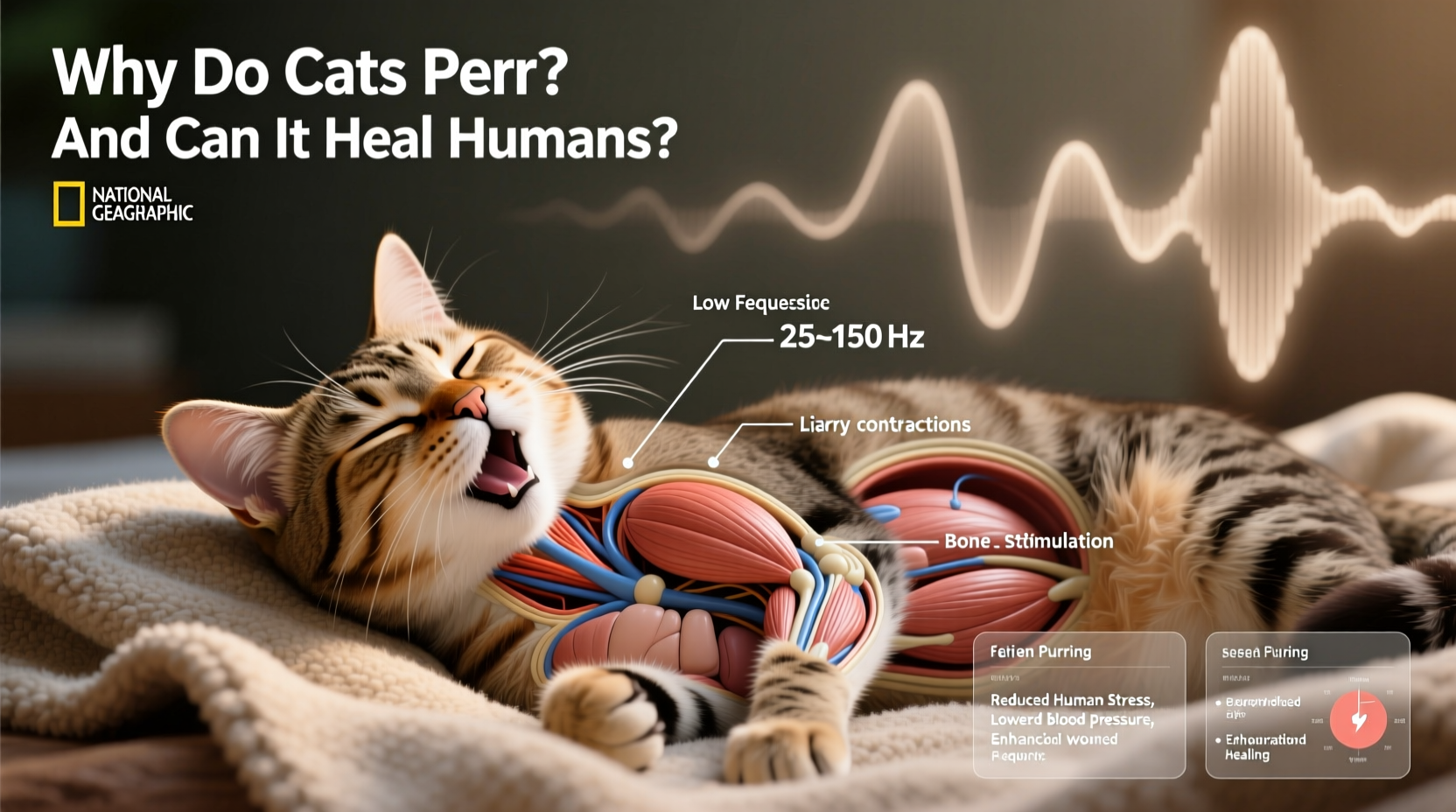
Purring is generated through a combination of neurological and muscular activity. When a cat inhales and exhales, the laryngeal muscles rapidly contract and relax—about 25 to 150 times per second—causing the vocal cords to separate briefly during each phase of breathing. This action creates a consistent, oscillating airflow that results in the characteristic low-frequency vibration we recognize as purring.
The neural oscillator in the cat’s brain sends repetitive signals to these muscles, initiating the process. Unlike other vocalizations such as meowing or hissing, purring does not require active lung pressure; instead, it operates passively through controlled muscle twitching. This allows cats to purr continuously while breathing in and out—a unique trait among land mammals.
Interestingly, purring isn’t exclusive to domestic cats. Several wild felids—including bobcats, ocelots, and cheetahs—are capable of purring, though larger roaring cats like lions and tigers cannot due to anatomical differences in their hyoid bones and larynx structure.
Tip: Not all cats purr at the same frequency. Domestic cats typically purr between 25 and 150 Hz, with many clustering around 25–50 Hz—the range associated with potential therapeutic effects.Why Do Cats Purr? Multiple Contexts and Functions
While most people associate purring with happiness, cats often purr in situations far removed from relaxation. Observational studies show that cats may purr when anxious, injured, giving birth, or even near death. This has led researchers to propose that purring serves multiple adaptive purposes beyond communication of well-being.
- Self-soothing mechanism: Purring may help cats manage pain and stress. The act of vibrating appears to trigger the release of endorphins, natural opioids that reduce discomfort and promote calmness.
- Mother-kitten bonding: Kittens begin purring within days of birth, allowing their mothers to locate them without attracting predators. Mother cats also purr while nursing, reinforcing comfort and connection.
- Healing stimulation: Some scientists believe cats instinctively use purring to support bone and tissue regeneration. The vibrational frequencies overlap with those used in medical therapies for fracture healing and muscle recovery.
- Social signaling: Adult cats rarely purr at each other but frequently direct purrs toward humans, suggesting an evolved communicative strategy to solicit attention, food, or affection.
“Purring likely evolved as a multimodal signal—used for self-repair, communication, and social manipulation. It's a survival tool disguised as a comforting sound.” — Dr. Elizabeth Stelow, Veterinary Behaviorist, UC Davis School of Veterinary Medicine
Therapeutic Frequencies: Can Cat Purring Heal Humans?
One of the most compelling areas of research involves the potential impact of feline purring on human health. The typical purr falls within the 25–150 Hz range, a spectrum that overlaps with frequencies used in clinical settings for treating various conditions. Medical studies have shown that vibrations in this range can:
- Stimulate bone density and repair microfractures
- Reduce swelling and inflammation
- Improve tendon and muscle strength
- Enhance wound healing and tissue regeneration
- Lower blood pressure and heart rate
A landmark study published in the *Journal of the Acoustical Society of America* found that domestic cats’ purrs peak at frequencies known to improve bone strength—particularly around 25 Hz and 50 Hz. These are the same frequencies prescribed in low-intensity pulsed ultrasound (LIPUS) therapy for non-union fractures.
Further research from the University of Minnesota Stroke Prevention Study observed that cat owners had a significantly lower risk of fatal heart attacks compared to non-cat owners—even after adjusting for lifestyle factors. While correlation doesn't imply causation, frequent interaction with purring cats was linked to reduced stress levels and improved cardiovascular outcomes.
| Purring Frequency (Hz) | Observed Biological Effect | Medical Application |
|---|---|---|
| 25–50 | Bone growth stimulation, fracture healing | Treatment of osteoporosis, delayed union fractures |
| 75–100 | Muscle repair, reduced joint stiffness | Rehabilitation post-injury or surgery |
| 100–150 | Pain relief, anti-inflammatory response | Chronic pain management, arthritis therapy |
Though no device currently replicates a cat’s exact purr pattern, some experimental vibroacoustic therapies attempt to mimic these frequencies using speakers or wearable devices. However, none carry the psychological benefits of actual pet interaction—such as emotional bonding, reduced loneliness, and increased oxytocin production.
Real-World Impact: A Case Study in Stress Reduction
Sarah M., a 58-year-old teacher from Portland, Oregon, began experiencing chronic anxiety following a series of stressful work evaluations. Her doctor recommended mindfulness practices and medication, but she resisted pharmaceutical intervention. Instead, she adopted a rescue cat named Milo, who had a particularly strong, resonant purr.
Within weeks, Sarah noticed a shift. Every evening, as Milo settled into her lap and began purring—especially during thunderstorms or high-stress news cycles—she felt her breathing slow and her shoulders relax. She started tracking her resting heart rate using a smartwatch and discovered that during sustained purring sessions (10+ minutes), her heart rate dropped by an average of 12 beats per minute.
After six months, Sarah reported fewer panic episodes and discontinued her plans to start anti-anxiety medication. Her primary care provider noted improvements in both blood pressure and sleep quality. While impossible to attribute solely to Milo’s presence, Sarah credits the tactile and auditory experience of his purring as a key factor in her recovery.
This anecdote aligns with broader trends seen in animal-assisted therapy programs. Nursing homes, rehabilitation centers, and mental health clinics increasingly incorporate therapy cats—many selected specifically for their consistent, calming purrs.
How to Maximize the Healing Benefits of Cat Purring
You don’t need to be a scientist to benefit from your cat’s purr—but intentional engagement enhances the effect. Here’s a practical checklist to help you harness the therapeutic potential of feline companionship:
📋 Checklist: Enhancing Human Health Through Cat Interaction- Invite your cat to sit on your lap or chest daily, especially during moments of stress.
- Practice deep, synchronized breathing while feeling the vibrations—inhale for four counts, exhale for six.
- Use quiet time with your purring cat as part of a mindfulness or meditation routine.
- Encourage regular play and handling to strengthen your bond and increase positive interactions.
- Monitor your own physiological responses (e.g., heart rate, muscle tension) before and after sessions.
- Consider volunteering with therapy cat organizations if you don’t own a cat.
Common Misconceptions About Purring
Not all purring indicates happiness. In fact, cats may purr when ill, frightened, or in pain. Veterinarians often observe sick cats purring during examinations—an apparent attempt to self-comfort. Owners should consider context: a cat hiding under the bed while purring may be distressed, whereas one curled beside you during TV time is likely content.
Additionally, not every cat purrs equally. Some breeds, like Siamese or Bengal cats, tend to be quieter or produce higher-pitched sounds. Others, particularly mixed-breed domestics, may have louder, deeper purrs. Age and health also affect purring volume and frequency.
Frequently Asked Questions
Can all cats purr?
No—not all members of the cat family can purr. Domestic cats, along with smaller wild species like lynxes and pumas, possess the anatomical structure needed for continuous purring. Larger roaring cats such as lions, tigers, leopards, and jaguars lack the rigid hyoid apparatus required and instead roar due to a flexible ligament in the throat.
Is there scientific proof that cat purring heals humans?
There is no definitive clinical trial proving that cat purring directly \"heals\" diseases in humans. However, substantial evidence supports indirect benefits: reduced stress, lower blood pressure, improved mood, and enhanced relaxation—all of which contribute to better overall health. Additionally, the frequency range of purring overlaps with those used in medical vibration therapy, suggesting plausible biological mechanisms worthy of further study.
My cat doesn’t purr much. Should I be concerned?
Not necessarily. Some cats are naturally quieter or express contentment in other ways—through kneading, head-butting, or following you closely. As long as your cat eats well, uses the litter box normally, and shows signs of trust and safety, infrequent purring is usually not a cause for concern. If purring stops suddenly in a previously vocal cat, consult your veterinarian to rule out illness or pain.
Conclusion: Listening Closely to Nature’s Subtle Healer
The humble purr is far more than a sign of a happy cat. It represents a sophisticated biological adaptation—one that supports feline resilience and may extend unexpected benefits to humans. From promoting bone health to easing anxiety, the low-frequency vibrations of a purring cat intersect with emerging fields of bioacoustics and integrative medicine in remarkable ways.
While science continues to explore the precise mechanisms and limits of these effects, millions of cat owners already know what research is beginning to confirm: spending time with a purring companion feels good—and may actually be good for you. Whether you’re recovering from illness, managing stress, or simply seeking a moment of peace, the rhythmic hum of a cat nearby offers a quiet yet powerful form of natural therapy.
🚀 Take Action Today: Spend dedicated time this week focusing on the sound and sensation of your cat’s purr. Use it as a mindfulness anchor. Breathe deeply. Observe how your body responds. And if you don’t have a cat, consider visiting a shelter or therapy program where you can experience this calming phenomenon firsthand. 💬 Have a personal story about how your cat’s purr helped you heal or relax? Share your experience in the comments—your insight might inspire others to listen more closely to the quiet power of purring.








