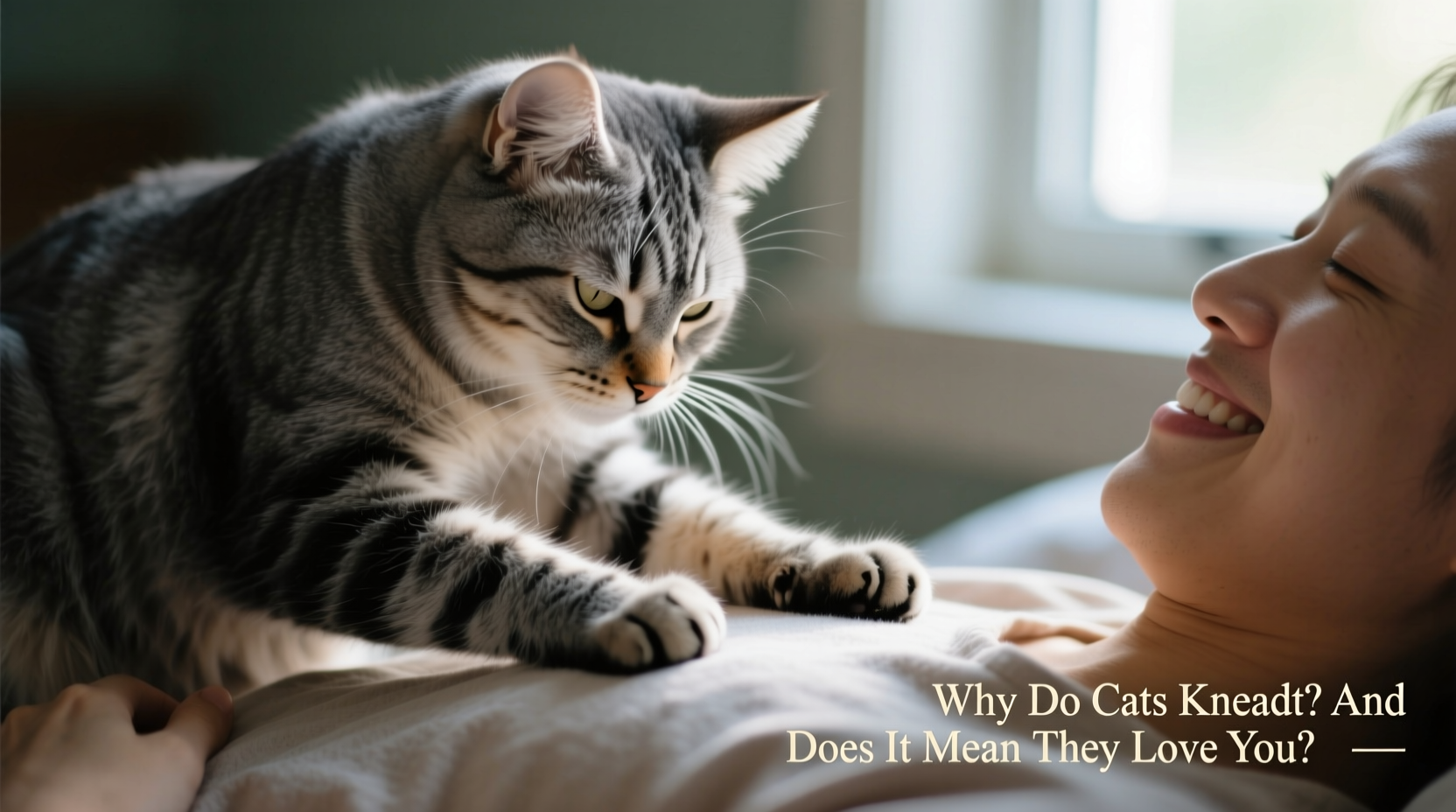
When your cat climbs onto your lap, settles in, and begins rhythmically pushing its paws into your stomach, it’s a moment many pet owners find both soothing and curious. This behavior—commonly known as \"kneading\"—is more than just a quirky habit. It's deeply rooted in instinct, comfort, and often, emotional connection. While it might tickle or even occasionally sting when claws come into play, kneading is typically a sign of trust and contentment. But what exactly drives this behavior? Is it purely instinctual, or does it signal genuine affection? Understanding the reasons behind kneading can deepen the bond between you and your feline companion.
The Origins of Kneading: A Behavior from Kittenhood
Kneading begins in the earliest days of a cat’s life. As newborn kittens nurse, they use their front paws to press against their mother’s mammary glands. This motion stimulates milk flow, ensuring they receive adequate nourishment. The action is rhythmic, instinctive, and closely tied to feelings of warmth, safety, and sustenance. Even after weaning, the physical sensation of kneading remains associated with positive emotions.
As cats grow into adulthood, they often retain this behavior, especially when they feel relaxed or are seeking comfort. When an adult cat kneads your stomach, it may be mentally transported back to those early, secure moments with its mother. This regression isn’t a sign of immaturity—it’s a testament to how safe and at ease your cat feels in your presence.
“Kneading is one of the clearest examples of a kittenhood behavior that persists into adulthood because it’s linked to such strong positive reinforcement.” — Dr. Sarah Bennett, Feline Ethologist
What Kneading Communicates About Your Cat’s Emotions
While the roots of kneading are biological, the behavior takes on new emotional dimensions in adult cats. When your cat chooses to knead you—especially on your stomach, chest, or thighs—it’s often expressing a complex mix of feelings:
- Contentment: A purring cat kneading your lap is likely in a state of deep relaxation.
- Trust: Exposing their belly (even partially) and engaging in a vulnerable, repetitive motion shows they feel safe around you.
- Attachment: Cats form strong emotional bonds with their caregivers. Kneading can be a way of reaffirming that bond.
- Marking Territory: Cats have scent glands in the pads of their paws. Each push releases pheromones, marking you as part of their trusted environment.
This last point is often overlooked. To your cat, you’re not just a caregiver—you’re family. By kneading you, they’re essentially saying, “You belong to me, and I belong here.”
Tip: If your cat kneads only when you're sitting still or during quiet evening hours, it’s likely a sign they associate you with peace and routine.Is Kneading a Sign of Love?
The question of whether cats “love” their owners in the human sense has long been debated. Unlike dogs, cats don’t always express attachment through overt excitement. Instead, their affection is subtle, ritualized, and often misunderstood.
Kneading, however, stands out as one of the most intimate behaviors a cat can display. Consider this: cats rarely knead people or places they distrust. They reserve this act for environments and individuals where they feel completely at ease. In behavioral studies, cats are more likely to knead in the presence of their primary caregiver, especially during moments of calm interaction like petting or grooming.
Moreover, kneading is frequently accompanied by other signs of affection:
- Purring
- Slow blinking (often called “cat kisses”)
- Rubbing their head against you
- Bringing toys or “gifts”
When combined, these behaviors form a clear picture: your cat isn’t just tolerating you—they’re actively bonding with you. Kneading, therefore, can be interpreted as a profound expression of feline love—one that speaks in the language of touch, scent, and memory.
Why the Stomach? Location Matters
You may wonder why your cat so often targets your stomach for kneading. There are several practical and psychological reasons:
- Warmth: The abdomen is one of the warmest parts of the human body, especially when covered by soft clothing. This mimics the warmth of a nursing mother.
- Accessibility: When you’re seated or reclining, your stomach is often the most exposed and stable surface available.
- Softness: Clothing over the stomach tends to be looser and more yielding, making it ideal for paw pressure.
- Rhythm: Breathing causes gentle movement in the abdominal area, which may further soothe the cat during kneading.
In multi-pet households, cats may also choose the stomach because it positions them slightly above ground level, giving them a sense of security while maintaining closeness.
Mini Case Study: Luna and Her Evening Ritual
Luna, a 4-year-old domestic shorthair, lives with her owner Maria in a quiet apartment. Every evening at 7:30 PM, without fail, Luna jumps onto the couch, circles twice, and begins kneading Maria’s stomach. She purrs loudly, her eyes half-closed, and often falls asleep mid-knead.
Maria initially found the claw pricks uncomfortable and tried redirecting Luna to a blanket. But when she placed a thick fleece throw over her lap, Luna continued the same ritual—just without discomfort. Over time, Maria realized this wasn’t just a habit; it was Luna’s way of unwinding and reconnecting after the day. On evenings when Maria skips the couch routine, Luna becomes noticeably more restless.
This case illustrates how kneading can evolve into a shared emotional ritual—one that provides structure, comfort, and mutual reassurance.
Managing Kneading: Comfort vs. Practicality
While kneading is a heartwarming sign of affection, it’s not always practical—especially if your cat has sharp claws or applies too much pressure. Fortunately, there are humane and effective ways to manage the behavior without discouraging your cat’s emotional expression.
| Issue | Solution | Benefit |
|---|---|---|
| Claws digging into skin | Keep nails trimmed or use soft nail caps | Prevents pain without stopping the behavior |
| Clothing getting snagged | Place a thick blanket or pillow on your lap | Creates a buffer zone |
| Kneading at inconvenient times | Redirect to a designated “kneading spot” (e.g., a plush bed) | Maintains routine while setting boundaries |
| Overstimulation during petting | Watch for tail flicking or ear twitching; stop before agitation | Prevents kneading from turning into scratching |
Step-by-Step Guide to Encouraging Comfortable Kneading
If you want to enjoy your cat’s kneading without discomfort, follow this simple routine:
- Observe the pattern: Note when and where your cat tends to knead. Is it after meals? During petting? At bedtime?
- Prepare a surface: Keep a soft blanket, cushion, or fleece throw nearby for your cat to use.
- Introduce gently: When your cat starts kneading you, slowly slide the blanket under their paws. Praise them if they continue on the fabric.
- Trim nails regularly: Use pet-safe clippers every 1–2 weeks to minimize discomfort.
- Reinforce consistency: Over time, your cat will learn to associate kneading with the designated surface.
This approach respects your cat’s instincts while making the experience more comfortable for both of you.
Frequently Asked Questions
Do all cats knead?
No, not all cats knead. Some may never develop the habit, while others only do it occasionally. Factors like early separation from the mother, personality, and environment can influence whether a cat kneads. Lack of kneading doesn’t indicate a lack of affection.
Can kneading be a sign of stress?
Rarely, but yes. In some cases, excessive or frantic kneading—especially when paired with vocalization or restlessness—can indicate anxiety. However, in most instances, kneading is a self-soothing behavior that reduces stress rather than reflects it.
Should I discourage my cat from kneading?
Generally, no. Unless it causes injury or becomes obsessive, kneading should be welcomed as a natural and affectionate behavior. If claws are an issue, address that specifically rather than suppressing the entire action.
Checklist: Is Your Cat’s Kneading Healthy and Happy?
Use this checklist to assess whether your cat’s kneading is a positive behavior:
- ✅ Occurs during relaxed moments (e.g., lounging, purring)
- ✅ Accompanied by other signs of contentment (slow blinks, tail curl)
- ✅ Not causing injury to you or the cat
- ✅ Not excessive (lasting hours or interrupting normal activities)
- ✅ Does not escalate into biting or aggression
If all boxes are checked, your cat is likely expressing love in their own unique way.
Conclusion: A Purr-fect Expression of Trust and Affection
Kneading is far more than a leftover kitten reflex. It’s a nuanced behavior that blends instinct, emotion, and communication. When your cat presses their paws into your stomach, they’re not just reliving infancy—they’re choosing you as their source of comfort, safety, and belonging. In the quiet rhythm of their paws, you’re hearing a story of trust, memory, and love told in the only language they know.
Instead of viewing kneading as a nuisance, consider it a privilege. Few animals allow themselves to be so emotionally vulnerable. By understanding and respecting this behavior, you honor the depth of your cat’s attachment. So next time those little paws start working away on your lap, take a breath, relax, and let yourself be marked—not just by scent, but by the quiet certainty that you matter to someone who doesn’t say it in words.
💬 Does your cat knead you? Share your story or tips in the comments—your experience could help another cat lover understand their furry friend better.








