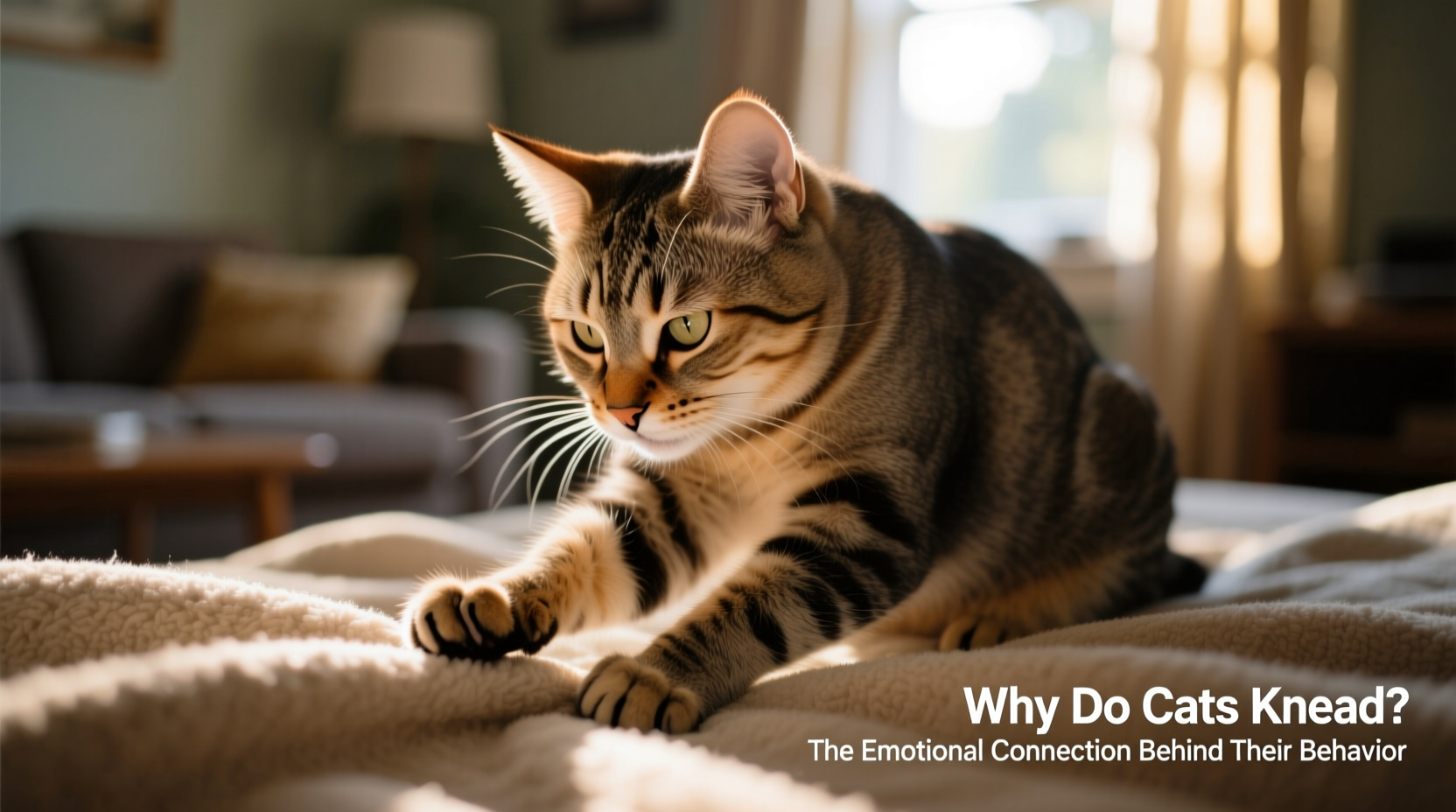
Cats are creatures of subtle communication, expressing comfort, anxiety, affection, and instinct through body language more than vocalization. One of the most endearing—and sometimes perplexing—behaviors cat owners witness is kneading: the rhythmic pushing of paws in and out against soft surfaces like blankets, laps, or even human arms. While it may seem random, kneading is deeply rooted in emotion and early life experience. Understanding why cats knead reveals not just a quirk, but a window into their psychological world—a blend of memory, safety, and connection.
This behavior transcends breed, age, and environment. Whether a cat grew up in a shelter or was bottle-fed from birth, kneading often persists into adulthood. The act itself is gentle yet deliberate, typically accompanied by purring, half-closed eyes, or even drooling—signs that point to deep relaxation and emotional contentment. But what lies beneath this ritual? And why does a full-grown cat still perform a motion linked to infancy?
The Origins of Kneading: A Survival Instinct Turned Emotional Signal
Kneading begins in the earliest days of a kitten’s life. When nursing, kittens press their tiny paws rhythmically against their mother’s mammary glands. This motion stimulates milk flow, ensuring nourishment. It’s a survival-driven action, hardwired into their neurology. Over time, the physical sensation of kneading becomes inseparable from feelings of warmth, security, and sustenance.
As cats mature, they no longer need to stimulate milk production—but the emotional association remains. The brain connects kneading with comfort, safety, and maternal care. When an adult cat kneads a blanket or nestles into your lap while pressing its paws, it isn’t trying to nurse. Instead, it’s reliving a primal state of peace. In many ways, kneading is a form of emotional time travel—an unconscious return to the safest moment in a cat’s life.
“Kneading is one of the clearest examples of how early experiences shape feline behavior well into adulthood. It’s not just habit—it’s emotional recall.” — Dr. Lydia Chen, Feline Behavior Specialist, Cornell University College of Veterinary Medicine
Emotional Triggers That Prompt Kneading
While all kneading stems from kittenhood reflexes, specific emotional states can trigger the behavior in adult cats. Recognizing these triggers helps owners interpret their cat’s mood and strengthen their bond.
- Contentment: A relaxed cat lying on its side or curled in your lap may begin kneading when it feels completely at ease. This is often paired with purring and slow blinking—feline signs of trust.
- Stress Relief: Some cats knead during transitions—moving to a new home, meeting guests, or after a vet visit. The repetitive motion acts as a self-soothing mechanism, much like humans might rock or fidget when anxious.
- Bonding: When a cat kneads on you, especially while making eye contact or nuzzling, it’s expressing attachment. You’ve become a surrogate caregiver, a source of emotional stability.
- Territorial Marking: Cats have scent glands in their paw pads. Kneading releases pheromones, subtly marking the surface (or person) as safe and familiar. This isn’t dominance—it’s reassurance.
Do All Cats Knead? Variations in Behavior
Not every cat kneads, and that doesn’t indicate emotional deficiency. The tendency to knead can depend on several factors:
| Factor | Impact on Kneading Behavior |
|---|---|
| Early Weaning | Cats separated from their mothers too early may show reduced or absent kneading due to underdeveloped nursing associations. |
| Socialization | Well-socialized kittens are more likely to retain comforting behaviors into adulthood. |
| Personality | More affectionate or anxious cats tend to knead more frequently than independent or aloof ones. |
| Health | Painful conditions like arthritis may discourage paw movement, suppressing natural behaviors. |
It’s also common for cats to “bunny kick” or alternate front paws while kneading—one paw at a time, mimicking the original nursing motion. Others use both paws simultaneously, especially if they’re particularly excited or overwhelmed with positive emotion.
Real-Life Example: Luna and the Blanket Ritual
Luna, a 3-year-old domestic shorthair adopted from a rescue shelter, arrived with minimal socialization. Her first months in her new home were marked by hiding, cautious exploration, and limited interaction. Her owner, Maria, noticed that Luna would occasionally press her paws into the edge of the couch but never fully settle.
Over time, as trust built, Maria introduced a fleece blanket that smelled faintly of her laundry detergent—consistent and comforting. One evening, after receiving gentle chin scratches, Luna climbed onto Maria’s lap, circled twice, then began kneading the blanket vigorously. She purred loudly, her eyes nearly shut, and eventually fell asleep mid-knead.
For Maria, this was a breakthrough. The behavior signaled that Luna finally felt safe. Over the following weeks, the kneading became a nightly ritual before bedtime. What started as an isolated incident evolved into a reliable indicator of emotional wellness. Maria learned to recognize the precursors—slow blinks, tail flicks, proximity—and respond with calm attention.
This case illustrates how kneading can serve as both a personal comfort tool and a relational barometer. For cats with traumatic pasts, resuming such infantile behaviors is a sign of healing, not regression.
When Kneading Becomes a Problem: Managing Claws and Discomfort
While emotionally beneficial, kneading can sometimes cause discomfort—especially when claws are involved. Cats don’t intend to hurt; they’re lost in a trance-like state of contentment. However, sharp claws digging into skin can turn a sweet moment into a painful one.
Here’s how to manage kneading without discouraging the emotional expression:
- Trim claws regularly: Keeping nails blunt reduces scratching risk while allowing the cat to continue kneading naturally.
- Use protective barriers: Place a thick blanket or cushion between your lap and the cat during kneading sessions.
- Redirect gently: If the cat starts digging in too hard, softly lift its paws and redirect to a soft toy or pillow.
- Avoid punishment: Never yell or push the cat away mid-knead. This can sever trust and suppress healthy emotional behaviors.
- Consider soft nail caps: Vinyl caps like Soft Paws are painless to apply and prevent accidental scratches.
Understanding the Deeper Emotional Language of Cats
Kneading is part of a broader emotional vocabulary cats use to navigate their world. Unlike dogs, who evolved to mirror human emotions, cats communicate more subtly. Their behaviors are less about obedience and more about internal state regulation. Kneading, therefore, isn’t performative—it’s functional. It helps them regulate stress, reaffirm safety, and express intimacy.
Owners who view kneading as merely “making biscuits” miss the depth of what’s occurring. This behavior reflects a complex interplay between biology and emotion. It’s not nostalgia in the human sense, but rather a physiological echo of safety. When a cat kneads, it’s saying, “I feel secure here. This place, this person, reminds me of being loved and protected.”
In multi-cat households, kneading can also signal social harmony. A cat may knead near another cat without direct interaction, releasing calming pheromones that reduce tension. It’s a quiet act of environmental conditioning—making shared spaces feel safer for everyone.
Frequently Asked Questions
Do cats knead when they’re stressed?
Yes. While kneading is often associated with happiness, some cats knead during periods of anxiety or change as a self-soothing technique. Observe the context: if the cat is tense, ears back, or tail twitching, the kneading may be a coping mechanism rather than a sign of joy.
Why does my cat drool when kneading?
Drooling during kneading is common and usually harmless. It’s linked to the intense relaxation and emotional release tied to early nursing experiences. As long as the cat is otherwise healthy, drooling is a sign of deep contentment.
Should I stop my cat from kneading on furniture?
Instead of stopping the behavior, redirect it. Provide designated kneading zones—soft beds, old sweaters, or cushions. Discouraging kneading entirely may increase stress. Focus on protecting surfaces with washable covers rather than suppressing the act.
Conclusion: Embrace the Biscuit-Making Ritual
Kneading is far more than a quirky habit—it’s a profound emotional gesture rooted in survival, comfort, and connection. When a cat presses its paws into your lap, it’s offering a rare glimpse into its inner world: a space where memory, safety, and affection converge. Rather than seeing it as a nuisance, consider it a compliment. You’ve earned a place in your cat’s emotional sanctuary.
By understanding the emotional reasons behind paw kneading, owners can respond with empathy, patience, and care. Simple actions—like keeping claws trimmed, providing soft surfaces, and recognizing the signs of emotional need—can deepen the human-feline bond. In return, you’ll receive one of the purest forms of feline love: the rhythmic push of paws, a purr, and the quiet trust of a creature feeling truly safe.
💬 Has your cat ever kneaded at just the right moment—when you needed comfort too? Share your story in the comments and celebrate the silent, powerful language of cats.