
Cats are creatures of habit, ritual, and subtle communication. Among their most endearing and mysterious behaviors is kneading—pawing rhythmically against soft surfaces with alternating front paws, often accompanied by purring or half-closed eyes. This motion, reminiscent of a baker working dough, is commonly observed in adult cats despite originating in kittenhood. While it may seem whimsical, kneading is deeply rooted in biology, emotion, and instinct. Understanding why cats knead provides insight into their psychological needs, social bonds, and evolutionary history.
Kneading isn't random; it's a multifaceted behavior that serves several purposes across a cat’s life. From marking territory to self-soothing, the act carries both physical and emotional significance. For cat owners, recognizing the meaning behind this gesture fosters deeper empathy and improves human-feline relationships. This article explores the science, psychology, and practical implications of feline kneading, offering clarity on one of the most cherished quirks of cat behavior.
The Origins of Kneading: A Behavior Rooted in Survival
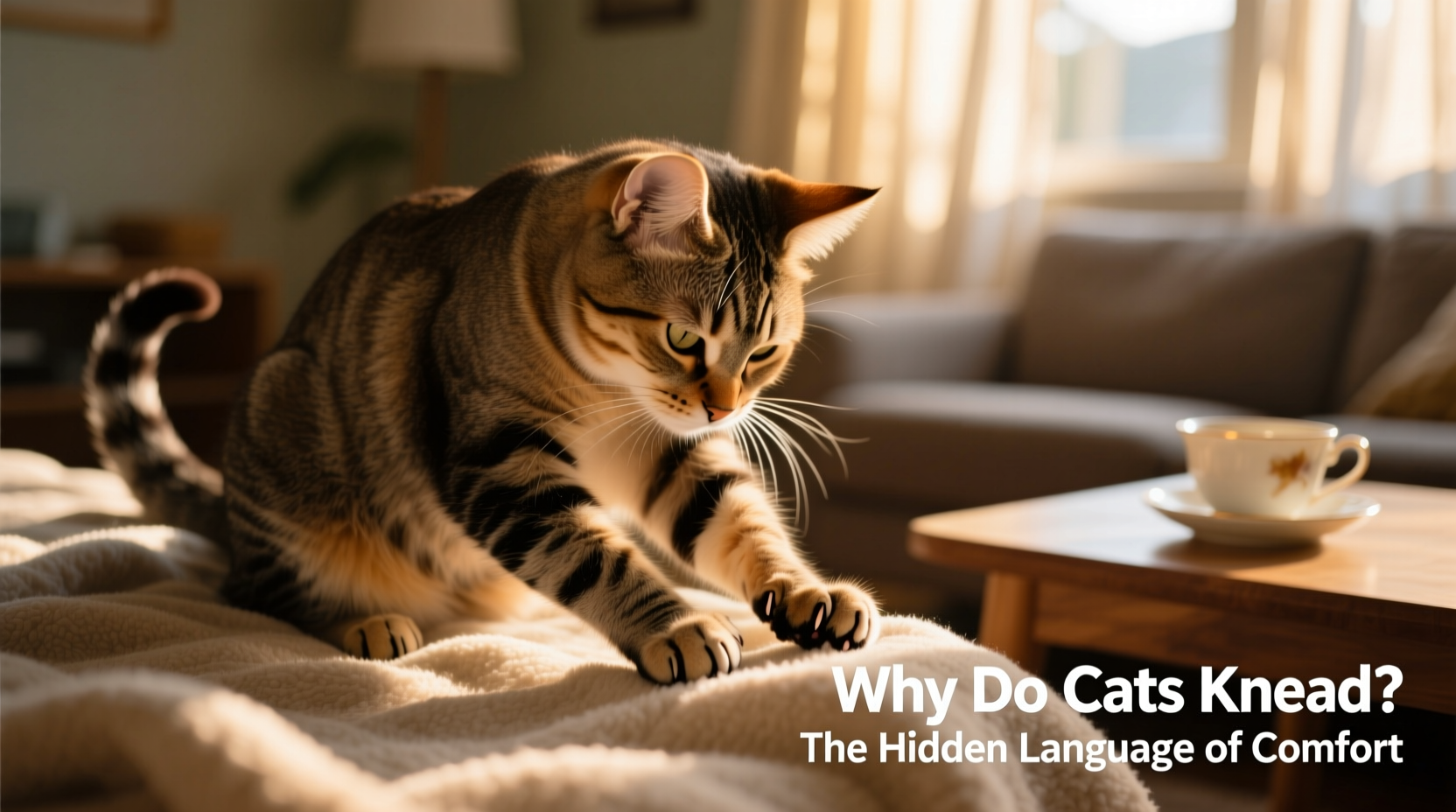
Kneading begins in the earliest days of a kitten’s life. Newborn kittens instinctively press their tiny paws into their mother’s mammary glands to stimulate milk flow during nursing. This repetitive motion increases blood circulation in the teat area, encouraging milk letdown. Because survival depends on successful feeding, the behavior is hardwired through natural selection. Even blind or disoriented kittens perform this action without prior learning, indicating its innate nature.
As kittens grow, they associate the sensation of kneading with warmth, nourishment, safety, and maternal connection. These positive associations persist into adulthood, even though the original purpose—milk stimulation—is no longer relevant. When an adult cat kneads a blanket, lap, or owner’s arm, it often enters a trance-like state of contentment, suggesting the behavior reactivates early feelings of security and comfort.
“Kneading is a window into a cat’s emotional past. It reflects not just physical need but deep-seated psychological comfort.” — Dr. Sarah Thompson, Feline Behavioral Scientist
This regression to kitten-like behavior is known as neoteny—the retention of juvenile traits into adulthood. In domesticated animals, especially companion species like cats, neoteny enhances bonding with humans. Behaviors such as kneading, suckling, and vocalizing in high pitches make cats appear more infantile and thus more appealing to human caregivers, reinforcing caregiving responses.
Emotional and Psychological Functions of Adult Kneading
In adult cats, kneading transcends its original biological function and evolves into a complex emotional signal. The behavior frequently occurs when a cat feels safe, relaxed, or affectionate. Observations show that cats are more likely to knead when settling onto a favored resting spot, preparing for sleep, or interacting closely with trusted humans.
One key psychological role of kneading is self-soothing. Much like humans might rock gently or engage in repetitive motions when anxious, cats use rhythmic paw movements to calm themselves. This is particularly evident in shelter environments or during transitions (e.g., moving homes), where cats may increase kneading frequency as a coping mechanism.
Beyond internal regulation, kneading also functions as a form of communication. When directed toward people, it often signifies trust and attachment. A cat choosing to knead on its owner’s lap is demonstrating vulnerability—it exposes its belly, lowers its guard, and engages in a behavior tied to infancy. Such moments represent peak intimacy in the human-cat relationship.
Tip: If your cat kneads while lying on you, avoid sudden movements. Allow the moment to unfold naturally to reinforce emotional security.Scent Marking and Territorial Signaling
Another critical dimension of kneading lies in scent marking. Cats possess scent glands in the soft pads of their paws, which release pheromones—chemical signals used for communication—during kneading. These invisible markers convey information about identity, mood, and ownership.
When a cat kneads a couch, bed, or person, it subtly deposits its unique olfactory signature. To humans, there may be no noticeable smell, but to other cats, the message is clear: “This space is familiar. I belong here.” This territorial behavior helps cats establish environmental stability, reducing stress in multi-cat households or unfamiliar surroundings.
Pheromone marking via kneading contributes to what ethologists call “scent homing”—the process by which cats create a reassuring sensory map of their environment. Familiar scents lower cortisol levels and promote relaxation. Owners who notice their cats kneading specific furniture items can interpret this as the animal claiming those spaces as emotionally secure zones.
| Function | Description | Observed Context |
|---|---|---|
| Emotional Comfort | Reactivation of kittenhood safety | Before sleeping, during petting |
| Scent Marking | Release of paw pheromones | On furniture, bedding, owners |
| Stress Reduction | Rhythmic motion calms nervous system | After disruptions, in new places |
| Bonding Signal | Expression of trust and affection | On laps, near faces, during grooming |
Why Some Cats Don’t Knead — And That’s Okay
Not all cats exhibit kneading behavior, and absence does not indicate distress or poor upbringing. Individual differences in personality, early life experiences, and breed tendencies influence whether a cat kneads. Some cats weaned early may have weaker associations between kneading and comfort. Others may express contentment through alternative behaviors like head-bunting, tail curling, or slow blinking.
In rare cases, trauma or neglect during kittenhood can disrupt the development of nurturing behaviors. However, many non-kneading cats remain deeply bonded to their caregivers. Owners should avoid interpreting lack of kneading as emotional deficiency. Instead, focus on the full range of communicative cues the cat offers.
Managing Kneading: Practical Tips for Cat Owners
While kneading is generally harmless, some cats extend their claws during the motion, potentially causing discomfort or damage to skin and fabrics. Managing this behavior requires understanding rather than suppression. Punishing a cat for kneading can erode trust and increase anxiety, counteracting the very comfort the behavior seeks to provide.
Instead, redirect and accommodate. Provide soft, designated kneading surfaces such as fleece blankets, padded mats, or old sweaters placed on laps. Regular nail trimming reduces scratching risks without interfering with natural behavior. Alternatively, consider soft nail caps applied every few weeks—they dull claw tips safely and painlessly.
“We don’t stop cats from purring when they’re happy. We shouldn’t discourage kneading either—it’s part of their emotional language.” — Lena Reyes, Certified Feline Behavior Consultant
Step-by-Step Guide to Encouraging Safe Kneading
- Observe Triggers: Note when and where your cat typically kneads (e.g., after meals, during petting).
- Introduce a Designated Surface: Place a textured blanket or cushion in common lounging areas.
- Reinforce Use: Gently guide paws onto the surface when kneading begins; reward with praise or treats.
- Maintain Nail Health: Trim claws every 2–3 weeks or apply nail caps.
- Respect Boundaries: If kneading becomes uncomfortable, slowly shift position or offer an alternative spot.
Checklist: Creating a Kneading-Friendly Environment
- Provide multiple soft, washable surfaces for kneading
- Keep claws trimmed or capped
- Avoid startling or restraining the cat mid-knead
- Use pheromone diffusers (e.g., Feliway) to enhance overall calmness
- Monitor for signs of over-grooming or obsessive kneading, which may indicate anxiety
Mini Case Study: Luna, the Shelter Cat Who Found Calm Through Kneading
Luna, a three-year-old domestic shorthair, arrived at a rescue center after being found stray. Initially withdrawn and hesitant, she avoided contact and spent hours crouched in the back of her enclosure. Staff introduced daily quiet sessions with soft music and warm fleece bedding. After two weeks, during a gentle petting session, Luna began to knead the volunteer’s sleeve—her first sign of relaxation.
Over time, staff noticed Luna would knead intensely after any environmental change—a new visitor, loud noise, or cage cleaning. They began placing a heated pad wrapped in a knitted blanket inside her space. Whenever stressed, Luna would settle onto it and knead for several minutes until her breathing slowed and she drifted to sleep.
This case illustrates how kneading serves as both a coping strategy and a measurable indicator of emotional progress. Within six weeks, Luna was adopted into a quiet home. Her new owner reported that kneading on her lap became a nightly ritual, signaling complete integration and trust.
Frequently Asked Questions
Do all cats knead?
No, not all cats knead. While common, the behavior varies by individual. Factors include early nursing experience, personality, and environment. Cats that don’t knead may still feel secure and bonded.
Is kneading a sign of sexual behavior?
No. Though unspayed females may knead more during heat due to increased tactile sensitivity, kneading itself is not sexually motivated. Spayed and neutered cats knead just as frequently, primarily for comfort and marking.
Why does my cat drool when kneading?
Drooling during kneading is a strong indicator of deep relaxation and nostalgia for kittenhood. It often occurs when cats are extremely content, recalling the sensations of nursing. As long as the cat is healthy, this is normal and benign.
Conclusion: Honoring the Language of Paws
Kneading is far more than a quirky habit—it is a profound expression of feline emotion, memory, and connection. By pressing their paws into soft surfaces, cats reach back into their earliest experiences of safety and belonging, weaving those feelings into their present lives. For owners, witnessing this behavior is a privilege: it means the cat views them as part of its inner circle, a source of warmth and reassurance.
Understanding the roots and roles of kneading allows us to respond with compassion rather than frustration. Rather than discouraging the behavior, we can support it through thoughtful care—providing safe outlets, maintaining comfort, and respecting the cat’s emotional rhythms. In doing so, we deepen the silent dialogue between species, built not on words, but on touch, scent, and trust.
💬 Have a story about your cat’s kneading habits? Share your experience in the comments and connect with fellow cat lovers who cherish these tender moments.








