
Cats knead with a rhythm that seems almost meditative—paws pressing in and out against soft surfaces, blankets, laps, or even their human companions. This behavior, often called \"making biscuits,\" is deeply rooted in a cat’s earliest experiences and continues into adulthood for complex emotional and biological reasons. While it may appear purely affectionate, kneading serves dual purposes: one tied to emotional security and the other to instinctual territorial communication. Understanding both psychological comfort and territorial marking helps explain why cats knead—and what they’re truly communicating when they do.
The Origins of Kneading: A Behavior Rooted in Infancy
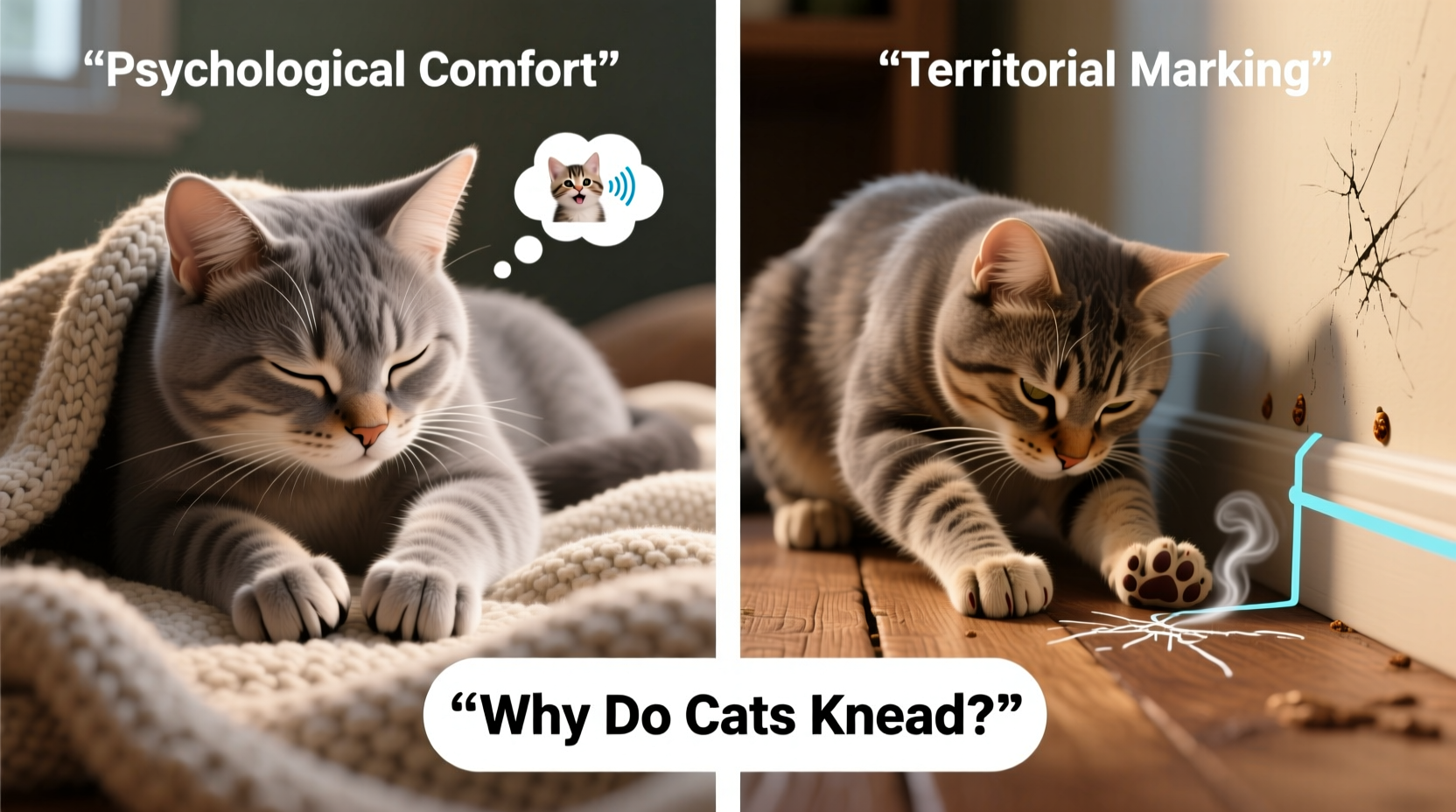
Kneading begins in the first days of life. Newborn kittens use their front paws to press against their mother’s mammary glands, stimulating milk flow during nursing. This motion is essential for survival and quickly becomes associated with warmth, nourishment, and safety. The rhythmic action triggers the release of oxytocin in both kitten and mother, reinforcing a bond built on trust and physical contact.
As kittens grow and are weaned, the behavior doesn’t disappear. Instead, it persists as a self-soothing mechanism. Adult cats often knead when they feel content, relaxed, or are preparing to rest. The act evokes early feelings of comfort, making it a behavioral echo of kittenhood. Even stray or feral cats who never experienced prolonged human interaction may display kneading, suggesting it’s hardwired rather than learned.
“Kneading is one of the few behaviors that bridges the gap between survival instinct and emotional expression in cats.” — Dr. Lena Reyes, Feline Behavioral Scientist
Psychological Comfort: Emotional Security Through Repetitive Motion
In adult cats, kneading frequently occurs during moments of calm—after grooming, before napping, or while being petted. These instances signal that the cat feels safe and emotionally regulated. The repetitive motion has a hypnotic quality, similar to how humans might rock or twirl their hair when trying to relax. It’s a form of displacement behavior that reduces anxiety and reinforces a sense of control in their environment.
Cats living in multi-pet households or homes with frequent changes (new people, moving furniture) may knead more often as a coping strategy. The action grounds them, offering tactile feedback that reassures them of their surroundings. When a cat kneads on its owner’s lap, it’s not just showing affection—it’s seeking emotional anchoring through a familiar, comforting ritual.
Interestingly, many cats accompany kneading with purring, half-closed eyes, and slow blinking—all signs of deep relaxation. Some even suckle on fabric or softly bite the surface they’re kneading, further mimicking infantile nursing behaviors. This combination suggests that for some cats, kneading temporarily regresses them to a state of complete vulnerability and trust.
Tip: If your cat kneads excessively during stressful events, provide a consistent routine and a designated soft blanket to help channel the behavior positively.Territorial Marking: Scent Communication Through Paw Glands
Beyond emotional comfort, kneading plays a crucial role in feline territorial behavior. Cats have scent glands located in the soft pads of their paws, which secrete pheromones when pressure is applied. Each time a cat kneads, it deposits a unique chemical signature onto the surface—marking it as part of their personal domain.
This form of olfactory communication is subtle but effective. Other cats can detect these scents, interpreting them as signals of familiarity, ownership, or non-aggression. In multi-cat homes, overlapping kneading zones often reduce conflict by creating a shared “colony scent,” promoting social cohesion.
Humans, though unable to smell these pheromones, become part of this marking system when cats knead on them. By transferring their scent onto their owners, cats integrate them into their social group. This act isn’t merely affectionate—it’s an assertion of belonging. The cat isn’t just saying “I love you”; it’s declaring “you are mine.”
How Pheromone Marking Influences Cat-Human Relationships
Owners often misinterpret kneading as purely loving behavior, overlooking its communicative function. However, understanding this dual purpose enriches the human-feline bond. When a cat kneads its owner after a long day apart, it’s both re-establishing emotional connection and reaffirming territorial claims. This explains why some cats become anxious if another person sits in “their” spot—even if the object (like a couch cushion) appears unchanged.
Synthetic feline facial pheromones, such as those found in products like Feliway, mimic this natural signaling system to reduce stress. But nothing replaces the authenticity of a cat’s own scent markers, making kneading an irreplaceable tool in their environmental management toolkit.
A Comparative Analysis: Comfort vs. Marking Triggers
| Factor | Psychological Comfort Trigger | Territorial Marking Trigger |
|---|---|---|
| Common Context | Before sleeping, during petting, post-meal | After exploring new areas, following household changes |
| Associated Behaviors | Purring, slow blinking, suckling | Sniffing, scratching nearby surfaces, rubbing head |
| Frequency | Regular, predictable, often daily | Increases during transitions or stressors |
| Target Surfaces | Soft fabrics, owner's lap, bedding | Furniture corners, entryways, personal items |
| Emotional State | Relaxed, content, drowsy | Vigilant, assertive, focused |
Real-Life Example: Maya the Rescue Cat
Maya, a three-year-old domestic shorthair adopted from a shelter, initially struggled with anxiety in her new home. She avoided eye contact, hid under the bed, and rarely vocalized. Her owners noticed one consistent behavior: every evening, she would approach the armchair, circle it several times, then begin kneading vigorously on the cushion—even drawing blood once from extended claw extension.
Over time, as Maya grew more comfortable, the intensity of her kneading decreased, but the frequency remained. Her veterinarian explained that the initial episodes were driven by high-stress marking—claiming territory in an unfamiliar space. As her confidence grew, the same behavior shifted toward comfort-seeking, especially when her owner sat in the chair.
By recognizing the evolution of Maya’s kneading—from survival-driven marking to emotional regulation—her owners adjusted their approach. They placed a washable fleece throw on the chair, trimmed her claws regularly, and used positive reinforcement during calm interactions. Within months, Maya transformed into a trusting, affectionate companion, with kneading now serving primarily as a bonding ritual.
Practical Tips for Managing Kneading Behavior
While kneading is natural and generally harmless, it can sometimes lead to discomfort—especially when claws are involved—or damage delicate fabrics. The goal isn’t to eliminate the behavior but to manage it in a way that respects the cat’s instincts while protecting people and property.
- Provide designated kneading zones: Offer soft, washable blankets or mats in preferred resting areas to concentrate scent marking and protect furniture.
- Trim claws regularly: Keeping claws blunt prevents injury during lap-kneading without interfering with natural behavior.
- Use claw caps: Soft vinyl caps like Soft Paws can be applied temporarily to prevent scratching damage.
- Encourage alternative outlets: Interactive toys or scratching posts near resting spots can redirect excess energy before kneading escalates.
- Respect the ritual: Avoid interrupting kneading once it begins, as doing so may increase anxiety or suppress a vital coping mechanism.
FAQ: Common Questions About Cat Kneading
Do all cats knead?
No, not all cats knead. While it’s common, some cats never develop the habit, particularly those separated from their mothers too early or those with traumatic early experiences. Others may knead only in specific contexts, such as when highly stressed or extremely content.
Is kneading a sign of dominance?
Not exactly. While kneading involves territorial marking, it’s not aggressive dominance. Instead, it’s a passive claim of familiarity. Cats don’t knead to assert superiority over others but to create a secure, recognizable environment.
Why does my cat drool while kneading?
Drooling during kneading is linked to intense relaxation and early nursing memories. The stimulation of the mouth and jaw during pretend suckling can trigger salivation, especially in cats who were bottle-fed or weaned prematurely. It’s usually harmless and indicates deep contentment.
Conclusion: Honoring an Instinctual Language
Kneading is far more than a quirky habit—it’s a sophisticated blend of emotional memory and biological communication. Whether driven by the need for psychological comfort or the instinct to mark territory, each press of the paw carries meaning. For cat owners, recognizing these dual motivations transforms a simple behavior into a window into their pet’s inner world.
Instead of discouraging kneading, consider how you can support it in healthy, sustainable ways. Create spaces where your cat feels safe to express this natural behavior. Appreciate the trust implied when a cat chooses your lap as their kneading ground. And remember: when your cat makes biscuits, they’re not just reliving kittenhood—they’re inviting you into their most intimate emotional language.
💬 Have a story about your cat’s kneading habits? Share your experience in the comments—your insights could help fellow cat lovers understand this beautiful behavior even better.








