Cats are creatures of habit, instinct, and subtle communication. Among their most endearing behaviors is kneading—rhythmic pushing of their paws into soft surfaces, often accompanied by purring and half-closed eyes. While this motion originates in kittenhood, when nursing stimulates milk flow from the mother, many adult cats continue to knead long after weaning. This persistent behavior may seem odd at first glance, but it’s deeply rooted in biology, emotion, and comfort. Understanding why adult cats knead offers insight not only into feline psychology but also into the bond they share with their human companions.
The Origins of Kneading: A Survival Instinct
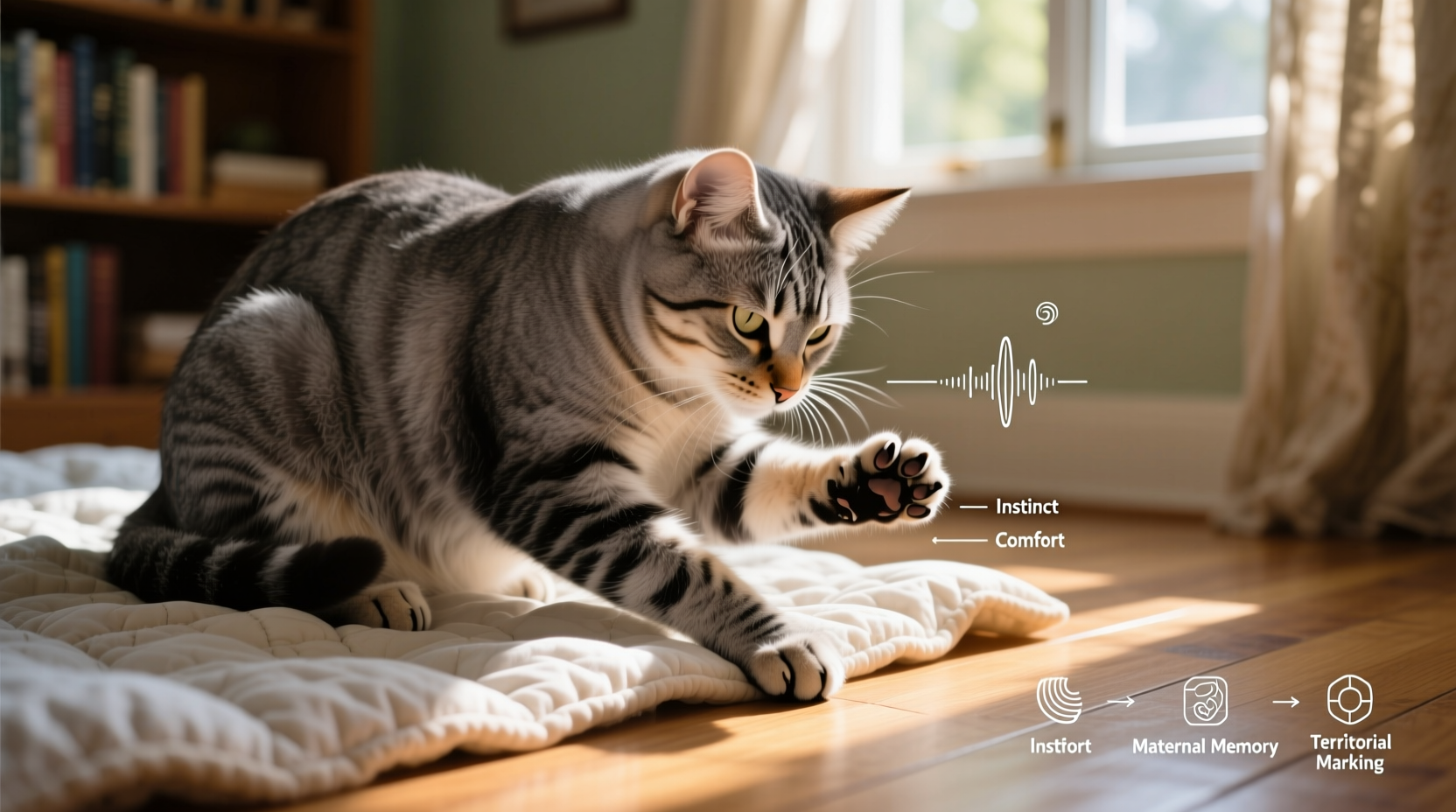
Kneading begins in the earliest days of a kitten’s life. As newborns nurse, they rhythmically press their tiny paws against their mother’s mammary glands. This action helps stimulate milk production and ensures a steady flow. It’s a survival mechanism hardwired into their nervous system—linked directly to nourishment and warmth.
Over time, this physical act becomes associated with feelings of safety, satisfaction, and bonding. The combination of tactile stimulation, body heat, and maternal presence creates a powerful emotional imprint. Even as cats mature and no longer rely on milk for sustenance, the neural pathways tied to kneading remain active. When triggered by comfort or affection, these pathways reactivate the behavior—a phenomenon known as neoteny, where juvenile traits persist into adulthood.
Tip: If your cat kneads during petting, respond gently—this is a sign of deep trust and contentment.Emotional Comfort and Territory Marking
In adult cats, kneading serves multiple psychological and social functions beyond its original biological purpose. One primary reason is emotional regulation. Cats often knead when they feel safe and relaxed—on laps, blankets, or favorite resting spots. The repetitive motion mimics early nursing rhythms, triggering the release of endorphins that promote calmness and reduce stress.
Additionally, cats have scent glands located in the pads of their paws. Each time they press into a surface, they leave behind pheromones—chemical signals used for territorial marking. Unlike aggressive marking through spraying, paw kneading is a subtle, positive form of communication. By depositing their unique scent, cats are essentially saying, “This space (or person) belongs to me, and I feel secure here.”
This dual function—self-soothing and olfactory claiming—explains why cats frequently knead on owners’ clothing, beds, or furniture. They’re not just expressing affection; they’re integrating you into their inner circle of trusted territory.
“Kneading is one of the purest expressions of feline contentment. It’s a throwback to kittenhood, but in adults, it reflects emotional security and social bonding.” — Dr. Lydia Ryan, Feline Behavior Specialist
Common Triggers for Adult Kneading
While kneading can occur spontaneously, certain environmental and emotional cues tend to provoke the behavior more consistently. Recognizing these triggers helps owners understand their cat’s needs and strengthen their relationship.
- Physical contact: Being held, stroked, or lying close to a trusted human often initiates kneading.
- Familiar scents: Items carrying the owner’s smell—like sweaters or pillows—are frequent targets.
- Comfortable textures: Soft fabrics, plush bedding, or warm surfaces (such as sunlit spots) encourage paw pressing.
- Pre-sleep rituals: Many cats knead before settling down to sleep, much like humans fluff a pillow.
- Stress relief: In some cases, anxious cats use kneading as a coping mechanism during change or uncertainty.
Interestingly, unspayed females may exhibit increased kneading during heat cycles, suggesting hormonal influences. However, neutered males and spayed females knead just as frequently, indicating that reproduction isn’t the driving factor in most cases.
Do All Cats Knead? Variations in Behavior
Not every adult cat kneads, and the absence of this behavior doesn’t indicate distress or poor socialization. Some cats simply don’t carry the trait into adulthood, while others may suppress it due to early weaning, lack of stimulation, or individual temperament. Conversely, some cats become more prolific kneaders over time, especially if reinforced by positive interactions.
There’s also variation in intensity and style. Some cats extend and retract their claws with each push; others keep claws sheathed. Some alternate paws slowly; others move both front paws simultaneously. These differences reflect personality, past experiences, and physical comfort.
| Factor | Encourages Kneading | Discourages Kneading |
|---|---|---|
| Early Bonding | Strong kitten-mother attachment | Early separation or orphaned upbringing |
| Environment | Safe, predictable home | High-stress or unstable settings |
| Texture Preference | Soft, warm fabrics | Hard or cold surfaces |
| Human Interaction | Gentle handling and affection | Neglect or inconsistent care |
Managing Kneading: Practical Tips for Cat Owners
While kneading is natural and generally harmless, it can sometimes lead to discomfort—especially when claws are involved. Scratching delicate skin or damaging upholstery are common concerns. Rather than discouraging the behavior entirely, which could undermine your cat’s sense of security, consider these humane management strategies.
Tip: Trim your cat’s claws regularly to minimize accidental scratches during kneading sessions.Step-by-Step Guide to Reducing Discomfort
- Observe patterns: Note when and where your cat tends to knead—on your lap, a specific blanket, etc.
- Provide alternatives: Place a thick, washable cushion or fleece mat nearby for them to use instead.
- Use protective barriers: Drape a folded towel or quilt over your legs when holding your cat.
- Redirect gently: If claws dig in, softly place their paws onto the alternative surface without scolding.
- Reinforce soft-paw behavior: Reward gentle kneading with treats or verbal praise.
- Maintain claw health: Regular trimming reduces sharpness and prevents snagging.
Avoid punishing your cat for kneading. Since the behavior is emotionally driven, negative reactions can damage trust and increase anxiety. Instead, focus on shaping the context—not eliminating the instinct.
Checklist: Creating a Kneading-Friendly Environment
- ✅ Provide soft, designated kneading zones (e.g., cat beds, blankets)
- ✅ Wash preferred items with your clothes to retain your scent
- ✅ Keep nails trimmed every 2–3 weeks
- ✅ Use claw caps if scratching becomes problematic
- ✅ Avoid sudden movements when your cat is kneading—it may disrupt their calming ritual
- ✅ Rotate textured materials (fleece, wool, cotton) to see what your cat prefers
Real-Life Example: Bella and Her Evening Ritual
Bella, a 5-year-old domestic shorthair, lives with her owner, Maria, in a quiet apartment. Every evening around 8 PM, Bella jumps onto the couch, circles twice, and begins kneading Maria’s wool-blanket-covered lap. She purrs loudly, blinks slowly, and eventually curls up to sleep.
Maria once tried moving the blanket away, thinking Bella would settle faster. But without it, Bella paced, vocalized, and took nearly an hour to relax. After reintroducing the blanket—and washing it occasionally with Maria’s sweater—the routine resumed seamlessly.
A veterinarian explained that the combination of texture, warmth, and familiar scent created a sensory anchor for Bella. The kneading wasn’t just habit; it was part of her wind-down process, helping transition from alertness to rest. By respecting this ritual, Maria supports Bella’s emotional well-being.
Frequently Asked Questions
Is kneading a sign of dominance?
No. Kneading is not an assertion of dominance. It’s a self-soothing, affiliative behavior linked to comfort and bonding. Cats who knead are typically expressing trust, not control.
Why does my cat drool when kneading?
Drooling during kneading is common and usually benign. It’s often a carryover from kittenhood, when sucking and swallowing accompanied nursing. In adults, it signals extreme relaxation—similar to how humans might sigh or smile unconsciously when at ease.
Should I discourage my cat from kneading on furniture?
Complete prevention isn’t recommended, but redirection is effective. Designate a favored piece of furniture or provide a dedicated kneading pad. Cover high-use areas with removable, washable throws to protect fabric while allowing the behavior to continue.
Conclusion: Embracing the Purr-fect Habit
Kneading is far more than a quirky leftover from kittenhood—it’s a window into a cat’s emotional world. When an adult cat pushes its paws into your lap or favorite blanket, it’s reliving moments of warmth, nourishment, and safety. It’s also marking you as part of its chosen family, weaving its scent into the fabric of shared life.
Rather than viewing kneading as a nuisance, embrace it as a compliment. This instinctive gesture, preserved across years and species boundaries, speaks volumes about the depth of the human-cat bond. With simple adjustments, you can honor your cat’s instincts while protecting your skin and furnishings.
💬 Does your cat knead? Share your story or tips in the comments—your experience could help another cat lover understand this loving behavior better.








