
Cats are creatures of habit, ritual, and subtle communication. Among their most endearing behaviors is kneading—rhythmically pushing their paws in and out against soft surfaces, often while purring or settling into a cozy spot. This motion, reminiscent of a human baby’s suckling reflex, appears comforting and almost meditative. But what lies beneath this seemingly simple gesture? The act of kneading is far more than just a quirky feline quirk; it's deeply rooted in evolution, survival, and emotional expression. Understanding why cats knead offers insight into their psychology, history, and the intimate bond they share with humans.
The Origins of Kneading: A Survival Instinct from Kittenhood
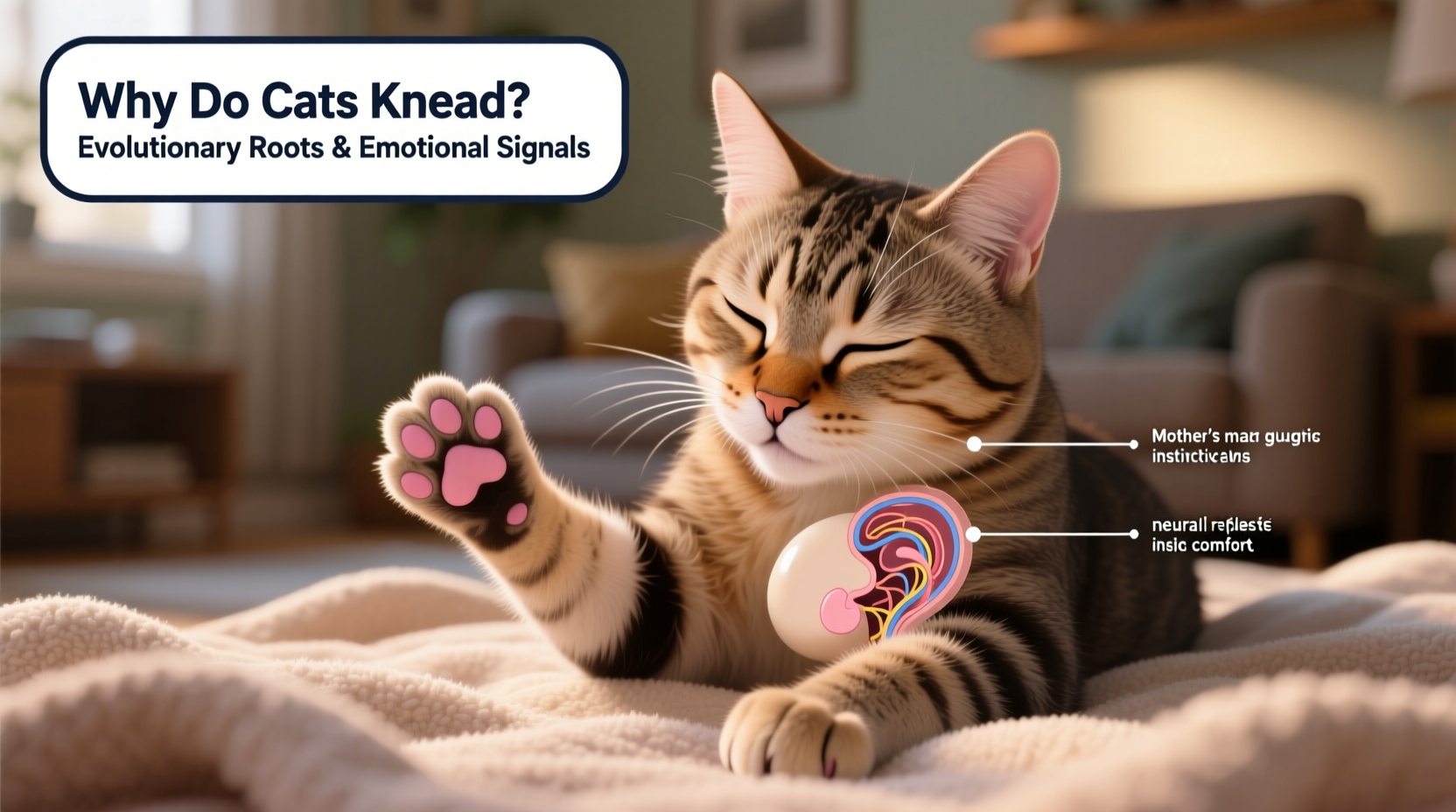
Kneading begins in the earliest days of a cat’s life. Newborn kittens are blind and deaf for the first week, relying entirely on touch and smell to locate their mother’s nipples for nourishment. To stimulate milk flow, they press their tiny paws rhythmically against the mammary glands. This action triggers the release of oxytocin in the mother, encouraging lactation. Over time, this movement becomes associated with warmth, safety, and sustenance.
This early-life behavior imprints a powerful neural pathway. Even as adult cats lose the need to nurse, the physical sensation of kneading remains linked to comfort and security. When a grown cat kneads a blanket, your lap, or a plush cushion, it’s not merely mimicking infancy—it’s reliving a primal state of emotional well-being. The motion itself may even trigger a mild endorphin release, reinforcing its calming effect.
“Kneading is one of the clearest examples of a retained neonatal behavior in adult animals. It reflects both physiological necessity and deep emotional conditioning.” — Dr. Sarah Thompson, Feline Behavioral Scientist
Evolutionary Advantages Beyond Infancy
While kneading originated as a nursing aid, its utility extended beyond kittenhood in wild ancestors of domestic cats. In natural environments, cats used their paws for multiple survival-related tasks:
- Nest preparation: Wild cats would trample down grass, leaves, or snow to create a soft, safe sleeping area. Kneading helped shape a depression that offered protection from predators and insulation from cold ground.
- Scent marking: Cats have scent glands in the pads of their paws. Each time they knead, they deposit pheromones—chemical signals that mark territory and convey familiarity. This subtle form of communication reinforced ownership of a space and signaled safety to other cats.
- Muscle conditioning: The repetitive motion helped maintain paw dexterity and circulation, essential for hunting and climbing.
These adaptive functions ensured that kneading wasn’t discarded as cats matured. Instead, it evolved into a multifunctional behavior—one that served both practical and social purposes across the lifespan.
Tip: If your cat kneads aggressively, trim their nails regularly or place a thick blanket over your lap to prevent discomfort without discouraging the behavior.Emotional Signals: What Kneading Says About Your Cat’s Mood
In domestic settings, kneading has transformed into a rich emotional language. While the roots are biological, the modern expression is largely psychological. Observing when and where your cat kneads can reveal much about their emotional state.
When a cat kneads while purring, half-closed eyes, and slow blinks, it’s a clear sign of contentment. This combination—often called the “cat smile”—indicates deep relaxation and trust. The surface being kneaded (your chest, a favorite pillow, a sunlit rug) becomes symbolically equivalent to a safe nesting site.
Conversely, kneading can also occur during moments of anxiety or transition. A cat adjusting to a new home might knead obsessively on a piece of clothing with your scent. In these cases, the behavior acts as self-soothing—a tactile reminder of security. Similarly, some cats knead before falling asleep, using the motion as a transitional ritual, much like humans might rock or tuck a blanket around themselves.
Scent and Territory: The Invisible Language of Paws
The role of scent in kneading cannot be overstated. Cats possess sebaceous glands between their toe pads that secrete pheromones unique to each individual. These chemical signatures are undetectable to humans but serve as olfactory ID cards to other cats.
When a cat kneads your sweater or couch, they’re not just expressing affection—they’re claiming you as part of their social group. In multi-cat households, shared kneading zones often emerge, creating communal scent profiles that reduce tension and reinforce social bonds.
| Context | Emotional Signal | Scent Function |
|---|---|---|
| Kneading on owner’s lap with purring | Trust, affection, contentment | Marking owner as safe/familiar |
| Kneading after a stressful event | Anxiety relief, self-comfort | Reinforcing personal safety zone |
| Kneading before sleep | Ritualistic comfort, preparation | Claiming sleeping area |
| Kneading near food bowl | Anticipation, excitement | Possessiveness over resources |
Why Some Cats Don’t Knead—and That’s Okay
Not all cats exhibit kneading behavior, and this absence doesn’t indicate distress or poor socialization. Individual variation plays a significant role. Factors influencing whether a cat kneads include:
- Early weaning: Kittens separated from their mothers too early may not develop strong kneading habits.
- Personality: More aloof or independent cats may express affection differently.
- Trauma or neglect: Cats from abusive or unstable backgrounds might suppress instinctive behaviors due to fear.
- Physical limitations: Arthritis or past paw injuries can make kneading painful.
Owners should avoid forcing or encouraging kneading through mimicry or pressure. Like any natural behavior, it should arise spontaneously. Respecting a cat’s boundaries fosters greater trust than attempting to elicit specific actions.
Practical Guide: Responding to Kneading Behavior
Understanding kneading allows owners to respond appropriately—supporting their cat’s emotional needs while managing practical concerns like fabric damage or accidental scratches.
- Observe context: Note when and where kneading occurs. Is it tied to feeding, petting, or resting? Patterns help decode emotional triggers.
- Provide alternatives: Offer a designated kneading pad—a soft, washable blanket or cushion placed in a favored spot. Infuse it with your scent by holding it close for a few hours.
- Respect boundaries: If your cat stops mid-knead or moves away, don’t insist on continued contact. Let them initiate and terminate interactions.
- Trim nails regularly: Maintain short claws to minimize fabric snagging or skin punctures during enthusiastic kneading sessions.
- Avoid punishment: Never scold or push a cat away for kneading. This behavior is instinctive and emotionally meaningful; suppressing it can increase stress.
Mini Case Study: Rebuilding Trust Through Kneading
Luna, a three-year-old tabby rescued from a hoarding situation, initially avoided human contact. Her new owner, Mark, provided a quiet room with hiding spots and daily gentle interaction. After six weeks, Luna began sleeping near him but remained distant. One evening, while Mark read on the couch, Luna approached, sniffed his arm, and slowly climbed onto his lap. She began kneading his sweater vigorously, her purrs growing louder. Though she retreated shortly after, this moment marked a turning point. Within two months, Luna was consistently kneading, sleeping curled against him, and greeting him at the door. Her kneading became a barometer of progress—each session signaling increased emotional safety.
This case illustrates how kneading can re-emerge as trauma recedes. For cats with difficult pasts, the return of infantile behaviors like kneading often indicates healing and reattachment.
Frequently Asked Questions
Do all cats knead?
No, not all cats knead. While it’s common, some cats never develop the behavior due to early separation from their mother, personality, or physical issues. Lack of kneading does not mean a cat is unhappy or unaffectionate.
Why does my cat drool when kneading?
Drooling during kneading is typically a sign of extreme relaxation and nostalgia for kittenhood. The motion triggers memories of nursing, which involved sucking and salivation. As long as the drool is clear and the cat is otherwise healthy, it’s a benign and positive response.
Is it okay to stop a cat from kneading?
It’s best not to discourage kneading unless it causes harm (e.g., damaging antique furniture or injuring someone). Instead, redirect the behavior to appropriate surfaces. Suppressing natural behaviors can lead to stress and displacement actions like overgrooming.
Checklist: Supporting Healthy Kneading Behavior
- ✅ Observe when and where your cat kneads to understand emotional triggers
- ✅ Provide a soft, dedicated kneading surface (e.g., fleece blanket or cushion)
- ✅ Trim your cat’s nails every 2–3 weeks to prevent injury or damage
- ✅ Respect your cat’s pace—don’t force interaction during kneading
- ✅ Avoid punishing or startling your cat while they’re kneading
- ✅ Use positive reinforcement when they use appropriate kneading zones
- ✅ Monitor for sudden changes—cessation or aggression during kneading may signal pain or stress
Conclusion: Embracing the Rhythm of Connection
Kneading is more than a mechanical motion—it’s a bridge between past and present, biology and emotion, cat and human. Rooted in survival, refined by evolution, and expressed through love, this behavior encapsulates the complexity of feline nature. When a cat kneads on your lap, they are not just pressing paws into fabric; they are weaving their scent, memory, and trust into the fabric of your relationship.
By recognizing the depth behind this simple act, we become better companions. We learn to see beyond the surface—to appreciate not just what cats do, but why they do it. The next time your cat begins that rhythmic push-pull against your leg, pause. Feel the purr, notice the half-closed eyes, and understand: you’ve been chosen as part of something ancient and profound.
💬 Have a story about your cat’s kneading habits? Share your experience in the comments—your insights could help fellow cat lovers deepen their understanding and connection.








