
Cat owners often observe their feline companions rhythmically pressing their paws into soft surfaces—blankets, laps, or even human arms—with a motion that closely resembles a baby’s suckling. This behavior, known as “kneading” or “making biscuits,” is both endearing and puzzling. While many assume it's a sign of contentment, the truth behind why cats knead runs deeper than surface-level affection. It intertwines early kittenhood instincts, emotional regulation, territorial marking, and sometimes even stress responses. Understanding the full spectrum of motivations behind kneading helps pet owners interpret their cat’s mood more accurately and strengthen their bond.
The Origins of Kneading: A Behavior Rooted in Kittenhood
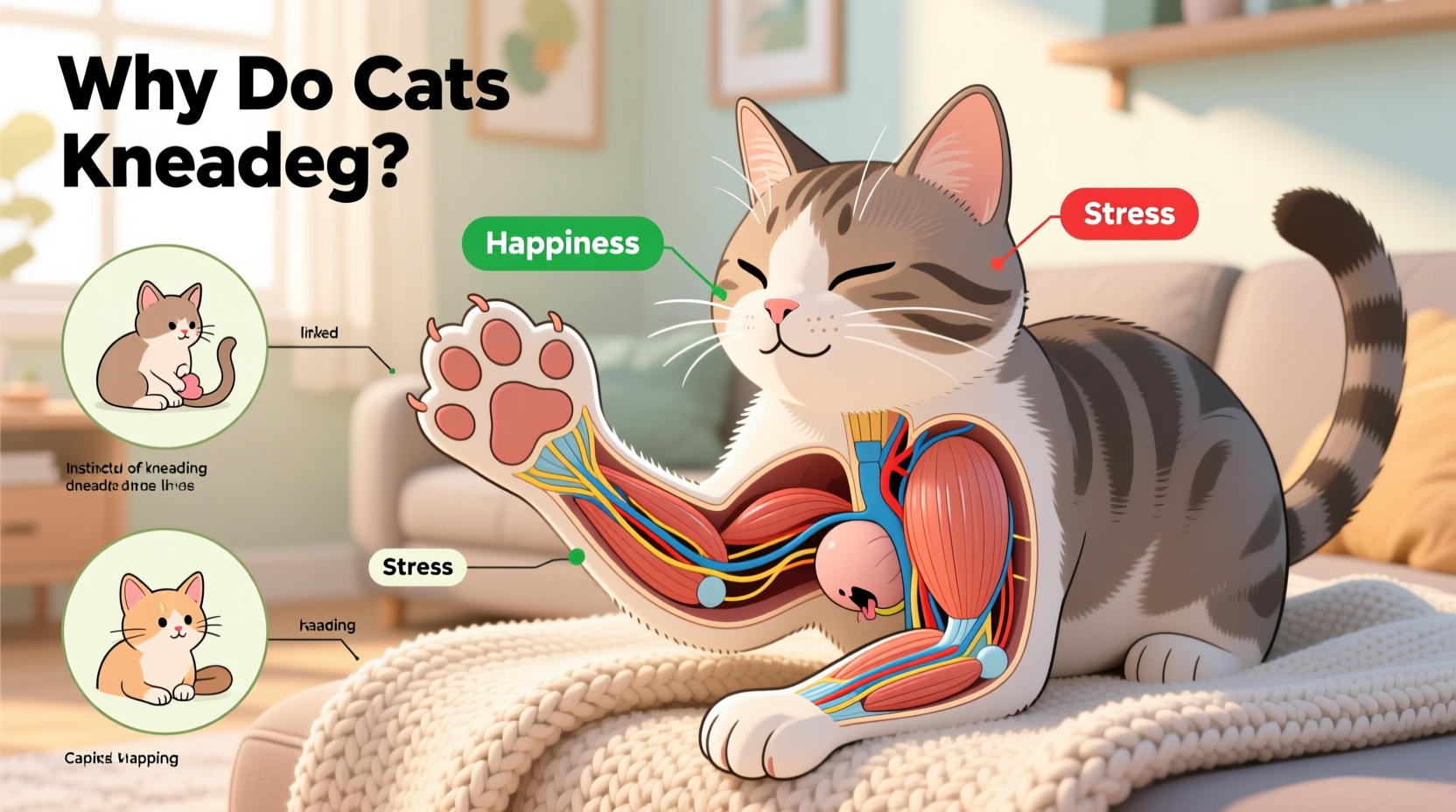
Kneading begins in the earliest days of a cat’s life. Newborn kittens instinctively press their tiny paws against their mother’s mammary glands to stimulate milk flow. This repetitive motion is crucial for survival during nursing. The action becomes associated with warmth, nourishment, safety, and comfort—all elements tied to maternal care.
As cats grow, they may continue kneading long after weaning. Adult cats often perform this behavior when they feel secure, relaxed, or emotionally attached to their environment or caregiver. In these cases, kneading serves as a throwback to kittenhood—a self-soothing mechanism triggered by feelings of trust and well-being.
“Kneading is one of the most enduring neonatal behaviors in cats. It persists because it’s deeply encoded in their neurology as a signal of safety.” — Dr. Lydia Ryan, Feline Behavioral Scientist
This persistence into adulthood suggests that while the original biological purpose fades, the emotional resonance remains strong. When your cat climbs onto your lap and starts rhythmically pushing its paws into your thigh, it may not just be comfortable—it may be reliving a primal sense of security from infancy.
Is Kneading Always a Sign of Happiness?
In most cases, yes—kneading is a positive behavior indicating contentment. Cats typically engage in it when they are calm, sleepy, or being petted. You might notice purring, half-closed eyes, slow blinks, or even drooling alongside the kneading, all of which reinforce the idea that the cat is in a state of deep relaxation.
However, assuming kneading always equals happiness can lead to misinterpretation. Context matters. For example, if a cat begins kneading suddenly during a loud thunderstorm or after a new pet enters the home, the behavior may serve as a coping mechanism rather than pure joy. In such instances, kneading functions similarly to human habits like nail-biting or fidgeting—repetitive actions used to manage anxiety.
Tip: Observe your cat’s body language beyond kneading. Ears forward, tail relaxed, and purring indicate happiness; flattened ears, tense muscles, or rapid tail flicks suggest stress.Other Reasons Cats Knead: Territory, Scent Marking, and Nesting
Beyond emotional comfort, cats knead for several practical and instinctual reasons:
- Scent marking: Cats have scent glands in the pads of their paws. Each time they knead, they deposit pheromones onto the surface, effectively claiming it as part of their territory. This subtle chemical messaging helps them feel more secure in their surroundings.
- Nesting instinct: Wild ancestors of domestic cats would trample down grass or leaves to create a soft sleeping area. Kneading may be a vestigial nesting behavior, especially common before lying down.
- Preparing a resting spot: Even indoor cats retain the urge to “fluff” their bed or blanket before settling in. Kneading may help regulate temperature, test firmness, or simply satisfy an ingrained routine.
- Stretching muscles: The motion engages shoulder, chest, and paw muscles, acting as a gentle stretch after rest or sleep.
These additional motivations show that kneading isn’t purely emotional—it also fulfills sensory, physical, and territorial needs. A cat may knead a sunlit couch not only because it feels good but because it wants to mark that prime real estate as its own.
When Kneading Might Signal Stress or Discomfort
While less common, excessive or out-of-context kneading can point to underlying stress. Cats under environmental pressure—such as moving homes, introducing new pets, or experiencing loud noises—may increase kneading frequency as a form of displacement behavior. Displacement behaviors occur when animals face conflicting impulses (e.g., fight vs. flight) and instead perform unrelated actions like grooming, licking, or kneading.
Signs that kneading may be stress-related include:
- Kneading at inappropriate times (e.g., during loud arguments or storms)
- Accompanied by vocalization, pacing, or hiding
- Excessive intensity, potentially leading to sore paws or carpet damage
- Sudden onset in previously non-kneading cats
In some cases, medical conditions like hyperesthesia syndrome—a neurological disorder causing skin rippling and obsessive behaviors—can manifest as compulsive kneading. If your cat seems agitated, bites at its paws, or reacts painfully when touched along the back, consult a veterinarian.
Mini Case Study: Luna the Rescue Cat
Luna, a three-year-old domestic shorthair adopted from a shelter, began kneading obsessively on her owner’s arm shortly after adoption. At first, the owner interpreted this as affection. But over time, the behavior escalated—Luna would knead for 20 minutes straight, often without purring, and sometimes pull out small tufts of fabric from furniture afterward.
After consulting a veterinary behaviorist, the owner learned that Luna’s past trauma likely contributed to anxiety-driven kneading. With environmental enrichment (vertical spaces, puzzle feeders), consistent routines, and pheromone diffusers, Luna’s kneading decreased significantly within two months. She still kneads occasionally—but now only when settling into her favorite blanket, accompanied by soft purrs.
This case illustrates how context and history shape feline behavior. What looks like affection may, in fact, be a cry for emotional stability.
How to Respond to Kneading: Do’s and Don’ts
Understanding why your cat kneads allows you to respond appropriately. Whether the behavior stems from joy or stress, your reaction influences how it develops over time.
| Do | Don’t |
|---|---|
| Provide soft blankets or cushions for kneading | Reprimand or push the cat away abruptly |
| Trim claws regularly to minimize discomfort | Allow sharp claws on sensitive skin without protection |
| Use a barrier (like a thick blanket) if kneading hurts | Yank your leg away mid-knead—it may startle the cat |
| Encourage calm environments to reduce stress-induced kneading | Ignore signs of compulsive or painful behavior |
| Praise gently with quiet voice or slow blinks | Overstimulate with loud praise or sudden movements |
Step-by-Step Guide: Managing Kneading Comfortably
If your cat’s kneading causes discomfort—or if you suspect it’s linked to stress—follow this step-by-step approach to support both your comfort and your cat’s well-being.
- Observe the pattern: Note when, where, and how intensely your cat kneads. Is it during petting? After eating? During storms?
- Assess body language: Look for signs of relaxation (purring, blinking) or tension (tail flicking, ear flattening).
- Protect your skin: Keep a folded towel or fleece blanket nearby to place on your lap before cuddle sessions.
- Maintain claw health: Trim front claws every 2–3 weeks using cat-safe clippers.
- Redirect if needed: Gently lift your cat and place them on a cushion or blanket while saying “there’s your spot” to reinforce location.
- Enrich the environment: Add scratching posts, warm beds, and interactive toys to reduce anxiety-based behaviors.
- Consult a professional: If kneading becomes compulsive or painful, seek advice from a vet or certified animal behaviorist.
Frequently Asked Questions
Why does my cat knead me but not others?
Cats reserve kneading for individuals they trust deeply. If your cat kneads only you, it’s a sign of strong emotional bonding. Familiar scents, voice, and touch contribute to this selective behavior.
Can neutered/spayed cats still knead?
Absolutely. Kneading is not hormonally driven but rooted in early development and emotional expression. Spaying or neutering does not affect this instinctive behavior.
Is it normal for older cats to start kneading again?
Yes. Senior cats may return to kneading due to memory recall, increased need for comfort, or mild cognitive changes. As long as there’s no aggression or pain involved, it’s generally harmless.
Expert Insight: The Emotional Language of Cats
Kneading is part of a broader repertoire of feline communication—one that relies heavily on tactile and olfactory cues rather than vocal ones. Unlike dogs, who evolved to read human facial expressions, cats communicate through subtle physical gestures.
“Cats don’t knead randomly. Every press of the paw carries meaning—whether it’s ‘I feel safe here’ or ‘I need to calm myself.’ Learning to read these micro-behaviors transforms cohabitation into true companionship.” — Dr. Marcus Lin, Animal Ethologist
This perspective shifts kneading from a quirky habit to a meaningful dialogue between species. When a cat kneads you, it’s not merely acting on instinct—it’s inviting you into a moment of vulnerability and trust.
Conclusion: Embracing the Biscuit-Making Ritual
Kneading is far more than a cute quirk—it’s a complex behavior woven from biology, emotion, and instinct. While it most often signals happiness, dismissing it as mere cuteness overlooks its role in feline emotional regulation and territorial identity. By paying attention to context, body language, and frequency, you gain deeper insight into your cat’s inner world.
Whether your cat is softly pressing into your sweater or working diligently on a plush pillow, recognize the gesture for what it is: a living echo of kittenhood, a declaration of belonging, and sometimes, a quiet plea for reassurance. Respond with patience, provide comfort, and let the rhythmic push of tiny paws remind you of the profound bond you share.
💬 What does your cat’s kneading tell you? Share your observations and experiences in the comments—your story could help another cat owner understand their furry companion better.








