
Cats are creatures of habit, guided by instincts refined over thousands of years of evolution. One behavior that often puzzles cat owners is when their feline companion appears to \"cover\" or paw around their food bowl—sometimes even after eating, sometimes before. This act may resemble the way cats bury their waste in litter, leading many to wonder: Is this a sign of dissatisfaction? A territorial move? Or simply an inherited quirk with deeper roots?
The truth lies in biology, environment, and individual temperament. What might look like a random gesture is actually a complex expression of ancestral survival strategies, sensory regulation, and emotional signaling. Understanding this behavior not only demystifies your cat’s actions but also helps improve their feeding experience and overall well-being.
The Evolutionary Roots of Food-Burying Behavior
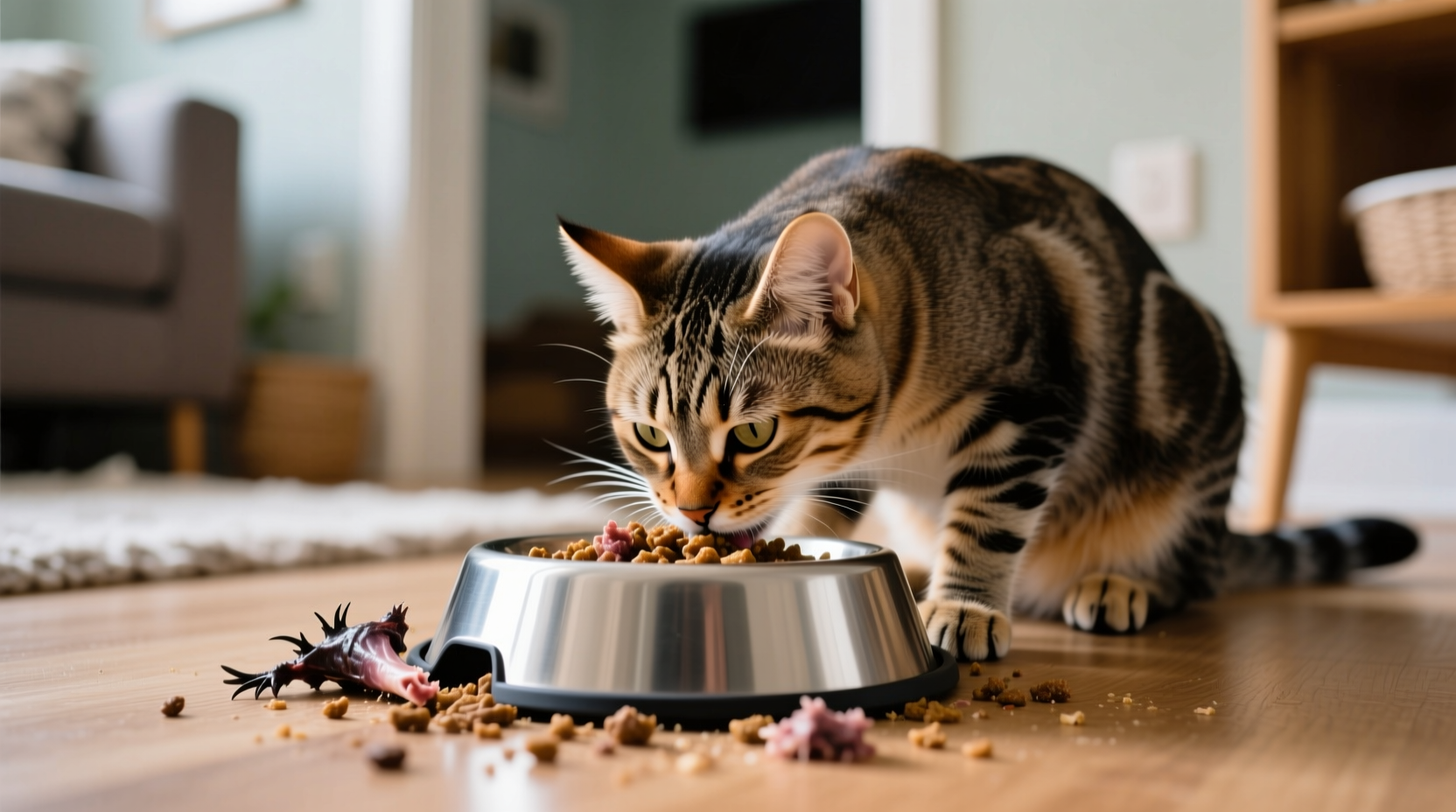
In the wild, cats are both predators and potential prey. Their survival depends on stealth, scent control, and minimizing exposure. One of the most significant evolutionary behaviors they’ve retained is the instinct to hide evidence of their presence—including food remains.
Wild cats, such as the African wildcat (the ancestor of domestic cats), would often bury uneaten prey or scratch around feeding sites to mask the smell of blood and tissue. This served two purposes: deterring scavengers and preventing larger predators from detecting their location. Even though today’s housecats receive meals in clean bowls, the impulse to “cover” food persists.
This behavior is especially common in multi-cat households or environments where a cat feels insecure. The act of pawing at the floor around the bowl mimics digging and covering—a symbolic attempt to erase traces of a meal that could attract unwanted attention.
“Even in safe indoor environments, cats operate on deep-seated survival programming. Burying food isn’t about cleanliness; it’s about risk mitigation.” — Dr. Lena Reyes, Feline Behavioral Scientist
Sensory Sensitivity and Environmental Triggers
Beyond instinct, sensory factors play a major role in why cats interact oddly with their food bowls. Cats have extremely sensitive whiskers (vibrissae) and acute hearing and smell. A food bowl that’s too small, too deep, or placed in a high-traffic area can cause discomfort or stress.
When a cat paws at the side of the bowl or scrapes the floor nearby, they may be reacting to:
- Whisker fatigue: Deep bowls force whiskers to press against the sides, causing discomfort.
- Noise sensitivity: Metal or ceramic bowls can make loud clinking sounds when kibble drops, startling some cats.
- Smell persistence: Strong food odors linger, triggering the instinct to bury or disperse them.
- Surface aversion: Plastic bowls can retain odors and bacteria, which cats find unpleasant.
In response, cats may use their paws to simulate covering the bowl, attempting to reduce sensory input or express discomfort. This doesn’t mean they dislike the food—it may simply indicate the presentation or setting isn’t ideal.
Tip: Use wide, shallow bowls made of stainless steel or ceramic to reduce whisker stress and odor retention.Behavioral Signaling: Communication Through Action
Cats don’t bark or meow constantly to express themselves—they rely heavily on body language and subtle behaviors. Pawing at or around a food bowl can be a form of communication, conveying messages such as:
- \"I’m done eating.\" (Pawing mimics post-meal burying.)
- \"This place feels unsafe.\" (Scratching signals anxiety.)
- \"I don’t like this food.\" (Especially if accompanied by walking away.)
- \"I want more attention.\" (Some cats learn that this action gets a reaction.)
In multi-pet homes, food-related behaviors often reflect hierarchy and stress levels. A subordinate cat might cover its bowl after eating to avoid drawing attention from a dominant animal. Conversely, a confident cat may eat freely and leave the area without interference.
It’s important not to assume negative intent. Just because a cat covers its bowl doesn’t mean it’s rejecting the food or the owner. More often, it’s a neutral or even positive expression of natural behavior—especially if the cat eats well and remains healthy.
Mini Case Study: Luna, the Anxious Feeder
Luna, a 3-year-old domestic shorthair, lived in a home with two dogs and another cat. Her owners noticed she consistently scratched the floor around her food bowl—even when it was empty. At first, they thought she wanted more food, so they refilled it, only for her to repeat the motion and walk away.
After consulting a feline behaviorist, they realized Luna felt exposed during mealtimes. The bowl was in the middle of the kitchen, near dog traffic and loud appliances. By relocating her feeding station to a quiet corner and switching to a low-profile ceramic dish, the scratching behavior decreased significantly within a week.
The change didn’t eliminate the instinct entirely—Luna still occasionally pawed at the ground—but it no longer appeared compulsive or stressed. This case highlights how environment shapes instinctual expression.
Do’s and Don’ts: Responding to Food-Covering Behavior
| Do’s | Don’ts |
|---|---|
| Provide a quiet, low-traffic feeding area | Place food bowls near loud appliances or foot traffic |
| Use wide, shallow bowls to prevent whisker stress | Use deep plastic bowls that trap odors |
| Observe your cat’s full feeding routine for patterns | Punish or scold pawing behavior |
| Keep multiple feeding stations in multi-pet homes | Force-feed or override clear signs of refusal |
| Monitor for sudden changes in eating habits | Assume all pawing means dissatisfaction |
Step-by-Step Guide to Assessing and Addressing the Behavior
If your cat frequently covers their food bowl, follow this practical sequence to determine the cause and implement solutions:
- Observe the context. Note when the behavior occurs—before eating, after eating, with certain foods, or in specific locations.
- Check the bowl type. Replace narrow or deep containers with wide, flat dishes made of non-porous materials.
- Evaluate the feeding environment. Ensure the area is calm, private, and free from competition or disturbances.
- Rule out medical issues. Sudden changes in appetite or feeding behavior warrant a vet visit to exclude dental pain or gastrointestinal problems.
- Test food preferences. Offer different textures or brands to see if the behavior correlates with specific meals.
- Adjust placement. Move the bowl to a quieter room or elevate it slightly to give your cat a sense of security.
- Monitor progress. Track changes over 7–10 days. Most improvements will become evident within this window.
This methodical approach separates instinctual behavior from environmental stressors, helping you support your cat without unnecessary intervention.
FAQ
Is it normal for my cat to scratch the floor after eating?
Yes, it’s completely normal. Scratching after a meal is an extension of the burying instinct. As long as your cat is eating well and showing no signs of distress, this behavior is typically harmless and rooted in natural tendencies.
Does pawing at the food bowl mean my cat dislikes the food?
Not necessarily. While food aversion can cause avoidance or pawing, many cats exhibit this behavior regardless of meal preference. Look for additional clues—such as sniffing and walking away, reduced appetite, or vomiting—to determine if the issue is dietary.
Should I stop my cat from covering their food bowl?
No. Discouraging natural behaviors can increase stress. Instead, focus on optimizing the feeding setup. If the behavior seems excessive or obsessive, consult a veterinarian or animal behaviorist to rule out underlying anxiety.
Checklist: Creating a Cat-Friendly Feeding Environment
- ✅ Use a wide, shallow bowl to prevent whisker stress
- ✅ Place the bowl in a quiet, secure location
- ✅ Avoid plastic bowls that retain smells
- ✅ Separate food and water stations (cats prefer them apart)
- ✅ Provide elevated or secluded feeding spots if needed
- ✅ Clean bowls daily with mild, unscented soap
- ✅ Observe your cat’s behavior for consistency and changes
- ✅ Offer multiple feeding zones in multi-pet homes
Conclusion: Respecting Instinct While Enhancing Comfort
The instinct to cover food bowls is a window into your cat’s evolutionary past—a remnant of survival tactics that once ensured safety in the wild. While modern cats don’t need to hide their meals from predators, the urge remains embedded in their psychology. Rather than suppress this behavior, the goal should be understanding and accommodation.
By refining feeding setups, reducing stressors, and observing your cat with empathy, you transform a puzzling habit into an opportunity for better care. Small adjustments—like changing bowl shape or location—can make a profound difference in your cat’s comfort and confidence.
💬 Have you noticed your cat covering their food bowl? What changes helped? Share your experience in the comments to help fellow cat owners understand this instinctual behavior.








