
Cats are creatures of habit, mystery, and finely tuned instincts. If you’ve ever found your cat dragging a crumpled paper ball, a stuffed mouse, or even their favorite feather toy toward their food bowl, you’re not alone. This seemingly odd behavior is surprisingly common—and deeply rooted in natural feline psychology. While it might appear random or even quirky, there’s a logical, instinct-driven explanation behind this action. Understanding why cats engage in this ritual offers insight into their ancestral past, social dynamics, and emotional needs.
This behavior isn’t a sign of confusion or misbehavior—it’s an expression of hardwired survival mechanisms that have evolved over thousands of years. From hunting rituals to territorial marking and emotional bonding, the act of bringing toys to food bowls reveals much about how cats perceive safety, ownership, and care. Let’s explore the science and instinct behind this fascinating habit.
The Evolutionary Roots of Toy-Dragging Behavior
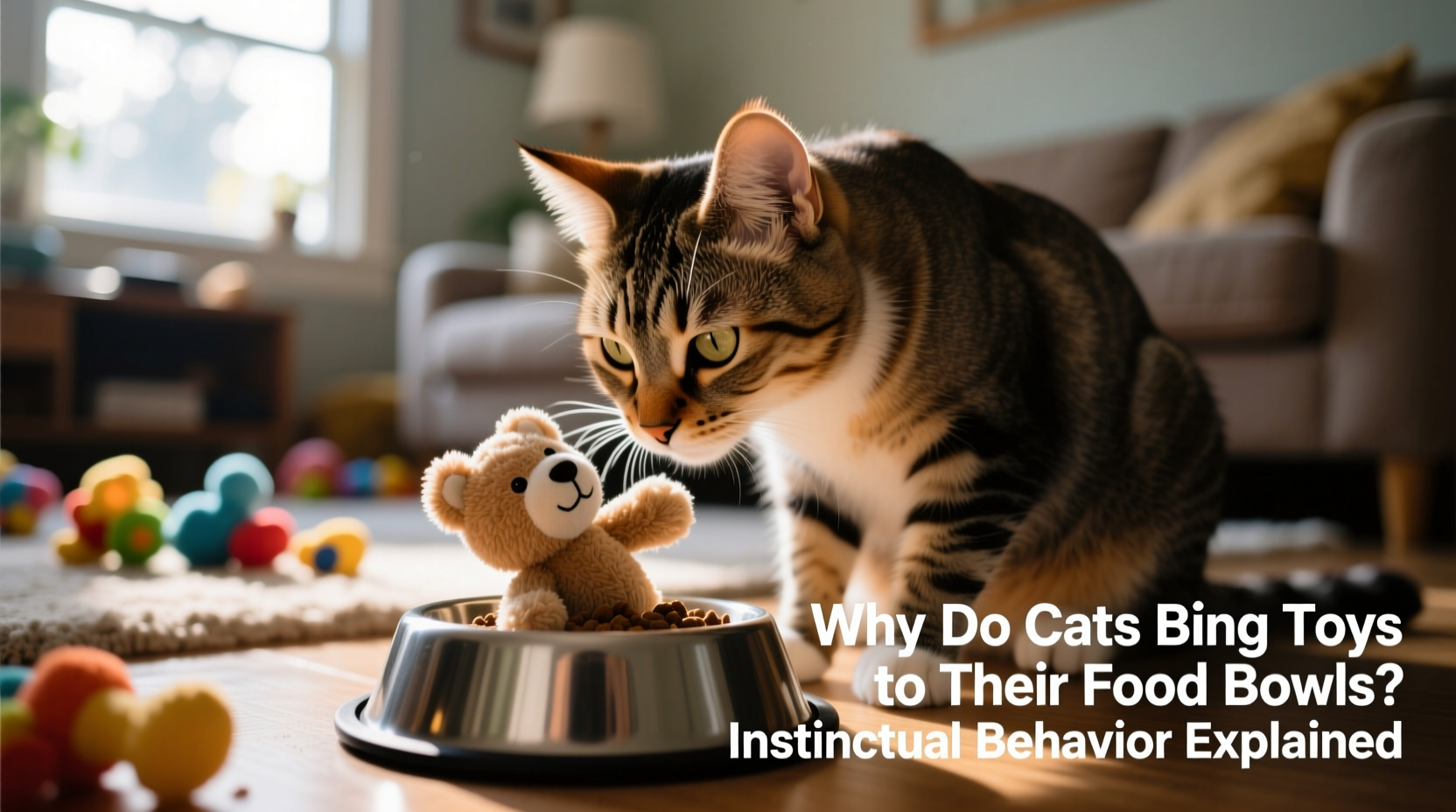
To understand modern cat behavior, we must first look at their wild ancestors. Domestic cats (Felis catus) descended from solitary hunters like the African wildcat (Felis lybica), animals that relied on stealth, precision, and resource protection to survive. In the wild, securing food was never guaranteed. After a successful hunt, a predator would often move prey to a safe location before consuming it—this minimized competition from scavengers and reduced the risk of ambush.
Even though today’s housecats don’t need to hunt for survival, their brains still operate with these ancient instincts. When a cat “catches” a toy—especially one that mimics prey like a mouse or bird—they experience a surge of predatory drive. The toy becomes symbolic prey. Bringing it to the food bowl may represent an attempt to store or “consume” their catch in a place they associate with nourishment and security.
“Cats don’t distinguish between real prey and toy prey in terms of behavioral sequence. Once the hunt sequence is triggered, the full ritual—including relocation—often follows.” — Dr. Sarah Ellis, Feline Behavior Scientist, University of Lincoln
The food bowl, as a consistent source of sustenance, represents a core zone of safety. By bringing their toys there, cats may be treating the area as a den-like space where important resources—both real and symbolic—are gathered and protected.
Scent Marking and Territorial Ownership
Cats are highly territorial animals, and scent plays a crucial role in how they claim and navigate their environment. They possess scent glands on their cheeks, paws, flanks, and lips, which release pheromones when they rub, scratch, or carry objects. When a cat picks up a toy in its mouth and transports it across the home, it leaves behind its unique olfactory signature.
Bringing toys to the food bowl could be a way of reinforcing ownership over both the object and the feeding area. In multi-cat households, this behavior may intensify, especially if there’s any subtle competition for resources. A cat may feel compelled to mark the feeding zone more frequently to assert dominance or comfort.
Tip: If multiple cats share feeding space, ensure each has their own designated bowl and nearby resting spot to reduce territorial stress.In some cases, the act of carrying toys to the food area functions as environmental anchoring—placing familiar, scent-marked items near a critical resource helps the cat feel more in control and less anxious. This is particularly noticeable in homes with frequent changes, new pets, or unfamiliar visitors.
Food and Play: Linked Zones of Security
To humans, eating and playing are distinct activities. But for cats, the boundaries can blur. Both behaviors are tied to survival: hunting leads to food, and play simulates hunting. Many cats exhibit what’s known as “food anticipation behavior,” becoming active near feeding times, meowing, pacing, or presenting toys. Some even drop toys at your feet as if offering a gift before mealtime.
When a cat brings a toy to its food bowl, it may be merging two key aspects of its daily routine: the hunt and the feast. In the wild, after capturing prey, a cat would eat it immediately in a secure spot. Your living room may not resemble the savannah, but to your cat, the food bowl is that secure spot. Placing the toy there completes a psychological loop—hunt, capture, consume—all within a trusted environment.
This also explains why some cats “chatter” at birds outside the window and then run to their food bowl afterward. The visual stimulation triggers the hunting sequence, but without physical prey, the energy gets redirected—often toward toys and feeding zones.
How Feeding Schedules Influence Toy Behavior
Cats thrive on predictability. Those fed at consistent times often begin to associate certain behaviors with meals. If playtime regularly precedes feeding, the cat may start bringing toys to the bowl as part of a learned ritual. Over time, this becomes a conditioned response: toy presentation → attention → food.
This doesn’t mean the cat thinks the toy is food. Rather, the toy becomes a signal—a way of initiating interaction that historically led to feeding. It’s a form of communication shaped by both instinct and experience.
A Sign of Trust and Social Bonding
One of the most heartwarming interpretations of this behavior is that it reflects trust. In the wild, cats sometimes bring injured prey to their kittens to teach them how to eat or hunt. Similarly, domestic cats may view their human caregivers as part of their social group—even as clumsy, oversized kittens who need “help” understanding prey.
By placing a toy near the food bowl, your cat might be symbolically sharing a catch with you. Since the food bowl is a central hub of human interaction, depositing a toy there ensures you’ll notice it. It’s a way of saying, “Look what I caught. This is important. You’re important.”
This theory is supported by observations in homes where cats are highly bonded to their owners. These cats are more likely to engage in toy-sharing behaviors, especially if they receive positive reinforcement—praise, petting, or immediate feeding—afterward.
Mini Case Study: Luna the Ginger Tabby
Luna, a 3-year-old rescue tabby, consistently brought her fuzzy mouse toy to her food bowl every evening at 6 PM—the time her owner served dinner. Initially, her owner thought she was trying to bury the toy or confuse it with food. However, after tracking behavior patterns, it became clear that Luna only did this when her owner was home. On weekends, when meals were delayed, Luna waited by the bowl with the toy in her mouth.
After introducing interactive play with the toy for five minutes before feeding, the behavior intensified—Luna began dropping the toy directly at her owner’s feet first, then moving it to the bowl. This suggested a dual purpose: play initiated feeding, and the toy acted as a transitional object linking activity to reward. Over time, the owner realized Luna wasn’t being odd—she was communicating.
Practical Tips for Cat Owners
While bringing toys to the food bowl is normal, it can create clutter or hygiene concerns—especially if the same toy goes from floor to feeding zone. Here are actionable ways to support your cat’s instincts while maintaining a clean, harmonious home.
Tip: Rotate toys weekly to keep your cat mentally stimulated and reduce obsessive attachment to a single item.Step-by-Step Guide: Managing Toy-to-Bowl Behavior
- Observe the pattern: Note when and how often your cat moves toys. Is it around feeding time? After play? During stress?
- Create a “hunt zone”: Place a small basket or mat near the feeding area where toys can be deposited. Encourage use with treats or praise.
- Engage in structured play: Use wand toys to simulate a full hunt sequence—chase, catch, “kill,” and reward with food. This satisfies instinctive needs.
- Separate play and eat spaces: If hygiene is a concern, gently redirect toys to a nearby shelf or bed after playtime.
- Maintain consistency: Stick to regular feeding and play schedules to reinforce security and reduce anxiety-driven behaviors.
Checklist: Supporting Healthy Feline Behavior
- ✅ Provide daily interactive play sessions (10–15 minutes)
- ✅ Keep feeding areas clean and separate from litter and sleeping zones
- ✅ Offer a variety of toys that mimic prey (feathers, crinkly mice, balls)
- ✅ Monitor changes in behavior—sudden shifts may indicate stress or illness
- ✅ Respect your cat’s rituals; avoid punishing natural behaviors
Common Misconceptions and What Not to Do
It’s easy to misinterpret feline behavior through a human lens. Below is a table outlining common misunderstandings and better alternatives.
| Misconception | Reality | Do This Instead |
|---|---|---|
| Your cat thinks the toy is food. | The toy represents prey, not nutrition. | Don’t remove the toy harshly; redirect gently. |
| This behavior is “cute” and needs encouragement. | Over-reinforcement can lead to obsession. | Praise moderately; focus on balanced routines. |
| Cats should keep toys away from food for hygiene. | Instinct overrides cleanliness concerns. | Designate a nearby “toy drop” zone instead of restricting. |
| If the cat stops doing it, something’s wrong. | Behavior varies by individual and environment. | Monitor overall health, not isolated habits. |
Frequently Asked Questions
Is it normal for my cat to bring toys to their food bowl every day?
Yes, it’s completely normal. Many cats develop routines around feeding and play. Daily toy delivery often indicates a healthy, active predator mind at work. As long as your cat is otherwise healthy and not showing signs of stress, this behavior is nothing to worry about.
Should I clean the toys after they go near the food bowl?
Yes, especially if your cat eats wet food or if the bowl area gets moist. Bacteria can transfer from toys to food surfaces. Wash plush toys monthly and wipe down plastic or rubber ones weekly with pet-safe cleaner.
What if my cat hides toys around the food bowl instead of just dropping them?
Hiding toys nearby may reflect caching behavior—an instinct to store surplus prey. In nature, cats hide excess kills to eat later. Your cat may see the feeding area as a central cache point. Providing a soft box or tunnel nearby can give them an appropriate hiding spot.
Conclusion: Respecting Instinct, Strengthening Bonds
The act of bringing toys to the food bowl is far more than a quirk—it’s a window into your cat’s primal psyche. Rooted in evolution, shaped by territory, and influenced by trust, this behavior connects your pet to a legacy of survival, strategy, and social connection. Rather than discouraging it, consider how you can honor your cat’s instincts while creating a clean, enriching environment.
By observing, engaging, and responding with empathy, you deepen your understanding of your cat’s world. Simple changes—like scheduled play, designated toy zones, and respectful interaction—can align their natural drives with household harmony.
💬 Have a story about your cat’s toy rituals? Share your experience in the comments—your insights might help fellow cat lovers understand their furry companions better.








