
Horses are remarkable animals, built for endurance, strength, and speed. Yet one of their most critical biological limitations is rarely discussed outside veterinary circles: they cannot vomit. Unlike humans, dogs, or even cats, a horse’s physiology makes regurgitation nearly impossible. This inability has profound implications for their health, diet, and daily care. Understanding why horses can’t throw up—and how their digestive system functions as a result—is essential for anyone who owns, rides, or works with these animals.
The equine digestive tract is a finely tuned machine designed for continuous grazing, not episodic meals. It operates under constant motion, relying on steady intake and efficient processing of fibrous plant material. Any disruption to this rhythm can lead to serious complications, including colic—the leading cause of death in horses. The absence of vomiting as a protective mechanism means that once something harmful enters the stomach, it must move forward through the system, increasing risks significantly.
Anatomy of the Equine Digestive System
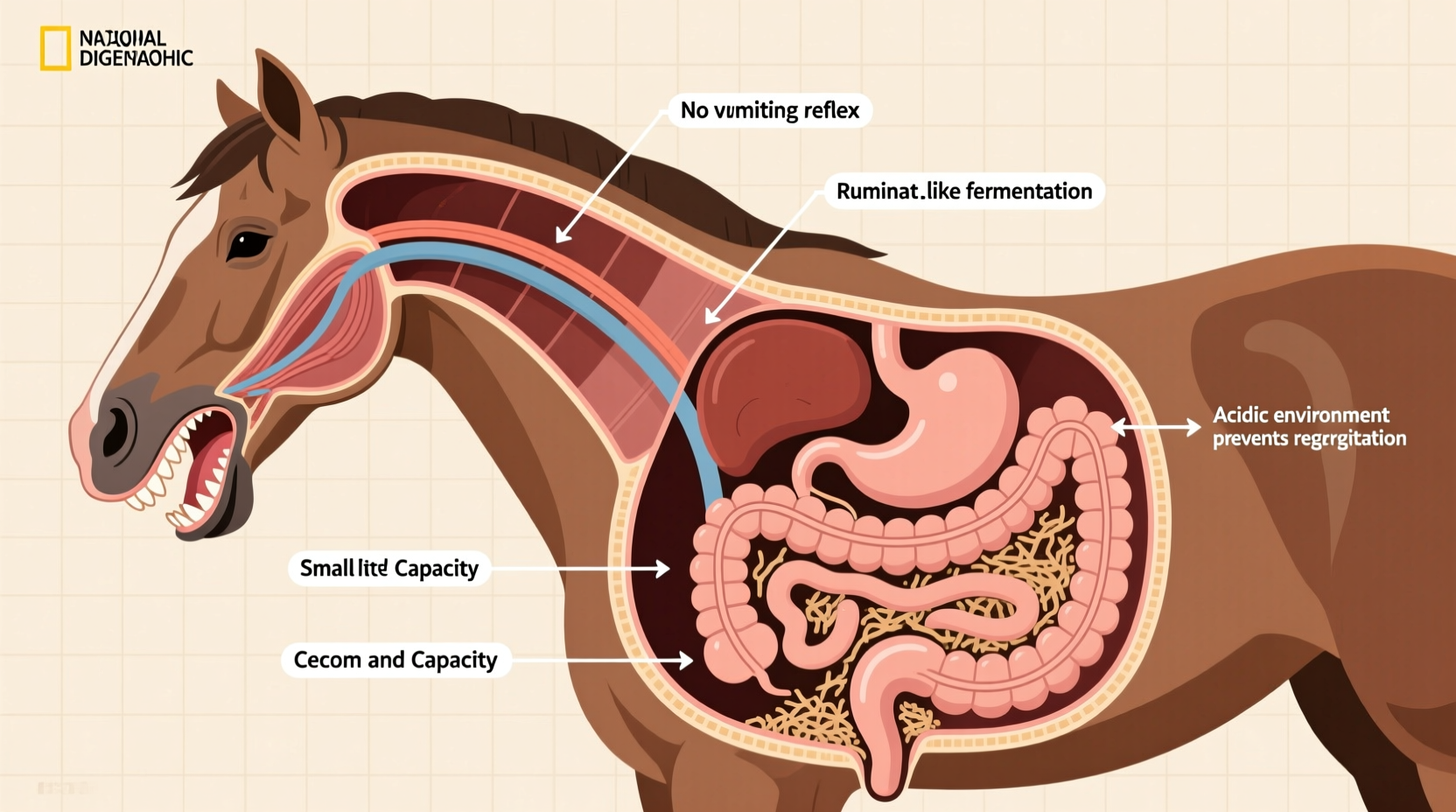
The horse’s digestive tract spans over 100 feet from mouth to tail, composed of specialized sections each serving a distinct purpose. Starting at the mouth, where teeth grind fibrous material, food travels down the esophagus into the stomach—a relatively small organ holding only 8–15 liters. From there, it moves into the small intestine (about 70 feet long), then the large intestine, which includes the cecum, colon, and rectum.
The key reason horses cannot vomit lies in the anatomy of the lower esophageal sphincter—the muscular valve between the esophagus and stomach. In most mammals, this valve relaxes when pressure builds or toxins are detected, allowing vomit to rise. In horses, however, this sphincter is exceptionally strong and one-way. Combined with the oblique angle at which the esophagus connects to the stomach, any backflow is mechanically blocked.
This design evolved to prevent aspiration during galloping but eliminates the ability to expel spoiled feed, excess gas, or toxic substances through vomiting. As Dr. Sarah Thompson, an equine veterinarian with over 20 years of experience, explains:
“The horse’s digestive system is optimized for survival on sparse forage, not emergency detoxification. Their inability to vomit isn’t a flaw—it’s a trade-off for efficiency in processing high-fiber diets. But it demands extreme diligence from caretakers.” — Dr. Sarah Thompson, DVM, Equine Internal Medicine Specialist
Why Can’t Horses Throw Up? A Closer Look
The physiological barrier to vomiting involves three main factors:
- Strong Lower Esophageal Sphincter: This muscle remains tightly closed except during swallowing, resisting reverse peristalsis (backward movement of food).
- Angle of Stomach Entry: The esophagus enters the stomach at a sharp angle, creating a flap-like valve that acts like a check valve in plumbing.
- Limited Diaphragm Control: Horses lack the abdominal pressure control needed to force contents upward due to rigid diaphragmatic attachments.
Even in cases of severe poisoning or gastric rupture, true vomiting is almost never observed. When stomach contents do escape, it typically results in fatal rupture rather than expulsion through the mouth.
Tip: Never assume a horse will \"throw up\" if it eats something bad. Immediate veterinary intervention is required if toxic ingestion is suspected.Digestive Risks and Common Issues
Because horses cannot clear their stomachs naturally, improper feeding practices can quickly lead to life-threatening conditions. The most common issues include:
- Colic: A general term for abdominal pain, often caused by gas buildup, impaction, or torsion. Colic is the number one killer of horses, accounting for more deaths than any other disease.
- Gastric Ulcers: Over 60% of performance horses suffer from ulcers due to irregular feeding, stress, and high-grain diets.
- Impaction: Dry, fibrous feed accumulates in the colon, especially when water intake is low.
- Toxicity: Ingestion of poisonous plants, moldy hay, or non-feed items can be fatal without prompt treatment.
A real-world example illustrates the danger. Last spring, a 12-year-old gelding on a boarding farm accidentally consumed a large amount of sweet feed meant for another horse. The sudden influx of carbohydrates led to rapid fermentation in the hindgut, causing severe gas colic. Because the horse couldn’t vomit to relieve pressure, the condition escalated within hours. Emergency surgery was required to correct a displaced colon. Though the horse survived, recovery took months and cost over $8,000.
Best Practices for Supporting Equine Digestion
Prevention is the cornerstone of equine digestive health. Since horses lack natural defenses against ingested hazards, management must focus on consistency, quality, and timing.
Feeding Guidelines Checklist
Checklist:- Provide forage (hay or pasture) for at least 16–18 hours per day
- Divide grain meals into two or more small feedings
- Ensure constant access to clean, fresh water
- Avoid abrupt changes in diet—transition over 7–10 days
- Store feed securely to prevent accidental overconsumption
- Inspect hay for mold, dust, and weeds before feeding
- Limit high-starch grains, especially in inactive horses
Do’s and Don’ts of Equine Feeding
| Do | Don’t |
|---|---|
| Feed consistent, high-quality forage | Skip meals or feed erratically |
| Use slow-feeders to extend eating time | Allow unlimited grain access |
| Monitor manure daily for changes | Introduce new feeds suddenly |
| Soak hay if respiratory issues exist | Mix medications into large grain meals without checking palatability |
| Provide salt blocks or loose mineral supplements | Assume all horses tolerate rich spring grass equally |
Recognizing Digestive Distress: A Step-by-Step Guide
Early detection of digestive problems can save a horse’s life. Follow this timeline when signs appear:
- Observe Behavior (0–30 minutes): Look for restlessness, pawing, flank watching, lying down frequently, or rolling.
- Check Vital Signs (within 1 hour): Take heart rate (normal: 28–44 bpm), respiration (12–24 breaths/min), and temperature (99–101.5°F). Elevated heart rate is often the first sign of colic.
- Assess Gut Sounds (use stethoscope or press ear to flank): Normal gut motility includes gurgles and bubbles. Silence or hyperactivity both indicate trouble.
- Contact Veterinarian (immediately if symptoms persist): Do not wait. Early intervention improves outcomes dramatically.
- Withhold Feed, Allow Water: Stop all grain and hay until vet arrives, but do not restrict water unless advised.
- Walk Gently (if safe): Light walking may help move gas or impactions, but avoid exhaustion.
Note: Never administer medication like Banamine without veterinary guidance. Pain relief can mask symptoms and delay accurate diagnosis.
Frequently Asked Questions
Can horses ever vomit?
No, horses cannot vomit due to anatomical restrictions. Rare reports of “vomiting” usually describe nasogastric reflux performed by a vet using a tube, not spontaneous regurgitation.
What happens if a horse eats something toxic?
Toxins pass into the intestines and are absorbed. Treatment involves activated charcoal, fluids, laxatives, and supportive care. Speed is critical—contact a vet immediately.
Are foals able to vomit?
No, even newborn foals lack the muscular and structural capacity to vomit. However, milk can sometimes reflux through the nose due to swallowing coordination issues, which is not true vomiting.
Conclusion: Responsibility in Care
The inability of horses to throw up is more than a biological curiosity—it’s a call to action for responsible stewardship. Every meal, every change in routine, and every environmental factor influences a horse’s fragile digestive balance. There is no second chance when toxins or blockages take hold.
By understanding the mechanics behind equine digestion and respecting its limitations, owners and caregivers can prevent many of the most common—and deadly—health crises. Knowledge, vigilance, and consistency are not just best practices; they are lifelines.
🚀 Your horse relies on you to make smart feeding and management choices. Review your current routine today—check your feed storage, assess your forage quality, and ensure water access is uninterrupted. Small changes now can prevent emergencies later.








