
Yellowing on the soles of the feet is more common than many realize, yet it often raises concern. While sometimes harmless, this discoloration can also signal underlying health conditions or lifestyle factors that require attention. The color change may appear gradually or suddenly, affecting small patches or the entire sole. Understanding the root cause is essential—not only for peace of mind but also for effective treatment and prevention.
This article explores the most frequent reasons behind yellow feet, from benign skin buildup to systemic medical issues. You’ll learn how to identify potential triggers, what steps to take at home, and when professional evaluation becomes necessary.
Common Causes of Yellow Soles
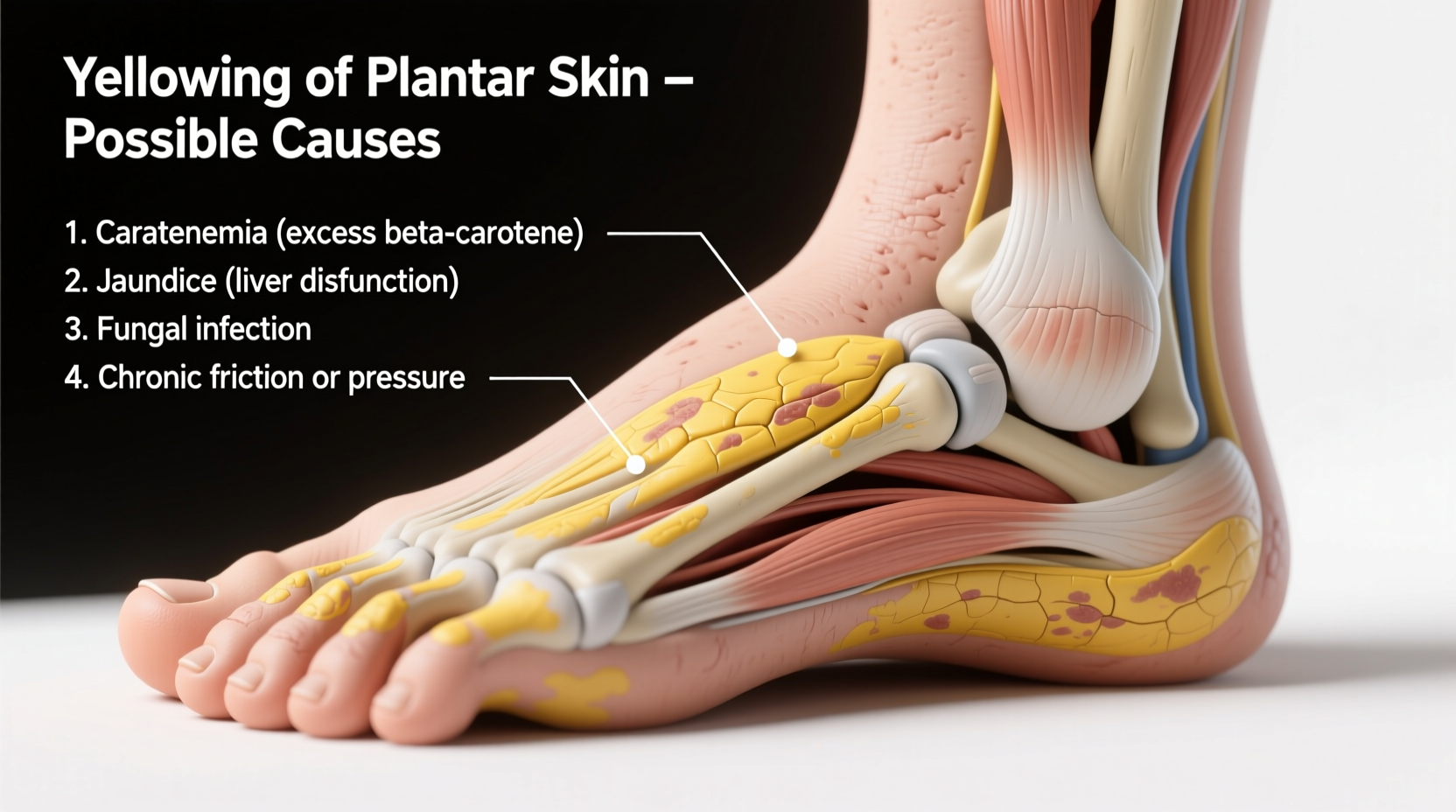
The yellow tint on the bottom of your feet rarely appears without reason. Some causes are superficial and easily managed; others point to deeper physiological imbalances.
- Keratoderma Blennorrhagicum: A skin condition linked to reactive arthritis, often causing thickened, yellowish skin on palms and soles.
- Carotenemia: Excess beta-carotene in the blood from eating too many carrots, sweet potatoes, or squash. This harmless condition deposits pigment in the skin, especially noticeable on thick-skinned areas like the soles.
- Fungal Infections (Tinea Pedis): Athlete’s foot can lead to scaling, cracking, and yellow discoloration between toes and on soles.
- Calluses and Dead Skin Buildup: Thick layers of dead skin naturally appear yellow due to keratin accumulation, especially under pressure points like heels and balls of the feet.
- Liver or Gallbladder Disorders: Jaundice—caused by elevated bilirubin—can turn the skin and eyes yellow. If liver-related, the whites of the eyes will also show yellowing.
- Psoriasis: Some forms affect the feet, leading to scaly, discolored patches that may appear yellowish when combined with debris or topical treatments.
Differentiating Between Harmless and Serious Causes
Not all yellow feet require urgent care. Distinguishing cosmetic concerns from medical red flags helps avoid unnecessary anxiety—or dangerous delays.
“Skin discoloration confined solely to the palms and soles, without eye involvement, is unlikely to be jaundice. Carotenemia is far more common in such cases.” — Dr. Lena Patel, Dermatology Specialist
A key indicator is the presence of scleral icterus—yellowing of the whites of the eyes. True jaundice affects mucous membranes and is accompanied by symptoms like fatigue, dark urine, or abdominal pain. If these are absent, the cause is likely external or dietary.
Clues That Suggest Non-Serious Causes:
- No yellowing in the eyes
- Gradual onset over weeks
- History of high intake of orange vegetables
- Rough, thickened texture typical of calluses
- Improvement with exfoliation
Red Flags Requiring Medical Evaluation:
- Yellow eyes or tongue
- Dark urine or pale stools
- Unexplained weight loss or fatigue
- Pain, swelling, or fever
- Symmetrical rashes with joint pain (possible reactive arthritis)
Treatment Options Based on Cause
Effective treatment starts with accurate identification. Below is a guide to managing yellow feet based on their origin.
For Calluses and Dead Skin
Regular exfoliation removes the top layer of keratinized cells responsible for the yellow hue.
- Soak feet in warm water with Epsom salt for 15 minutes.
- Gently scrub with a pumice stone or foot file.
- Apply a urea-based moisturizer (10–20%) to soften skin.
- Repeat 2–3 times weekly until improvement is seen.
For Fungal Infections
Over-the-counter antifungals like terbinafine or clotrimazole creams work well for mild cases. Apply twice daily for 2–4 weeks, even after symptoms fade.
For Carotenemia
No treatment is needed beyond reducing intake of high-beta-carotene foods. Levels normalize within several weeks. Avoid drastic dietary cuts—moderation is key.
For Liver-Related Jaundice
This requires physician diagnosis and intervention. Blood tests (liver function panels) and imaging help determine the cause, which could range from hepatitis to gallstones.
Step-by-Step Home Care Routine
If your yellow feet stem from dryness, calluses, or minor fungal activity, follow this weekly regimen:
| Day | Action | Product Recommendations |
|---|---|---|
| Monday | Soak + exfoliate | Epsom salts, pumice stone |
| Tuesday | Maintain moisture | Urea cream (e.g., Eucerin Advanced Repair) |
| Thursday | Repeat soak/exfoliate if needed | Foot scrub with lactic acid |
| Saturday | Inspect for changes, reapply antifungal if history of infection | Terbinafine cream |
| Daily | Moisturize after showering | Shea butter or ceramide lotion |
Mini Case Study: Resolving Persistent Yellow Soles
Sarah, a 34-year-old yoga instructor, noticed her soles turning yellow despite regular washing. She had no eye discoloration or systemic symptoms. Initially concerned about liver issues, she visited a dermatologist. After examination, the doctor noted thickened skin and learned Sarah consumed two large sweet potato meals daily.
The diagnosis: carotenemia compounded by mild plantar hyperkeratosis. Sarah reduced her beta-carotene intake slightly and began a gentle exfoliation routine using a urea-based foot cream. Within six weeks, the yellow tint faded significantly. Her case highlights how diet and skin physiology can interact—and how simple adjustments yield visible results.
Prevention Checklist
Maintaining healthy foot color involves consistent habits. Use this checklist to stay proactive:
- ✅ Exfoliate feet 1–2 times per week
- ✅ Moisturize daily, especially heels and pressure zones
- ✅ Rotate footwear to reduce moisture buildup
- ✅ Treat athlete’s foot promptly with antifungal agents
- ✅ Monitor dietary intake of orange-colored produce
- ✅ Inspect feet regularly for texture or color changes
- ✅ See a doctor if yellowing spreads or persists beyond 8 weeks
FAQ
Can diabetes cause yellow feet?
Diabetes itself doesn’t directly cause yellow soles, but poor circulation and nerve damage increase the risk of dry, cracked skin and infections that may alter appearance. Additionally, people with diabetes often have coexisting conditions like jaundice or nutritional imbalances that contribute.
Is it safe to use bleach or lemon juice on yellow feet?
No. These substances are highly irritating and can damage the skin barrier, increasing infection risk. Stick to medically approved exfoliants and moisturizers instead.
Why do babies sometimes have yellow feet?
Newborns commonly develop jaundice in the first few days of life due to immature liver function. This typically resolves on its own or with phototherapy. If an infant’s feet and face are yellow, consult a pediatrician immediately.
Conclusion: Take Action Before It Worsens
Yellow feet are usually treatable, but ignoring them can allow minor issues to escalate. Whether the cause is as simple as too many carrots or as serious as liver dysfunction, early recognition makes all the difference. Most cases respond well to hygiene improvements, exfoliation, and dietary balance. However, never dismiss widespread or systemic signs—your body might be signaling something deeper.
Start today: examine your feet, assess your habits, and apply one new step from this guide. Small changes bring visible results. And if uncertainty remains, schedule a visit with a healthcare provider. Your skin’s appearance is not just cosmetic—it’s a window into your overall health.
💬 Have you experienced yellow feet? What worked for you? Share your story in the comments—your insight could help someone find relief faster.








