The pug is one of the most recognizable dog breeds in the world—wrinkled face, curled tail, and an expression that balances mischief and melancholy. But have you ever wondered why they’re called “pugs”? The name seems almost too simple for such a distinctive dog. Unlike breeds named after regions (like the Siberian Husky) or functions (like the German Shepherd), “pug” stands apart. Its origin is layered, drawing from linguistic roots, historical anecdotes, and even pop culture references from centuries past.
Unpacking the name “pug” reveals more than just etymology—it tells the story of a breed that has traveled from imperial China to European palaces and eventually into homes around the globe. This article explores the compelling theories behind the name, traces the breed’s journey through time, and explains how a small, sturdy companion dog became universally known as a pug.
Theories Behind the Name “Pug”
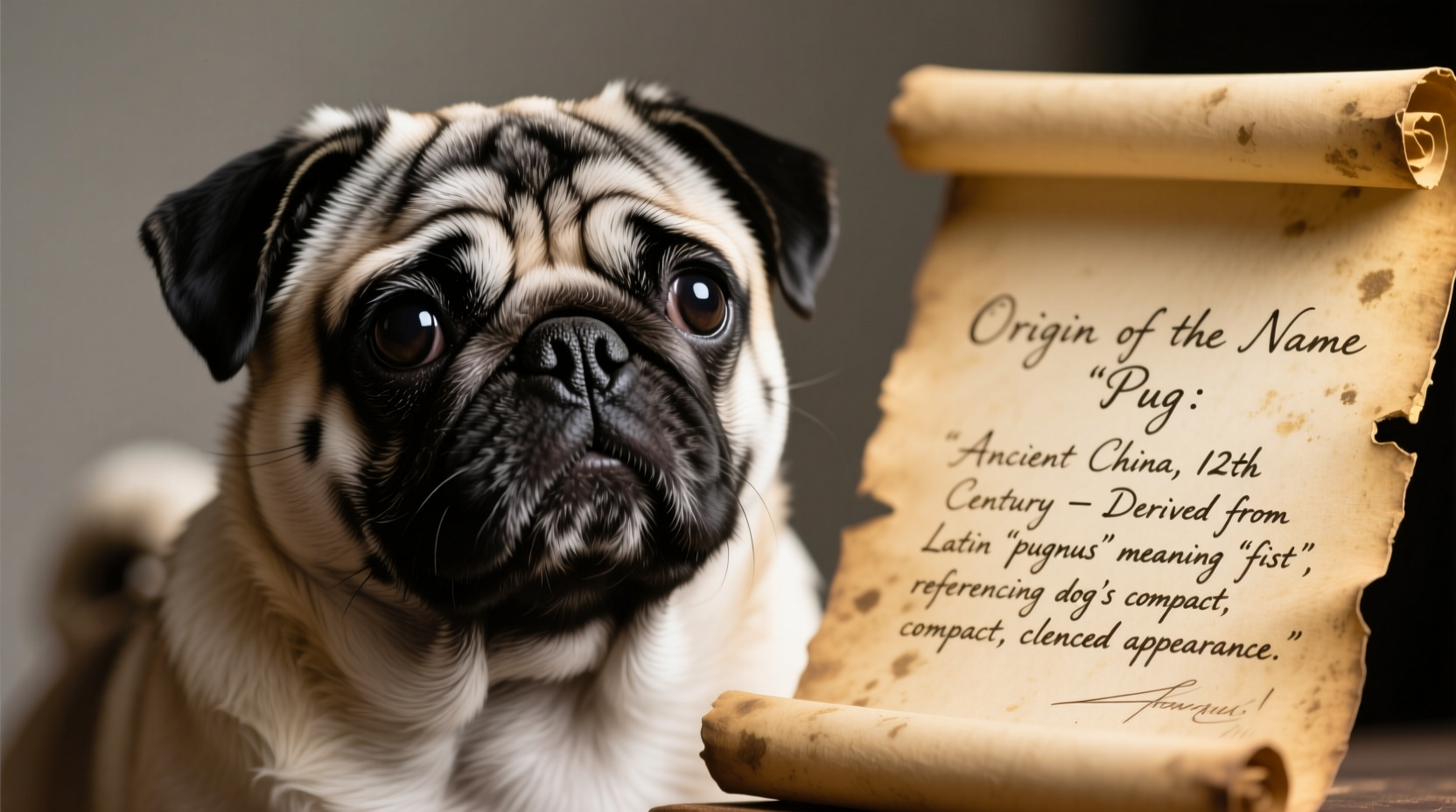
There is no single definitive answer to why these dogs are called pugs, but several credible theories have emerged over time, each supported by historical context and linguistic evidence.
1. Resemblance to a Monkey’s Face
One of the most widely accepted theories is that the name “pug” comes from the Latin word *pugnus*, meaning “fist,” due to the wrinkled face resembling a clenched fist. However, a more popular explanation ties the name to “pug monkey”—a term used in the 1700s to describe a type of marmoset or small ape with a flat, human-like face. Early pugs were said to resemble these monkeys in both facial structure and expressive eyes.
“Pugs were often referred to as ‘monkey-faced’ dogs in 18th-century England. Their large, round eyes and short muzzles gave them an uncanny resemblance to the pug monkeys popular in caricatures of the time.” — Dr. Helen Whitaker, Canine Historian
This theory gained traction during the Victorian era when exotic animals were common subjects in art and conversation. The visual similarity was strong enough that the nickname stuck—and eventually evolved into the official breed name.
2. Link to the Word “Pug” as a Term of Endearment
In old English, “pug” was sometimes used as a term of endearment, much like “mug” or “sweetie.” It carried connotations of something small, homely, and affectionate—traits that perfectly describe the pug. While not directly tied to the breed at first, the term may have been naturally applied to these compact, lovable dogs.
3. Connection to the Muzzle Shape
Another plausible theory links “pug” to the Old English word *pugg*, a slang term for a playful, mischievous creature—often applied to dogs. Additionally, some linguists suggest a connection to the word “pugged,” an archaic term describing something blunt or flattened, referencing the breed’s short muzzle. Given that pugs are brachycephalic (short-nosed), this description fits both physically and phonetically.
Tip: When researching historical dog names, look beyond direct definitions—many breed names evolved from nicknames based on appearance or behavior.A Historical Journey: From China to Europe
To fully understand the naming of the pug, one must follow its path across continents and centuries. The breed’s history begins in ancient China, where it was bred exclusively for royalty.
Origins in Imperial China
Pugs, or their ancestors, date back to 700 BC in China. They were known as *lo-chiang-sha*, meaning “lion dog,” and were highly prized by emperors of the Han dynasty. These early pugs lived luxurious lives, guarded by soldiers and sometimes even having their own servants.
Though they weren’t called “pugs” yet, their distinct features—compact size, curled tail, and wrinkled forehead—were already established. Chinese artists frequently depicted them in paintings and sculptures, often placing them beside Buddha or imperial figures as symbols of prosperity and protection.
Introduction to Europe
The pug made its way to Europe in the 1500s via Dutch traders who brought the dogs from China to the Netherlands. The Dutch East India Company played a crucial role in this exchange. Once in Europe, the breed quickly gained favor among aristocrats.
The House of Orange, particularly William of Orange, helped popularize the pug. In 1572, William adopted a pug named Pompey, who famously alerted him to an impending Spanish attack by barking. This act of loyalty cemented the pug’s status as a national symbol in the Netherlands. Pugs were later adopted as mascots by the royal family, reinforcing their elite image.
The Name Solidifies in 18th-Century England
By the 1700s, pugs had become fashionable pets among British nobility. Queen Charlotte, wife of King George III, owned several pugs and encouraged their breeding. It was during this period that the name “pug” began appearing regularly in written records.
The first documented use of the word “pug” in reference to the dog breed appears in 1749 in a novel by Tobias Smollett, where a character mentions owning a “pug-dog.” By the late 18th century, the Kennel Club in England officially recognized the name, and the breed standard began to take shape.
Cultural Influence and Naming Trends
The rise of caricature art in 18th-century Britain further reinforced the monkey comparison. Artists like James Gillray often drew pugs with exaggerated human expressions, emphasizing their comical, almost humanoid features. These depictions likely strengthened the association between pugs and “pug monkeys,” helping the name endure.
| Era | Region | Name Used | Notes |
|---|---|---|---|
| 700 BC – 1600 AD | China | Lo-chiang-sha, Fu Dog | Sacred companions of emperors |
| 1500s–1600s | Netherlands | Mopshond (Dutch) | Adopted by House of Orange |
| 1700s | England | Pug, Pug-Dog | First recorded use in literature |
| 1871 | United Kingdom | Pug (official) | Recognized by The Kennel Club |
Modern Recognition and Global Popularity
Today, the name “pug” is universally recognized. The American Kennel Club (AKC) officially recognized the breed in 1885, and pugs consistently rank among the top 30 most popular dog breeds in the United States.
The name has remained unchanged despite evolving breed standards and increased awareness of health issues related to brachycephaly. While modern pugs are bred for slightly less extreme features than their Victorian counterparts, their identity—as both a breed and a name—remains firmly rooted in history.
Pop Culture and the Name’s Persistence
Films and television have played a role in maintaining the name’s relevance. From Frank the pug in the *Men in Black* series to the viral popularity of social media pugs like “Moose” and “Gonzo,” the name “pug” has transcended breed circles and entered mainstream lexicon.
“The name ‘pug’ is now so embedded in global culture that it’s used colloquially to describe anyone with a squashed nose or a funny expression—even humans.” — Dr. Lydia Chen, Cultural Linguist
Frequently Asked Questions
Is “pug” short for anything?
No, “pug” is not an abbreviation. It is a standalone name derived from historical nicknames related to appearance and temperament. Some mistakenly believe it’s short for “pug dog,” but in fact, “pug dog” is the redundant form—the correct term is simply “pug.”
Are pugs related to monkeys, given the name origin?
No, pugs are not biologically related to monkeys. The name originated from a visual comparison—their flat faces and large eyes were likened to those of “pug monkeys,” a term for certain small primates in the 1700s. It’s purely a descriptive nickname, not a scientific classification.
Did all pugs originally come from China?
Yes, the ancestors of modern pugs were developed in ancient China over 2,000 years ago. All contemporary pugs descend from dogs bred in Chinese imperial courts, later exported to Europe and refined into the breed we know today.
Tip: When choosing a pug, research breeders who prioritize health and moderate features to avoid severe breathing issues linked to extreme brachycephaly.How to Honor the Pug’s Legacy Today
Understanding the origin of the name “pug” isn’t just a trivia point—it deepens appreciation for the breed’s long journey and cultural significance. As a pug owner or enthusiast, you can honor this legacy by:
- Supporting ethical breeders who focus on health and temperament
- Learning about brachycephalic syndrome and how to care for your pug’s respiratory needs
- Sharing the rich history of the breed with others
- Participating in breed preservation efforts through clubs or registries
Checklist: Responsible Pug Ownership
- Choose a reputable breeder who screens for genetic conditions
- Schedule regular vet visits focusing on eye, skin, and breathing health
- Keep your pug cool in summer—avoid overheating due to short airways
- Engage in gentle training; pugs respond best to positive reinforcement
- Preserve the breed’s dignity by avoiding cosmetic exaggerations
Conclusion
The name “pug” may seem whimsical, but it carries centuries of history, cross-cultural exchange, and affectionate admiration. Whether derived from a monkey’s face, a term of endearment, or the shape of a clenched fist, the name reflects how humans have perceived and cherished this breed for generations.
From imperial palaces to modern apartments, the pug has retained its charm—and its name—through remarkable consistency. Now that you know the story behind why they’re called pugs, you’re part of preserving that legacy.
💬 Did you have a favorite theory about the name’s origin? Share your thoughts or your pug’s story in the comments below!








