
A sudden green tint on your nails can be alarming. While it might look like a cosmetic issue at first, green nails often signal an underlying health concern—most commonly bacterial or fungal infection. This discoloration, known medically as \"green nail syndrome,\" is more than just a visual oddity; it can indicate poor hygiene, trauma to the nail, or prolonged exposure to moisture. Understanding the root causes, recognizing early symptoms, and taking preventive steps are essential to restoring nail health and avoiding recurrence.
Understanding Green Nail Syndrome
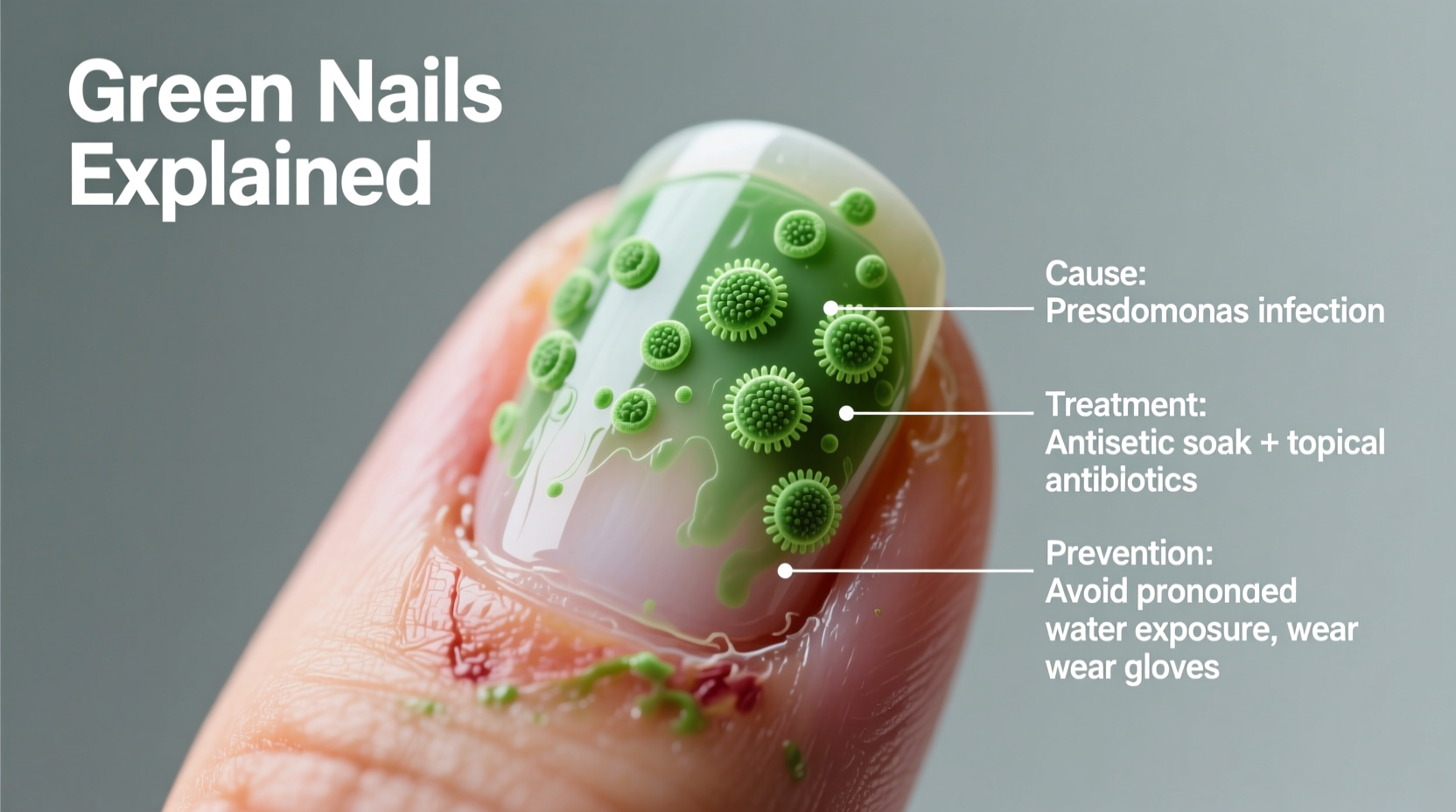
Green nail syndrome is typically caused by *Pseudomonas aeruginosa*, a bacterium that thrives in moist environments. When this bacteria colonizes under the nail plate—especially when the natural seal between the nail and nail bed is compromised—it produces a greenish-blue pigment called pyocyanin. The result is a noticeable green discoloration, often accompanied by a foul odor, softening of the nail, and sometimes mild discomfort.
This condition is not contagious in the traditional sense but can spread between nails if left untreated. It’s more common in people whose hands are frequently wet—such as dishwashers, healthcare workers, swimmers, or beauticians—and those who wear artificial nails or use nail polish for extended periods without breaks.
Tip: If you work with water regularly, wear cotton-lined rubber gloves to reduce moisture buildup under the nails.Common Causes of Green Nails
The appearance of green nails is rarely random. Several interrelated factors contribute to the development of this condition:
- Bacterial Infection (Pseudomonas): The primary cause. Occurs when the nail separates from the nail bed due to injury, over-manicuring, or excessive moisture.
- Fungal Infections: Though fungi usually cause yellow or white discoloration, secondary bacterial invasion can lead to green hues.
- Artificial Nails: Acrylics and gels can trap moisture and bacteria if applied improperly or worn too long.
- Prolonged Exposure to Water: Frequent handwashing, swimming, or working in wet conditions weakens the nail barrier.
- Nail Polish Buildup: Extended use of dark polishes, especially without base coats, may stain nails or create an anaerobic environment conducive to bacteria.
- Weakened Immune System: Conditions like diabetes or immunosuppression increase susceptibility to infections.
“Green nails are often preventable. The key is maintaining dry, intact nail beds. Once Pseudomonas takes hold, treatment requires both topical and behavioral changes.” — Dr. Lena Patel, Dermatologist and Nail Health Specialist
Treatment Options for Green Nails
Treating green nails effectively depends on identifying the cause. Mild cases may resolve with improved hygiene, while persistent infections require medical intervention.
Step-by-Step Treatment Guide
- Discontinue Nail Polish and Artificial Nails: Remove all enhancements and stop using polish to allow the nail to breathe.
- Keep Nails Dry: Avoid prolonged water exposure. Use gloves during cleaning or dishwashing.
- Cleanse Daily: Soak affected fingers in a solution of half vinegar and half water for 15 minutes daily, or use diluted bleach (1 part bleach to 4 parts water) for 5–10 minutes once a day.
- Apply Topical Antibiotics: Use over-the-counter bacitracin or prescription topical agents like polymyxin B.
- See a Dermatologist: For severe or recurring cases, oral antibiotics such as ciprofloxacin may be prescribed.
- Trim and File Gently: Keep nails short and smooth to reduce lifting and debris accumulation.
If the nail is severely damaged or detached, partial or complete nail removal may be necessary under medical supervision. Healing can take several weeks to months, depending on nail growth rate.
Prevention Checklist
Preventing green nails is far easier than treating them. Follow this actionable checklist to maintain healthy nails:
Checklist: Preventing Green Nails- Wear protective gloves when handling water or chemicals
- Avoid pushing back cuticles aggressively
- Give your nails a break from polish every 1–2 weeks
- Use a breathable base coat before applying color
- Don’t share nail tools or use unsterilized salon equipment
- Keep nails trimmed and dry throughout the day
- Inspect artificial nails weekly for lifting or moisture traps
- Treat any nail trauma promptly (e.g., subungual hematoma)
Do’s and Don’ts: Nail Care Comparison
| Do’s | Don’ts |
|---|---|
| Use cotton-lined gloves for wet work | Soak hands/nails for long periods |
| Apply antifungal nail solutions preventively | Use expired or shared nail polish |
| Let nails breathe between polish applications | Peel off gel polish instead of filing |
| Sanitize nail tools after each use | Ignore early signs of discoloration |
| Moisturize cuticles regularly | Use metal instruments under the nail |
Real-Life Example: A Case of Green Nail Syndrome
Sarah, a 34-year-old nurse, noticed her right ring fingernail turning green after three weeks of double shifts during flu season. Constant handwashing, glove use, and fatigue led her to skip proper drying and nail care. She initially assumed it was a polish stain, but the color deepened and began to smell faintly sour. After consulting a dermatologist, she was diagnosed with *Pseudomonas* infection due to chronic moisture exposure and minor nail separation.
Her treatment included daily vinegar soaks, a prescription antibiotic ointment, and strict avoidance of artificial nails. Within six weeks, the green hue faded as her new nail grew in healthy and clear. Sarah now keeps a spare pair of lined gloves at work and performs weekly nail checks.
Frequently Asked Questions
Can green nails go away on their own?
In very mild cases where the cause is superficial staining from polish, the discoloration may fade as the nail grows out. However, if the green tint is due to bacterial infection, it will not resolve without intervention and may worsen, leading to nail deformation or secondary infections.
Is green nail syndrome dangerous?
While not life-threatening, untreated green nail syndrome can lead to chronic nail damage, pain, and spread to other nails. In individuals with compromised immunity, the infection could potentially become systemic, though this is rare.
Can I still wear nail polish during treatment?
No. Wearing nail polish during treatment traps moisture and hinders healing. It also makes it difficult to monitor progress. Wait until the infection has fully cleared and the new nail has grown in completely before resuming polish use.
Final Thoughts and Action Steps
Green nails are a visible sign that something is off—whether it's hygiene, nail care habits, or environmental exposure. The good news is that most cases are treatable and highly preventable with consistent care. Pay attention to how you treat your nails daily: avoid excessive moisture, don’t over-file or manipulate the cuticles, and give your nails time to recover between manicures.
If you notice any discoloration, act early. Simple home remedies can halt progression, but don’t hesitate to seek professional help if the condition persists beyond two weeks. Healthy nails aren’t just about appearance—they’re a reflection of your overall wellness and self-care routine.
💬 Have you experienced green nails? What worked for you? Share your story or tips in the comments to help others recognize and manage this condition effectively.








