
In the ever-evolving landscape of digital communication, a quiet revolution has taken place—not through words or videos, but through tiny animated characters with oversized eyes, pastel colors, and an undeniable charm. Kawaii stickers, rooted in Japanese pop culture, have surged in popularity across global social media platforms, from Instagram Stories to TikTok captions and WhatsApp messages. Their presence is no longer niche; it’s ubiquitous. But what drives this fascination? Why do millions choose a bouncing panda over a simple text when expressing joy, sarcasm, or affection? The answer lies at the intersection of emotion, identity, and digital evolution.
The Emotional Language of Kawaii Aesthetics
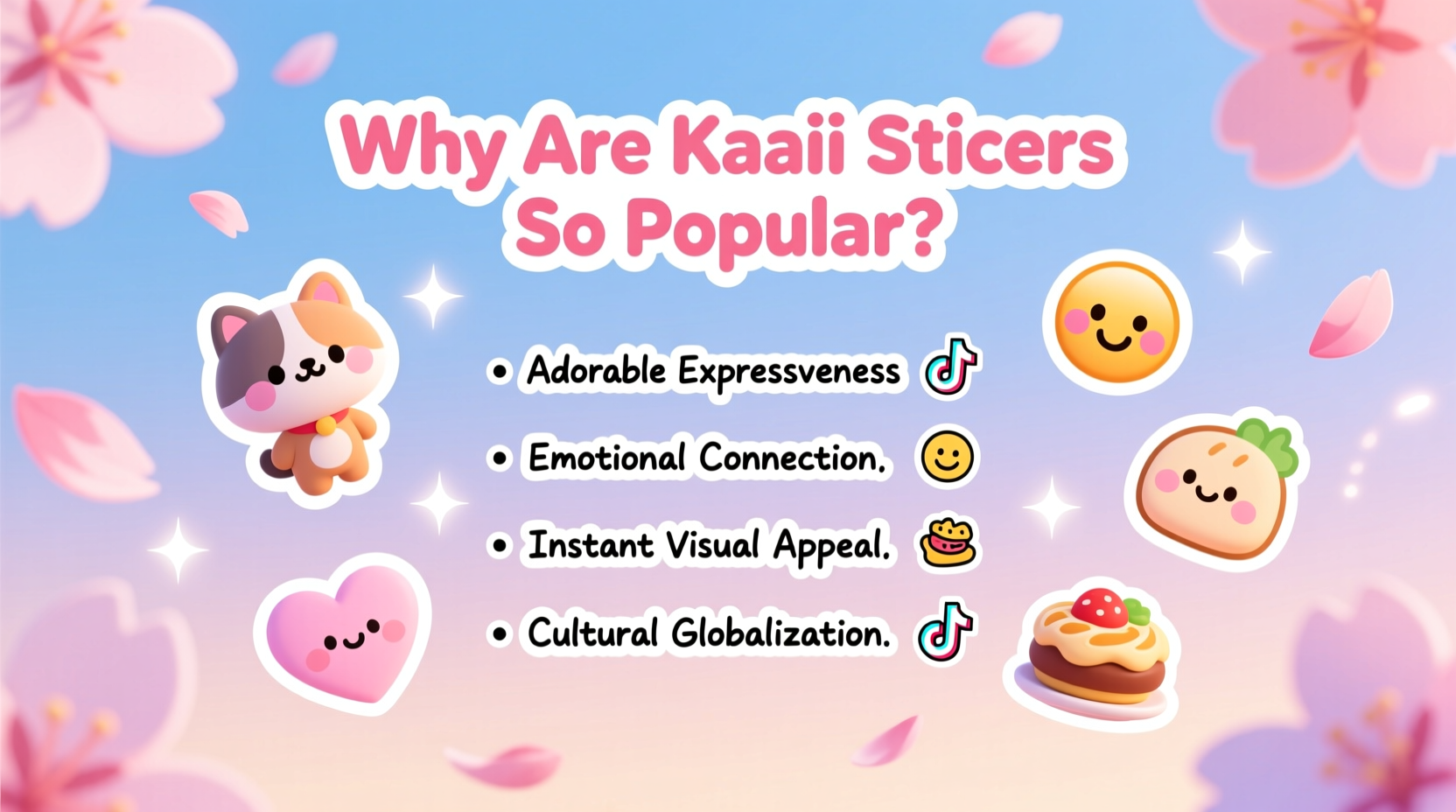
Kawaii, meaning \"cute\" in Japanese, transcends mere visual appeal. It functions as an emotional amplifier in digital conversations. Unlike plain text, which can be misinterpreted due to tone absence, kawaii stickers convey nuanced feelings instantly. A winking cat with hearts for eyes communicates flirtation more effectively than “;)”. A blushing bunny clutching its cheeks says “I’m shy” without typing a word.
This emotional clarity is critical in an age where attention spans are short and miscommunication is common. Psychologists note that humans are wired to respond positively to infantile features—a phenomenon known as *baby schema*. Large eyes, round faces, and soft contours trigger nurturing instincts and positive affect. Kawaii design leverages these traits deliberately, making stickers not just decorative, but emotionally persuasive.
“Cuteness isn’t trivial—it’s a powerful tool for building rapport and reducing social friction.” — Dr. Naomi Takahashi, Cognitive Scientist specializing in digital communication
On social media, where users often interact with strangers or distant acquaintances, kawaii stickers act as social lubricants. They soften messages, defuse tension, and signal approachability. Sending a giggling unicorn after a potentially awkward comment makes the sender seem less confrontational and more personable.
The Role of Identity and Self-Expression
Beyond emotion, kawaii stickers serve as extensions of personal identity. In a world saturated with curated content, people seek authentic ways to express individuality. Stickers offer a low-effort, high-impact method to communicate personality, mood, and cultural affiliation.
For younger demographics, particularly Gen Z and Alpha, kawaii aesthetics are tied to subcultures like anime fandom, virtual influencers, and digital maximalism. Using specific sticker sets—such as Sanrio characters, original Line Friends, or user-generated pixel art—becomes a subtle badge of belonging. It signals shared interests without explicit declaration.
Platforms like Telegram and Discord have amplified this trend by allowing users to create and share custom sticker packs. This democratization of design means anyone can craft a sticker reflecting their humor, values, or aesthetic preferences. A sticker of a crying raccoon holding a coffee cup might resonate deeply with someone navigating burnout, turning private emotion into relatable public expression.
Tip: Choose stickers that reflect your current mood rather than defaulting to generic ones—this builds authenticity in your digital persona.Platform Design and Algorithmic Amplification
Social media platforms didn’t just adopt kawaii stickers—they engineered spaces for them to thrive. Features like Instagram’s sticker-based polls, Snapchat’s Bitmoji integration, and TikTok’s Duet reaction overlays prioritize visual interactivity over text. These tools reward engagement, and cute visuals consistently outperform neutral or text-only content.
Algorithms favor posts with higher interaction rates. When users respond to a story with a laughing jellyfish sticker instead of a heart emoji, that action counts as meaningful engagement. As a result, creators who use expressive stickers see better reach. This creates a feedback loop: more visibility → more sticker usage → more algorithmic promotion.
Moreover, many apps now offer real-time sticker suggestions based on typed keywords. Type “congrats,” and a shower of confetti pandas appears. This predictive functionality lowers barriers to use, encouraging even casual users to incorporate stickers into daily communication.
How Major Platforms Use Kawaii Stickers to Boost Engagement
| Platform | Sticker Feature | User Impact |
|---|---|---|
| Interactive Story stickers (polls, quizzes, questions) | Increases response rate by 3x compared to text-only prompts | |
| Custom third-party sticker packs | Enables cultural and emotional specificity in private chats | |
| TikTok | Reaction stickers during video playback | Boosts viewer participation and time spent per video |
| Telegram | User-created animated sticker marketplace | Fosters community-driven creativity and niche expression |
A Mini Case Study: The Rise of “Boba Bear”
In 2021, a freelance illustrator named Mei Chen launched a sticker pack called *Boba Bear* on Telegram. The set featured a chubby brown bear sipping bubble tea, reacting to everyday situations with exaggerated cuteness—crying over spilled boba, dancing at midnight snack time, or hiding under a blanket during work calls.
Initially shared within a small anime fan group, the stickers went viral after a popular TikTok creator used them in a video about mental health. Within three weeks, the pack was downloaded over 500,000 times. What made Boba Bear resonate wasn’t just its design, but its emotional accuracy. It gave voice to millennial and Gen Z anxieties in a way that felt light, not heavy.
“People don’t want therapy bots,” Mei said in an interview. “They want something that says, ‘I see you, and it’s okay to feel overwhelmed—even if you’re smiling.’ That’s what the bear does.”
Boba Bear exemplifies how kawaii stickers function as micro-narratives. They compress complex emotional states into single, shareable images—making them ideal for fast-paced social media environments.
Psychological Comfort in Uncertain Times
The surge in kawaii sticker popularity coincides with periods of global stress—pandemics, economic instability, climate anxiety. During such times, people seek comfort and escapism. Kawaii culture, with its emphasis on innocence, playfulness, and whimsy, offers a psychological refuge.
Research in media psychology shows that exposure to cute imagery can reduce cortisol levels and improve focus. Known as the “kawaii effect,” this response explains why users instinctively reach for a giggling penguin when feeling anxious. It’s not just decoration—it’s self-soothing.
Additionally, kawaii stickers help maintain emotional boundaries. Instead of oversharing personal struggles, users can send a teary-eyed cloud with the caption “not today” to signal distress subtly. This allows for vulnerability without pressure to elaborate—critical in maintaining mental well-being online.
Step-by-Step: How to Use Kawaii Stickers More Effectively
- Assess the context: Is this a casual chat or professional message? Reserve highly animated stickers for informal settings.
- Match emotion to sticker: Choose one that accurately reflects your feeling—don’t use a laughing fox for serious news.
- Limit frequency: Overuse can dilute impact. One well-placed sticker is stronger than five cluttered ones.
- Create or curate: Install sticker packs that align with your personality or current life phase.
- Observe reactions: If friends respond positively, continue using similar styles. Adjust if engagement drops.
Checklist: Building a Thoughtful Kawaii Sticker Strategy
- ✅ Identify your core emotions (humor, empathy, excitement) and find stickers that match them
- ✅ Download 2–3 high-quality sticker packs that reflect your taste
- ✅ Test sticker responses in low-stakes conversations before using them broadly
- ✅ Update your collection seasonally (e.g., holiday-themed or mood-based sets)
- ✅ Respect platform norms—what works on TikTok may not suit LinkedIn
Common Misconceptions About Kawaii Culture
Despite its popularity, kawaii is often misunderstood as childish or superficial. Critics argue that relying on cute visuals undermines serious discourse. However, this view overlooks the cultural depth and strategic intent behind kawaii expression.
In Japan, kawaii is not just for children. It permeates business branding, public service campaigns, and even government messaging. Hello Kitty isn’t merely a cartoon—she’s a global ambassador for kindness and connection. Similarly, kawaii stickers online aren’t signs of immaturity, but tools for emotional intelligence in digital spaces.
Another myth is that all kawaii content is Japanese-made. While the aesthetic originated there, it has been localized globally. From Korean dalgona bears to Brazilian anime-inspired doodles, kawaii has become a universal design language adapted to regional tastes.
FAQ
Are kawaii stickers appropriate in professional settings?
It depends on context and culture. In creative industries or casual teams, a subtle sticker in a Slack message may humanize communication. In formal corporate environments, they’re best avoided. When in doubt, mirror the tone of your colleagues.
Can I create my own kawaii stickers?
Absolutely. Apps like Telegram, WhatsApp, and Sticker.ly allow users to upload custom images (with transparent backgrounds) and publish personal packs. Many artists start this way before gaining commercial success.
Do kawaii stickers have any negative effects?
Rarely—but overreliance on visual cues can hinder verbal emotional articulation. Some psychologists suggest balancing sticker use with occasional written reflection to maintain emotional literacy.
Conclusion: Embracing Cuteness as Digital Empathy
The popularity of kawaii stickers on social media isn’t a passing fad. It’s a reflection of how human connection is evolving in the digital age. As screens replace face-to-face interactions, we crave warmth, clarity, and emotional safety. Kawaii stickers deliver all three in a format that’s instant, inclusive, and infinitely adaptable.
They are more than decorations—they are modern hieroglyphs of feeling, encoding joy, sadness, irony, and solidarity in a single frame. Whether you’re sending a sleepy sloth to a friend pulling an all-nighter or using a glittery frog to celebrate a promotion, you’re participating in a new form of emotional economy—one where cuteness carries real weight.
💬 What’s your go-to kawaii sticker and why? Share your favorite in the comments and help others discover new ways to express themselves—because sometimes, the perfect feeling comes in a tiny, pixelated package.








