For millions of music fans, the dream of seeing a favorite artist live often ends in frustration minutes after a ticket sale begins. Despite refreshing pages, setting alarms, and lining up virtually, many walk away empty-handed—only to find those same tickets resold online for hundreds or even thousands of dollars. The root of this growing crisis isn’t just demand; it’s an invisible army of bots controlled by scalpers that hijack digital ticketing systems before real humans can react. This article examines how automated resale networks exploit vulnerabilities in ticket platforms, why enforcement remains weak, and what fans, artists, and policymakers can do to reclaim fairness in live entertainment access.
The Mechanics of Scalping: From Back-Alley Resale to Digital Domination
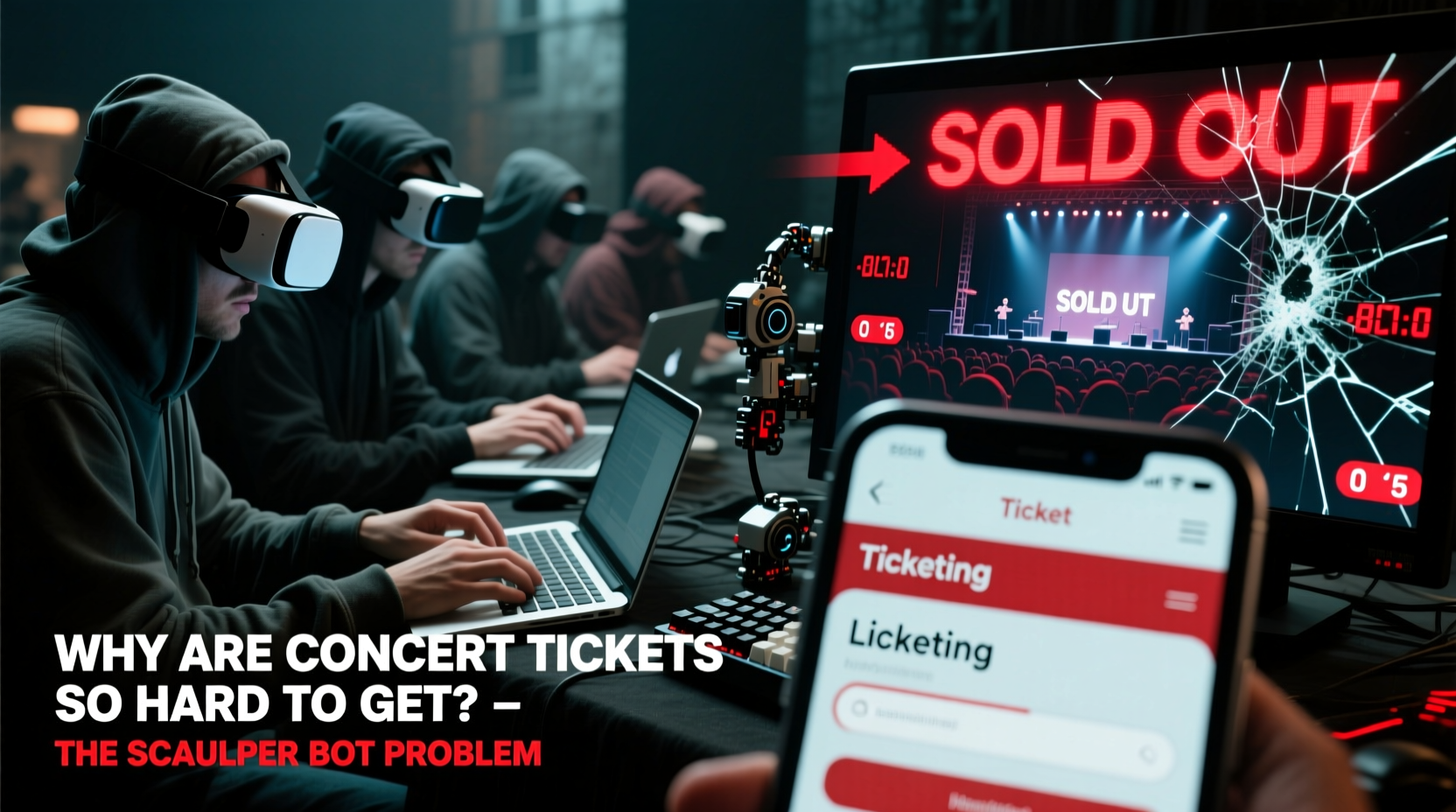
Historically, ticket scalping involved individuals buying extra tickets at face value and reselling them at inflated prices outside venues. While this still occurs, the modern version is far more sophisticated—and damaging. Today’s scalpers use software known as “bots” to automate the purchase of large volumes of tickets within seconds of a public on-sale. These bots bypass human limitations like reaction time, CAPTCHA-solving ability, and browser speed, flooding ticketing servers with thousands of simultaneous transactions.
Scalper bots are designed to mimic legitimate users while operating at machine speed. They integrate with proxy networks to mask their IP addresses, evade detection, and simulate multiple unique customers. Some advanced versions can even bypass security measures such as queue systems (e.g., Ticketmaster’s “Verified Fan”) by creating fake accounts en masse using stolen or synthetic identities.
Tip: If tickets sell out in under two minutes—even for major acts—it's almost certain bots are involved.How Bots Exploit the System: A Step-by-Step Breakdown
To understand how scalpers maintain control over high-demand events, consider the typical lifecycle of a bot-driven ticket acquisition:
- Pre-Sale Intelligence Gathering: Scalpers monitor tour announcements, fan club newsletters, and presale codes distributed through third-party partners. They also use data brokers to acquire early access information.
- Infrastructure Setup: Before the sale, they deploy clusters of virtual machines across global server farms, each equipped with a bot instance, proxy IP, and preloaded payment methods.
- Sale Execution: At the moment of release, bots flood the ticketing site, completing checkouts in milliseconds. One operator may control tens of thousands of virtual “buyers.”
- Post-Purchase Aggregation: Acquired tickets are consolidated into inventory pools and listed on secondary marketplaces like StubHub, Vivid Seats, or private Telegram groups.
- Dynamic Pricing & Resale: Algorithms adjust resale prices based on real-time demand, often inflating costs by 500% or more.
This entire process runs largely unchecked due to fragmented regulation, inconsistent platform enforcement, and financial incentives that align ticketing companies with high-volume sales—not consumer fairness.
The Role of Ticketing Platforms: Profit Over Protection?
Major ticketing companies like Ticketmaster (owned by Live Nation) have long been criticized for enabling, rather than preventing, bot activity. Critics argue that these platforms benefit financially from secondary market commissions, which can reach 25–30% per resale transaction. In effect, the system rewards scarcity and inflation, turning sold-out shows into revenue multipliers.
While Ticketmaster has introduced tools like Verified Fan and dynamic pricing, these measures often fail to stop determined scalpers. Verified Fan, for example, requires users to register in advance, but scalpers simply create vast numbers of fake verified accounts using disposable emails and burner phones. Moreover, insiders report that some presales are leaked or sold to bot operators through corrupt affiliates.
“Ticketing platforms have all the technical capability to stop bots, but their business model depends on artificial scarcity and resale markups. Until that changes, no anti-bot measure will be truly effective.” — Daniel Reyes, Former Ticketing Security Analyst at Eventbrite
A Real-World Example: The Taylor Swift ‘Eras Tour’ Debacle
No recent event illustrates the breakdown of fair ticket access better than the 2022 Taylor Swift Eras Tour sale. Anticipated by millions, the U.S. leg went on sale via Ticketmaster’s Verified Fan program. Within hours, the company canceled the general sale, citing “unprecedented demand” and website crashes.
Despite claiming 3.5 million fans were in the queue, most never received a code. Meanwhile, tens of thousands of tickets appeared immediately on resale sites priced between $1,000 and $5,000. Congressional hearings followed, with lawmakers demanding answers about bot usage and market manipulation.
An investigation revealed that over 70% of tickets purchased during the initial window were later resold—many by entities linked to professional scalping rings using coordinated bot networks. Fans reported spending hours in queues only to be shown error messages, while bots cleared entire sections in seconds.
Who Benefits from the Current System?
The ticketing ecosystem favors several powerful stakeholders—all at the expense of ordinary fans:
| Stakeholder | Benefit | Impact on Fans |
|---|---|---|
| Scalper Networks | Massive profit margins via resale arbitrage | Tickets become unaffordable or inaccessible |
| Secondary Marketplaces | Commission on every resale (often 20–30%) | Incentivizes scarcity and price gouging |
| Primary Ticket Sellers | Revenue from high-volume initial sales | Limited investment in anti-bot tech |
| Venues & Promoters | Guaranteed sell-outs and higher reported grosses | False metrics of demand; alienated fan base |
| Fans | Limited or no access to fair pricing | Exclusion, frustration, financial strain |
This table underscores a systemic imbalance: nearly every player profits from restricted access, while the actual audience bears the cost.
What Can Be Done? A Practical Action Plan
Fixing the ticketing crisis requires coordinated effort across technology, policy, and consumer behavior. Below is a checklist of actionable steps that could restore equity to the system.
Checklist: Building a Fairer Ticketing Future
- ✅ Mandate stricter identity verification for presales and purchases (e.g., government ID-linked accounts)
- ✅ Enforce penalties for bot use under laws like the Better Online Ticket Sales (BOTS) Act
- ✅ Require ticketing platforms to publish transparency reports on bot detection rates
- ✅ Limit per-customer ticket purchases based on seat configuration (e.g., max 4 tickets per household)
- ✅ Redirect resale profits to artists or charities via blockchain-based smart contracts
- ✅ Support independent artists who use direct-to-fan platforms like DICE or Songkick, which ban resale above face value
- ✅ Advocate for legislation capping resale markups (as enacted in New York and Washington state)
Emerging Solutions: Technology Fighting Back
Some promising technologies aim to level the playing field:
- NFT Tickets: Blockchain-based tickets can be programmed to prevent unauthorized resale or return excess profits to artists upon transfer.
- Wallet-Linked Access: Platforms like DICE tie tickets to user phone numbers and IDs, making bulk buying impossible.
- AI Monitoring: Advanced anomaly detection can flag suspicious purchasing patterns—such as 50 checkout attempts from similar IPs in one second.
- Lottery Systems: Randomized allocation, used successfully by Harry Styles and Olivia Rodrigo, reduces the advantage of speed and automation.
While not foolproof, these innovations shift power back toward fans by removing scalability from the scalper playbook.
FAQ: Common Questions About Ticket Scalping and Bots
Is it illegal to use bots for concert tickets?
Yes. Under the U.S. BOTS Act of 2016, using bots to circumvent ticket purchase limits is a federal offense. However, enforcement is rare, and prosecutions are minimal due to jurisdictional challenges and lack of resources.
Why don’t ticketing companies just block bots?
They technically can, but doing so completely would require aggressive verification that might slow down legitimate users. More importantly, many platforms earn revenue from secondary sales, reducing their incentive to eliminate scalping entirely.
Are paperless tickets safer from scalping?
Paperless or mobile-only tickets help reduce casual resale, but sophisticated scalpers bypass them using fake identities and SIM farms. True security requires identity binding—not just device locking.
Conclusion: Reclaiming Live Music for Fans
The struggle to obtain concert tickets reflects a deeper issue: when technology enables exploitation faster than regulation can respond, everyday consumers lose. The current ticketing model prioritizes speed, volume, and profit over fairness, accessibility, and fan loyalty. But change is possible. With stronger laws, transparent platforms, and smarter technology, we can build a future where seeing your favorite artist doesn’t require deep pockets or insider access.
Artists, fans, and regulators must unite to demand accountability. Support tours that use ethical ticketing partners. Push for legislation that caps resale prices. And most importantly, keep raising your voice—because live music should belong to the people who love it most.
💬 Have you been affected by scalper bots? Share your story or tips for beating the system in the comments below.








