
Weak knees are more than just a fleeting discomfort—they can significantly impact mobility, confidence in movement, and overall quality of life. Whether you're an athlete, someone managing chronic joint issues, or simply noticing increased instability when climbing stairs, understanding the root causes, recognizing key symptoms, and applying targeted treatments is essential. This article dives deep into the biomechanics, medical conditions, and lifestyle factors behind knee weakness, offering practical, evidence-based solutions to restore strength and stability.
Understanding Knee Weakness: More Than Just Pain
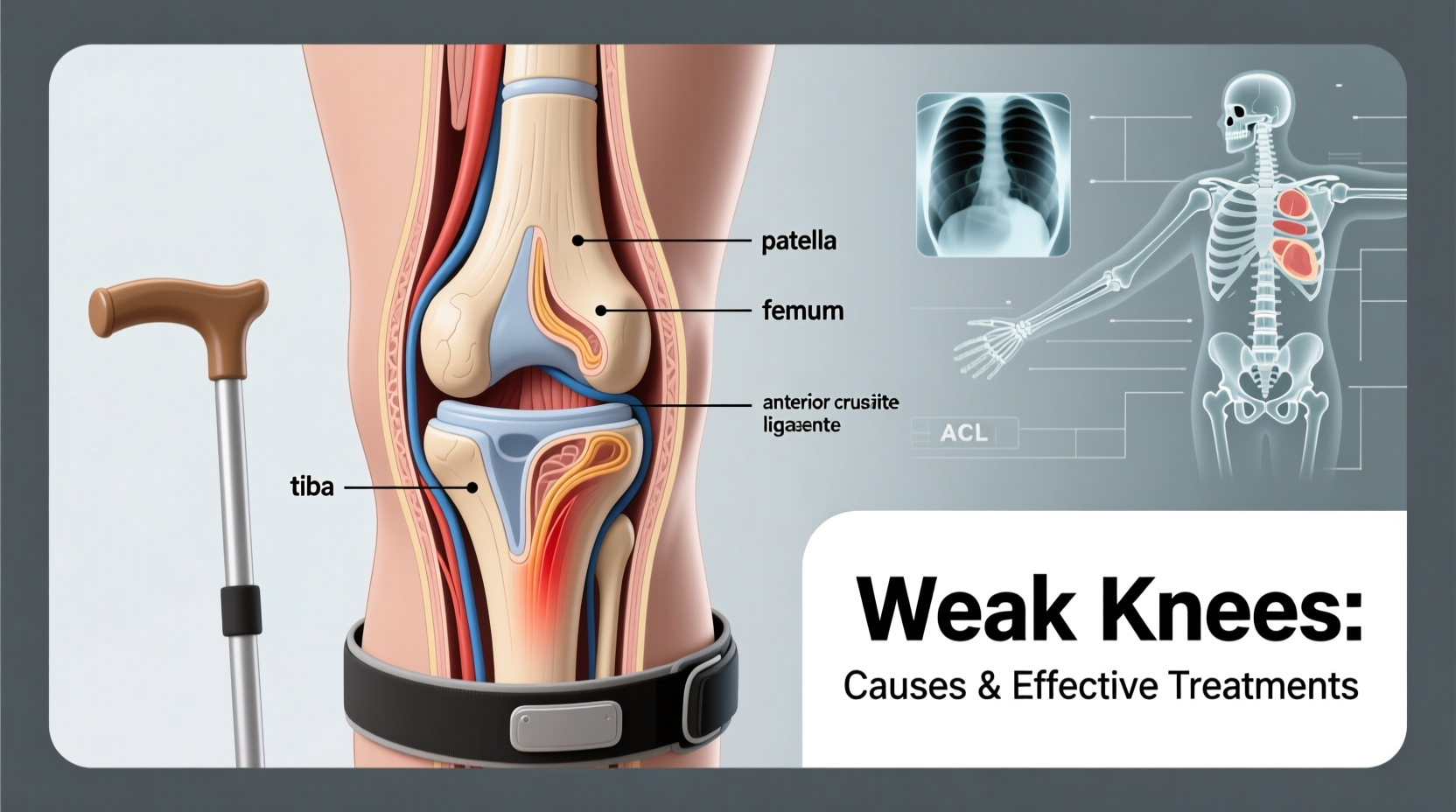
Knee weakness isn’t always accompanied by sharp pain. Instead, it often presents as a sensation of instability—your knee may buckle, feel “wobbly,” or give out unexpectedly during routine activities like walking or standing up from a chair. This sensation stems not from the knee joint alone but from a complex interplay between muscles, ligaments, nerves, and joint structures.
The quadriceps, particularly the vastus medialis obliquus (VMO), play a crucial role in stabilizing the patella (kneecap) and supporting the knee during extension. When these muscles weaken or fire improperly, the knee loses dynamic support. Additionally, injuries to ligaments such as the ACL or meniscus, nerve dysfunction from lumbar spine issues, or degenerative conditions like osteoarthritis can all contribute to perceived or actual knee weakness.
“Knee instability often reflects underlying neuromuscular inefficiency, not just structural damage.” — Dr. Alan Reyes, Sports Medicine Physician
Common Causes of Weak Knees
Identifying the cause is the first step toward effective treatment. Below are the most prevalent contributors to knee weakness:
- Muscle atrophy or imbalance: Prolonged inactivity, post-surgery recovery, or poor training habits can lead to underdeveloped quadriceps or hamstrings.
- Ligament injuries: Torn ACL, MCL, or PCL compromise joint integrity, leading to buckling and reduced confidence in weight-bearing.
- Meniscus tears: These disrupt load distribution and proprioception, contributing to weakness and mechanical catching.
- Osteoarthritis: Cartilage degeneration alters joint mechanics and triggers protective muscle inhibition.
- Patellofemoral pain syndrome (PFPS): Misalignment or tracking issues of the kneecap weaken functional performance.
- Nerve impingement: Lumbar radiculopathy (e.g., L3-L4 nerve root compression) can reduce signal strength to the quadriceps, causing true neurological weakness.
- Tendinopathies: Chronic inflammation of the patellar or quadriceps tendon reduces force transmission.
Symptoms That Signal Underlying Issues
Recognizing early signs helps prevent further deterioration. Common symptoms associated with weak knees include:
- Feeling of the knee “giving out” during walking or standing
- Difficulty rising from a seated position without using hands
- Pain with stairs, squatting, or prolonged standing
- Swelling or warmth around the joint after activity
- Reduced range of motion, especially full extension
- Visible muscle wasting above the knee (quadriceps atrophy)
- Popping or locking sensations during movement
It’s important to differentiate between mechanical instability (structural failure) and functional instability (muscle inhibition). A physical therapist can perform specific tests—such as the straight leg raise test or valgus/varus stress testing—to pinpoint the origin.
Effective Treatments and Rehabilitation Strategies
Treatment must be tailored to the underlying cause. A one-size-fits-all approach often fails. The following interventions are supported by clinical research and patient outcomes.
1. Targeted Strengthening Exercises
Restoring muscular control is foundational. Focus on eccentric loading and neuromuscular re-education:
- Straight Leg Raises: Lie on your back, lift one leg while keeping the knee locked. Hold for 5 seconds. 3 sets of 10 daily.
- Mini Squats (to 30°): Keep knees aligned over toes; avoid forward knee drift. Use wall support if needed.
- Step-Ups: Use a 4–6 inch platform. Lead with the affected leg, emphasizing slow lowering phase.
- Terminal Knee Extensions (TKEs): Wrap a resistance band around a pole, attach to ankle, and perform small extensions from 30° to full lock.
- Bridges with Marching: Lie on back, lift hips, then alternate lifting each foot off the ground.
2. Neuromuscular Electrical Stimulation (NMES)
For patients with significant quadriceps inhibition—common after surgery or acute injury—NMES can reactivate dormant muscle fibers. Applied under professional guidance, NMES improves voluntary activation and accelerates strength recovery.
3. Bracing and Support
While not a long-term solution, knee braces can enhance proprioception and provide external stability during rehabilitation. Hinged braces are ideal for ligamentous insufficiency, while patellar tracking sleeves help with PFPS.
4. Injections and Medical Interventions
In select cases, corticosteroid or hyaluronic acid injections may reduce inflammation and improve function. For advanced osteoarthritis, regenerative therapies like PRP (platelet-rich plasma) show promise in reducing pain and improving joint resilience.
5. Surgical Options
When conservative care fails and structural damage is confirmed via MRI, procedures such as ACL reconstruction, meniscectomy, or partial knee replacement may be necessary. Post-op rehab remains critical for restoring strength.
Rehabilitation Timeline and Progression
Recovery varies based on cause and severity, but a structured timeline enhances adherence and outcomes.
| Phase | Duration | Goals | Key Activities |
|---|---|---|---|
| Acute/Protection | Weeks 1–2 | Reduce swelling, restore quad activation | Icing, NMES, straight leg raises |
| Strengthening | Weeks 3–6 | Improve muscle endurance and balance | Mini squats, step-ups, bridges |
| Functional Training | Weeks 7–10 | Restore dynamic stability | Lunges, single-leg stance, agility drills |
| Return to Activity | Weeks 11+ | Full strength, sport/work readiness | Plyometrics, sport-specific drills |
Real-World Example: Recovering After Knee Surgery
Sarah, a 48-year-old office worker, underwent arthroscopic meniscus repair. Post-surgery, she noticed her right knee frequently buckled when stepping off curbs. Initial physical therapy focused on reducing swelling and activating her quadriceps. By week three, she began terminal knee extensions with a resistance band. At six weeks, she progressed to mini squats and step-ups. Her therapist introduced NMES twice weekly due to persistent quadriceps lag. By week ten, Sarah could climb stairs without handrail support. At twelve weeks, she resumed hiking—her favorite activity—with a custom knee brace for added confidence.
Sarah’s case illustrates how combining medical intervention with consistent, progressive rehab leads to meaningful recovery—even in middle age.
Do’s and Don’ts for Managing Weak Knees
| Do | Don't |
|---|---|
| Perform daily strengthening exercises | Ignore persistent buckling episodes |
| Use proper footwear with good arch support | Engage in high-impact activities prematurely |
| Apply ice after activity if swelling occurs | Compensate by shifting weight to the unaffected leg long-term |
| Seek evaluation from a physical therapist | Self-diagnose or rely solely on painkillers |
Frequently Asked Questions
Can weak knees be reversed without surgery?
Yes, in many cases. Muscle imbalances, early-stage arthritis, and post-injury weakness often respond well to physical therapy, targeted exercise, and lifestyle modifications. Surgery is typically reserved for structural failures that don’t improve with conservative care.
Why does my knee feel weak after sitting too long?
Prolonged sitting shortens the hip flexors and reduces blood flow to the quadriceps, temporarily impairing muscle activation. This phenomenon, known as \"arthrogenic muscle inhibition,\" is common in knee pathologies. Gentle movement before standing—like ankle pumps and quad sets—can help.
How long does it take to strengthen weak knees?
Noticeable improvement usually occurs within 4–6 weeks of consistent exercise. Full recovery may take 3–6 months depending on the cause, age, and adherence to rehab protocols.
Conclusion: Take Control of Your Knee Health
Weak knees don’t have to limit your life. With accurate diagnosis, targeted rehabilitation, and consistent effort, most individuals regain stability and confidence in their movements. Start with simple daily exercises, consult a healthcare provider for persistent symptoms, and prioritize long-term joint health through strength and mobility work.
🚀 Ready to strengthen your knees? Begin today with 10 minutes of guided exercises and track your progress weekly. Share your journey in the comments—your experience could inspire someone else to take their first step toward stronger knees.








